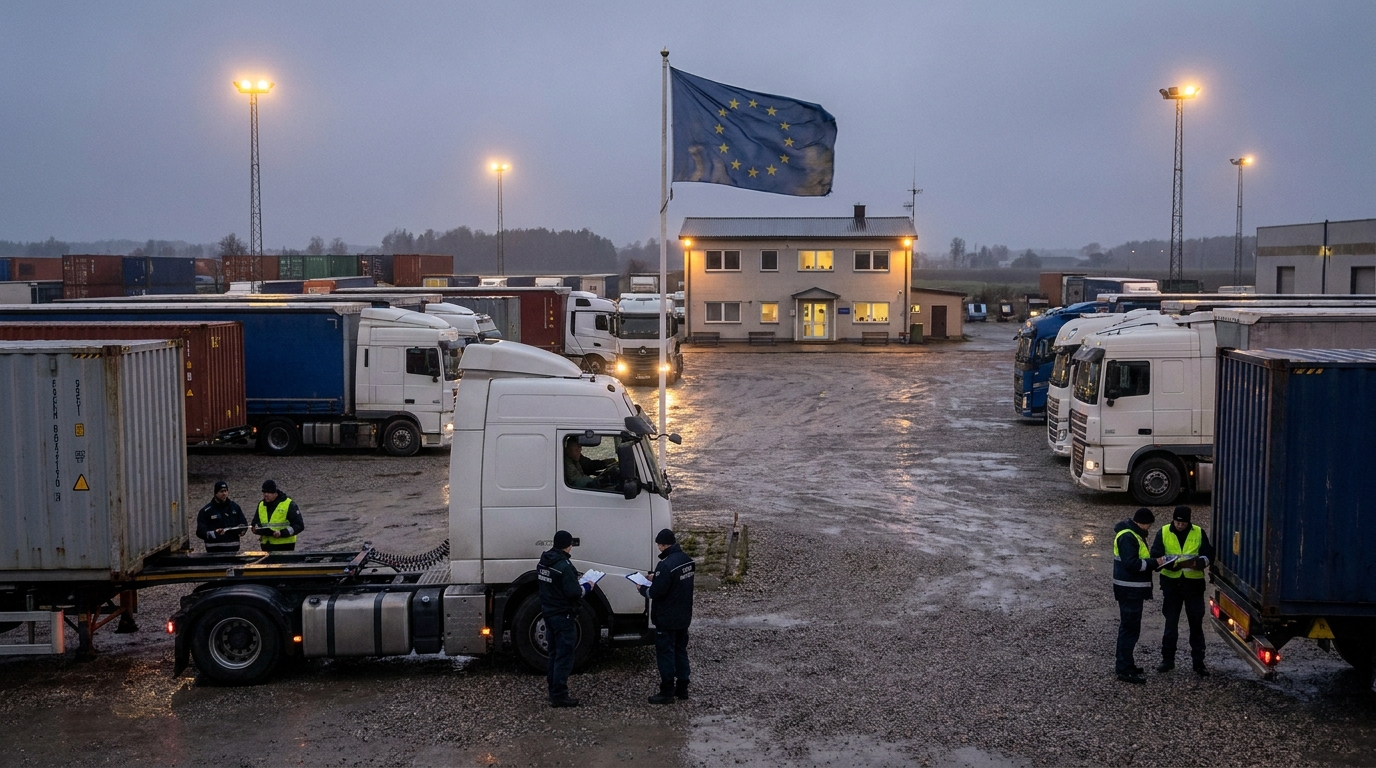
ICS2 for road transport: June 2026 ends the era of the old customs system in the EU
Od 1 czerwca 2026 roku pełne wdrożenie systemu ICS2 dla transportu drogowego obejmuje ostatnią grupę państw UE — Polskę, Chorwację, Łotwę, Rumunię i Słowację. Każdy pojazd przekraczający granicę musi posiadać zaakceptowaną deklarację ENS przed dotarciem do przejścia — bez okresu przejściowego i bez wyjątków. Firmy transportowe bez gotowych procedur celnych stają w obliczu realnego ryzyka zatrzymania pojazdów, zatorów granicznych i poważnych strat finansowych.
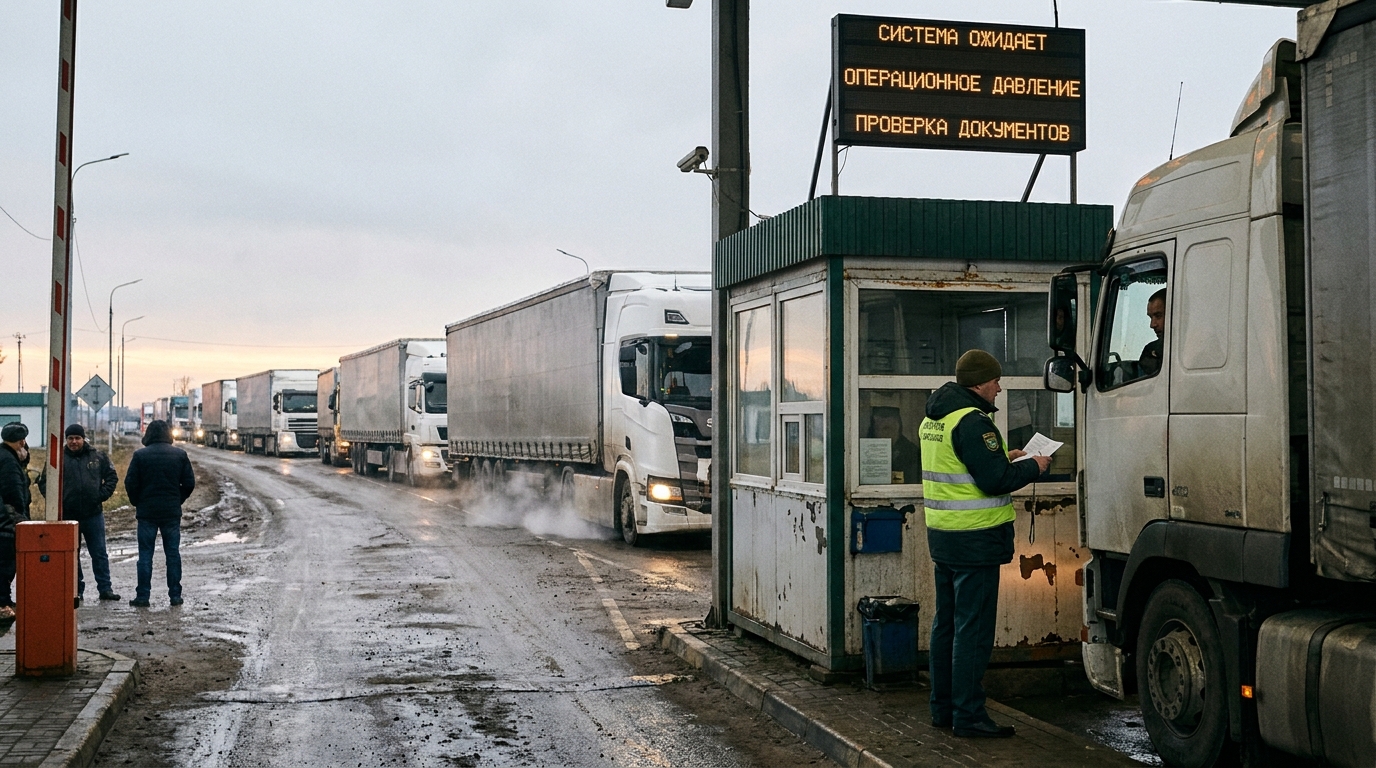
Since June 1, 2026, European road transport has been operating under new, rigorously enforced customs rules. On that day, the last group of European Union member states—Poland, Croatia, Latvia, Romania, and Slovakia—finally deactivated the outdated ICS1 system and switched to Import Control System 2 (ICS2). For the TSL industry, this marks the end of the adaptation period and the beginning of an era of fully digital control of entry into the EU customs territory. Transport companies that have not adapted their procedures now face a real risk of having their vehicles stopped at the border—without warning and without exception.
What is ICS2 and why is it a fundamental change?
Import Control System 2 is an EU electronic system for recording and analyzing Entry Summary Declarations (ENS) before goods actually enter the European Union customs territory. Its primary goal is to strengthen supply chain security by enabling customs authorities to conduct risk assessments before cargo reaches the border. The system replaces its long-standing predecessor, ICS1, which was technologically outdated and no longer meets the requirements of modern trade or security standards.
The implementation of ICS2 is not a simple software update. It is a fundamental shift in the philosophy of risk management at the EU's external borders. Under the current model, certain data imperfections could be corrected after crossing the border or during customs processing. The new approach is clear: an accepted ENS declaration must precede a vehicle's arrival at the border. If it is missing—or if it contains errors that result in rejection—the truck simply cannot enter. There are no leniencies, no transitional period, and no room for improvisation.
Multi-stage implementation – why are there differences between countries?
To understand the significance of the June deadline, it's worth looking at the entire timeline for implementing ICS2 in European road transport. This process was phased in over time and geographically, deliberately to allow for gradual testing of the system in real cross-border traffic.
- Fall 2025: Austria, Germany, and Denmark—countries with highly digitalized customs administrations—were the first to launch ICS2 for road transport. Their experiences served as a valuable source of knowledge on technical and organizational challenges.
- January 1, 2026: Another significant group of countries has joined the system: Ireland, Spain, France, Italy, Lithuania, Hungary, Finland, Greece, and Bulgaria. This group encompasses key economies in Western and Southern Europe, through which vast volumes of cargo flow.
- June 1, 2026: The final phase of implementation covered Poland, Croatia, Latvia, Romania and Slovakia – countries located primarily on the eastern and southern flanks of the EU, constituting key transit hubs for goods from third countries, including Ukraine, Turkey, Central Asia and the Caucasus region.
This final stage is of particular strategic importance. Poland and Romania are among the busiest transit countries in the entire EU. Millions of tons of imported cargo from outside the EU pass through their borders annually. The full implementation of ICS2 at these border crossings means that the entire outer eastern and southeastern periphery of the EU customs territory is now subject to a uniform, rigorous standard of import controls.
Single Notification Mechanism: The Biggest Challenge for Road Hauliers
One of the key and most problematic aspects of the current implementation of ICS2 for road transport is the current model of the so-called single filingIn simple terms, it means that one entity is responsible for submitting a complete and error-free ENS declaration – the carrier or its designated customs agent.
By comparison, air and sea transport have long used a more flexible multiple filing model, in which various entities involved in the supply chain—the freight forwarder, the shipper, and the shipper's customs agent—can independently and directly submit their relevant data to the customs system. This allows for better sharing of responsibility and information, and reduces the risk of error.
In road transport, this functionality is not expected to be available until the second half of 2026. Until then, carriers operate under conditions of information asymmetry and disproportionate burden. They must collect accurate data from all entities in the supply chain—sender, recipient, and any subcontractors—and then, based on this, submit a single, consistent, and error-free declaration. If any partner provides incomplete or incorrect information (e.g., an incorrect tariff code, an overly general description of the goods, or missing weight or value), the carrier bears the consequences.
In practice, this means that transport companies become hostages to the data quality of their customers and contractors. In groupage traffic—where a single vehicle transports goods from multiple shippers—a single data error regarding a single load item can block the clearance of an entire trailer. With tight delivery schedules, contractual penalties for delays, and downtime costs, such a situation can generate losses reaching tens of thousands of euros per incident.
Border infrastructure under pressure: the specter of congestion and queues
Industry organisations including the European Association of Freight Forwarders, Carriers, Customs Agents and Logistics Operators (CLECAT) and the InternationalrodoThe International Road Transport Union (IRU) has been warning for months about threats to border infrastructure that may materialize in connection with the full launch of ICS2.
The key problem is the structural difference between land border crossings and seaports or airports. Ports have extensive storage infrastructure and buffer zones—a container with incomplete documentation can be sidelined and await clarification without blocking the flow of other vessels. At a land border crossing, this is simply not possible. Space is limited, trucks queue up, and any stoppage of one vehicle immediately lengthens the queue for all others.
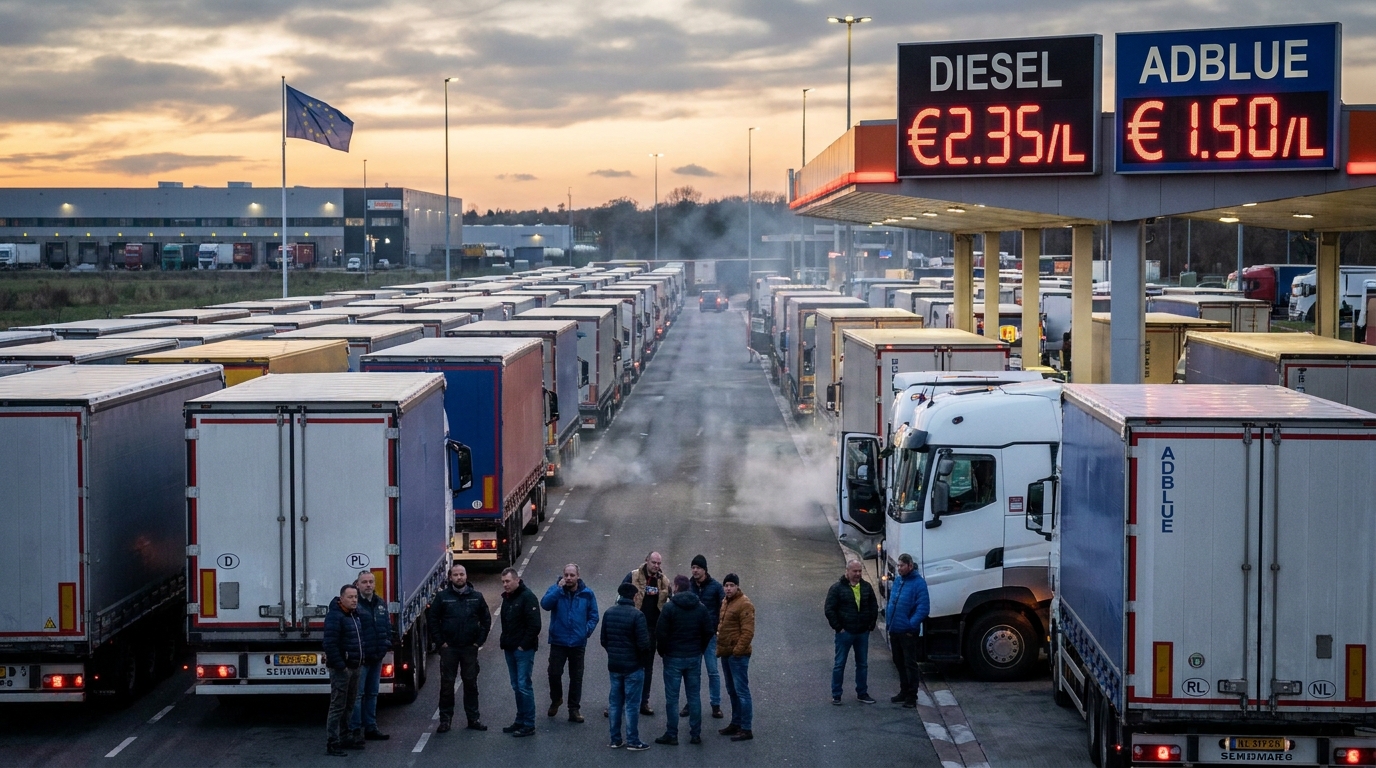
If, in the first weeks after ICS2's full implementation, the number of rejected ENS declarations proves higher than expected—a scenario considered highly probable by experts—some border crossings could experience serious congestion. Truck queues lasting hours or even days are a real possibility, especially at the busiest crossings in Poland and Romania.
The consequences for the transport and logistics industry are multifaceted: rising operating costs related to driver waiting times, a growing risk of missed delivery dates, and, consequently, increased exposure to contractual penalties. For EU recipients of goods, especially those operating just-in-time systems, border delays can disrupt production or sales continuity.
System Complications: ICS2 vs. NCTS6
An additional layer of complexity highlighted by CLECAT is the mismatch between the ICS2 implementation schedule and the parallel implementation process. New Computerized Transit System Version 6 (NCTS6)Both systems are part of a broader EU modernization program.rodocustoms, but their schedules are not fully synchronized.
In practice, this means that in countries where NCTS6 is not yet fully operational, carriers carrying out transit procedures may be forced to manually enter the same data multiple times into different systems. Each repetition creates an additional entry point for human error—and an additional risk of inconsistencies between customs documentation and the physical contents of the cargo.
This situation is well known in the industry. The digitalization of customs procedures in the EU has been carried out for years by various directorates and bodies, resulting in the creation of systems that do not always communicate seamlessly with each other. ICS2 and NCTS6 are two distinct projects, implemented at different paces by different member states. Their parallel, unsynchronized operation generates operational risks, which are entirely placed on the shoulders of carriers and customs agents.
What does a transport company need to do now?
Given the above conditions, every company operating in the road transport sector—whether as a carrier, freight forwarder, or logistics operator—should immediately undertake a number of adaptive measures. Below are key areas requiring urgent attention:
- Customs procedures audit: A detailed review of internal procedures for preparing and submitting ENS declarations should be conducted. Who is responsible for data collection? Who submits the declaration? Is the software used compatible with ICS2?
- Verification of data flow with customers: It is necessary to determine whether customers and trading partners are providing customs data in the format and in advance required by ICS2. Agreements or instructions to customers should be updated to specify requirements for the quality and timing of information submission.
- Staff training: Customs officers, freight forwarders and operational managers should be trained on the new ICS2 requirements, including the obligation to submit an accepted ENS declaration before reaching the border.
- Investments in IT systems: Businesses still using outdated software or manual processes should urgently consider implementing ICS2-compatible customs document management systems.
- Preparing contingency plans: Procedures should be developed to deal with the rejection of an ENS declaration – who makes the decision, who contacts customs authorities, how can vehicle downtime be minimised?
- Monitoring border crossings: In the first weeks after 1 June 2026, it is worth following information about the situation at key border crossings and planning routes flexibly to avoid potential congestion.
Business Risk Perspective: What Can Go Wrong?
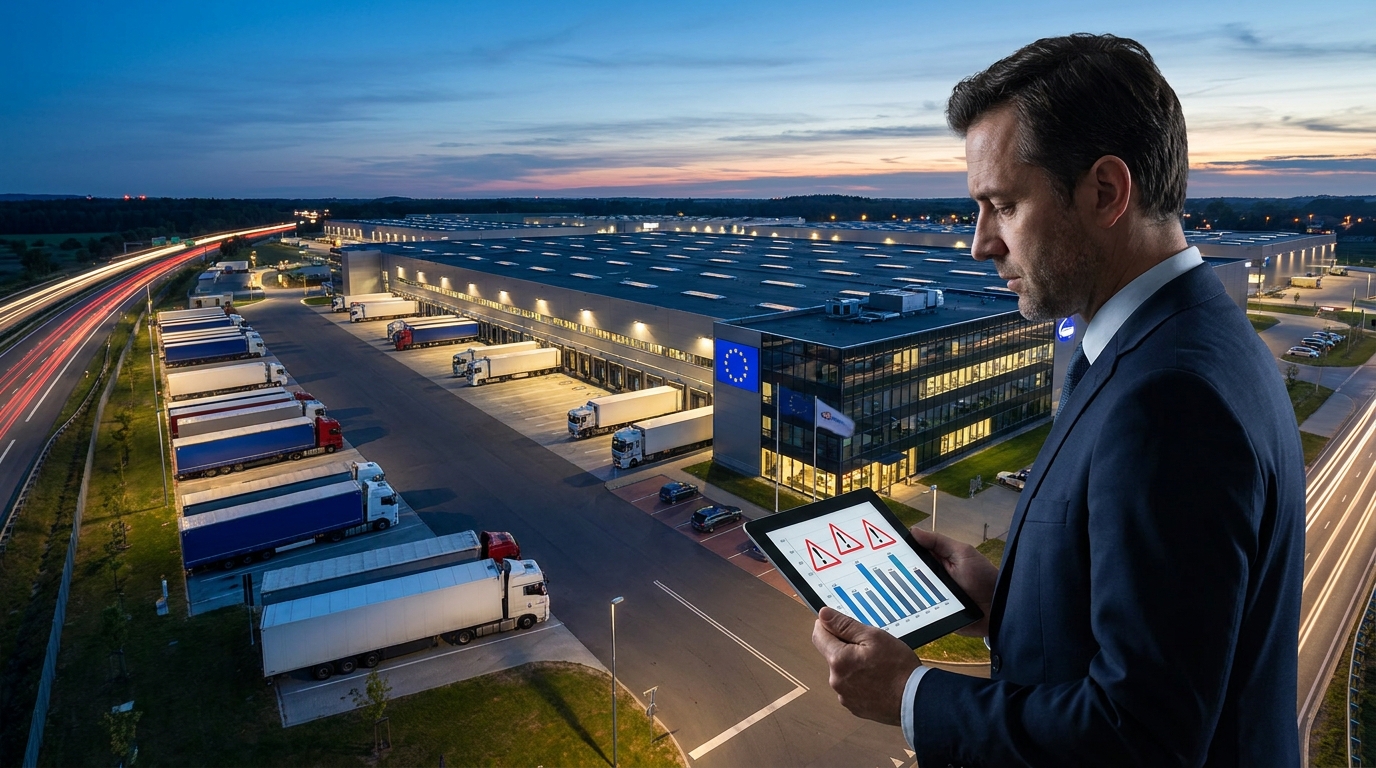
From a business risk assessment perspective, the full launch of ICS2 generates several categories of threats that risk managers in transport and logistics companies should consider in their models:
Operational risk
A vehicle being stopped at the border due to an error in the ENS declaration can have an immediate impact on a company's entire supply chain. With the increasing complexity of supply chains and the interdependencies between entities, a single delay can have a domino effect reaching several levels up and down the value chain.
Financial risk
Vehicle and driver downtime costs, contractual penalties for missed delivery dates, and potential charges for storing goods in border zones—all of these directly impact a carrier's bottom line. Given the tight margins typical of the road transport sector, even a few such incidents per month can significantly impact a company's profitability.
Reputational risk
Companies that fail to comply with ICS2 requirements and regularly generate delays quickly lose customer trust.rodoIn the industry, information about customs clearance problems spreads quickly, which can lead to the loss of contracts to better prepared competitors.
Legal risk and compliance
Incorrectly submitted ENS declarations or attempts to circumvent ICS2 requirements may result in the initiation of proceedings by customs authorities, the imposition of financial sanctions and, in extreme cases, the suspension of the right to conduct customs activities.
Long-Term Perspective: ICS2 as the New Industry Standard
Despite all the adaptation challenges, the implementation of ICS2 should be seen as part of the inevitable digitalization process of the EU customs administration. Ultimately, once the multiple declaration functionality for road transport is launched—planned for the second half of 2026—the system should become more user-friendly for supply chain participants. Sharing data responsibility among multiple entities will reduce pressure on carriers and should improve the overall quality of declarations.
In the long term, ICS2 has the potential to significantly reduce customs clearance times for companies that regularly submit high-quality data. Automated risk assessment systems will be able to more quickly and accurately identify shipments requiring detailed inspection, efficiently allowing those with a low and well-documented risk profile to pass through. This is a bonus for reliable and disciplined operators.
For the TSL industry as a whole, June 2026 is therefore not so much the end as the beginning of a new chapter. A chapter in which data quality, digital competences, and the ability to collaborate efficiently in the supply chain become key competitive advantages—and their absence, an equally crucial existential threat.
Summary: The time for action is over – now it's about preparedness
The full implementation of the ICS2 system for European road transport from June 1, 2026, concludes a multi-year process of modernizing EU customs control. Transport and logistics companies operating on routes through Poland, Croatia, Latvia, Romania, and Slovakia must now operate under a zero-tolerance regime for errors in customs documentation. Failure to submit an accepted ENS declaration means no entry—without exceptions and without a grace period.
The challenges related to the single entry model, limited infrastructure at land border crossings and the unsynchronized implementation of NCTS6 createrodoA landscape of heightened operational risk that requires immediate and systematic responses from industry players. Audits of customs procedures, investments in compatible IT systems, staff training, and close collaboration with customers on data quality are not options, but a necessity.
Companies that view ICS2 as an opportunity to digitally transform their customs processes will emerge from this challenge stronger and more competitive. Those that continue to delay risk rising operating costs, customer loss, and a real threat to business continuity.