Wave of insolvencies in Germany: 25 900 bankruptcies annually through 2027 — the transport, shipping and logistics sector at the heart of the crisis
Allianz Trade forecasts that the number of corporate insolvencies in Germany will reach nearly 25,900 cases per year in 2026 and 2027 — the highest level since 2013. The transport and logistics sector is among the industries most at risk, posing a direct risk to European companies working with German carriers and operators. An improvement is not expected until 2028, requiring risk managers to immediately tighten their counterparty verification procedures.
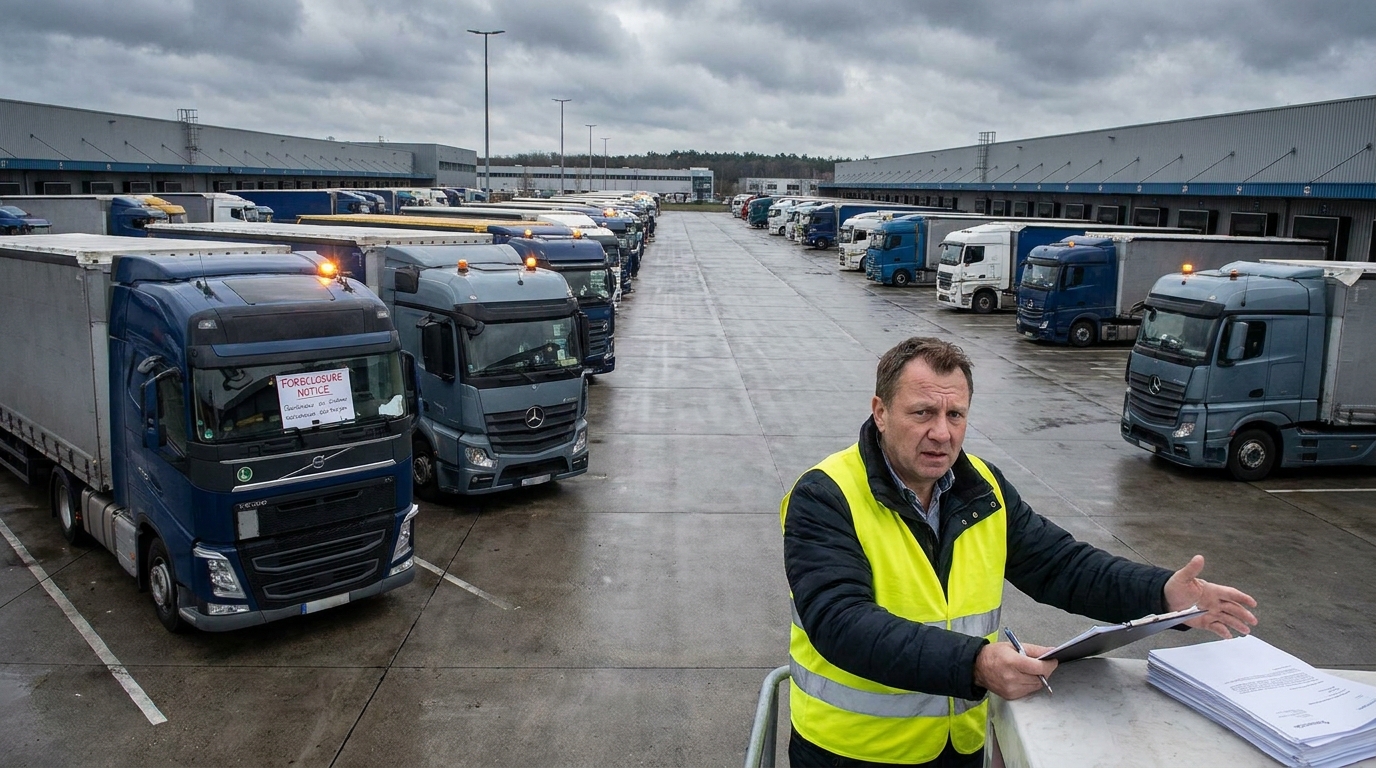
Renowned trade credit insurer Allianz Trade published a report in October 2026 that should capture the attention of every risk manager working with businesses in the German market. The document makes it clear that the wave of insolvencies across Poland’s western border has not yet reached its peak — or at least is not set to subside quickly. The number of corporate insolvencies in Germany will stabilize at nearly 25 900 cases per year in both 2026 and 2027, returning to levels not seen in over a decade. The transport and logistics industry is at the top of the list of sectors most at risk of bankruptcy — and that means a real, direct risk for companies across Europe that work with it.
Germany is losing its status as Europe’s locomotive
For years, the German economy was the foundation of European prosperity. Today, analysts must regrettably revise that picture. Allianz Trade estimates that the number of insolvencies in Germany will rise by 8% in 2026 compared with the previous year, reaching 25 900 cases — the highest level since 2013. Worse still, the forecast for 2027 offers no relief: experts expect the number of bankruptcies to remain unchanged, meaning that this is not a one-off statistical spike but a deeply rooted structural trend.
Milo Bogaerts, managing director of Allianz Trade in Germany, points in his commentary on the report to a combination of several overlapping factors that together create an exceptionally hostile environment for businesses. The armed conflict in Iran — although geographically distant — is causing increased instability in energy commodity markets and disruptions to global supply chains. Germany, as an economy heavily dependent on exports and imports of industrial components, feels these disruptions particularly acutely.
A second, equally important cause is the prolonged economic stagnation (Konjunkturflaute) in Germany itself. Domestic demand has been stagnant for several quarters, business investment is being postponed, and consumers — faced with rising living costs — are cutting spending. As a result, many industries are experiencing falling orders, directly worsening the financial performance of thousands of companies.
Two further chronic problems add to this picture of adverse conditions: a dramatic shortage of skilled labor (Fachkräftemangel) and continuously rising operating costs. Energy prices, although partly stabilized compared with their 2022–2023 peak, remain significantly higher than before the energy crisis. External financing costs, driven up by the ECB’s interest rate policy, weigh on the balance sheets of companies that previously operated in an environment of cheap credit. Together, all these factors create a kind of financial trap for businesses with limited cash reserves.
The TSL sector: a barometer of the crisis
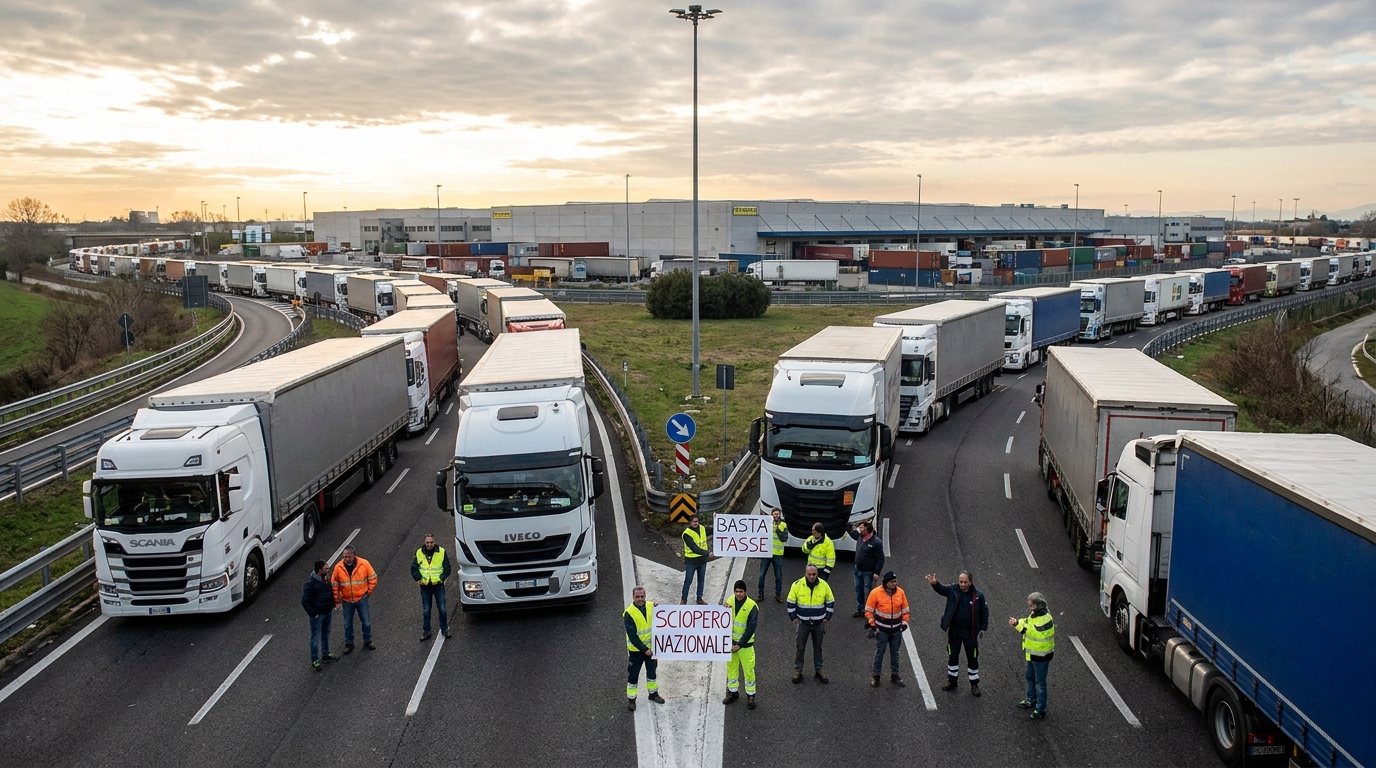
The Allianz Trade report places particular emphasis on the position of the transport, freight forwarding and logistics (TSL) sector among the industries most exposed to the wave of bankruptcies. This should come as no surprise to anyone familiar with the characteristics of this industry. Transport and logistics companies have structurally low operating margins, sometimes hovering around a few percent of revenue. Under such conditions, even a relatively small increase in costs or decline in order volumes can be enough to wipe out profits and threaten liquidity.
In 2026, TSL companies are simultaneously grappling with several exceptionally adverse developments:
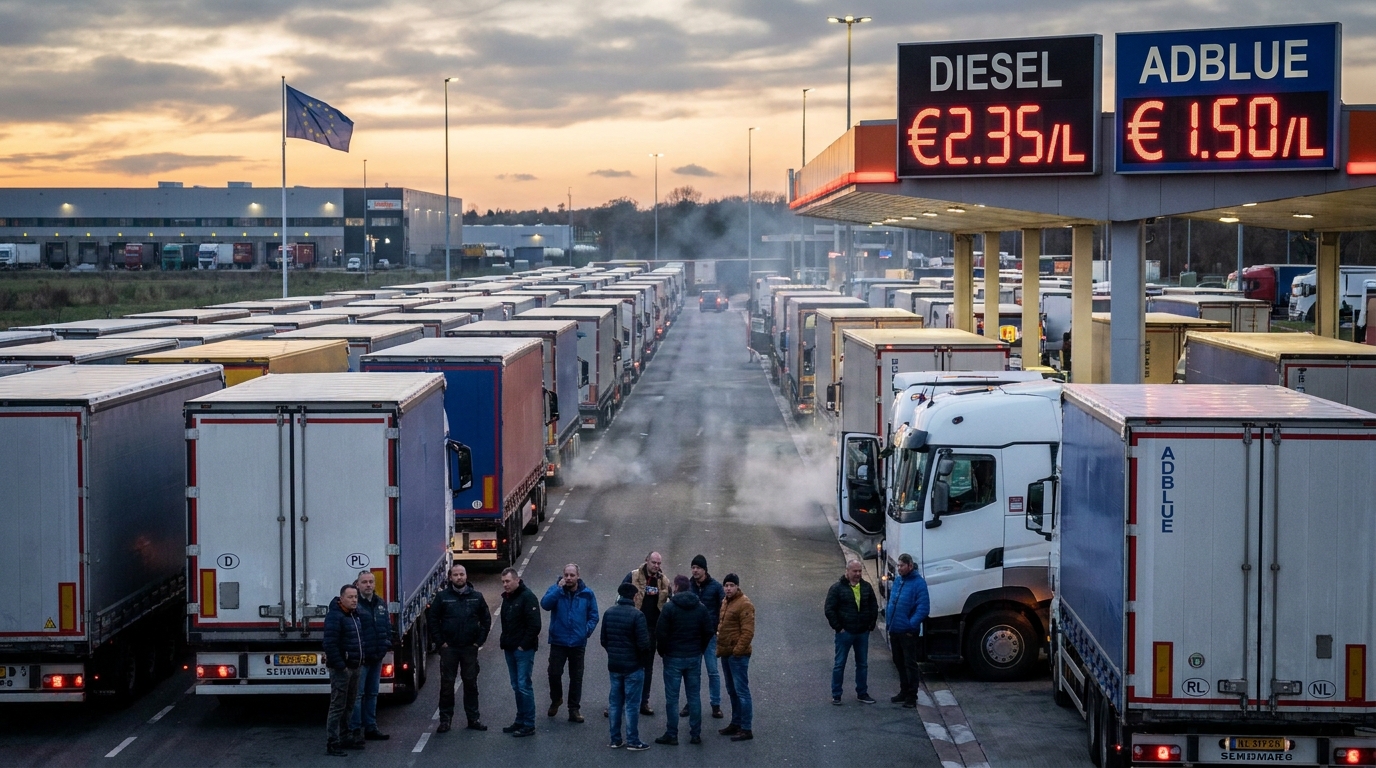
- Rising fuel costs — driven by geopolitical uncertainty and instability in energy markets, fuel remains the largest cost item for road carriers, and every price spike at filling stations directly hits the profitability of transport jobs.
- Wage pressure — a chronic shortage of professional drivers and warehouse workers forces companies to raise wages simply to maintain operational capacity. This is an expense that cannot be postponed without risking the loss of key employees.
- Declining freight volumes — the slowdown in the automotive, chemical and machinery industries — traditional pillars of the German economy — directly translates into fewer transport orders. Logistics companies that built their capacity around forecasts made several years ago are now struggling with excess transport capacity and a shrinking customer base.
- High financing costs — fleets of tractor units and semi-trailers in the TSL industry are largely financed through loans or leases. Rising interest rates have caused debt servicing to consume an ever larger share of already modest revenues.
- Regulatory pressure — the introduction of further environmental requirements (including CO₂ emission charges and EURO 7 emission standards) forces companies to replace vehicles at considerable cost, creating additional investment burdens at an already difficult time.
The combination of these factors means that many German TSL companies that survived the pandemic and the energy crisis are now on the brink of insolvency. Some are trying to save themselves through restructuring — reducing their fleets, laying off employees and shedding unprofitable routes. Where even that is not enough, an insolvency petition follows.
The domino effect: risk for European partners
For European companies working with the German TSL sector — whether as customers commissioning transport, subcontractors or service providers — this situation has direct consequences. The insolvency of a carrier or logistics operator is usually not an isolated event. It generates a wave of problems for dozens, and sometimes hundreds, of businesses that had contracts with it or appeared as creditors on its list of outstanding debts.
For companies with unpaid invoices for services rendered or goods delivered, a counterparty’s insolvency often means court proceedings lasting many months and the recovery of only a fraction of the amount owed — if anything at all. From a receivables risk management perspective, this is a scenario to prevent, rather than one whose consequences should be dealt with after the fact.
EURODEBT.eu experts recommend that companies engaged in cross-border trade in goods with Germany immediately tighten their procedures for verifying counterparties’ solvency. A standard check of the commercial register or a cursory review of the history of cooperation is now the absolute minimum and does not provide sufficient protection. Under current market conditions, the following are essential:
- Systematically monitoring the financial health of key German business partners — at least once a quarter.
- Analyzing early warning indicators: payment delays, changes in credit limits reported by business information agencies, changes in management and ownership structures.
- Considering or expanding trade credit insurance — although it is worth bearing in mind that, in the face of a rising wave of bankruptcies, insurers may tighten conditions and raise premiums for exposure to the German market.
- Shortening payment terms offered to counterparties or introducing advance payments for new and unverified partners.
- Diversifying the base of logistics providers to avoid dependence on a single carrier that could suddenly disappear from the market.
When will the turning point come? Forecasts for 2028 and beyond
Allianz Trade leaves no room for illusions about the short-term outlook: throughout 2027, the number of bankruptcies in Germany will remain close to 25 900 cases per year. Only 2028 is expected to bring the first — albeit modest — signs of improvement. Analysts then forecast a decline in insolvencies of around 5%, to 24 600 cases. The assumption is that by then the federal government’s stimulus measures will begin to produce measurable results and the economy will gradually regain its ability to generate growth.
It must be emphasized, however, that even the projected figure of 24 600 insolvencies per year will remain historically high. This will not be a return to pre-crisis normality, but merely some easing of the scale of the problem. Elevated risk in dealings with Germany will remain with us for at least three to four years.
This is a long time horizon that requires companies not to make a one-off adjustment to procedures, but to bring about a lasting change in their approach to credit risk management. Managers who ignore the signals from the Allianz Trade report today may in a few months find themselves having to write off receivables that could have been protected through more thorough counterparty checks.
A risk perspective: what should logistics managers do?
Summing up the picture painted by Allianz Trade, several key recommendations can be identified for transport and logistics companies and their business partners operating in the European market:
- Treat Germany as a higher-risk market — not just on paper, but in everyday credit and contracting decisions. Due diligence standards applied to businesses from countries perceived as stable should be urgently reviewed.
- Invest in business intelligence — use real-time financial monitoring tools, such as business information agency reports or scoring platforms for TSL companies. Advance information about a counterparty’s problems gives you time to respond.
- Build your organization’s financial resilience — companies with solid liquidity reserves and a diversified customer base are far better prepared to absorb losses caused by partners’ insolvency.
- Talk to your credit insurer — if you do not yet use trade credit insurance, it is time to consider it. If you do — check whether your credit limits for German counterparties are up to date and sufficient in light of the latest market data.
- Strengthen relationships with reliable partners — during a market crisis, there is a natural tendency to consolidate around businesses with proven financial stability. Companies investing in transparency and building trust today will win new contracts at the expense of those that disappear from the market.
The Allianz Trade report is not just another gloomy forecast to put on a shelf. It is a clear signal that the European risk management market is entering a phase of heightened vigilance — and that companies that disregard this need for vigilance may pay a high price. The years 2026 and 2027 will be a real test of the maturity of risk management systems across the European transport and logistics ecosystem.