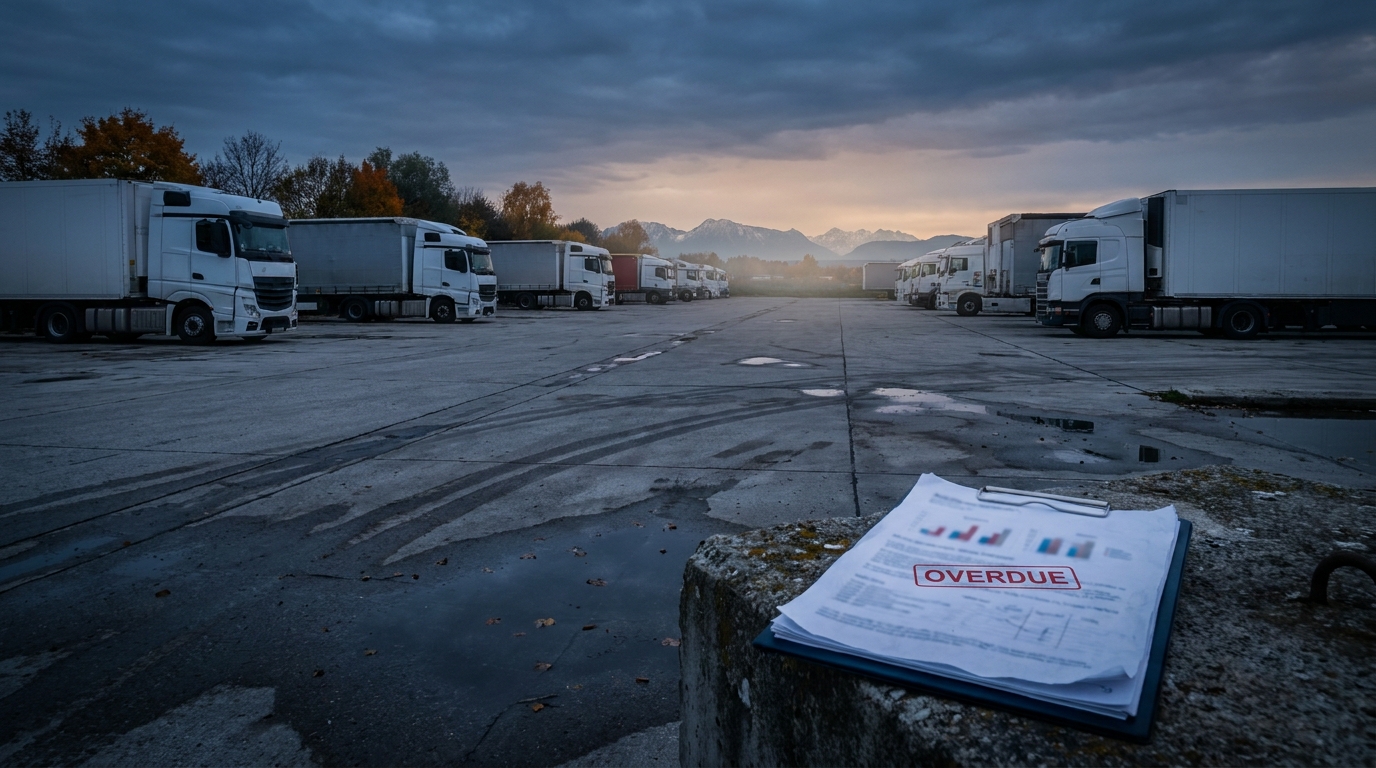
Rhine Crisis 2026: Record low water levels paralyze European logistics. Transport companies raise alarm.
The water level in the Rhine fell to 53 centimetres at the key measuring point in Kaub at the beginning of July 2026 — a level unprecedented for that time of year. The inland fleet can transport only one third of its standard cargo, forcing companies to make a costly switch to road and rail transport. Industry experts warn that the crisis is not a temporary weather-related episode, but a sign of lasting changes in the operating conditions of European logistics.
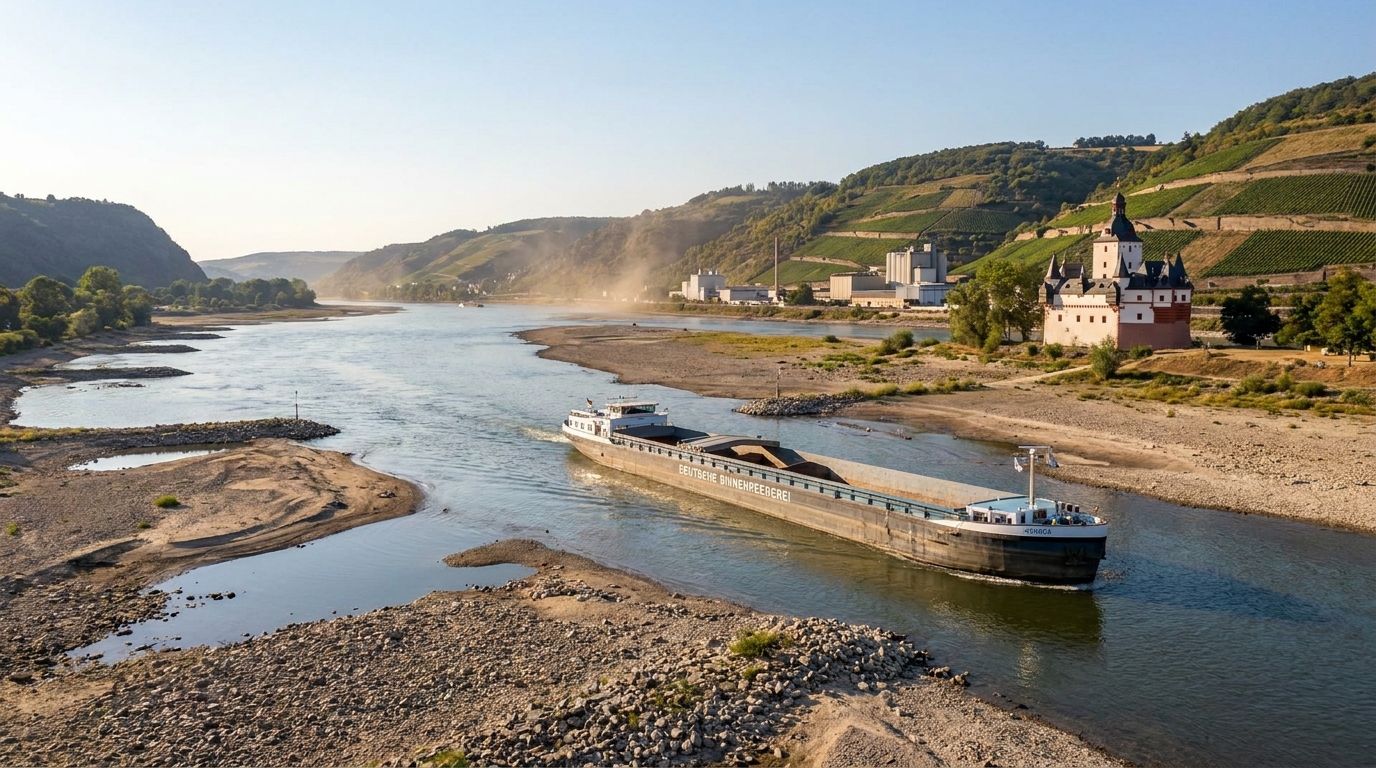
In early July 2026, Europe's inland waterway transport sector faced a crisis on a scale not seen in decades. The water level in the Rhine, Germany's most important inland trade artery, reached extremely low levels—a mere 53 centimeters at the strategic measuring point in Kaub, near Koblenz. What's unique and particularly worrying is that such a dramatic situation isn't unfolding in mid-summer or late autumn, but at the very beginning, heralding months of operational disruption for the entire supply chain in Central Europe.
An unprecedented low flow at a special time of year
German inland navigation experts are not hiding their concern. Roberto Spranzi, a board member of the German Inland Transport Cooperative (DTG), which manages a fleet of around 90 vessels, stated bluntly: "In 45 years of professional experience, he has never encountered such low water levels at this time of year." This is no exaggeration—the historical record for absolute minimum water levels in the Kaub River is just 25 centimeters, recorded in October 2018, when the entire European industry was suffering from weeks of drought. Today, in July, the water level is more than double that record, but its arrival at the start of the summer season means the worst may still be ahead.
The Federal Waterways and Shipping Administration in its hydrographic forecasts indicated that the water level in the Kaub could drop significantly below 50 centimeters in the coming days. With such a shallow waterway, river vessels must drastically limit their loading – the DTG reports that its vessels can only transport about one third of the standard load capacityThis means that for every route that, just a few weeks ago, ensured full fleet capacity, carriers are now sending three ships or abandoning the route in favor of more expensive alternatives.
The Logistics Domino Effect: From Rivers to Roads and Rails
The drastic reduction in river fleet capacity triggers a costly shift of goods to road and rail transport. For logistics and risk managers in European companies, this means immediate renegotiation of transport contracts, searching for available transport resources in the market, and—inevitably—accepting significantly higher freight rates.
Road transport, while flexible, is structurally more expensive than inland waterway transport, especially for bulk raw material transport. When a large portion of cargo previously transported by the Rhine suddenly finds its way onto highways, the road transport market reacts with price increases—a mechanism well known to anyone who followed the consequences of the low water levels in 2018. At that time, road freight costs in Germany rose by more than ten percent in a matter of weeks, and waiting times for available rolling stock extended to several days.
Rail, while seemingly an attractive alternative, has its capacity limitations, especially on routes parallel to the Rhine, connecting seaports with industrial areas. Rail infrastructure managers cannot increase the number of freight routes overnight, and freight forwarders must reserve capacity several weeks in advance. In practice, the logistical knock-on effect means that industry faces not only more expensive but also slower transport.
Which industries are most at risk?
The Rhine serves as the lifeblood of several key industries. Analyzing the structure of inland waterway transport in Germany, we can identify sectors with particularly high exposure to the risk of low water levels:
- Chemical and petrochemical industry — Chemical plants located along the Rhine (including in Ludwigshafen, Leverkusen, and Cologne) are dependent on waterborne supplies of raw materials. Delays or increased transportation costs directly impact production costs and the timely fulfillment of orders.
- Energy and heating — Coal and fuel oil transported along the Rhine supply power plants and heating plants. Supply disruptions may result in the need to increase strategic reserves or in disruptions.
- Steel and mining industry — Metal ores, scrap, and finished steel products are ideal bulk cargoes for waterborne transport. Plants located in the Ruhr area and along the Rhine are particularly sensitive to disruptions in this mode.
- architecture — Aggregates, sand, gravel, and construction materials are transported in huge quantities by water. The construction season is in full swing, and river transport restrictions may delay the implementation of large infrastructure investments.
- Agri-food industry — grain, fertilizers and agrochemical raw materials also use water transport, especially on the sections connecting agricultural basins with transshipment ports.
Companies in these sectors should urgently audit their exposure to water transport risks and update their Business Continuity Planning (BCP).
Macroeconomic dimensions of the crisis: inflation and competitiveness
The Rhine crisis is not an isolated logistics event; it fits into the broader context of growing cost pressures in the European economy. Global freight rates remain elevated, partly due to geopolitical tensions in the Middle East, which have kept oil prices above $85 per barrel. For road hauliers expected to take over river cargoes, this means both higher fuel costs and rising wage expectations for drivers amid tight labor markets.
It is worth looking at historical data: already in 2025, only 171,6 million tons of goods — the worst result since German reunification in 1990. The main reason at the time was a decline in exports and reduced industrial production, but the current slump may push this indicator even lower, this time hitting not demand but directly the logistics infrastructure. The cumulative effect of weak export demand and supply constraints in transport creates an exceptionally unfavorable combination for export-oriented companies.
From a broader macroeconomic perspective, rising transportation costs translate into higher prices for industrial products and raw materials in the domestic market. Companies that have previously benefited from competitive production costs thanks to affordable inland waterway transport may be forced to revise their price lists or accept lower margins. Both scenarios negatively impact their ability to service liabilities and their creditworthiness.
Institutional response: is the system prepared for climate normality?
The scale of the problem forced a response at the government level. The Federal Ministry ofrodoThe situation was monitored by the Ministry of Environment, and the first poviats and communes along the river implemented water withdrawal restrictions, protecting dwindling resources.rodoCarsten Schneider announced the launch of the first nationwide low water level information system, under the working name NIWIS.
This system is intended to provide decision-makers in public administration, businesses, and local governments with up-to-date water level data at key measurement points, as well as hydrographic forecasts that enable advance planning of alternative routes and transportation modes. Its implementation is a step in the right direction, although the transportation industry emphasizes that monitoring alone does not solve the underlying problem: the increasing frequency of extreme hydrometeorological phenomena resulting from climate change.
The summer vacation season may prove to be a factor easing tensions in the coming weeks. Holiday shutdowns at some industrial plants mean lower demand for river freight, allowing the inland fleet to meet its priorities without such drastic pressure. However, this is only a temporary solution—the industry will return to full production capacity after the summer vacation, and the hydrological situation may not have improved significantly by then.
Long-term perspective: adaptation or risk acceptance?
Experts are increasingly pointing out that low water levels on the Rhine are no longer an anomaly, but a new climatic normal. Changing precipitation patterns in Central Europe, earlier melting of Alpine snow, and longer dry periods in summer are systematically lengthening and intensifying the low water season. Even if this year's situation doesn't break the historic record of 2018, its appearance in July indicates that the operating window for full-scale inland navigation is shrinking year by year.
For European industry, this means a structural adaptation of supply chains is necessary. Companies that have previously relied solely or predominantly on waterborne transport for their logistics should consider:
- Modal diversification — building permanent, and not just emergency, contracts with rail and road carriers capable of taking over cargo in a crisis situation.
- Increasing raw material reserves — creating strategic storage buffers in the event of supply disruptions, especially for raw materials critical to production continuity.
- Force majeure clauses in contracts — renegotiation of long-term contracts taking into account hydrological risk as a factor that may affect delivery times and costs.
- Investments in ships adapted to low water levels — modern vessels with a special hull design, capable of maintaining a higher level of payload at a shallower draft, are becoming an increasingly attractive investment.
- Transferring production capacity — in the long term, some plants that use water transport intensively may consider relocating closer to alternative logistics hubs.
Business Risk Assessment: What Do Risk Managers Need to Know?
From the perspective of contractor verification and cooperation risk assessment, the Rhine crisis generates a number of warning signals that are worth considering in due diligence processes and monitoring the contractor portfolio:
Inland navigation sector: Companies in this sector will report a dramatic decline in revenue in the third quarter of 2026. Lower freight rates (paradoxically, despite low cargo supply, some carriers may not be able to fully enforce rate increases for long-term customers) combined with rising operating costs will exert significant pressure on the financial liquidity of smaller shipowners and river freight forwarders. Companies with limited capital buffers and high debt are particularly vulnerable.
Heavy and chemical industry: Companies heavily dependent on waterborne raw material supplies may experience production disruptions or increased operating costs that are not fully passed on to customers. Combined with the generally challenging macroeconomic environment, this may result in a deterioration in liquidity and profitability, and in extreme cases, difficulties servicing liabilities.
Suppliers and partners: Companies supplying large industrial plants located along the Rhine should be aware of possible payment delays if their customers experience production downtime. Monitoring of timely payments among this group of contractors should be tightened.
Construction sector: The increase in the costs of construction materials previously transported by water may lead to exceeding investment budgets and delays in project implementation, which in turn may generate contractual disputes and claims between contractors and clients.
Short-term market forecasts
Inland freight market analysts predict that if current hydrological conditions persist for the next 4-6 weeks, rates on alternative modes of transport could increase by 15-25% compared to pre-crisis levels. The trucking market is already under pressure from rising fuel costs and a driver shortage, so any additional demand from inland logistics will have an immediate impact on prices.
Rainfall in the Alps, which feed the Upper Rhine, may provide some relief. However, weather forecasts for this zone are uncertain, and hydrologists warn that even heavy rainfall won't quickly restore water levels downstream. A realistic scenario assumes that the industry will operate with significantly reduced river transport capacity for most of the summer of 2026.
At the same time, analysts point out a paradox: the summer holiday season, which reduces demand for industrial freight, may provide a window of time for companies to reorganize their supply chains and conclude contracts with alternative carriers before the return of full production activity in September.
Summary: Systemic risk, not episodic risk
The extremely low water levels on the Rhine in July 2026 are a serious warning sign for the entire European industrial and logistics sector. The combination of an unprecedentedly early onset of low water levels, a reduction in river fleet capacity to just one-third of normal, and rising global freight costs are creating exceptionally challenging operating conditions for companies dependent on the Rhine as a transportation artery.
Of particular importance from a risk management perspective, the situation described is not a one-off weather event, but rather part of a long-term climate trend. The increasing frequency and intensity of low flows on European inland rivers is forcing companies to permanently reassess their logistics strategies—from the structure of transport contracts, through the level of buffer stocks, to the location of production capacity.
Risk managers and credit analysts should take a closer look at companies in the chemical, energy, and steel sectors, which have historically based their cost models on cheap and reliable waterborne transportation. In the new climate and market conditions, these assumptions urgently need to be challenged—before reality dictates otherwise.