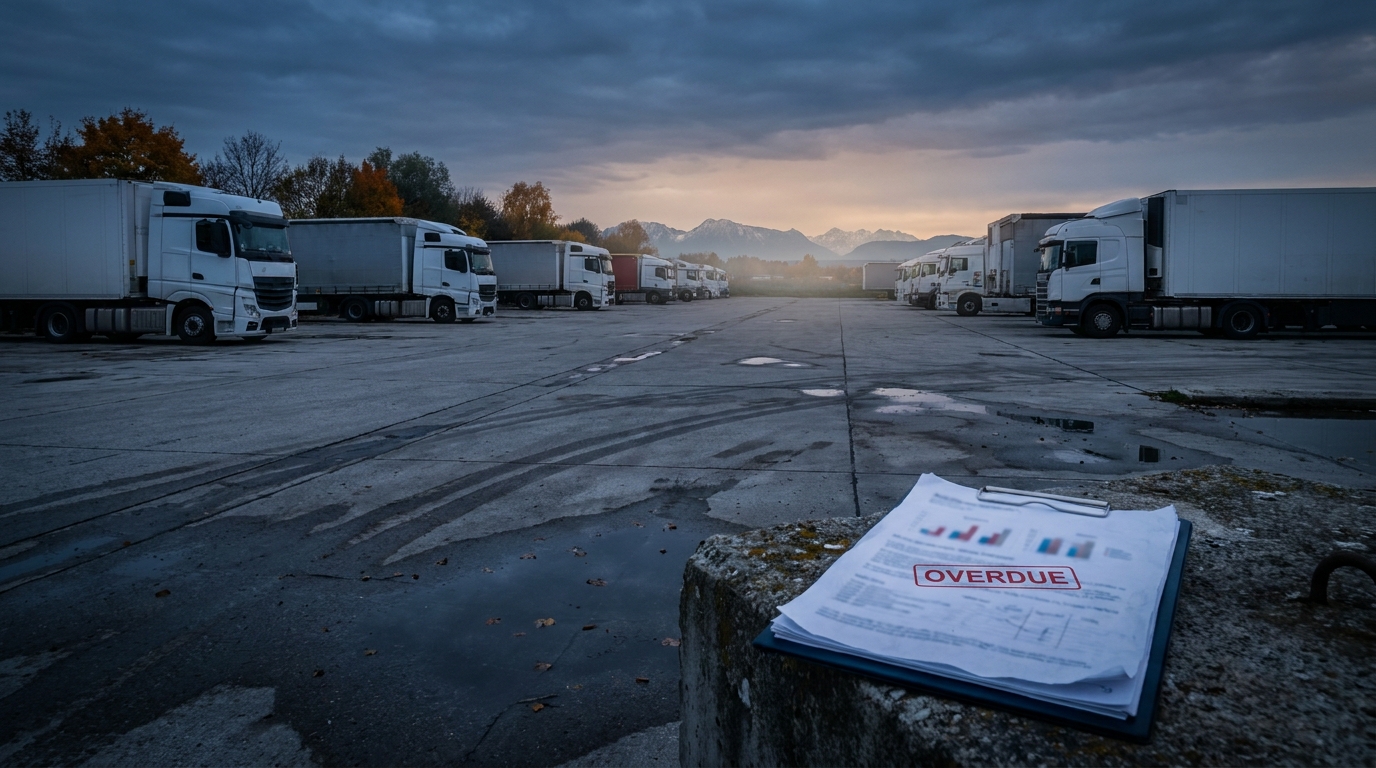
Germany on the brink: 25,900 company insolvencies in 2026 — the transport and logistics sector under fire
Germany is facing a record wave of bankruptcies — nearly 25,900 companies will go bankrupt in 2026, the highest figure in 13 years. The transport and logistics sector is going bankrupt faster than the rest of the economy, and Eurostat data indicate an 11.4% quarterly increase in transport and logistics bankruptcies across the EU. The domino effect following the collapse of major companies and the drastic rise in energy costs pose a real threat to all companies working with partners from Germany, France and Romania. The situation is not expected to improve before 2028.
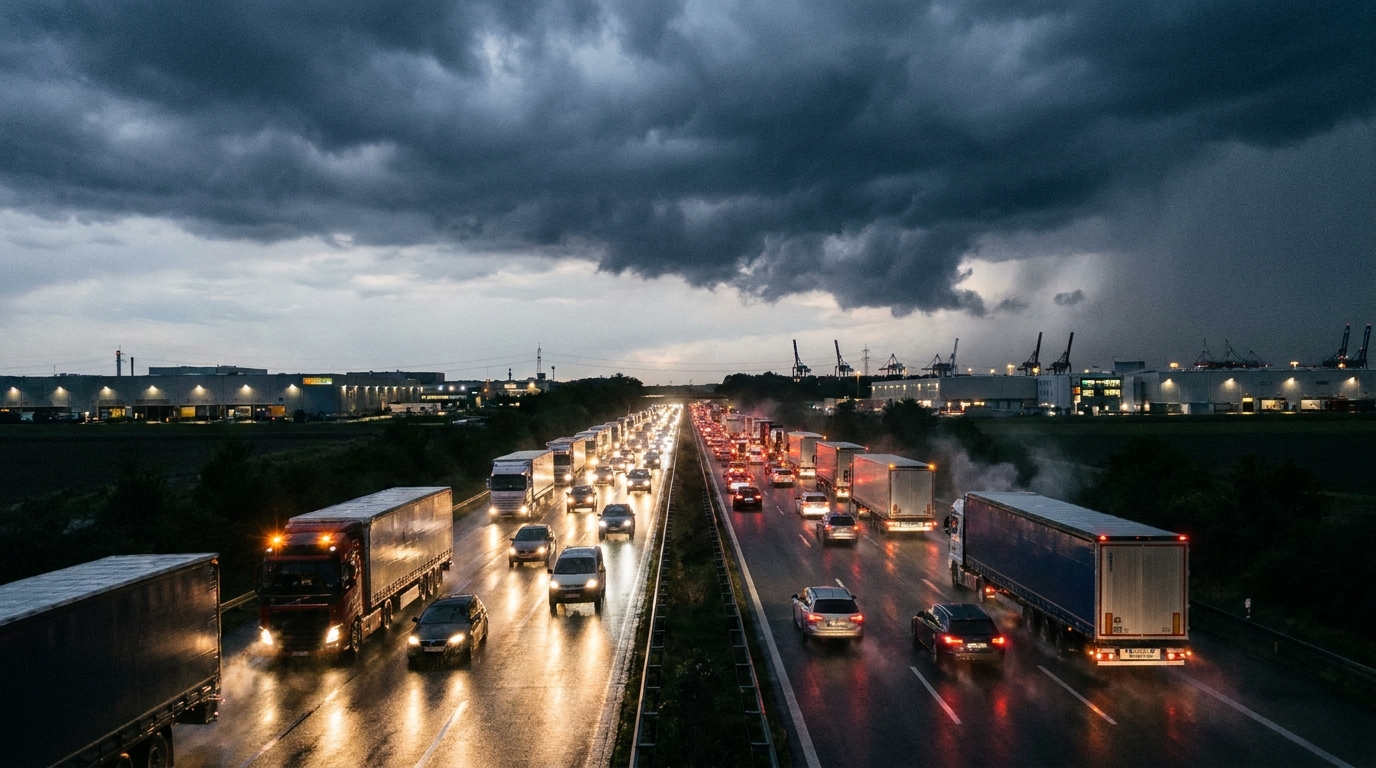
Germany is facing its most severe wave of bankruptcies in more than a decade. According to the „Global Insolvencies Outlook 2028" report published by Allianz Trade — one of the world's largest trade credit insurers — the number of corporate insolvencies in Europe's largest economy will exceed 25 900 cases this year. This is a record not seen in 13 years and a warning signal for all companies working with partners in Germany — particularly carriers, freight forwarders and logistics operators across the continent.
Record wave of bankruptcies — figures that speak for themselves
Allianz Trade forecasts an 8 percent year-on-year increase in insolvencies in Germany, a figure dramatically higher than the spring estimates of just 2 percent growth. The scale of the phenomenon becomes even more significant when viewed over a longer period. In 2021, only around 14 000 bankruptcies were registered — the result of the market being artificially supported by government aid programmes during the pandemic. Since then, the trend has been relentless:
- 2023: 17 814 insolvencies
- 2024: 21 812 insolvencies
- 2025: 24 064 insolvencies (forecast)
- 2026: 25 900 insolvencies (forecast — a 13-year record)
This represents an increase of nearly 85 percent compared with 2021 and a figure approximately 30 percent higher than the pre-pandemic average (2016–2019). Particularly worrying is that Allianz Trade experts do not expect a clear improvement in 2027 — the number of bankruptcies is expected to remain at the same record high level.
Milo Bogaerts, CEO of Allianz Trade in the DACH region, points to several overlapping factors that together create a destructive combination of circumstances: weak economic conditions, growing geopolitical uncertainty, drastically high energy costs and a chronic shortage of skilled labour. None of these problems is temporary — all are structural, meaning that solving them will take years, not months.
Transport and logistics — an industry among those at highest risk
Among all sectors of the economy, the transport, freight forwarding and logistics (TSL) industry is one of those feeling the crisis particularly acutely. According to Allianz Trade's sector analyses, in the first half of 2026 the number of insolvencies in Germany's transport and warehousing sector rose by 8 percent year on year — while the figure for the economy as a whole was 5 percent. This means that transport companies are going bankrupt faster than the average company in the market.
Eurostat data also confirm this. In the second quarter of 2026, the number of bankruptcy filings in the transport sector across the European Union rose by 11,4 percent quarter on quarter. This is one of the highest quarterly rates among all industries monitored by the EU statistical office.
Alongside transport and logistics, the sectors at highest risk include:
- construction
- automotive
- machinery
- food service and hospitality
The common denominator of these sectors is high energy intensity, dependence on supply chains and vulnerability to fluctuations in demand. In transport there is another factor: the industry operates on margins that barely exceed a few percent in the best years, meaning that any additional cost shock can cause even a financially sound company to lose liquidity.
Energy costs — a direct blow to carriers' margins
One of the main causes of the rapid rise in bankruptcies is energy costs, which in 2026 reached a level approximately 60 percent higher than at the beginning of the year — according to Allianz Research models. For the road transport industry, where fuel accounts for 25 to 35 percent of total operating costs, such a drastic jump has a direct and immediate impact on financial results.
Analysts estimate that rising energy costs could put pressure on net margins by as much as 10 percentage points. In a market where net margins in road transport rarely exceed 3–5 percent, this effectively means operating losses across a significant portion of the fleet.
Financing costs add to the burden. Interest rate increases in recent years have resulted in higher lease payments for vehicles and trailers and higher costs of working capital loans. Small and medium-sized transport companies that invested aggressively in renewing their fleets in recent years now face a double burden: rising operating costs and growing financial liabilities. The liquidity buffer that served as a safety cushion just two years ago has in many cases disappeared entirely.
The domino effect — when the big fall, the small pay
A particularly dangerous phenomenon highlighted by industry experts is the growing problem of insolvencies among large entities with turnover above 50 million euros. In previous crisis waves, it was mainly micro and small companies that went bankrupt, which was painful but did not destabilise entire supply chains. Today the situation is different.
This is illustrated by the high-profile insolvency of the Belgian logistics company Ziegler — an entity with a long history and a significant market position. Its insolvency left the unpaid receivables of dozens of smaller subcontractors tied up: carriers, freight forwarding companies and warehouses. Many of them are Polish, Romanian or Bulgarian companies that provided transport services for Ziegler as subcontractors and suddenly faced the reality that they would not be paid for the work performed.
It is precisely this mechanism — the so-called domino effect — that makes the insolvency of a major player far more destructive than a series of small company bankruptcies. One entity drags down an entire network of partners, some of which may themselves find themselves on the brink of insolvency.
Uneven crisis — the risk map across Europe
The picture of Europe's TSL market is a mosaic and varies greatly by geography. Companies operating across borders must be aware that the risk of doing business varies significantly depending on the country where a partner is based.
Countries at highest risk in 2026:
- Germany — 25 900 insolvencies forecast, up 8% y/y; transport companies are going bankrupt faster than the rest of the economy
- France — more than 71 000 insolvencies in total; one of the highest levels in the country's history
- Romania — the Sierra Quadrant agency recorded a 73 percent year-on-year jump in road transport insolvencies in September 2026; an exceptionally worrying figure given the enormous role of Romanian carriers in the European cargo market
- Belgium — the overall number of bankruptcies is stable, but the TSL sector is in turmoil: 297 carriers went bankrupt in 9 months, mostly micro-enterprises
Countries with relatively more stable or improving conditions:
- Poland — the number of insolvencies fell by 5% in 2026; the country remains one of the safer markets for TSL business partnerships
- Spain — a decrease of 2%; a moderate improvement compared with the record year of 2024
- Hungary — an impressive 21% drop in bankruptcies; the result of the government's active economic policy
This divergence between European markets has practical consequences for risk managers. A Polish logistics company working with a partner from Germany, France or Romania is now exposed to considerably higher payment risk than it was just two years ago. Conversely, a Western company looking for carriers in Poland or Spain can expect relatively more stable partners.
Structural causes of the crisis — why this time is different
Previous waves of insolvencies in Europe were often cyclical or resulted from one-off shocks — the financial crisis of 2008–2009 or pandemic lockdowns. The current wave differs in several key respects.
First, we are seeing an erosion of business models. Rising energy, labour and financing costs are not a temporary shock — they are a new operating reality to which many companies have not had time or have been unable to adapt. In road transport, the model based on low margins and high volumes, which dominated over the past decade, is ceasing to be profitable.
Second, there has been a depletion of reserves. Some companies that survived the pandemic thanks to aid packages entered 2022–2024 with weakened balance sheets and reduced cash reserves. When the next cycle of rising costs arrived, they no longer had a safety buffer.
Third, the structural shortage of drivers and logistics workers is leading to growing wage pressure, placing an additional burden on operating costs. Germany is currently estimated to be short of 60 to 80 thousand truck drivers. Companies that want to maintain operational capacity must pay significantly more — at the expense of margins.
Finally, geopolitical uncertainty — armed conflicts on Europe's doorstep, trade tensions and changing customs regulations — makes planning and pricing logistics services more difficult. Customers are negotiating increasingly long contracts with fixed prices, while carriers' costs fluctuate from week to week.
When can we expect an improvement?
Allianz Trade experts are not optimistic in the short term. 2027 is expected to bring stabilisation at record high levels of bankruptcies — without a clear improvement. The first tentative signs of a global improvement are not forecast until 2028, meaning at least two years of operating under heightened risk.
For the European TSL sector, this means a need to implement long-term, rigorous financial risk management strategies. Companies counting on a rapid rebound and a return to pre-2022 conditions may be disappointed.
Practical implications for risk managers in the TSL industry
In light of the above data, every transport or logistics company working with partners in Germany, France, Romania or Belgium should consider implementing or tightening the following procedures:
- Regular verification of business partners' financial health — at least once a quarter, taking into account data from court registers, insolvency databases and business intelligence reports
- Monitoring warning signs — payment delays, management changes, frequent changes of banking provider, declining operational activity, as well as informal information emerging within the industry
- Trade credit insurance — amid growing risk of uncollectible receivables, credit insurance policies are becoming less an option than a necessity for companies with significant exposure to foreign partners
- Diversification of the customer and supplier portfolio — dependence on one large business partner is particularly dangerous in a crisis; the Ziegler effect showed how one collapse can destabilise dozens of companies
- Shortening payment terms or implementing factoring — in a heightened-risk environment, accepting 60- or 90-day payment terms without any security is a high-risk practice; factoring or forfaiting can transfer the risk to a specialised financial entity
- Geographical exposure analysis — differences between EU countries are now so great that it is worth auditing the partner portfolio by country of establishment and its assigned level of systemic risk
Conclusion: not a time for routine, a time for vigilance
Data collected by Allianz Trade, Eurostat and national business intelligence agencies paint a consistent and worrying picture: Europe's transport and logistics sector is entering one of its most difficult periods since the global financial crisis. Germany — the engine of the European economy — will generate a record number of bankruptcies for at least two more years. France, Romania and Belgium are joining the ranks of high-risk markets. The domino effect threatens to draw into a spiral of insolvency entities that would otherwise be able to survive — were it not for unpaid receivables from bankrupt partners.
The Polish TSL industry, although itself recording a decline in bankruptcies, is not isolated from these developments. Polish carriers and freight forwarders are deeply integrated into the European market — as subcontractors of Western logistics companies, as creditors of foreign customers and as competitors fighting for orders against companies from crisis-hit countries. Understanding market dynamics and implementing effective partner verification procedures is no longer a luxury, but a prerequisite for operational security.
To paraphrase a well-known industry saying: in transport, it is always about getting the goods there on time. Today it is equally important that the transport is paid for.