
500 insolvencies in British transport: an alarm for European carriers and their business partners
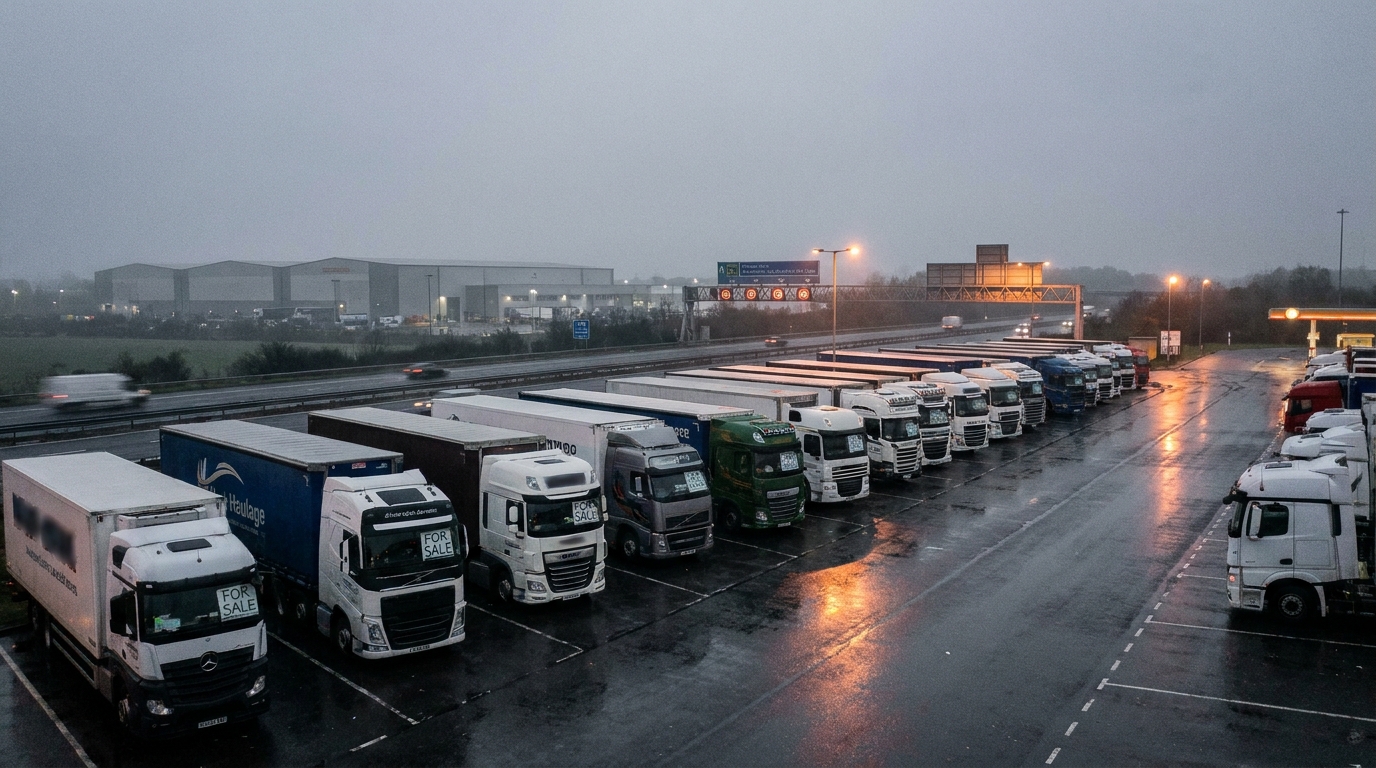
The British transport and logistics sector is going through one of the most difficult periods in its post-war history. According to data collected in the Administrator.uk register and analysed by the Trans.INFO editorial team, the number of transport, forwarding and logistics companies liquidated in the United Kingdom exceeded the symbolic threshold of 500 in 2026. November alone brought another 33 liquidation applications, and the companies closing down included AAA Transport of Horsham, BK Haulage and Classy Couriers. The scale of the phenomenon not only paints a bleak picture of the state of the market across the English Channel, but also constitutes a direct warning to every European logistics operator, subcontractor or service provider doing business with British partners.
A wave of liquidations — the numbers and their real meaning
The figure of 500 closed companies is striking, but it does not in itself convey the full depth of the problem. The Administrator.uk register covers a very broad range of entities — from road hauliers and courier companies, through rail and maritime operators, to warehouses, freight forwarders and distributors. This means that each of those 500 entries represents different circumstances: different fleet sizes, different numbers of employees, different volumes of freight handled and different numbers of business partners who may feel the effects of the entity's collapse.
The industry data does not specify exactly how many heavy goods vehicles have actually disappeared from European roads as a result of these proceedings, or by how much total transport and storage capacity in the UK has contracted. It is known, however, that the loss of even one medium-sized haulier can trigger a domino effect among dozens of smaller subcontractors that relied on it. In the transport industry, which depends on networks of contracts, timely payments and strict schedules, any disrupted link in the chain can quickly turn into a systemic problem.
Data from the Insolvency Service — the British equivalent of the Polish Ministry of Justice in matters of insolvency proceedings — shows that a total of 1757 insolvencies were recorded across all sectors of the economy in England and Wales in October 2026. That is 6% lower than in the previous month and as much as 15% lower year on year. At first glance, this sounds encouraging. The problem is that the transport sector is clearly diverging from this trend, maintaining an elevated level of liquidation proceedings while other industries are improving.
The three faces of liquidation — what to really look for in the register
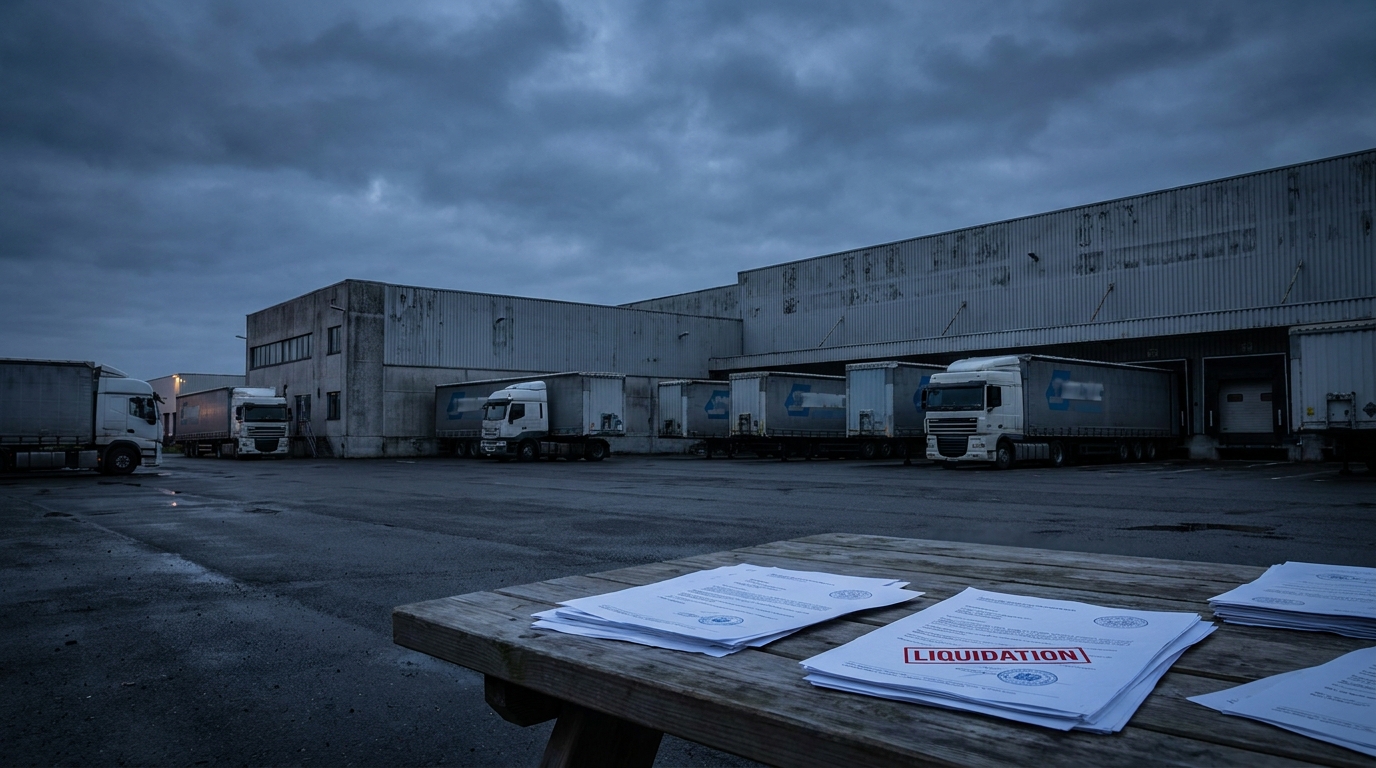
Before a European risk manager draws hasty conclusions from the appearance of a British business partner in the proceedings register, they must understand one fundamental point: in the United Kingdom, the word “liquidation" is not synonymous with bankruptcy in the everyday sense of the word. English law provides for at least three separate routes, each with entirely different consequences for creditors.
- Creditors' Voluntary Liquidation (CVL) — voluntary liquidation initiated by the company itself, undertaken when the directors conclude that the company is unable to pay its debts. This is the most common form of proceeding and also the one that offers creditors the worst prospects of recovering their money — the company's assets are usually already significantly depleted.
- Compulsory Liquidation — compulsory liquidation initiated by a court, most often at the request of a creditor who has exhausted other means of pursuing a claim. These proceedings usually take longer and are more costly, but indicate that the claims were significant enough to warrant legal action.
- Members' Voluntary Liquidation (MVL) — liquidation of a fully solvent company, most often used in group restructurings or when owners choose to close a business. From a credit risk perspective, it is the least alarming, although it appears in statistics alongside more serious cases.
Alongside liquidation, British law provides for the Administration procedure — similar to Polish restructuring proceedings. An administrator takes control of the company and attempts to rescue it as a going concern or at least preserve value for creditors. Significantly, recent months have seen an increase in such proceedings specifically in the transport industry — a signal that creditors and directors are increasingly choosing to attempt a rescue rather than immediate liquidation. For suppliers and subcontractors, however, even administration means frozen payments and uncertainty about the future course of their business relationship.
Why transport in the UK is under such pressure — an analysis of risk factors
The crisis in the British transport, forwarding and logistics industry did not come out of nowhere. It is the result of several overlapping negative factors that together create an exceptionally hostile environment for companies operating with traditionally low operating margins.
The effects of Brexit — hidden and visible costs
Although Brexit formally took place several years ago, its structural consequences for logistics are still being felt. Hauliers operating on routes between Great Britain and the continent face extensive customs procedures that lengthen journey times, generate additional administrative costs and increase the risk of delays. Congestion at ports and border crossings, although less severe than immediately after Brexit, has not disappeared entirely. For small and medium-sized transport companies, every additional hour a tractor unit stands idle is a real financial loss.
Rising operating costs
Fuel, insurance, vehicle leasing, road charges — all these cost items have risen rapidly in recent years. Sharp increases in insurance premiums for lorry fleets have proved particularly painful. Combined with labour cost inflation and wage pressure from professional drivers — who remain in short supply in the British market — these factors have pushed many hauliers' operating margins below the break-even point.
Tax debts owed to HMRC
A serious problem for the entire industry is growing tax debt owed to the British tax authority (Her Majesty's Revenue and Customs). During the pandemic, many companies took advantage of deferred VAT and other tax payments. Now that tax authorities are enforcing arrears more vigorously, some transport companies cannot pay their current obligations and repay their deferred tax debts at the same time. HMRC, as a preferential creditor, has priority over ordinary business partners in the satisfaction of claims — further worsening the position of subcontractors and suppliers.
Cyberattacks as a new dimension of operational risk
Recent months have brought a new threat to the logistics industry — cyberattacks on the systems of major operators. Incidents of this kind have paralysed the operations of several major players in the British market, blocking access to transport management systems, customer databases and billing tools. Direct operational losses were substantial, but the secondary effects proved equally costly: delayed payments to subcontractors, broken contracts and reputational damage. Smaller hauliers, dependent on timely payments from major clients, found themselves in serious liquidity difficulties overnight.
What this means for creditors — the realities of debt recovery in transport, forwarding and logistics
When a CVL is announced or compulsory proceedings are initiated, an officially appointed liquidator or insolvency practitioner steps in. Their legal duty is to act in the interests of creditors — not the company's directors, not its owners. In theory, this sounds favourable. In practice, however, the picture is much less optimistic.
A typical British haulier has a fleet of tractor units and semi-trailers that constitute its main asset. The problem is that the vast majority of these vehicles are not owned by the company — they are leased from banks or specialised financial institutions. Lessors, as secured creditors, have priority in recovering their assets. This means that after the claims of HMRC and secured financial institutions have been satisfied, there is often little or nothing left for so-called unsecured creditors — ordinary subcontractors, fuel suppliers, maintenance providers and temporary employment agencies.
The statistics are unforgiving: in typical CVL proceedings in the transport industry, unsecured creditors recover on average from a few to a little over ten percent of the value of their claims. The lengthy liquidation process, administrative costs and the order of priority of claims mean that the wait for even partial satisfaction of claims can range from over a year to several years.
Practical guidance for risk managers and credit control departments
Crossing the threshold of 500 liquidations in a single year is a signal that no European company with commercial ties to the British transport, forwarding and logistics sector can afford to ignore. Below are specific remedial steps worth implementing immediately.
Precise verification of legal entities
The transport industry is characterised by highly dispersed ownership — many corporate groups consist of dozens of separate limited companies. The fact that one company in a group has entered liquidation does not automatically mean the collapse of the entire structure. On the other hand — similar trading names can be misleading. It is essential to verify the exact registration numbers (Companies House number) of each entity with which a contract has been concluded or which is a party to an issued invoice.
Tightening credit policy
Under current market conditions, granting long payment terms to British logistics partners without robust security is a high-risk practice. We recommend shortening standard payment terms in new contracts, introducing credit limits linked to current solvency assessments and systematically monitoring payment histories.
Trade credit insurance
For companies conducting a significant volume of transactions with the British transport, forwarding and logistics market, trade receivables insurance (trade credit insurance) is no longer an option but a necessity. This type of policy protects against the effects of a business partner's sudden insolvency and helps maintain the continuity of a company's own cash flows even if services rendered are not paid for.
Continuous solvency monitoring
An entry in the liquidation register often appears only when a company's financial situation is already critical. Much earlier warning signs include: delays in filing financial statements with Companies House, changes in the board structure, records of tax arrears or negative information from industry debt databases. Systematic monitoring of these indicators enables a timely response — before a business partner appears on the liquidation list.
The European perspective — Polish hauliers particularly exposed
Among the European companies particularly exposed to the effects of the crisis in the British transport, forwarding and logistics industry are Polish transport companies. Poland is one of the largest providers of transport services in the British market — Polish tractor units regularly operate on ferry and tunnel routes between the continent and the UK. Many Polish hauliers carry out work for British freight forwarders and logistics operators on deferred payment terms.
If a British client becomes insolvent, the Polish transport company becomes an unsecured foreign creditor — which in practice means one of the last places in the queue for satisfaction of claims. The language barrier, differences between legal systems and the cost of potential debt recovery proceedings in the UK lead many small and medium-sized Polish companies to write off their losses rather than fight to recover their money. This is precisely the domino effect referred to in the context of the current crisis — the insolvency of one large British haulier or freight forwarder can quickly threaten the financial liquidity of many smaller European subcontractors.
Conclusion — time for proactive risk management
The number of liquidations of transport and logistics companies in the United Kingdom exceeding 500 in 2026 is not just a statistic — it is a clear signal of a systemic crisis in one of the key segments of the European economy. The accumulation of negative factors: the consequences of Brexit, rising operating costs, tax debt, wage pressure and new cyber threats — creates an environment in which even seemingly sound companies can quickly find themselves on the brink of insolvency.
For risk managers and owners of logistics companies in continental Europe, the current situation calls for an immediate and decisive response. This is not about abandoning business with British partners — the market remains too important and too large to ignore. It is about conducting that business with full awareness of the risks, appropriate safeguards and up-to-date knowledge of business partners' financial condition.
The EURODESK.eu platform continuously monitors the situation in the British market, providing up-to-date data on insolvency proceedings, payment histories and credit risk assessments of entities in the transport, forwarding and logistics sector. At a time when even a routine job can result in an uncollectible receivable, access to reliable business information is becoming one of the most important tools for protecting European companies from the effects of the crisis across the English Channel.