
IG Metall strikes paralyze Germany: 23 thousand workers take to the streets, and European logistics holds its breath
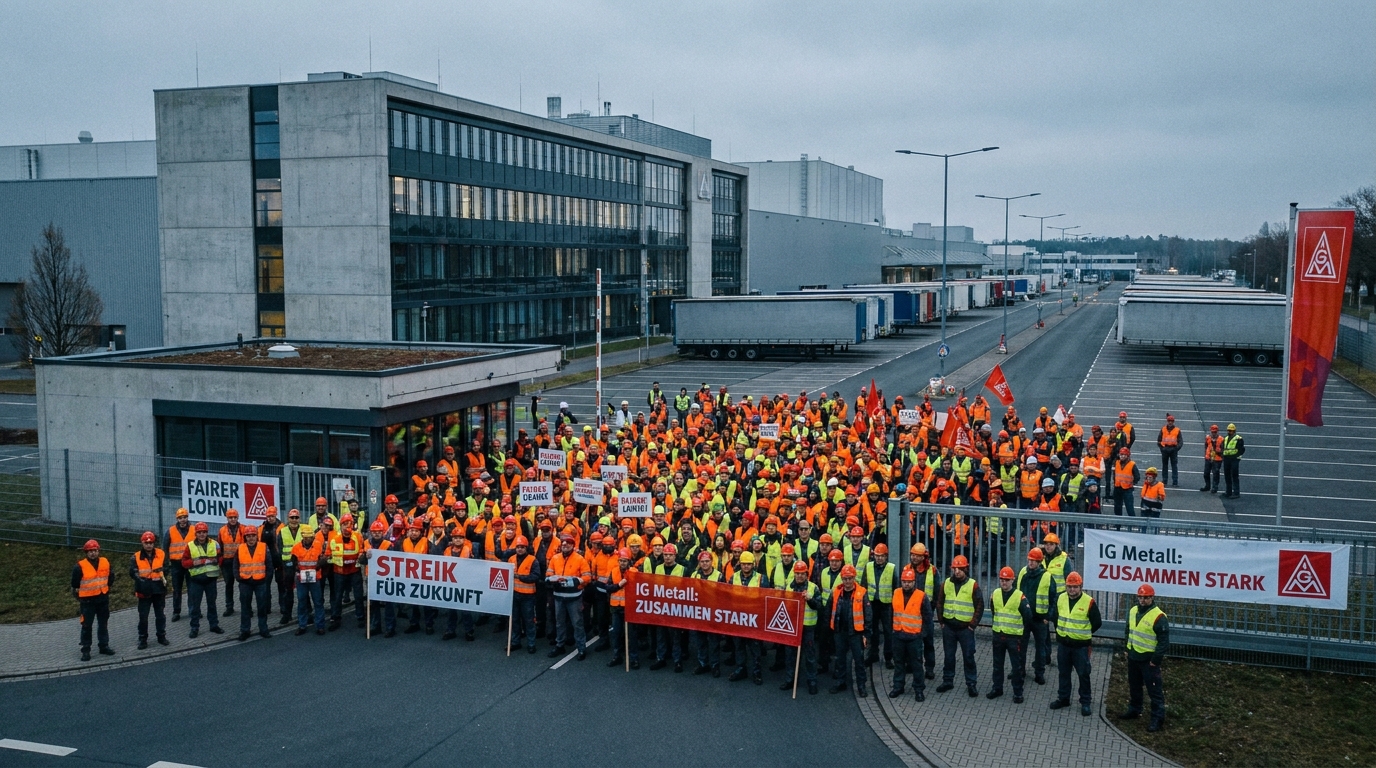
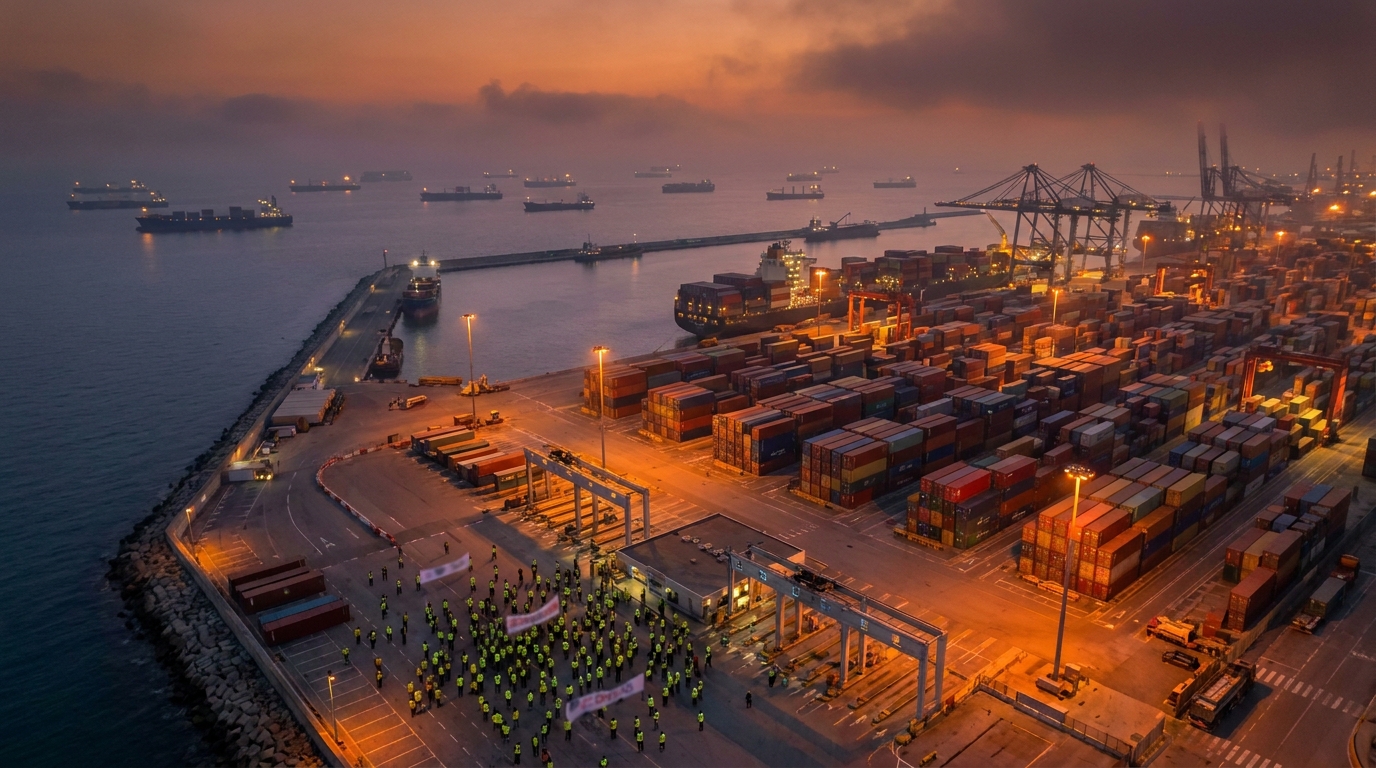
Germany is experiencing one of the most serious escalations of labor tensions in years. The IG Metall trade union, one of the most powerful labor organizations in Europe, announced a series of coordinated, 24-hour warning strikes that directly affected more than 23,000 workers employed at 19 key industrial plants on November 22–23, 2026. Companies brought to a standstill included giants such as Mercedes-Benz, safety systems manufacturer ZF Airbag, shipyard Meyer Werft and Siemens Gamesa. For the European transport and logistics industry, this situation is not just a headline from a distant part of Europe — it is a direct, tangible operational and financial threat.
What are workers demanding and why now?
IG Metall is making two principal demands: a 5 percent pay rise and stronger employment guarantees for industrial workers. Neither demand has arisen in a vacuum. Germany is grappling with a prolonged economic slowdown, rising energy costs and pressure from Asian and global competitors, particularly acute in the automotive and renewable energy sectors. The union, which represents nearly two and a half million members, believes this is the right time to compel employers to respond to years of stagnant real wages in industry.
Employers, for their part, argue that, in the face of declining profitability and shrinking order books — particularly in the automotive sector — raises on the proposed scale cannot be sustained without restructuring or job cuts. Both sides remain uncompromising, and weeks of negotiations have failed to deliver a breakthrough. As a result, the union decided to escalate its actions and move from talks to direct action.
Which plants have stopped? The scale of the stoppages is striking
The scope of the ongoing protests extends far beyond a typical local labor dispute. The strikes simultaneously hit several segments critical to the entire European industrial ecosystem:
- Automotive sector: Mercedes-Benz plants, one of the pillars of German exports, experienced assembly-line stoppages. Every hour that this manufacturer's production line is idle means dozens of vehicles will not leave the factory on time and, consequently — dozens of transport orders become obsolete or require urgent rescheduling.
- Component and safety systems manufacturers: ZF Airbag, a supplier of critical components to many European OEMs, halted operations. A shortage of airbags or seat belts can stop final vehicle assembly even at factories that are not themselves on strike — the effect of a single missing component in a complex supply chain is immediate and brutal.
- Shipbuilding sector: Meyer Werft, a renowned shipyard specializing in cruise ship construction, is a strategic facility not only for Germany but for the entire European maritime industry. Stoppages in the construction of large vessels generate delay costs measured in millions of euros per day.
- Energy and machinery: The plants of Siemens Gamesa, a key wind turbine manufacturer, illustrate how far the protests extend beyond the traditionally understood automotive industry. Delays in producing renewable energy components affect wind farm installation schedules across Europe — which in turn has implications for logistics companies handling oversized cargo.
Taken together, these 19 plants and more than 23,000 workers involved in the strike action paint a picture that demands the immediate attention of every risk manager at a European transport, freight forwarding or logistics company.
A direct blow to contract logistics and transport fleets
For logistics operators, especially those serving dedicated routes to and from Germany, the effects of the escalation are felt almost immediately. Disruptions to production at shipper clients create several specific operational problems:
- Empty miles and forced idle time: Drivers and vehicles sent to collect goods arrive at the gates of a plant that is not producing. The scheduled loading does not take place, and the transport company incurs travel costs without revenue. Accumulated empty miles across the entire partner network quickly become a serious burden on the bottom line.
- Schedule disruption: Long-term logistics contracts assume regular, predictable cargo flows. Sudden strikes disrupt these schedules, forcing costly resource reallocation, route renegotiations and ad hoc searches for alternative loads.
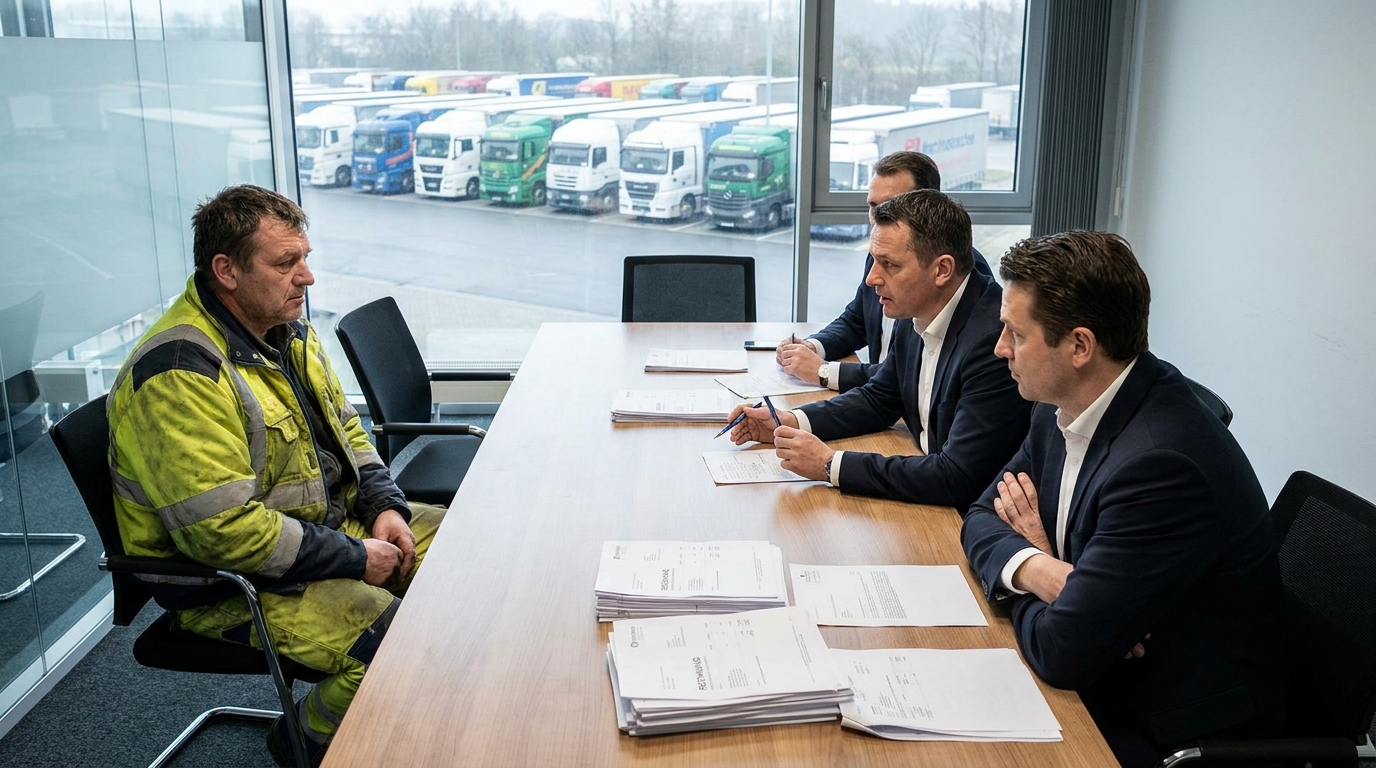
- Pressure on contract profitability: When a client suspends production, it may try to renegotiate terms or suspend contract performance, invoking force majeure. This is a legal and financial risk that requires an immediate review of contractual provisions.
- Overloaded alternative routes: Companies that manage to redirect cargo to other destinations or detours must contend with growing competition for capacity — and consequently, pressure on freight rates and cargo space availability.
Polish transport companies are particularly vulnerable. Poland is one of the largest providers of transport services to Germany, and many domestic carriers derive a significant share of their revenue from handling German industrial exports and imports. Every additional week of strikes means a real reduction in revenue and growing cash flow pressure.
Domino effect: who will foot the bill for supply chain stoppages?
The credit risk and insolvency perspective is just as important in this situation as the purely operational aspect. Strikes do not stop at the gates of a large plant — the shock wave travels down the supply chain with growing force.
Tier 2 and Tier 3 manufacturers — small and medium-sized suppliers of components, semi-finished goods and materials — typically operate on very thin operating margins. Their liquidity buffers are limited, and their ability to survive weeks of cash flow disruption is minimal. When the main customer stops accepting goods, the supplier cannot issue an invoice. Capital tied up in inventory does not generate cash. Obligations to their own suppliers, employees and financial institutions nevertheless still have to be met.
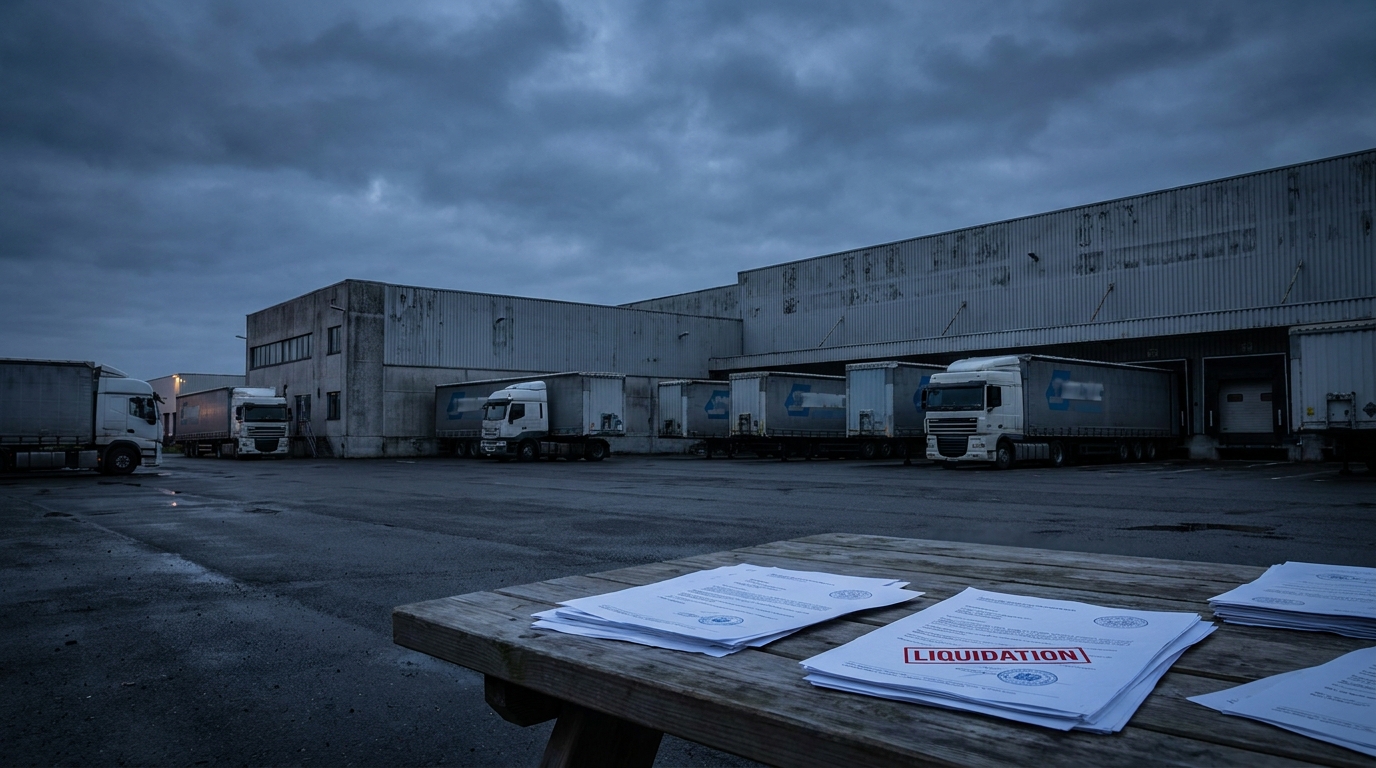
This is the classic mechanism behind payment backlogs, which can turn into a wave of bankruptcies during a prolonged crisis. Transport and logistics companies that have already invoiced such entities for services rendered become creditors exposed to the risk of non-recovery of receivables. In extreme cases — creditors in insolvency proceedings, where recoveries are often minimal or nonexistent.
Macroeconomic background: why this crisis is deeper than it appears
The IG Metall strikes are not an isolated incident that can be dismissed with the phrase “it will pass, because it always has". They are part of a much broader picture of structural problems in the German economy that should remain on the radar of every risk manager at a European B2B company.
First, Germany is grappling with a profound transformation of the automotive sector. The transition to electric mobility is forcing mass restructuring, the elimination of tens of thousands of jobs linked to combustion engines and a complete overhaul of supply chains. In this environment, rising labor tensions are natural — workers are demanding guarantees that the transformation will not take place solely at their expense.
Second, rising labor costs resulting from potential concessions to IG Metall will further squeeze the margins of manufacturers already struggling with rising energy and raw material costs. In the face of global competition — particularly from Asian manufacturers of electric vehicles and components — passing additional costs on to end customers is extremely difficult. As a result, manufacturers will look for savings — and a natural place to seek them is through pressure on suppliers' prices and payment terms, including those of transport service providers.
Third, political instability in Germany, observed in the context of difficult elections and coalition renegotiations, limits the government's ability to intervene quickly in labor disputes or offer fiscal incentives supporting industry. This prolongs uncertainty for all entities connected to the German market.
Practical recommendations for transport and logistics companies
In the face of the risks described, EURODEBT.eu offers specific recommendations for logistics operators, freight forwarders and transport companies operating in the German market or serving counterparties linked to the affected sectors:
1. Immediate audit of the counterparty portfolio
The priority should be to identify which business partners are directly or indirectly linked to the striking plants. Lists of companies affected by stoppages should be compared with the customer and client database. Entities with significant exposure to the automotive, shipbuilding and machinery sectors in Germany require particular attention.
2. Assessment of partners' financial health
Financial statements, debt levels, payment punctuality in recent months and available credit risk indicators should be analyzed without delay. A counterparty's financial health can deteriorate quickly and without prior signs visible to the naked eye. Platforms such as EURODEBT.eu offer tools for ongoing risk monitoring across the partner network.
3. Review of trade credit limits
Companies that grant counterparties deferred payment terms — standard practice in contract logistics — should consider reducing limits for entities with elevated risk profiles. It is better to forgo some turnover than to risk an uncollectible receivable.
4. Review of contractual provisions and force majeure clauses
It is worth consulting a lawyer about how current contract provisions treat a situation in which a counterparty invokes force majeure because of strikes at its suppliers. Precise wording may determine whether a company retains the right to compensation for failed loading or fleet downtime.
5. Implementation of early warning and debt collection procedures
Any payment delays by counterparties linked to the affected sectors should be treated as a first-level warning signal. Promptly initiating payment demand procedures and — if necessary — amicable or judicial debt collection may determine whether a company recovers its receivables before the counterparty becomes insolvent.
6. Updating business continuity plans
The current situation is an ideal opportunity to review and update Business Continuity Plans. Companies should prepare scenarios in advance for a further escalation of strikes, their spread into new sectors or an extension of the labor dispute for several more weeks. Identifying alternative sources of cargo, routes and operational partners is now a necessity, not a luxury.
Time horizon: when will it end?
Forecasting the duration of a collective labor dispute is always subject to considerable uncertainty. Historically, IG Metall warning strikes have often been a prelude to intensive negotiations that — after several weeks of tension — ended in compromise. However, the current macroeconomic context is exceptionally difficult. Employers have limited room for concessions, while the union has a strong public mandate arising from the real decline in workers' purchasing power in recent years.
The scenarios can be outlined as follows: in the optimistic scenario, the parties reach an agreement within two to four weeks, accepting a compromise pay rise of approx. 3–4 percent with implementation spread over time. In the pessimistic scenario — protracted negotiations, escalation to full strikes without time limits and paralysis of key factories for a month or longer. For companies in the transport, freight forwarding and logistics sector, not only the outcome of negotiations matters, but also their duration: every week of uncertainty generates costs and makes operational planning more difficult.
Conclusion: risk management during a crisis is an investment, not a cost
The IG Metall strikes in Germany are a signal that the European transport and logistics industry should take with the utmost seriousness. The direct impact of production stoppages on supply chain disruptions is immediate and severe. The risk of payment backlogs and counterparty insolvency — real and measurable. The scale of the situation, involving 23,000 workers at 19 strategic plants, rules out treating it as an isolated disruption.
Companies that take proactive steps today — meticulous financial monitoring of partners, reviews of credit limits, updates to debt collection procedures and contingency plans — will be in a much better position than those waiting for it to “go away on its own". In credit and operational risk management, response time is one of the key factors determining survival.
EURODEBT.eu will continue to monitor developments in the strikes in Germany and inform European risk managers of significant changes affecting the security of B2B transactions in the transport and logistics industry.