

A wave of airline bankruptcies this winter? Ryanair warns market, and financial data confirms fears
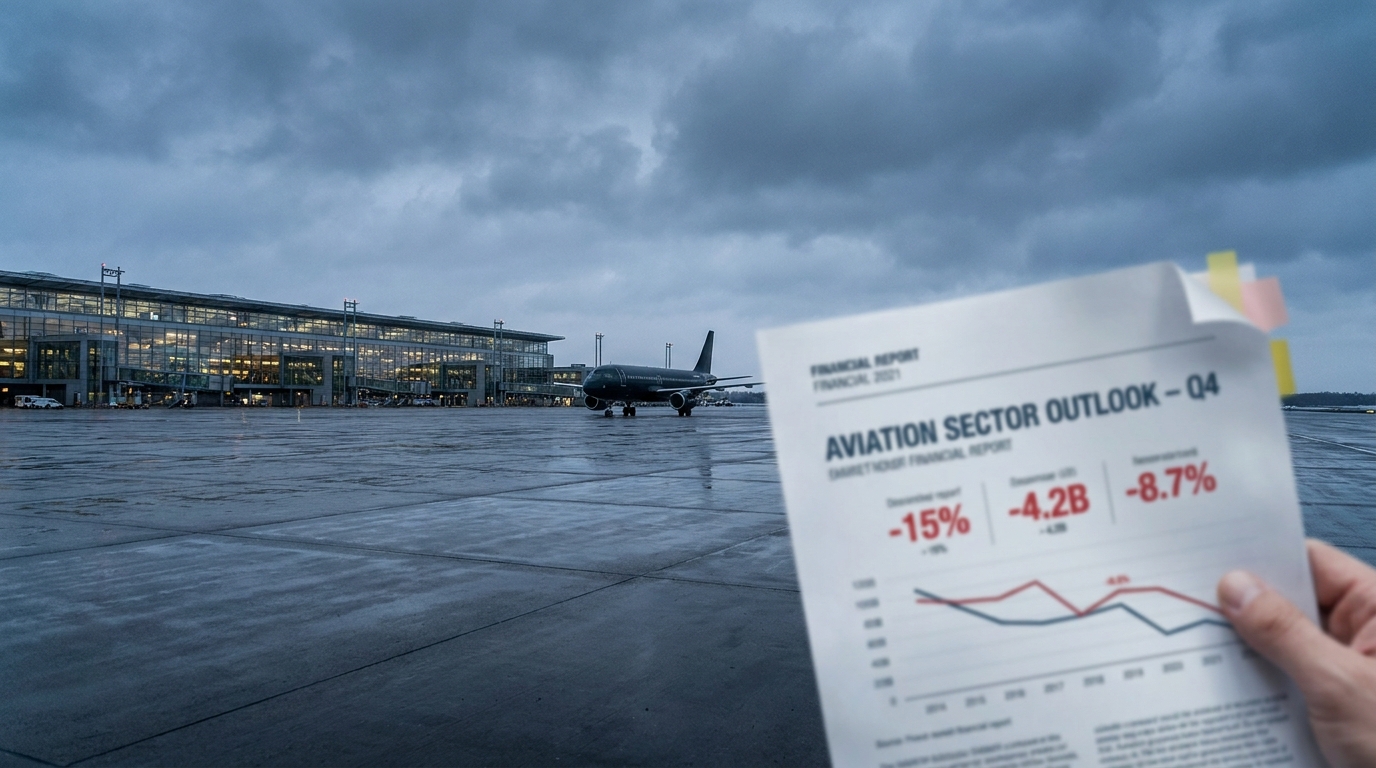
The CFO of Ryanair—Europe's largest low-cost carrier—has officially warned the industry about a wave of insolvencies among financially weaker airlines, which could hit as early as the upcoming winter season. This isn't an isolated voice: CEO Michael O'Leary has also publicly expressed similar concerns. Importantly, these warnings don't come from a vacuum—they're illustrated by the harsh reality of financial balance sheets, where rising operating costs, volatile fuel prices, androdoHigh interest rates create a particularly dangerous mix for carriers with limited liquidity. For risk managers, logistics companies, and financial institutions involved in the European air transport sector, this situation should be treated as a clear alarm signal requiring immediate review of credit exposure.
Ryanair itself under pressure - but still in a different league to its competitors
Paradoxically, these warnings about industry destabilization come from a company that has itself seen a significant decline in its financial performance. In the first quarter of the current fiscal year, Ryanair's profit shrank by almost a third—34%, to be precise—to €538 million. This is a significant decline that is difficult to ignore, but in the context of the Irish carrier's financial structure, it does not signal a threat to the company's survival.
Ryanair management cites several factors contributing to this result. The first is a shift in consumer behavior—travelers are increasingly holding off on bookings, waiting for price promotions and last-minute seat sales. This forces fare reductions and reduces revenue, even with maintained passenger numbers. The second factor is the growing geopolitical tensions in the Middle East, which are impacting passenger sentiment and, indirectly—through commodity markets—on aviation fuel prices.
The key question, however, is why, despite this decline, Ryanair remains confident about its future while simultaneously expressing serious concerns about its competitors. The answer lies in its cost structure and approach to financial risk management.
The carrier has been consistently applying the strategy for years fuel hedging, which allows it to contract deliveries at predetermined prices—in this case, with a guarantee that these terms will be maintained until 2027. In practice, this means that even with sharp spikes in oil or jet fuel prices on global markets, Ryanair remains largely immune to these turbulences. This is a valuable protective shield that many smaller and mid-sized carriers simply don't have.
Additionally, the Irish giant operates virtually debt-free. In an era of high interest rates from the European Central Bank, when the cost of servicing debt has risen dramatically, not having to refinance expensive liabilities is a fundamental competitive advantage. Indebted companies are faced with the need to roll over debt on increasingly difficult terms—or are simply unable to do so.
Who exactly might not survive the winter?
In his public statements, Michael O'Leary named two entities about which he expressed particular concerns: Hungarian Wizz Air and Latvian airBalticBoth carriers operate in a completely different financial reality than their Irish critic.
Wizz Air, despite being one of the largest low-cost carriers in the Central and Eastern European region, struggles with a significantly higher debt-to-balance-sheet ratio. The dynamic fleet expansion and aggressive growth policy implemented in previous years cost the company significant financial liabilities—often incurred when credit terms were more favorable. Today, servicing these debts in therodoThe impact of restrictive monetary policy generates powerful pressure on cash flow.
airBaltic, on the other hand, is a much smaller carrier, with a limited operational scale and a specific business model based on connections from the Baltic countries via its hub in Riga. This smaller scale means less revenue diversification and limited opportunities to offset losses on some routes with profits on others. The lack of a sophisticated hedging policy, combined with the seasonal nature of passenger traffic, poses a particular risk during the winter season.
It's important to emphasize that O'Leary has a history of offering sharp, sometimes controversial, assessments of market conditions. However, whenever he warned about competitors' problems, reality proved him right—just consider the collapse of numerous European airlines over the past decade, from Monarch Airlines to Norwegian Air and Alitalia in its previous form. His words are therefore worth taking seriously, even if they do contain an element of strategic market communication.
Why is winter particularly ruthless for airlines?
Seasonality is built into the DNA of the aviation market. Summer brings full planes, high fares, and solid margins; winter is a period of dramatically reduced tourism demand for most European carriers. Passengers fly less frequently, and ticket prices fall because airlines must actively fill planes that already need to fly (because fixed fleet costs are independent of passenger numbers).
In this situation, every carrier enters winter hoping that summer revenues will be enough to cover operating losses during the off-season. For companies with adequate cash reserves and low debt, this is a challenge, but one that can be overcome. For carriers with bloated balance sheets, expensive debt, and a lack of fuel insurance, this winter may be their last.
Adding to this is the macroeconomic context. Consumers across Europe are feeling the effects of inflation, high mortgage costs, and general economic uncertainty. While travel demand has proven surprisingly resilient in the wake of the COVID-19 pandemic, market signals point to a slowdown—particularly in the discretionary travel segment, which dominates low-cost carriers' statistics.
Cascading effects on the financial market and air logistics
From a business risk management perspective, potential airline bankruptcies are not just a problem for the passenger industry. The consequences can be much broader, affecting many entities seemingly remote from the airline ticket market.
Bondholders and institutional lenders
European airlines—including those listed as distressed—issued corporate bonds that were acquired by investment funds, banks, and insurance companies. A potential restructuring or bankruptcy would require these entities to make write-downs and losses on their debt portfolios. Funds exposed to lower-rated corporate debt should urgently analyze the sensitivity of their portfolios to a default scenario in the aviation sector.
Aircraft leasing companies (aircraft lessors)
Most European airlines—both large and small—operate their fleets of aircraft on a leasing model, not an ownership model. In the event of an airline's bankruptcy, the lessor must repossess the aircraft, find a new lessee, or sell the assets, often in unfavorable market conditions. The lessor industry is therefore directly exposed to the knock-on effect and should closely monitor the performance of its operating partners.
Airports and ground handling
An airline's bankruptcy generates direct losses for airports that provided services to that carrier on credit—in the form of unpaid airport fees, handling charges, and other services. Smaller regional airports, particularly in Central and Eastern Europe, that are heavily dependent on one or two dominant carriers, may find themselves in a very difficult financial situation.
Logistics and cargo companies
While low-cost airlines are not major players in the cargo market, their presence on specific routes and airports impacts air capacity availability and freight pricing. Consolidation in the passenger market—whether through bankruptcies or acquisitions—is inevitably reshaping the balance of power in the aviation supply chain.
Consolidation of the European sky - an inevitable consequence
Aviation market analysts have been pointing out for years that Europe is excessively fragmented compared to the American or Asian markets. The United States underwent a painful but effective consolidation following aviation deregulation; today, a few mega-carriers serve the continent, achieving economies of scale unavailable to smaller players.
Europe remains a market for many carriers, some of which survive thanks to government support or historically favorable operating conditions that are now disappearing. The upcoming winter season—if it indeed brings bankruptcies or deep restructuring—could accelerate this consolidation process.
The main beneficiaries would be carriers with both capital and an appetite for expansion: Ryanair, Lufthansa Group and IAG (owner of British Airways, Iberia and Vueling). Takeover of laid-off employees airport slots — especially at crowded, strategic airports — is as valuable to them as gaining the customer base of the acquired carrier.
For smaller, niche airlines, this means further shrinking market space. For passengers, this means possible disruption in the short term and potentially higher ticket prices in the long term on routes where competition will be reduced.
What does this mean for risk managers in the transportation industry?
From an operational perspective, risk managers in logistics and transport companies should take several specific verification and security actions in the coming weeks:
- Audit of aviation contractors — if your company uses transport or logistics services based on specific carriers (cargo, charters, framework agreements), it is worth checking the financial condition of these partners and preparing alternative scenarios.
- Verification of contract terms — in contracts with airlines, provisions regarding liability in the event of suspension of operations, refund of advance payments and force majeure clauses are crucial.
- Diversification of air transport suppliers — dependence on a single carrier in the event of its financial problems may paralyze the supply chain; it is worth expanding the network of alternative partners in advance.
- Credit rating monitoring — Rating agencies (Moody's, S&P, Fitch) regularly update airline credit ratings; tracking this information provides an early warning of deteriorating partner standing.
- Trade credit insurance — for companies issuing invoices with deferred payment terms to airlines, an insurance policy protecting against debtor insolvency is particularly justified today.
EURODEBT.eu Outlook: Risk Assessment for the Coming Months
Financial data and public statements from airline management indicate a heightened level of systemic risk in the European passenger transport sector. This isn't about the certainty of bankruptcies—markets are dynamic, and the situation could change with a potential easing of monetary policy by the ECB or an unexpected increase in demand. However, the trend is clear and worrying.
Key risk factors to monitor in the coming months include:
- The price level of jet fuel on global markets - directly affecting the profitability of carriers without hedging
- European Central Bank interest rate decisions – affecting the cost of servicing corporate debt
- Financial results for Q2 and Q3 2024 published by Wizz Air, airBaltic and other potentially affected carriers
- Geopolitical tensions – particularly in the Middle East – impacting consumer sentiment and oil prices
- Reservation levels for the 2024/2025 winter season as a leading indicator of demand conditions
Ryanair's warnings should be interpreted not as part of a competitive battle, but as a signal from a company with deep knowledge of the cost structure and dynamics of the entire European aviation market. The Irish carrier, for all its controversial nature, has repeatedly demonstrated the analytical accuracy of its industry forecasts.
Summary
The European aviation market is entering the 2024/2025 winter season under severe structural pressure. A 34% drop in profits for the leading carrier, warnings from Ryanair management about the liquidity of competitors, record operating costs, androdoThe environment of high interest rates creates conditions in which financially weaker airlines may not survive the coming months.
For the transportation and logistics industry, this means the need to actively manage counterparty risk in aviation services—both passenger and cargo. For investors and lenders, this means urgently reviewing exposure to aviation sector debt. And for the entire market, this means a likely acceleration of consolidation, the effects of which will be felt for years to come.
EURODEBT.eu will monitor the financial situation of European air carriers and inform about any significant changes in the risk assessment of cooperation with entities in this industry.










