

A wave of bankruptcies in French road transport – a record crisis threatens European supply chains
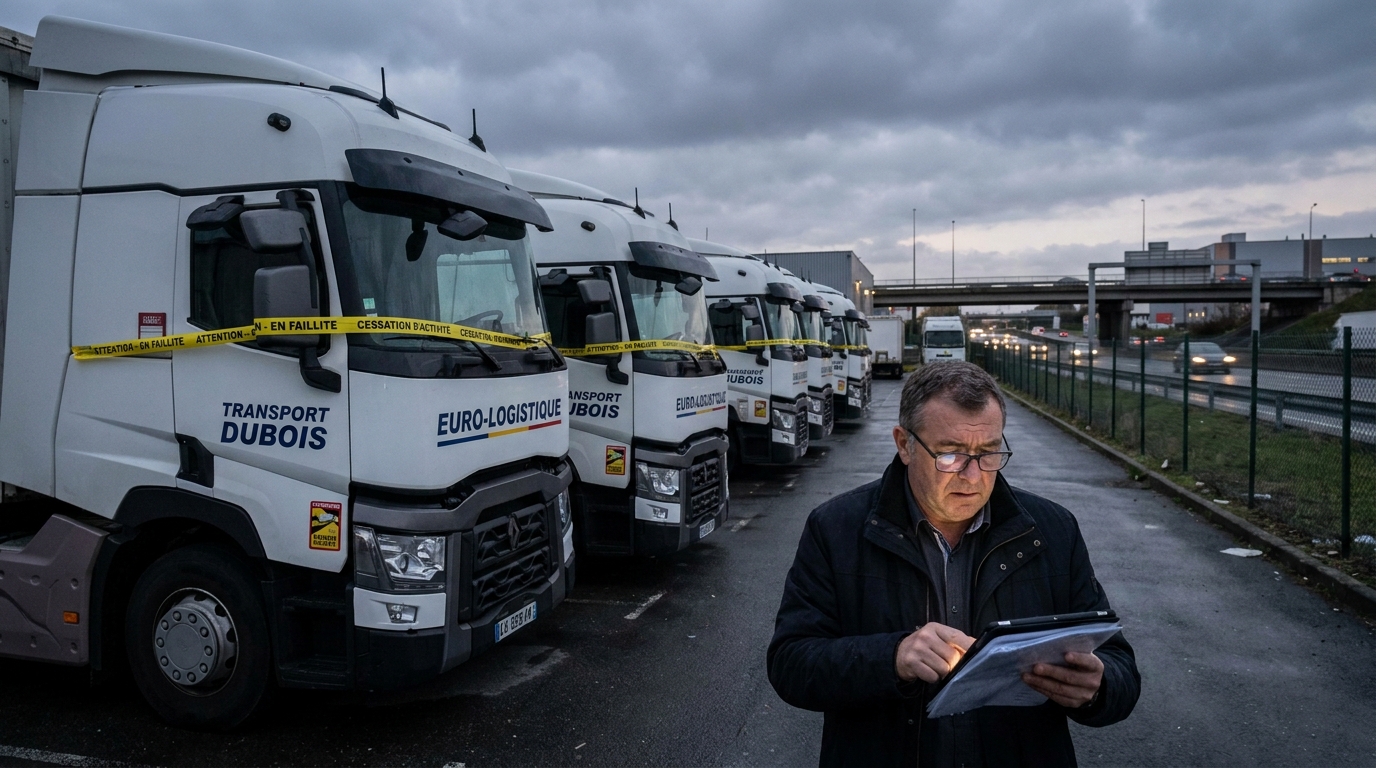
The French road transport sector is experiencing its most serious financial crisis in decades. In the first half of 2026, the number of bankruptcies among French carriers reached unprecedented levels, far exceeding rates recorded even during the most difficult periods of the COVID-19 pandemic. For European principals, subcontractors, and logistics partners, this poses a real and immediate threat to operational continuity.
The scale of the phenomenon: impressive numbers
According to analyses published by Allianz Trade, among others, the transport and warehousing industry will become one of the most crisis-hit sectors of the entire French economy in 2025. The number of bankruptcy proceedings in road transport has increased by more than 61% compared to the long-term average from 2010–2019For context: during the same period, the information and communications sector saw a 42% increase in bankruptcies, the automotive trade by 40%, and the hotel and restaurant industry by 34%. Transportation is breaking negative records across the economy.
In macroeconomic terms, France registered a total of 68,500 bankruptcy filings across all sectors—a result 23% worse than at the peak of the pandemic crisis. The negative dynamics not only persisted but even accelerated at the turn of 2025 and 2026, especially among small and medium-sized transport companies.
Why Transport? Anatomy of a Crisis
Key industry federations—Union TLF and OTRE (Organisation des Transporteurs Routiers Européens)—point to the convergence of several destructive trends. This is not a crisis caused by a single factor, but rather the result of a toxic synergy of structural and cyclical problems.
Rising operating costs
- Diesel prices — the pressure on fuel prices that has been persisting for several years is severely affecting the margins of carriers, who in many cases are unable to fully pass on these costs to their clients.
- Road tolls — systematically rising tolls on European routes, including in France, constitute an increasingly serious item in the operating budgets of transport companies.
- Labor costs — wage pressure, resulting partly from inflation and partly from the shortage of professional drivers, pushes employment costs up to levels that are difficult for smaller entities to bear.
- Fleet insurance and leasing — motor insurance rates and rolling stock maintenance costs are systematically rising, reducing the already slim financial buffers of entrepreneurs.
Collapse of demand and devastating price war
In parallel with rising costs, the volume of goods transported in France and the broader eurozone has shrunk significantly. Weakening consumer demand translates directly into fewer orders and fewer loads transported. In a shrinking market, transport companies are engaging in a destructive price war, offering below-break-even rates to maintain contracts. The transport industry has never been known for its high margins, and current price pressures are driving them to levels that make continued operation simply impossible.
While microenterprises and poorly capitalized sole proprietorships are primarily experiencing market declines, the current crisis is also affecting medium-sized and large logistics operators. The scale and pace of bankruptcies mean that even companies with long-standing history and established market positions are not immune to the loss of financial liquidity.
The burden of ecological transformation
In addition to these factors, there's the additional burden of energy transition costs. Emission reduction requirements, imposed by both EU regulations (including those concerning emission standards for heavy-duty vehicles) and France's national climate policy, necessitate investment in new, low-emission fleets. However, prices for electric and hydrogen vehicles remain many times higher than those of traditional diesel-powered trucks. For companies struggling to survive financially, investing several hundred thousand euros in a single zero-emission vehicle is simply unaffordable. The result is either an investment impediment—the fleet ages and loses competitiveness—or excessive debt leading directly to bankruptcy.
Risk of domino effect in European supply chains
From the perspective of companies using the services of French carriers - including internationalrodomanufacturing concerns, distributors, and retail chains—this crisis has direct and serious operational consequences. The sudden disappearance of such a significant number of transport entities from the market translates into rapid shrinkage of available transport capacityMeanwhile, France remains one of Western Europe's most important logistics hubs—key routes connecting the Iberian Peninsula with Central and Northern Europe run through its territory, and ports in Marseille, Le Havre, and Dunkirk handle a huge portion of continental imports.
Operational risk for clients manifests itself on several levels:
- Supply interruptions — the sudden bankruptcy of a carrier during the execution of a contract may stop the supply of components or finished products for days or even weeks.
- Payment bottlenecks — Bankrupt transport companies often fail to settle their liabilities towards their own subcontractors, which triggers a chain reaction in neighbouring markets, including the Polish, Czech and Belgian markets.
- Increase in prices of services — the limited supply of transport services amidst stable demand inevitably leads to upward pressure on freight rates, which will burden the budgets of logistics companies across Europe.
- Legal and financial risks — Clients who have made advance payments for transport services or have unsecured receivables from companies in bankruptcy may have serious difficulties in recovering them.
Who is most at risk?
From an analytical point of view, the highest risk of bankruptcy concerns primarily small and medium-sized carriers operating exclusively on the domestic market, without a diversified customer base and without access to alternative financing sources. Companies with fleets of fewer than 20 vehicles, operating in the groupage segment and serving primarily retail customers, are particularly susceptible to bankruptcy—a sector that, as the data indicates, is experiencing serious difficulties itself.
However, the crisis is also affecting larger players. Logistics operators handling low-margin contracts, heavily dependent on a single client industry, or engaged in costly fleet investments may also face liquidity challenges. It's worth noting that Bankruptcy in transport often occurs quickly and without clear warning signals — a company may seemingly function efficiently until there are no funds left to pay wages or settle fuel liabilities.
Recommendations for clients and business partners
In the face of such a rapidly evolving crisis, companies cooperating with French road hauliers should immediately implement enhanced counterparty risk management procedures. Below are key recommendations:
- Intensive financial monitoring — regular review of the financial condition of key subcontractors and partners in the TSL industry in France, taking into account available court registers, business intelligence reports and credit scoring.
- Verification before signing the contract — be particularly cautious when concluding new contracts with entities that cannot demonstrate stable financial results for the last 12–18 months.
- Diversification of transport suppliers — reducing dependence on a single carrier on key routes; it is worth identifying alternative operators in advance who can take over volumes in an emergency.
- Trade receivables insurance — for companies with open trade credits with French logistics partners, purchasing a trade credit insurance policy is becoming almost a necessity in the current circumstances.
- Overview of contract clauses — verification of contracts in terms of provisions regarding service continuity, contractual penalties and procedures in the event of the contractor’s bankruptcy.
- Emergency scenarios — developing business continuity plans to address the sudden loss of a key transportation service provider from the supply chain.
Macroeconomic perspective: is this a phenomenon limited to France?
It's worth emphasizing that while this report focuses on the situation in France, similar trends—albeit with varying intensity—are being observed in other European countries. Cost pressures on road hauliers are a pan-European phenomenon, and the French crisis may herald difficulties that will also affect markets in Germany, Italy, Spain, and Poland. The road transport industry in Western Europe has been struggling for years with excessively low freight rates, driver shortages, and excessive market fragmentation—and the current macroeconomic conditions are only exacerbating these structural weaknesses.
France, however, is a special case due to the scale of its economy and central role in the European logistics network. The problems facing its TSL sector have the potential to cause significant disruption across the continent—both operationally and financially.
Summary: Time for preventative action
The crisis in the French road transport sector is not a distant macroeconomic observation—it is a real and immediate challenge for every European entity that uses the services of local carriers or has open receivables from them. The scale of the phenomenon, its pace, and the multifaceted nature of its causes make reactive risk management insufficient. Preemptive action is necessary: systematically reviewing the condition of contractors, diversifying suppliers, and securing financial exposure.
The EURODEBT.eu editorial team will continuously monitor developments in this sector and inform about further significant bankruptcy cases, regulatory changes and available risk assessment tools for European logistics companies and their clients.










