

Bankruptcy record in Poland: 5549 proceedings in 2025 - transport industry under particular pressure
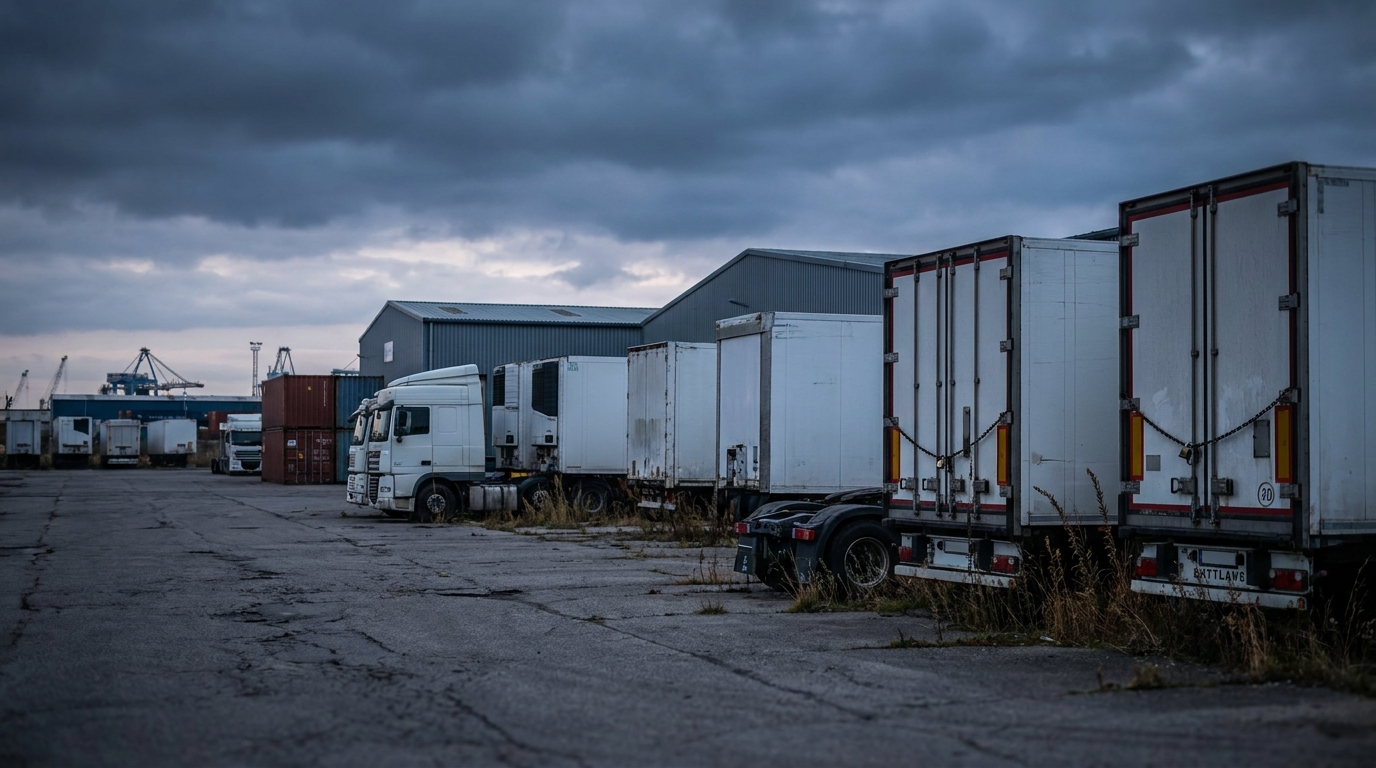
The Polish economy closed 2025 with a historically high number of bankruptcy and restructuring proceedings—a total of 5549 cases, the worst result in years. The transportation and logistics industry, although not the epicenter of the crisis, is feeling its effects more acutely than many other sectors. For risk managers and business owners working with Polish carriers, these figures are a wake-up call that should prompt an immediate review of credit policies and contractor verification procedures.
The scale of the phenomenon: a record that is not encouraging
Data collected by the Central Economic Information Center (COIG) in cooperation with the technology company MGBI leave no doubt: 2025 was one of the most difficult years for Polish entrepreneurs in the last decade. Over the past twelve months, Polish commercial courts opened a total of 5549 bankruptcy and restructuring proceedings — over 550 more than in 2024, when 4998 such cases were recorded, and 900 more than in 2023 (4649 proceedings). It is worth noting that in 2022 this number was half that of 2023, which means that we are dealing with a cumulative, three-year exponential growth trend.
The vast majority of this year's statistics are restructuring proceedings - in 2025, as many as 5132, which represents a 14,7% increase compared to the previous year. Michał Miernik of MGBI emphasizes that this is a historic breakthrough: for the first time in the history of Polish restructuring law, the annual number of such proceedings has exceeded the psychological barrier of five thousand entities. Although restructuring formally represents a chance to save a company, in practice it signals serious liquidity difficulties and often precedes the declaration of bankruptcy.
Classic bankruptcies were declared by the courts in 2025 426 — slightly less than a year earlier (433 in 2024). This apparent improvement in this number shouldn't lull us into a sense of urgency, however: the rising number of restructurings means that more and more companies are teetering on the brink of insolvency and resorting to court protection as a last-minute remedy. Some of these proceedings will fail and escalate into bankruptcy liquidation—the only question is when.
Which industries have suffered the most?
The crisis is widespread and affects many sectors of the Polish economy, but sectoral analysis reveals distinct clusters of problems. Four industries are statistically most affected, and their condition directly impacts the stability of entire supply chains.
Trade: leader of restructuring
The first place in terms of the number of restructuring proceedings initiated was taken by the trade sector with a result 1011 proceedings — an 11,2% increase year-on-year. Problems in wholesale and retail trade directly impact domestic and cross-border transport volumes, as distributors and retail chains are among the largest customers for transport services. Financial difficulties in this sector quickly manifest themselves in extended payment terms and growing arrears to carriers.
Construction: Dramatic 30% Growth
The situation in the construction sector is particularly noteworthy, as the number of restructurings has increased dramatically. 30,3 % Year over year, reaching 920 proceedings. Construction is the sector that generates the greatest spiral of payment backlogs—delays in the execution of public and private contracts are transferred to subcontractors, and then to transport companies transporting construction materials, machinery, and prefabricated components. This sector also saw 53 classic bankruptcies, meaning the scale of irreversible financial losses for creditors is very high.
Industrial processing: the epicenter of bankruptcy
Industrial processing with a result 771 restructuring proceedings (an increase of 18% y/y) took third place in the sector ranking. Importantly, this is the industry that generates the largest number of classic bankruptcies — 116 bankruptcies in 2025 alone. For the TSL industry, this means a double threat: a decline in orders from production plants and the risk of non-payment of receivables by contractors who have declared bankruptcy.
Transport and logistics: the fourth victim of the crisis
The TSL (transport, forwarding, logistics) sector ranked fourth in the national restructuring ranking. The numbers are alarming, and the trend is clearly upward. In 2025, restructuring proceedings were 653 transport companies, compared to 634 in 2024 and only 512 in 2023. At the same time, the number of classic bankruptcies in the industry increased: courts declared them 37, compared to 34 in the previous year.
Paweł Kowalski, CEO of TVM Transport & Logistics, makes no secret of the fact that the sector is facing its most challenging period in years. The causes of this situation are complex, multifaceted, and do not stem from a single, easily identifiable risk factor, making the situation particularly difficult to manage.
Germany's economic slowdown - a key external factor
The Polish transport industry is strongly dependent on the condition of Western European—especially German—industrial markets. Germany, Poland's largest trading partner and main export destination for transport services, is experiencing its own deep crisis. The Leibniz Institute for Economic Research in Halle has published data showing that Germany will end 2025 with a record number of 17,604 bankruptcies — 5% more than in the peak year of the global financial crisis in 2009. The consulting company Falkensteg reports that among large German companies with a turnover exceeding EUR 10 million, bankruptcy was declared 471 entities, which represents a 25% increase year-on-year.
The metallurgical and automotive sectors—traditionally one of the largest generators of orders for Polish transport companies—have been particularly hard hit. Strong, low-cost competition from Chinese manufacturers is pushing European plants toward production cuts or complete closure. Each closed factory beyond the Oder River means fewer trailers leaving Poland, fewer ton-kilometers, and less revenue for Polish carriers.
Strong zloty - the hidden killer of profitability
Polish carriers are de facto exporters of services—they generate a significant portion of their revenues in euros, while most operating costs (wages, fuel, vehicle leasing, repairs) are incurred in złoty. In 2025, the EUR/PLN exchange rate remained at around 4,30 zlotys, which, compared to the historically higher levels from previous years, translated into a real decrease in the profitability of transport by 5 to 7 percentWith operating margins in the TSL industry typically reaching 3-5% under favorable conditions, such erosion of foreign exchange revenues can push a company below the break-even point within a few quarters.
High operating costs and payment arrears
The above-mentioned pair of threats is complemented by rising operating costs – constantly increased fuel prices, wage pressure resulting from competition on the drivers' labor market, expensive fleet leasing financing and increasingly stringent regulatory requirements (emissions, tachographs, environmental standards).rodoTransport companies that in recent years invested in the modernization of their rolling stock with the assumption of maintaining growing demand are now struggling to service leasing obligations while orders are shrinking.
A separate issue remains payment backlogs — a structural ailment of the Polish B2B market, which is rapidly intensifying amid the economic slowdown. Carriers, as an intermediate link in the supply chain, are particularly vulnerable: they receive orders from commercial and industrial companies that are themselves struggling with liquidity problems, and as a result, they wait months for payment for services rendered. The growing number of restructuring proceedings in client sectors directly translates into the risk of bad debts in the TSL industry.
Risk Perspective: What does this data mean for your business decisions?
For risk managers, owners of logistics companies and all entities cooperating with carriers and forwarders in Poland, the presented data should prompt several specific verification and security actions.
Verification of contractors - an obligation, not an option
In the wedrodoIn a country where over 5 Polish companies seek restructuring protection each year, standard NIP and KRS number checks are no longer sufficient. Regular monitoring is necessary:
- Status of court proceedings — whether the contractor is not already subject to restructuring or bankruptcy proceedings;
- Payment history — trends in delays and their scale in the last 12-24 months;
- Capital ties — whether the parent company or subsidiary is not experiencing its own financial difficulties that may spill over to the audited entity;
- Financial indicators — current liquidity, debt ratio and revenue dynamics based on the latest available financial statements;
- Activities in debtor registers — KRD, BIG InfoMonitor and other industry databases.
Companies operating in sectors with the highest restructuring rates – construction, trade, industrial processing – require particularly thorough analysis before establishing or expanding commercial cooperation.
Credit policy - time to tighten
Jonas Eckhardt from the consulting company Falkensteg predicts that 2026 will bring another, 10-20 percent increase number of bankruptcies among large German enterprises. Considering the strong link between the Polish TSL industry and the German market, it can be assumed with a great degree of probability that the pressure on Polish carriers and their contractors will continue and, in many cases, intensify.
In practice, this means the need to:
- Shortening acceptable payment terms for contractors from high-risk industries;
- Introducing or reducing trade credit limits for transport and construction companies;
- Use of contractual security – bills of exchange, bank guarantees, receivables insurance;
- Implementation of early warning systems based on automatic monitoring of court databases and debtor registers;
- Acceleration of debt collection processes at the first signs of payment delays.
The Domino Effect – Systemic Risk in the Supply Chain
A particularly dangerous phenomenon that materializes in conditions of mass restructuring is domino effect in the supply chainThe bankruptcy of a large client—a retail chain, manufacturer, or developer—automatically generates a wave of bad debts for its service providers, including transportation companies. These, in turn, may lose liquidity and cease to meet their obligations to subcontractors, lessors, and employees. In the TSL industry, where margins are historically low and liabilities (leases, investment loans) are high and long-term, such a domino effect can quickly affect dozens of entities associated with a single insolvent client.
The growing number of restructurings in the construction industry (+30% y/y) is particularly worrying in this respect: the construction sector traditionally generates some of the longest subcontracting chains in the Polish economy, and any disruption at the beginning of this chain is felt by transport companies, material suppliers and ancillary service providers.
Poland in the context of Europe: we are not an exception
It's worth emphasizing that the record-breaking data from Poland is consistent with a broader European trend of rising insolvencies. Germany, as mentioned, is breaking its own bankruptcy records. Similar trends are being observed in the Netherlands, Belgium, France, and the Scandinavian countries. The global spike in energy and financing costs from 2022-2023 is now, with a delayed effect, reaching the balance sheets of companies that have been hovering near profitability for years, benefiting from cheap money and stable macroeconomic conditions.
The Polish transport industry, with one of the largest fleets of trucks in the European Union and handling a significant portion of trans-European freight flows, is particularly sensitive to these macroeconomic turbulences. On the one hand, it benefits from its geographic location and relatively low labor costs compared to Western Europe, but on the other, it is strongly dependent on the condition of Western industrial markets, which is currently difficult to assess optimistically.
Summary: 2026 could be even more difficult
The record number of 5549 bankruptcy and restructuring proceedings in Poland in 2025 is not a statistical anomaly—it is the result of overlapping, long-term risk factors that will remain unchanged or intensify in 2026. The slowdown in Germany, the strong zloty, high operating costs, and structural liquidity problems in the client sectors are creating arodoa situation in which even a solid, long-standing transport company can find itself in financial trouble within a few months.
For B2B market participants – both those ordering transport services and their suppliers and subcontractors – 2026 should be a year of increased vigilance, proactive verification of contractors and consistent credit risk managementHistory teaches us that the costs of neglecting due diligence in times of prosperity are many times higher than the costs of implementing appropriate preventive procedures in a timely manner.
Platforms like EURODEBT.eu, which aggregate data on legal proceedings, payment histories, and capital affiliations of transport and logistics companies in Poland and Europe, are becoming an essential operational risk management tool rather than a luxury. In an industry where a single bad debt can wipe out quarterly profits, access to reliable, up-to-date information is simply invaluable.










