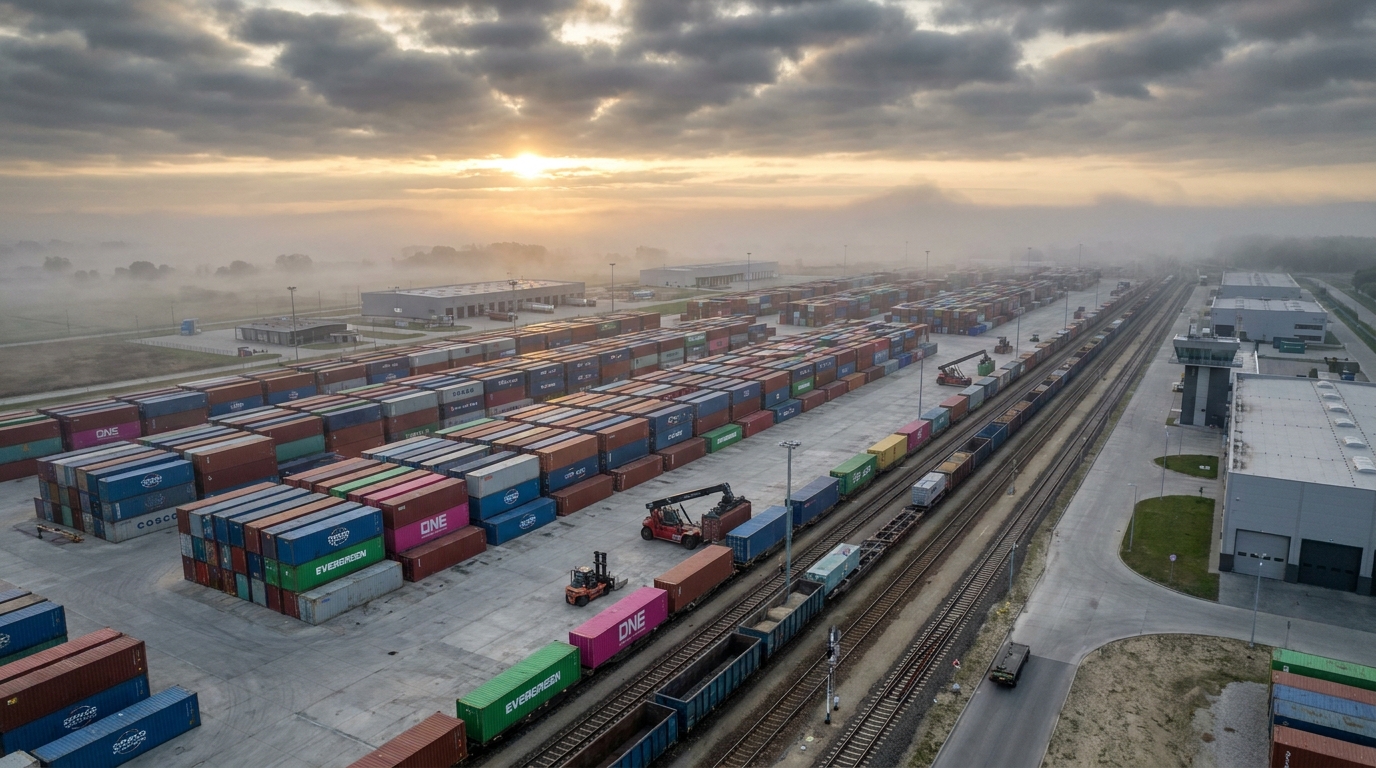

Cargo fraud costs Europe €2,6 billion annually. Is your company the next target?
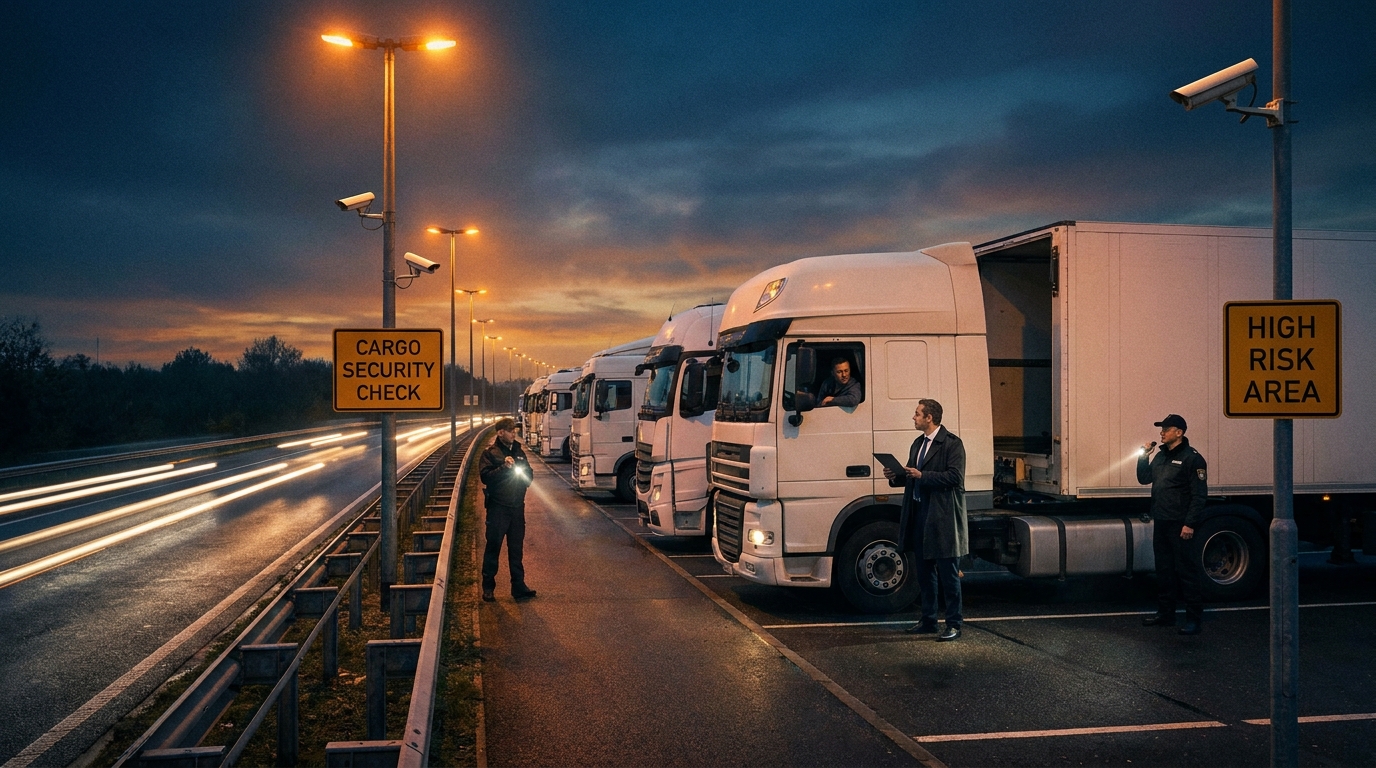
The European transport and logistics sector is grappling with an unprecedented wave of cargo crime. According to a recent report from the Transported Asset Protection Association (TAPA), companies operating in the EMEA region will suffer direct losses of up to 2,6 billion euros solely due to cargo theft. When we add cascading costs to the bill—contractual penalties, production downtime, loss of customers, and long-term image consequences—the total cost to the European economy exceeds 8,2 billion euros per yearWhat's particularly alarming: experts estimate that in only about 5% of recorded incidents is it possible to precisely determine the actual value of losses. This means that the true scale of the threat is vastly underestimated, and companies' exposure to this risk is many times greater than the available statistics would suggest.
The scale of the phenomenon: numbers that should worry every manager
Statistical data paints a picture of a threat that is growing at an exponential rate. In 2023 alone, the value of documented losses due to cargo crime in European Union countries amounted to 549 million euros — which means an increase of staggering 438% year over year and over 1000% compared to 2021These numbers aren't just statistics. Behind each of them lie real companies that have lost cargo, reputation, and financial liquidity.
The situation is particularly dramatic in Germany, Europe's largest economy and a key transit hub for the continent. every three days Full truck loads (FTL) are disappearing from German roads without a trace. In the first seven months of 2025 alone, the German Insurance Association (GDV) recorded 88 cases The use of so-called phantom carriers—fictitious carriers masquerading as legitimate transportation companies. This number equals the total number of incidents recorded in the entire previous year. The trajectory is clear and disturbing.
The TT Club and BSI SCREEN Intelligence report for 2023 shows that 71% of all cargo thefts takes place during road transport. Trucks, semi-trailers, and lorries have become the main field of operation for organized crime groups. Among the categories of goods most frequently attacked, food and beverages took first place, with their share in the total pool of stolen goods increasing from 16% to 24 %Consumer electronics and pharmaceuticals also remain high on the loot list—goods with high unit value and easy liquidation on the black market. Besides Germany, the geographic hotspots in Europe remain primarily Włochy.
Who are phantom carriers and why are they so dangerous?
Fictitious carriers – known in the industry as ghost carriers and/ or phantom carriers — constitute one of the most sophisticated and difficult-to-detect cargo fraud mechanisms today. They operate according to a precisely developed scheme that is increasingly being compared to the methods used by professional business organizations, not amateur criminal groups.
The modus operandi is as follows: criminals legally register a business entity In a chosen European jurisdiction, they obtain authentic licenses to transport goods, and then, over time, build a credible operational history—by completing smaller orders, collecting positive references, and building a profile as a trusted partner. They do this with a single goal: to seize a significant shipment at the right moment and disappear. The client, lulled by prior satisfactory cooperation, doesn't conduct further verification. And that's precisely what the perpetrators are counting on.
This is why the traditional, one-time carrier verification during onboarding has become insufficient. Criminals know perfectly well that after the first check, their status is rarely checked again. They build credibility deliberately by investing time and resources into creating a facade of legitimacy. By the time the transport company discovers the fraud, it's usually too late—the cargo has disappeared, the entity has been deregistered, and recovering the goods or seeking compensation is extremely difficult.
Criminal Techniques: Professionalizing the Threat
Phantom carriers, however, are just one element in the increasingly extensive arsenal of methods employed by modern criminal groups specializing in cargo fraud. European law enforcement agencies and industry organizations identify several key operational patterns:
- Business Email Commitment (BEC) — Attacks that involve taking over corporate email accounts or creating deceptively similar domains. The goal is to impersonate a trusted broker, freight forwarder, or contractor and redirect cargo or payments. The effectiveness of this method stems from the fact that email remains the primary channel for document exchange in the transportation industry.
- Double-brokering — a mechanism involving multiple forwarding of a transport order through successive intermediaries, deliberately obscuring the chain of responsibility and making it difficult to identify the actual contractor. Each additional intermediary increases the control gap and creates a window of opportunity for cargo interception.
- Document falsification using artificial intelligence — a new and particularly disturbing phenomenon. AI tools now enable the mass generation of fake bills of lading, insurance certificates, and license documents of a quality difficult to distinguish from the originals without specialized technical verification.
- Physical theft using intelligence tactics — Advanced criminal groups invest in reconnaissance: tracking routes, monitoring schedules, identifying transfer points and parking spaces. The attack isn't accidental—it's the result of a carefully planned operation.
The methods described have one thing in common: a high degree of professionalism. Experts from the insurance and logistics industries increasingly point out that Organized criminal groups are behind the biggest cases of cargo fraud operating on a cross-border scale, with specialized "departments" responsible for the registration of entities, document falsification, logistics and liquidation of goods.
The true cost of fraud: far more than the value of the lost goods
For companies that fall victim to cargo fraud, the most painful impact is often not what is immediately visible – the loss of physical cargo – but the consequences that unfold in the weeks and months that follow.
The first, direct costs include, of course, the value of the stolen goods and the resulting compensation and insurance proceedings. However, in the short term, these costs are added to drastically rising insurance premiums — Cargo insurers increase rates or tighten policy terms after incidents, which directly impacts the company's operating margins.
In model-based delivery systems just-in-time The absence of a single component—even a relatively low-value one—can have a domino effect and lead to costly production downtime at plants located in completely different countries. It is estimated that Downtime caused by disruptions in the supply chain generates losses that are many times greater than the value of the missing goods.
The most difficult to measure, but often the most painful in the long run, are reputational losses. Loss of trust from a key contractor, termination of a framework agreement, negative industry references—these are consequences that, in the case of smaller entities, can directly threaten the continued operation of the company. In the context of increasingly widespread requirements regarding supply chain due diligence (including those resulting from EU regulations on due diligence in the supply chain), Cargo incidents may also give rise to legal liability for company management boards.
Why do boards continue to ignore this threat?
One of the key problems identified by experts is the misclassification of risk at the corporate level. A significant number of supervisory boards and management boards still treat cargo security as a purely operational issue—the domain of logistics managers and forwarding employees. However, data clearly indicates that Cargo fraud has been promoted to the category of financial and image risk of strategic importance for the entire organization.
This perception gap has serious practical consequences. Without top management's commitment, it is difficult to allocate appropriate budgets for monitoring systems, staff training, and implementing advanced verification tools. The risk of third-party vendors (third-party risk management) remains an underfunded area through which organised crime infiltrates companies.
Experts also emphasize procedural inertia: many companies still operate under the model of annual carrier verification—they check documents once, upon establishing cooperation, and for the following months operate under the belief that their partner is trustworthy. This belief is now a dangerous anachronism.
What should be done? Recommendations for the industry
Expertsrodologistics, insurance, and organizations like TAPA EMEA agree: a systemic change in the approach to carrier verification and monitoring is necessary. One-time onboarding is not enough — continuous, automated monitoring is required including the licensing status, financial condition and operational history of transport partners.
Next-generation logistics platforms already offer tools that enable real-time verification before each individual order is assigned. Automated database checks, transport license records, and alert systems for entity status changes—these are elements that should become standard, not optional.
The key recommendations from experts included:
- Implementation of continuous monitoring of carriers — automatic checking of partners' license, insurance and financial status in real time, not only during onboarding.
- Certification according to industry standards — requiring partners to have TAPA TSR (Trucking Security Requirements) certifications or compliance with the ISO/IEC 27001 standard in the field of information security.
- Multi-level identity verification — before each FTL order, mandatory verification of the carrier’s registration data, license numbers and contact details by at least two independent sources.
- Strengthening the security of electronic communications — implementing email verification protocols (DKIM, SPF, DMARC), training employees in recognizing BEC attacks and procedures for verifying changes to banking data.
- Strict control of the intermediation chain — clear rules regarding the permissible number of intermediaries in an order, obligation to disclose the actual transport contractor.
- Participation in intelligence exchange networks — active cooperation with industry organizations (TAPA, BSI) and law enforcement agencies in the exchange of data on suspicious entities.
- Raising the profile of cargo risk management to a strategic level — regular reporting of supply chain risk indicators to the management board and supervisory board, treating cargo security as an element of a broader corporate risk management strategy.
Risk Perspective: What Does This Mean for Your Business?
For risk managers and owners of transport and logistics companies operating in Europe, the conclusions drawn from the available data are clear. Cargo crime is no longer a marginal or exclusively regional phenomenon. — is a pan-European challenge of a systemic nature, affecting both large operators and small carriers.
Companies operating in high-value industries are particularly vulnerable: electronics, pharmaceuticals, premium food products, and branded clothing. These are precisely the categories that attract the greatest interest from organized crime groups, who know exactly where to seek the highest return on criminal activity.
It is also worth remembering the regulatory dimension. Growing requirements regarding supply chain due diligence — including those resulting from the EU CSDD (Corporate Sustainability Due Diligence Directive) — make the responsibility for the security of the entire supply chain increasingly rests with the clientCompanies that fail to implement adequate partner verification procedures may expose themselves not only to financial losses but also to legal liability.
Paradoxically, this crisis also creates an opportunity for entities that choose to treat cargo security as a competitive advantage. Companies with documented, certified procedures for carrier verification and supply chain risk management are increasingly winning tenders and building long-term relationships with contractors who prioritize reliable and predictable deliveries.
Summary
The European transport market is facing a structural increase in the threat of cargo crime. The numbers are clear: €2,6 billion in direct losses, an increase in incidents of over 1000% in four years, 88 cases of phantom carriers in Germany in just seven months of 2025Behind these figures lies a new reality in which organized crime groups operate with a degree of scale and professionalism previously reserved for legitimate businesses.
The response to this threat cannot be spotty or reactive. It requires a systemic approach: continuous monitoring of partners, investment in verification technologies, standardization of processes according to recognized industry standards, and—above all— recognition by company management boards that cargo security is now a strategic issue, not just an operational one.
Companies that understand this and implement adequate protective mechanisms early will be able to not only minimize their own risk exposure but also build a lasting advantage in the increasingly demanding European logistics market. Others risk becoming just another addition to the growing loss statistics.