

Debt crisis in the TSL sector: record PLN 3,38 billion in debt and nearly 39 companies in trouble
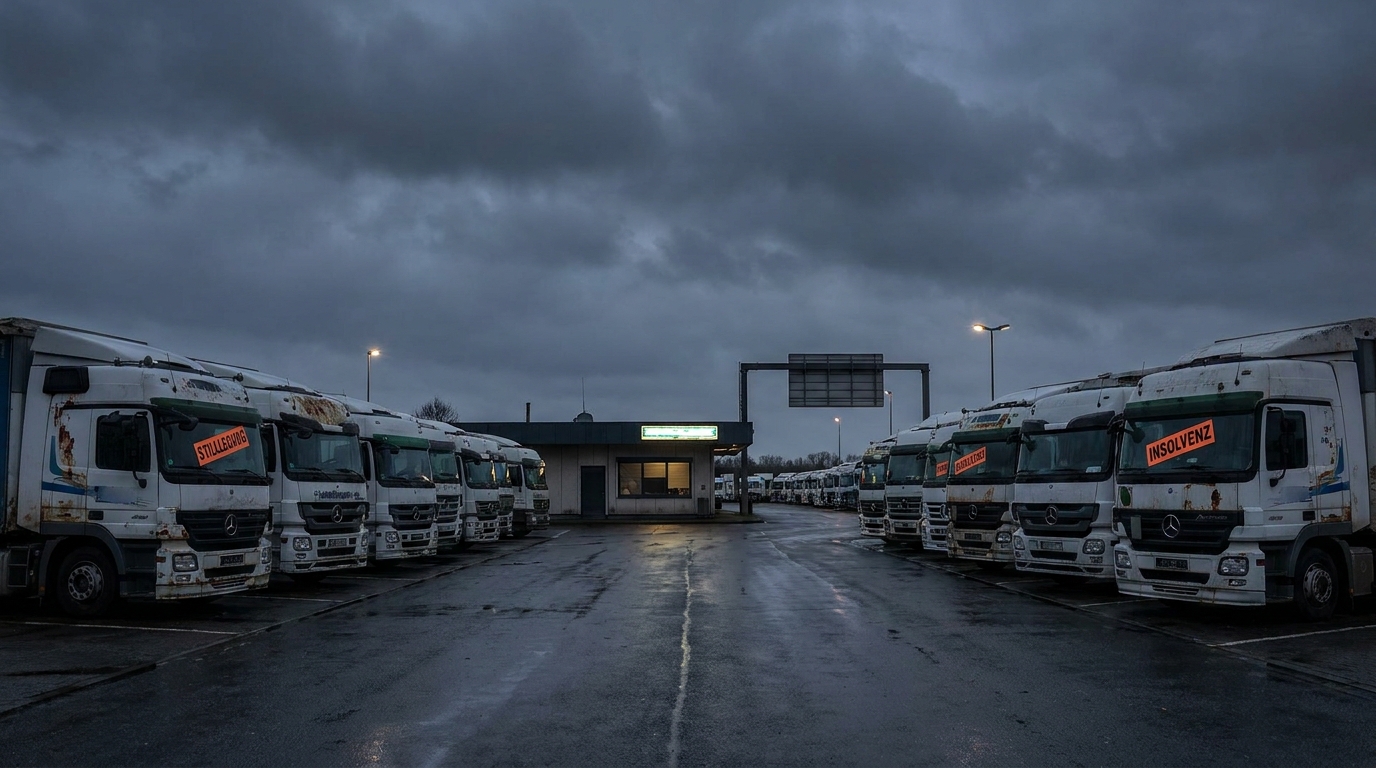
The transport, forwarding and logistics (TSL) sector in Poland found itself in the midst of a serious financial crisis at the end of the first half of 2026. According to the latest data published by BIG InfoMonitor, the total debt of the industry has broken the barrier 3,38 billion zlotys — a level never before recorded in the history of Polish logistics. The problem is already affecting nearly 39 thousand enterprises, and the debt growth rate exceeds 5 percent year-on-year. Experts agree: unless urgent systemic intervention occurs, the sector faces a wave of mass bankruptcies that will shake European supply chains.
Hard numbers that leave no doubt
To fully understand the scale of the problem, it's worth examining its dynamics over a short timeframe. As recently as January 2026, fewer than 38,300 TSL companies were registered as debtors, and their total arrears hovered around PLN 3,31 billion. These were already worrying signs. However, within just one quarter, the situation significantly worsened.
At the end of April 2026, BIG InfoMonitor has already recorded 10,000 entities having trouble meeting their obligations on time, and their accumulated debt has risen to the aforementioned PLN 3,38 billion. This represents an increase of over PLN 70 million in less than one hundred days—a pace that should raise alarm not only among entrepreneurs but, above all, among political decision-makers and financial institutions.
Moreover, industry experts emphasize that the actual scale of the crisis may be significantly greater from what appears in official registers. So-called hidden debt—unpaid liabilities that have not yet been entered into debtor databases due to delays in reporting or creditors' reluctance to formalize disputes—can significantly overstate the true financial situation of the industry.
What's Behind Record Debt? Anatomy of a Crisis
The current condition of the TSL sector is not the result of a single, isolated shock. Rather, it is the cumulative effect of several overlapping, unfavorable macroeconomic and geopolitical processes that hit the industry almost simultaneously.
Geopolitics and rising freight costs
The armed conflict in Ukraine, which has been ongoing since 2022, has left a lasting mark on Polish logistics. The loss of eastern markets, the closure of traditional transit routes through Belarus and Russia, and the need to seek alternative transport corridors have increased operating costs for many carriers by between ten and several dozen percent. Poland, as a front-line country and a historically important logistics hub connecting Western Europe with the East, has been particularly hard hit by these changes.
In addition, in 2026, another source of destabilization appeared — the escalation of tensions on Middle EastDisruptions to shipping through the Red Sea and the Suez Canal forced shipowners to choose much longer routes around Africa. The result? Global maritime transport costs skyrocketed, and consequently, cargo insurance rates and insurance policies for shipping fleets also rose. Polish land carriers operating multimodal supply chains felt these changes directly.
Energy vice
The TSL industry is one of the largest consumers of energy in the entire economy. Fuel accounts for 30 to 40 percent of all operating costs for many transport companies. With the persistent, high volatility of oil and gas prices—fueled by both geopolitical conflicts and market speculation—budget planning is becoming nearly impossible for carriers. Companies that entered into contracts with fixed rates several months earlier have found themselves in a dire situation: they are carrying out orders below the break-even point because fuel costs have exceeded the assumed calculations.
Slowdown among key trading partners
The Polish economy is closely linked to the economic cycle of Germany—our largest trading partner. Meanwhile, the German economy has been grappling with a significant slowdown for several quarters, and the automotive and chemical industries—the main generators of road freight—are experiencing declines in production. Reduced industrial activity in Germany and Western Europe more broadly translates directly into fewer transport orders available to Polish companies. The effect is doubly painful: freight rates are falling due to oversupply of transport capacity, while fixed costs remain high.
Wage pressure and driver shortage
The road transport labor market has been grappling with a structural shortage of qualified professional drivers for years. An aging workforce, limited appeal of the profession to younger generations, and regulatory requirements related to Category C and CE licenses mean that experienced truck drivers remain in short supply. Companies seeking to maintain operational capacity must offer increasingly higher wages, driving up labor costs—the second-largest component of operating expenses. Combined with low freight rates, this creates a toxic mix: rising costs and declining revenues.
The domino effect – a threat that goes beyond the TSL industry
Risk analysts are sounding the alarm for yet another reason. The crisis in the TSL sector is not an isolated problem—on the contrary, its effects may quickly spread to other sectors of the economy, creating a classic domino effect.
Indebted carriers are delaying or suspending payments to their suppliers: fuel distributors and fuel card operators, repair shops and tire service providers, and suppliers of spare parts and fleet accessories. These companies, in turn, are beginning to experience their own liquidity problems, which are then passed on to component manufacturers, banks, and leasing companies financing vehicle purchases.
Financial institutions that have granted leasing loans for the purchase of truck fleets valued at hundreds of millions of zlotys face the risk of mass contract terminations and security enforcement. However, the secondary market for commercial vehicles has limited capacity—a potential mass supply of used tractor-trailers would mean a drastic decline in their value, deepening losses for both carriers and the banks that finance them.
From the perspective of the real economy, the bankruptcy of thousands of small and medium-sized transport companies would mean disorganization of supply chains for key sectors: fast-moving consumer goods (FMCG) retail, the automotive industry, e-commerce, and construction. As a country through which a significant portion of Europe's east-west transit passes, Poland would play the role of a weak link in European logistics in this scenario.
Who is most at risk? Industry risk profile
Not all segments of the TSL sector are equally affected by the crisis. Data analysis indicates that land transport — primarily road — is experiencing the fastest growth in payment arrears. It is here that the largest number of small and sole proprietorship businesses are concentrated, with the smallest financial reserves and the lowest ability to absorb cost shocks.
A particularly vulnerable group are:
- Small transport companies (1–5 vehicles) — operating with a minimal liquidity buffer, completely dependent on timely payments from clients;
- Subcontractors of large logistics operators — often forced to accept extended payment terms (60–90 days), which, combined with rising running costs, leads to a rapid depletion of working capital;
- Companies with a large share of leasing in their fleet — any delay in the execution of orders or a reduction in freight rates immediately translates into difficulties in handling leasing installments;
- Carriers serving eastern directions — faced with the direct loss of sales markets due to armed conflict and sanctions.
Large logistics groups with a diversified service portfolio, their own warehouses, and long-term contracts with corporate partners are faring relatively better. However, they also report growing difficulties in maintaining profitability at current levels.
Will the market manage on its own? Voices calling for intervention
A growing number of economists and industry representatives believe that market mechanisms alone cannot cope with a crisis of this scale. The TSL sector is too closely intertwined with the rest of the economy, and a potential mass wave of bankruptcies would have too serious systemic consequences to be considered a natural process of market selection.
Among those postulated intervention instruments the following are mentioned in particular:
- Debt restructuring programs — easier procedures for concluding settlements with institutional creditors, especially with leasing companies and banks, with the possibility of dividing arrears into instalments without additional sanctions;
- Temporary leasing holidays — similar to the solutions used during the COVID-19 pandemic, allowing carriers to suspend instalment repayments for a specified period without the risk of losing their vehicles;
- Government liquidity support programs — low-interest loans or credit guarantees for strategic logistics operators, financed from public funds or from instruments of Bank Gospodarstwa Krajowego;
- Mechanisms for shortening payment deadlines — regulatory or fiscal incentives for large contractors to settle invoices to transport subcontractors more quickly, which would directly improve the fluidity of the entire supply chain;
- Business expense relief — temporary reductions or deferrals of social security contributions, tax advances or fees for using road infrastructure.
Industry organisations, including road hauliers' associations, are appealing to the government to urgently initiate dialogue with the sector and develop a rescue package before the scale of bankruptcies reaches the point of no return.
Outlook for the second half of 2026 - risk scenarios
Looking at the available data and macroeconomic forecasts, we can outline several possible scenarios for the TSL sector in the coming months.
Pessimistic scenario This assumes no significant external intervention, further increases in energy costs, and a continued economic slowdown in Western Europe. In this case, the number of transport company bankruptcies could increase several times compared to historical averages in the second half of 2026. Polish companies are losing market share to carriers from countries with lower operating costs, and rebuilding these positions could take the entire next decade.
Base scenario The forecast predicts partial stabilization of the geopolitical situation, a moderate decline in fuel prices, and selective public support for the largest operators. The number of bankruptcies will increase, but a systemic crisis will not occur. The market will consolidate, with stronger players taking over the transport capacity of bankrupt companies and rebuilding profitability at higher freight rates resulting from lower supply.
Optimistic scenario requires a swift and decisive government response, a significant revival in German industry, and a de-escalation of tensions in the Middle East. With the right combination of these factors, the industry could avoid the worst-case scenario, although a return to pre-2022 conditions will still take several years.
Risk Assessment for Business Partners - What Managers Need to Know
From the point of view of companies using the services of carriers and logistics operators, the current situation requires an immediate review counterparty risk management policiesHere are the key recommendations:
- Verification of the financial condition of TSL service providers — regular checking of contractors’ status in debtor databases (BIG InfoMonitor, KRD, ERIF) should become a standard procedure, and not a one-time action when signing a contract;
- Diversification of the carrier base — dependence on one or two logistics operators in the current environment poses a significant risk to operational continuity; it is worth building relationships with alternative suppliers before problems arise;
- Emergency clauses in contracts — contracts with carriers should contain clear provisions on procedures to be followed in the event of non-compliance with the contract, including the right to immediate termination of the contract and transfer to another operator;
- Monitoring early warning signals — longer order execution times, frequent requests for prepayments or advance payments, driver turnover and fleet replacement with older vehicles are signals that may indicate financial problems of the logistics partner;
- Credit insurance — companies exposed to the risk of subcontractor insolvency should consider extending their insurance coverage to include policies protecting against loss of receivables.
Summary: An Industry at a Crossroads
The record debt of the TSL sector, exceeding PLN 3,38 billion, is not a statistical anomaly—it's a symptom of a deep, structural crisis that has been building for years and is now fully manifest. The transport and logistics industry, the lifeblood of the modern economy, requires urgent attention from both policymakers and financial institutions.
For risk managers and business owners using TSL services, one conclusion is clear: the time for passive observation is overActively vetting contractors, diversifying logistics partners, and updating risk management procedures are now not a luxury, but a business necessity. Companies that ignore these signals may become the next victims of the crisis—not as direct participants in the TSL sector, but as its customers suddenly deprived of a reliable supply chain.
The coming months will reveal whether Polish logistics will find a way out of the crisis—whether through government intervention, market consolidation, or an improved global economy. One thing is certain: decisions made now—by both entrepreneurs and governments—will shape the health of this strategic industry for the next decade.










