

The EU ETS is destroying the connectivity of European ports. Shipowners are fleeing to Morocco and Egypt.
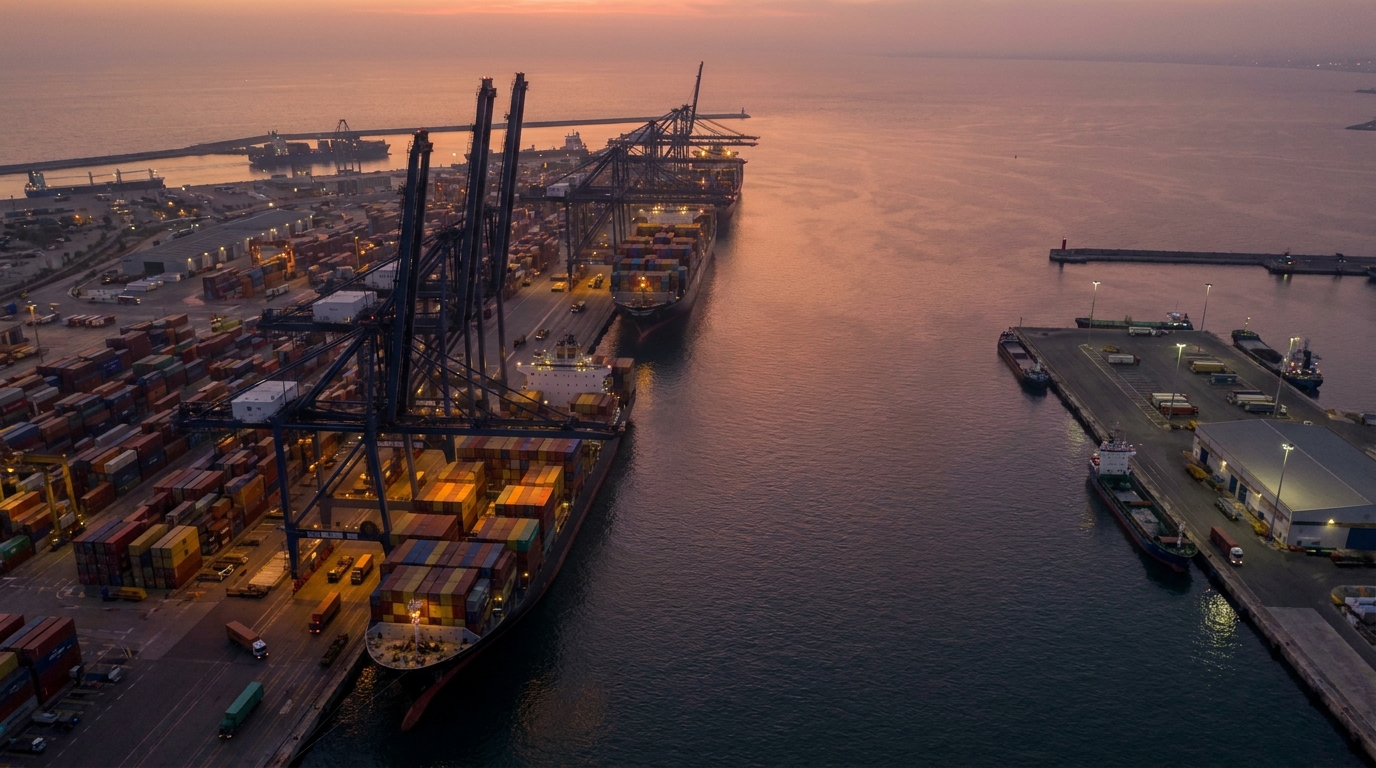
The EU Emissions Trading System (EU ETS) is causing significant structural changes in European container shipping. A recent report by the Spanish port authority, Puertos del Estado, documents a drastic decline in direct container connections to ports within the European Union. Shipowners, seeking to avoid rising emissions allowance costs, are increasingly shifting transshipment operations to hubs located just beyond the EU's borders. For European transport and logistics companies, this means urgently reviewing supply chains, calculating costs, and assessing new operational risks.
Hard Numbers: Ports Are Losing Connections at an Alarming Rate
A study conducted by an analytical group established by Puertos del Estado, covering data from January 2023 to March 2026, yields clear and disturbing conclusions. Direct container connectivity in northern European ports has declined by 5%, while ports in the eastern Mediterranean have seen a drastic decline of as much as 18%. These are not adjustments resulting from momentary market fluctuations—they signal a profound, systemic shift in the logic of global shipping networks.
Some commentators have attempted to attribute these changes to external factors: the conflict in the Middle East, restricted transit through the Suez Canal, or a general restructuring of shipping alliances. However, experts from the renowned analytical firm Alphaliner calculated that these phenomena cannot explain the scale of the observed changes. According to their estimates, as many as 76% of changes in routes and arrival schedules are directly due to shipowners' efforts to avoid EU ETS costsThis figure should be a wake-up call for both decision-makers in Brussels and all businesses dependent on the stability of Europe's maritime hubs.
How do shipowners avoid EU fees? Two key strategies
Shipping line operators have developed efficient cost optimization mechanisms that allow them to effectively reduce their exposure to EU ETS fees. The two dominant methods are: route sharing (route splitting) and route transformation (route transformation).
- Splitting routes This involves terminating deep-sea ocean services at transshipment ports located outside the EU. From there, the cargo is then picked up by smaller feeder vessels and delivered to destination ports within the EU. This allows the shipowner to avoid emission fees for the most expensive part of the route per kilometer.
- Route transformation Instead, it assumes including non-EU ports in the rotation immediately before entering EU waters or immediately after leaving. This allows for optimizing the balance of emission allowances without radically restructuring the entire network of connections.
Both strategies bring tangible financial benefits to shipowners – at the expense of European ports, their workers and the related value chains.
Britain and Morocco are the main beneficiaries of the EU exit.
The consequences of these shifts are clearly visible in the market data. The share of deep-sea cargo handled by British ports in the northern European market—measured in TEU-miles— increased from 17% in 2023 to 36% in the first quarter of 2026This growth has come at the direct expense of ports in Germany and the Netherlands, which until a few years ago were the main gateways for goods entering Europe.
In the Mediterranean region, a particularly striking example is the dynamics of the so-called clean transshipment (pure relay transhipment), where EU ports served as hubs connecting distant regions of the world. The volume of these operations decreased by more than half — exactly 51% compared to the level in 2023. At the same time, the Moroccan port of Tangier Med, located just a dozen or so kilometers from the EU coast, recorded a stable, 5 percent increase in activity.
Maersk case study: one route change, savings of €16 to €33 million
The scale of these processes is illustrated by the decision of Danish shipping giant Maersk to reorganize its MECL service, which serves the US East Coast-India route. The company has canceled calls at the Spanish port of Algeciras—on both its western and eastern routes—instead of a stopover in Tanger Med, Morocco.
The financial impact of this single, seemingly technical, operational decision? Estimated savings ranged from 16 to 33 million euros on the cost of emission allowances alone. For the management of large shipowners, this is a sufficient argument to reconfigure their logistics networks without considering the consequences for EU ports. For Polish, German, and Dutch freight forwarders and logistics operators, this heralds higher costs and longer transit times.
Structural erosion of Europe's maritime infrastructure
Puertos del Estado clearly warns: the changes described are no longer a temporary response to new regulations; they have become a permanent and structural phenomenon. Investments in infrastructure, terminal operating agreements, and long-term logistics contracts are increasingly consolidating around hubs located outside the EU—in Morocco, Egypt, and the United Kingdom.
The consequences of this process for the European transport and logistics industry are multidimensional:
- Increase in operating costs for companies using European ports – additional transshipments, longer feeder routes and a greater number of contact points in the supply chain translate directly into higher freight rates and extended delivery times.
- Growing operational risk — more reloads mean more potential points of failure, delays and cargo damage.
- Planning uncertainty — dynamic changes in rotations and shipping services make long-term supply chain planning and negotiating stable contracts with carriers difficult.
- Erosion of infrastructure and employment in European ports - reduced volumes hinder investments, lead to job cuts and weaken the negotiating position of EU maritime hubs.
What is Puertos del Estado proposing? Two recovery mechanisms.
The authors of the report do not stop at diagnosis – they also point to specific policy instruments that could limit the scale of carbon leakage and level the playing field between EU and non-EU ports.
1. Expanding the list of neighboring transshipment ports
The first proposed solution assumes a significant expansion of the official list of so-called neighbouring transshipment ports (neighboring transhipment ports) under the EU ETS regulations. Including ports in the UK, Egypt, and Israel on this list would close off the most easily accessible avenues for circumventing the fees. Shipowners would no longer be able to automatically avoid the emissions fees by routing traffic through ports from countries currently not subject to these regulations.
2. Carbon Leakage Factor
The second and potentially more effective tool is the introduction of a special carbon leakage factorThis mechanism would administratively penalize shipowners who artificially split routes solely to reduce their emission allowance bills, without any real benefits.rodoAs a result, transshipment operations would return to EU ports, and the regulatory game would no longer be profitable to the same extent as before.
Both solutions, however, require political will and efficient action by European institutions—and time is of the essence. The longer the structural reorganization of shipping networks continues, the more difficult it will be to reverse the consolidation processes around non-EU hubs.
Business Risk Perspective: What Should Transport and Logistics Companies Do?
For risk managers and business owners operating in European maritime transport and logistics, the current situation requires a specific response – both in the short and long term.
W short term It's crucial to constantly monitor changes in the rotations of major shipping services, especially on key routes to Asia, North America, and the Red Sea. Any change in call may require renegotiating contracts, revising schedules, and updating logistics cost calculations.
W medium term Companies should consider diversifying their ports of call and feeder partners—dependence on a single maritime hub in an environment of increasing shipping network instability is a significant risk factor. It's also worth exploring alternative multimodal connections.
W long-term perspective It's essential to monitor the legislative process surrounding the EU ETS. The review of the 2031-2040 legal framework could bring significant regulatory changes that will once again impact the geography of European shipping networks. Companies that identify the direction of these changes early will gain an advantage in infrastructure planning and negotiating long-term contracts.
The dilemma of European climate policy
This entire situation reveals a fundamental tension facing EU institutions. The EU ETS, as a decarbonization instrument, achieves its goal—increasing the cost of CO2 emissions and encouraging investment in cleaner propulsion technologies. The problem is that, in its current form, it does not eliminate emissions, but moves them outside the EU's borders.
Ships don't stop emitting CO2—they just do it in Morocco, Egypt, or the UK instead of Algeciras or Hambok. The global climate isn't benefiting, European ports are losing cargo and jobs, and EU logistics companies are facing higher operating costs. This is a textbook example of carbon leakage—a phenomenon that economists warned about even at the system's design stage.
Decision-makers in Brussels face a difficult choice: keep the restrictive regulations unchanged and accept the structural marginalization of European ports, or modify the ETS mechanisms in a way that closes the loopholes for easy fee avoidance without weakening the very idea of carbon pricing.
Summary: Time for action, not diagnosis
The Puertos del Estado report is a document of strategic importance for the entire European maritime sector. The data is clear: the EU ETS in its current form is generating strong incentives to relocate operations outside the EU, and the scale of these shifts—both measured in container volumes and the value of lost business—is growing quarter by quarter.
For transport and logistics companies operating in the European market, this means incorporating new, systemic regulatory risks into their operating and financial models. Ignoring these changes in the name of planning inertia could prove a costly mistake—especially at a time when major market players are already actively rebuilding their networks in response to the new emissions reality.










