
Fake carriers attack freight exchanges: How organized crime groups steal cargo and drive companies into bankruptcy

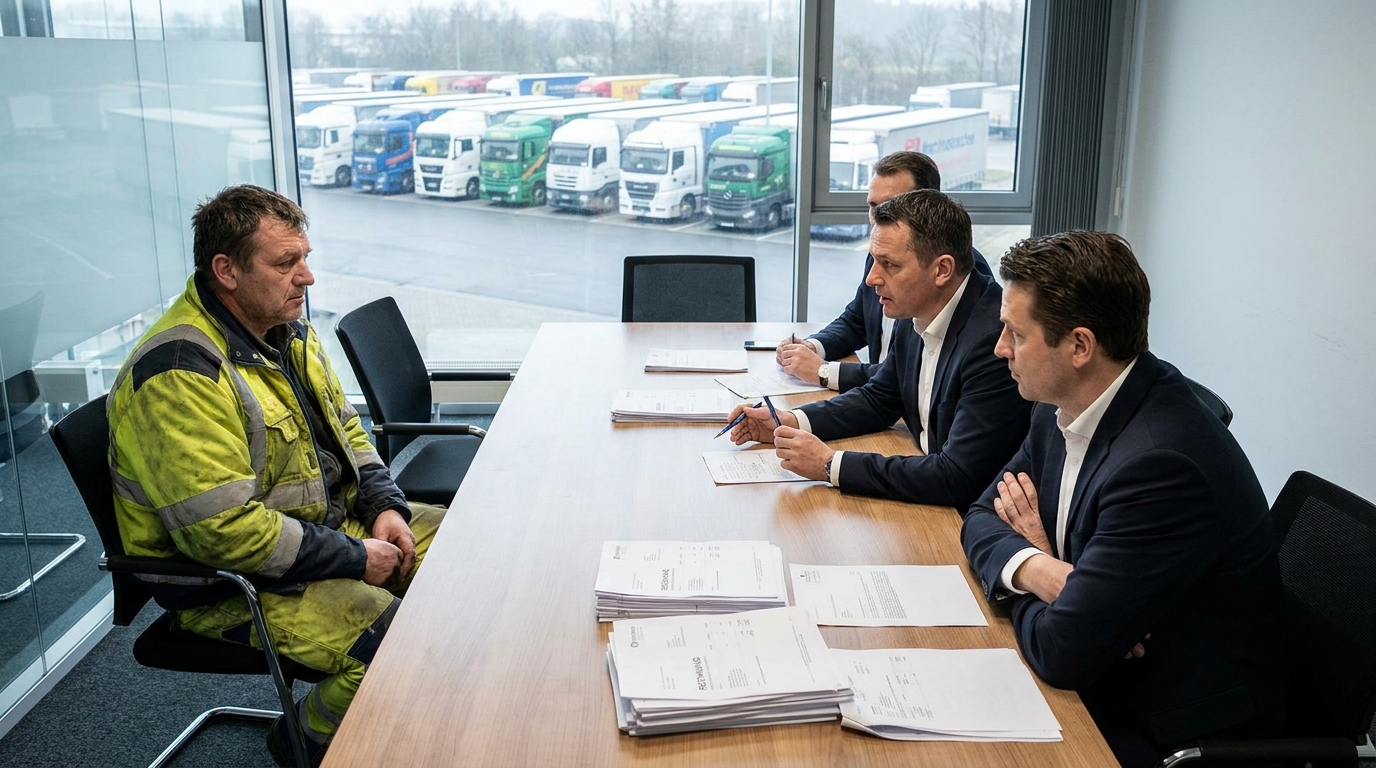
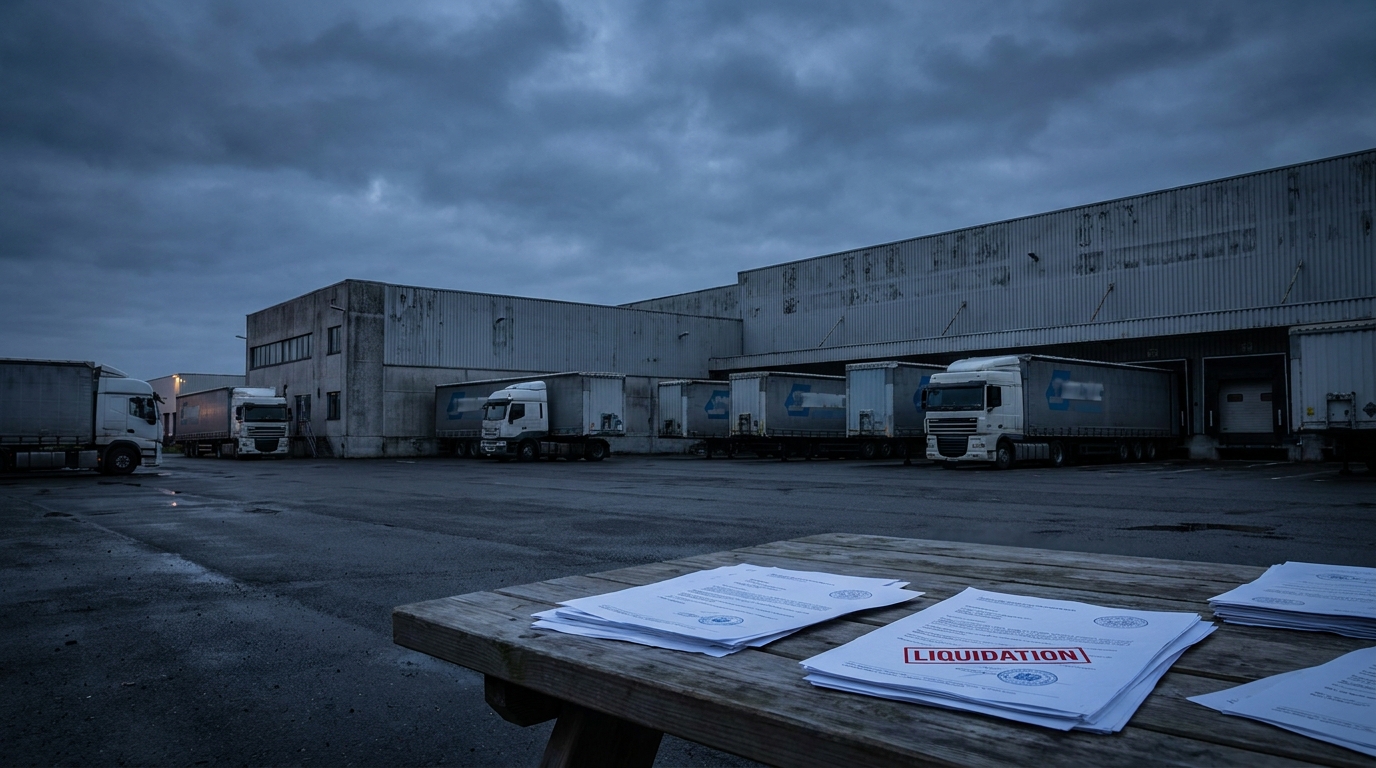
The European transport and logistics sector is grappling with a new, particularly dangerous wave of fraud. In just 48 hours, dozens of attempted cargo hijackings by organized criminal groups impersonating legitimate transport companies from Poland and Lithuania have been recorded. The perpetrators' modus operandi is meticulously planned, and the forged documents they use are strikingly similar to the originals. Experts warn: standard verification procedures are no longer sufficient, and the financial consequences for the intermediaries defrauded could be catastrophic.
The scale of the phenomenon: dozens of incidents in two days
The latest data from European freight exchanges and reports from affected companies paint an alarming picture. According to available industry reports, dozens of confirmed cargo thefts occurred in a very short period of time—some sources even mention 88 separate incidents. In many cases, losses were not limited to the transported goods: victims also lost the vehicles themselves, i.e., tractor-trailers and trailers, which disappeared irretrievably along with the stolen cargo.
Companies registered in Poland and Lithuania—countries whose carriers enjoy a well-established reputation in Europe and form the backbone of trans-European supply chains—have proven particularly vulnerable to impersonation by criminals. Their reputation and recognition make them attractive targets for corporate identity theft groups.
Who are ghost carriers and how do they operate?
The term "ghost carrier" is not accidental. It describes an entity that, on paper—and in digital communications—appears to be a fully legitimate, operating transport company, while in reality it is merely a facade created solely for the purpose of extorting goods. These groups operate using several complementary methods, the common denominator of which is gaining the victim's trust before they realize something is amiss.
Fake domains and typosquatting
The first and most common tool is registering fake domains nearly identical to the addresses of legitimate carriers. The difference can be as simple as a single transposed letter, an added number, or a change to the domain ending—for example, replacing ".pl" with ".eu" or ".com." This technique, known as typosquatting, allows criminals to conduct email correspondence that appears credible to the untrained eye. A carrier who doesn't carefully check every character of a sender's email address can easily fall victim to this manipulation.
Generic mailboxes and fake dispatchers
A parallel method operates through free, publicly available email accounts. Criminals contact freight forwarders, posing as independent dispatchers or employees of reputable transport companies, using Gmail, Outlook, or similar addresses. While smaller transport companies do sometimes communicate through such channels, in the case of large carriers with extensive fleets, this is a clear red flag that should not be ignored.
Taking over indebted companies - the most dangerous method
However, it's the third method that raises the greatest concern among experts and represents a new level of concern in transport crime. Organized groups are increasingly taking over—formally or informally—indebted and bankrupt transport companies. Such entities have a long history in business registers, positive stock market ratings, and their data is listed in state databases as active enterprises. After taking control, the criminals do not change anything in the official documentation—they simply substitute their own drivers and intercept customer communications. This solution is dangerous because it effectively bypasses many standard verification tools, which in such cases indicate a "clean" operator's history.
Forged documents - perfection that would fool anyone
A key element of any scenario is providing the potential victim with documentation that doesn't arouse suspicion. Criminals have professionally prepared fakes of two basic types of documents required when ordering transport:
- OCP (Carrier's Civil Liability) policies — sent as PDF scans, they contain the logo of the legitimate insurer, the correct company details of the legitimate carrier, and the correct insurance amounts. Only the contact details are modified—phone numbers and email addresses are redirected to criminals.
- Transport licenses — government documents authorizing the conduct of transport activities, forged with similar care. License numbers may be authentic (stolen from a real company), which means that their verification through standard internet search engines may yield false positive results.
The common denominator between both types of fraud is the substitution of contact details and bank account numbers. A forwarder who calls the number listed on the submitted liability insurance policy will connect directly to the criminal—not the legitimate company whose documents have been falsified. This is why verifying phone numbers in independent, official registries is now an absolute requirement, not an option.
How to Effectively Verify a Carrier? Standards That Cannot Be Ignored
Industry security experts, freight exchange operators, and law enforcement agencies are unanimous on this issue: verification based solely on the analysis of submitted documents is a thing of the past. The current and only acceptable standard is so-called two-factor carrier verification—the business equivalent of the two-factor authentication used in online banking.
Verification in official state registers
Before each transport order, the freight forwarder is required to independently verify the contractor's details in independent databases. For Polish companies, these are the KRS (National Court Register) and CEIDG (Central Registration and Information on Economic Activity). For entities across the European Union, the VAT VIES database is an essential tool, enabling verification of a valid VAT number. It is crucial that telephone contact with the carrier is made only on numbers obtained from these official sources—not on numbers provided by the interested party in correspondence.
Warehouse procedures and physical vehicle verification
Verification cannot end at the office level. Equally rigorous procedures must be implemented directly in warehouses. Employees responsible for loading should always compare the physical license plates of vehicles arriving at the ramp with the information contained in the notification. Any discrepancies—even seemingly minor ones—should result in immediate suspension of the goods release and escalation of the matter to superiors or the security department.
Red flags you shouldn't ignore
Experts point to a number of warning signs that should automatically trigger an extended verification procedure or transaction suspension:
- Email address from a free domain — reputable carriers with large fleets use business mailboxes on company domains, not public services.
- Sudden changes to driver data — information about a change of driver or vehicle just before the planned loading, especially without prior notice, is one of the most common signals preceding an attempted theft.
- Time pressure — artificially rushing the forwarder or warehouseman, insisting on the immediate release of goods without following standard procedures, is a classic social engineering technique used by criminals.
- Registration number mismatch — the vehicle that arrives to pick up the load has different plates than those given in the notification.
- No telephone verification possible — inability to call numbers from official registers or refusal to confirm the order by the company's headquarters.
- Freight rates too attractive — prices that differ significantly from market rates may indicate that the “carrier” does not intend to reach the destination.
Financial Tsunami: How Cargo Theft Destroys a Shipping Company
The consequences of a successful cargo theft by a ghost carrier are devastating for shipping companies—often more so than for the owner of the stolen goods. The mechanism that transforms a one-off theft into an existential threat to a shipper is well known to financial risk specialists in the TSL industry.
Insurers refuse to pay out
The first and most painful step is usually the refusal of the forwarder's insurer to pay compensation under the Freight Forwarder's Civil Liability (OCS) policy. Insurance companies are increasingly invoking provisions regarding the insured's gross negligence in selecting a subcontractor. If the forwarder cannot document a rigorous, two-step carrier verification process in accordance with current industry standards, the insurer has grounds for denying coverage. In practice, this means that the financial burden of compensation for the owner of the goods falls entirely on the forwarding company.
Debt spiral and loss of liquidity
The value of cargo targeted by organized crime groups is typically significant—most often consumer electronics, household appliances, photovoltaic panels, copper and other non-ferrous metals, tires, and brand-name cosmetics. The value of a single stolen shipment typically ranges between €50 and €300. For a small or medium-sized freight forwarder, having to pay such a large sum of money out of their own funds means an immediate and significant loss of financial liquidity.
Worse still, the freight forwarder suffers a double blow: he must compensate the owner of the goods, while simultaneously failing to recover the amount owed by the fictitious carrier. In the following weeks, a domino effect begins—the company is unable to meet its obligations to other subcontractors and service providers, generating payment bottlenecks across the broader market.rodoThe entity falls deeper and deeper into debt, often resorting to working capital loans or loans to cover current operations. In many cases, this spiral ends with the filing of a bankruptcy petition—and the debts of the affected entities go to debt collection.
Long-term litigation and insurance recourses
Even if the insurer ultimately pays compensation, the shipping company doesn't escape unscathed. The insurance company will pursue recourse—reimbursement of the paid amount—from the forwarder if it deems the damage to have been caused by a lack of due diligence. Litigation in such a case can drag on for years, generating additional legal costs and absorbing the company's management resources. During this time, the company operates under constant financial and legal pressure, negatively impacting its ability to secure new contracts and maintain relationships with existing partners.
The macroeconomic dimension of transport crime
The phenomenon of "ghost carriers" should be considered not only in the context of individual losses for individual companies, but above all as a systemic threat to the financial condition of the entire European TSL sector. The transport and logistics industry operates in arodoThis is a landscape of exceptionally low margins, rising operating costs (fuel, wages, insurance), and intense competitive pressure. In such conditions, a one-time, unexpected loss of several hundred thousand euros can devastate even a long-standing company with a stable market position.
The cumulative effect of dozens or hundreds of such incidents annually translates into hundreds of millions of euros in losses for the European industry, rising insurance premiums for all market participants, and, consequently, inflationary pressure on the prices of logistics services, ultimately affecting every consumer in Europe. Organized transport crime is therefore not just an industry-specific problem; it has a macroeconomic dimension.
Recommendations for risk managers and owners of TSL companies
In the face of the growing threat, security experts are making specific recommendations for forwarding and logistics companies:
- Implementation of a formal carrier verification procedure — written, standardized and obligatory for every new contractor, regardless of the value of the order.
- Using authorized transport exchange platforms offering their own identity verification mechanisms, such as TIMOCOM or Trans.eu, while maintaining their own control procedures.
- Regular employee training — dispatchers, freight forwarders and warehouse workers — in the field of recognizing social engineering techniques and current methods of operation of fraudsters.
- Introduction of the "four eyes" principle when approving new carriers and for orders with a cargo value exceeding established thresholds.
- Ongoing monitoring of industry warnings published by transport exchanges, industry associations and threat information exchange platforms such as EURODEBT.eu.
- OCS insurance policy audit in terms of provisions regarding due diligence and gross negligence - to know in advance what procedures the insurer requires to guarantee payment of compensation in the event of a loss.
Business Risk Perspective: Lessons for Policymakers
The current wave of identity fraud on European freight exchanges is not a temporary phenomenon, but rather a symptom of a lasting, structural shift in the threat landscape for the TSL industry. Organized crime groups are systematically increasing the sophistication of their methods—from simple document forgery, through advanced typosquatting, to the takeover of legitimate businesses as "fronts." Each subsequent improvement in the verification process on the market side is met with an appropriate response from criminals.
For risk managers in freight forwarding and logistics companies, the conclusion is clear: carrier verification cannot be treated as a formality or a one-time activity performed when onboarding a new customer. It must become a living process, constantly updated in response to evolving threats. The cost of implementing rigorous verification procedures is disproportionately low compared to the potential financial, reputational, and legal losses resulting from a single successful theft.
Companies that invest in appropriate procedures, training, and verification tools today will be able to operate tomorrow with reduced operational risk and a stronger negotiating position with insurers. Those that ignore warnings risk becoming just another addition to the growing list of victims—and yet another case of bad debt analyzed by platforms like EURODEBT.eu.