
Phantom carriers attack European freight exchanges – BGL and DSLV sound the alarm
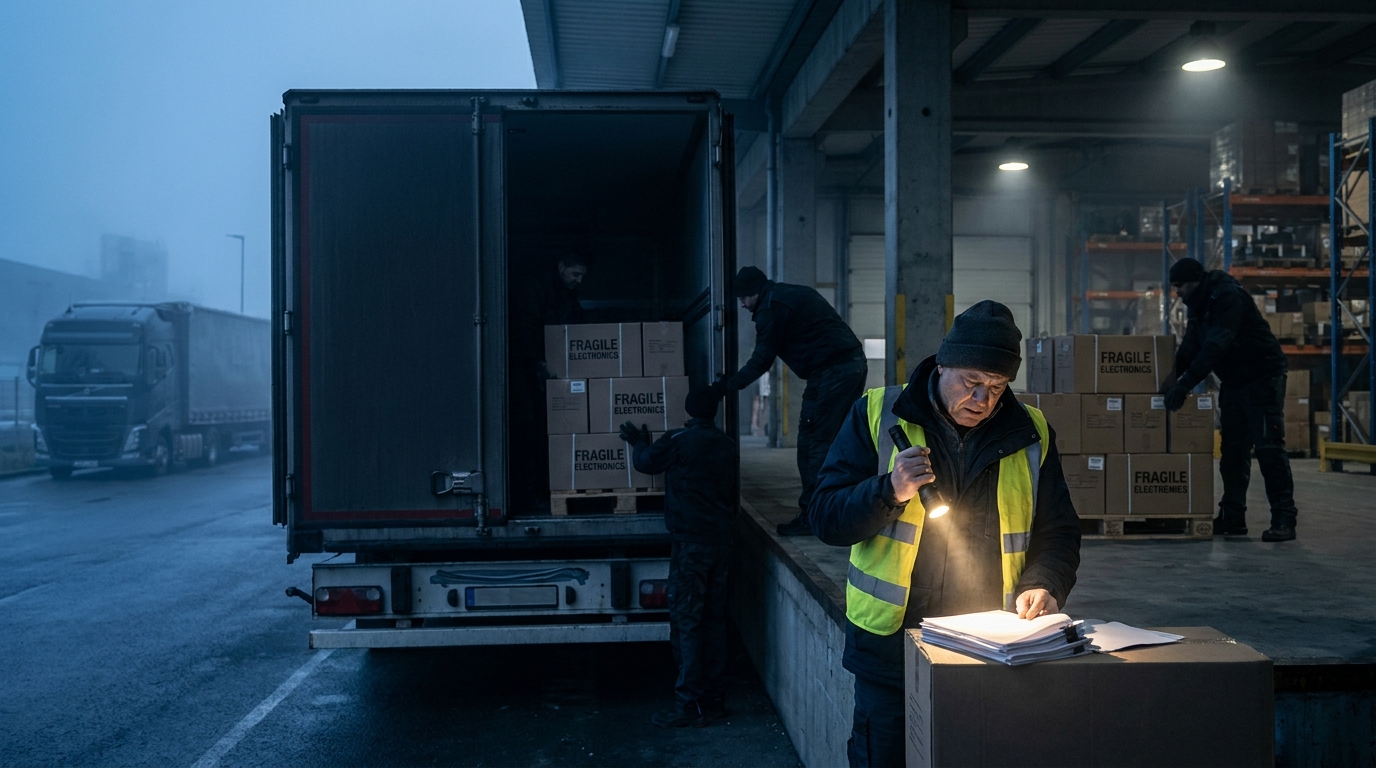
The German industry associations BGL and DSLV have issued an urgent warning to the entire transport and logistics sector in Europe. The alarm is about the rapidly growing wave of sophisticated frauds involving the impersonation of legitimate transport companies in order to steal valuable cargo. The phenomenon of so-called ghost carriers (Phantom-Frachtführer) has reached a scale where traditional methods of verifying contractors prove completely ineffective. Losses incurred by European logistics and forwarding companies reach hundreds of thousands, and in extreme cases even millions of euros – often in a single incident.
A new dimension of crime in the transport industry
For years, the transportation and logistics industry has grappled with classic forms of crime—parking lot thefts, truck robberies, and fraud by dishonest employees. However, modern criminals operate in a completely different dimension. Instead of risking direct confrontation, they use digital tools to create complex identity theft schemes. The Bundesverband Güterkraftverkehr Logistik und Entsorgung (BGL)—the Federal Association for Freight Transport, Logistics, and Disposal—in cooperation with the German Forwarding and Logistics Association (DSLV)—documented a series of such cases and decided to issue a public warning to the entire industry.
The criminals' modus operandi is well-thought-out and multi-stage. Organized criminal groups — often operating on an international scalerodowej — they don't set up fictitious companies from scratch. Instead, they take over the digital identities of companies with a long history and established reputation in the market. The victim of such an attack may not even be aware for a long time that someone is impersonating their brand and accepting transport orders on their behalf.
How does a digital identity theft scheme work?
The first step for criminals is to take control of a legitimate transport company's account on a popular European freight exchange. They use advanced phishing techniques and social engineering methods to achieve this, manipulating company employees into unknowingly revealing their login credentials. After gaining unauthorized access to the company's profile, the fraudsters begin subtle but crucial modifications.
Contact details are primarily changed—phone numbers and email addresses are replaced with data controlled by criminals. Often, domains are created that look deceptively similar to the company's original website—differing only by a single letter or suffix. The result is that, attempting to verify the carrier, the client contacts the fraudster, believing they are speaking with a reputable company.
After taking over communication channels, criminals quickly accept offers to transport particularly valuable goods. The following cargo categories appear primarily in BGL documentation:
- Consumer electronics — smartphones, laptops, electronic components
- Solar panels — due to its high unit value and ease of resale
- Copper and other non-ferrous metals — goods with a stable market value
- Branded cosmetics and perfumes — easy to liquidate on the grey market
- Pharmaceuticals — an increasingly common target of attacks
The theft process – from the stock exchange to the black market
Once the phantom carrier accepts a lucrative order, the criminal mechanism enters the next phase. A driver arrives at the loading site equipped with a set of carefully crafted documents—false transport licenses, forged insurance policies, and false registration documents. The vehicle is adorned with false license plates that may correspond to actual vehicles in the database.
In many reported cases, criminals have employed two execution strategies. The first involves subcontracting to an unsuspecting subcontractor—usually a small carrier from Eastern Europe who receives the order through another exchange and is unaware that they are participating in the crime. The second involves using their own resources—vehicles and drivers closely linked to the criminal group.
Equally dangerous is the scenario of manipulation during transport. In this scenario, the cargo is legally entrusted to a legitimate company, and then—already in transit—someone contacts the driver by phone, posing as a freight forwarder or shipper, and redirects him to another location under a credible-sounding pretext. The driver, having no reason to suspect, delivers the goods to the indicated address, from where they immediately disappear into informal distribution channels.
The time to recover the goods is dramatically short. As BGL experts point out, the cargo is transferred to a temporary warehouse—often in another country—where it is rapidly unloaded, repackaged, or disassembled. Within dozens of hours, it is practically impossible to identify or recover by law enforcement.
Catastrophic legal and financial consequences
This issue has recently been analyzed in detail by transport law experts, including Professor Axel Salzmann, whose publications document the growing problem. The topic also found a spotlight in the industry magazine VerkehrsRundschau. The emerging picture should compel every risk manager to take immediate action.
For freight forwarders and shippers who fall victim to phantom carrier fraud, the consequences can be dramatic—regardless of whether they themselves are victims. The key problem lies in the approach of insurance companies. Insurers often refuse to pay compensation under freight forwarder's liability (OCS) or cargo insurance policies. The basis for denial is an allegation gross negligence when selecting a subcontractor.
The insurers' logic is as follows: if available tools and procedures exist to verify the carrier's identity before loading, and the company fails to utilize them or utilizes them insufficiently, it bears joint responsibility for the damage incurred. In practice, this means that a freight forwarding company that loses cargo worth several hundred thousand euros may be forced to cover the entire loss from its own funds. For many companies, especially small and medium-sized ones, this effectively means bankruptcy.
Reputational risk is equally serious. A company that allows a customer's cargo to be stolen faces not only financial claims but also a loss of market trust—often irreversible. In an industry based largely on relationships and reputation, a single incident can end years of business.
BGL and DSLV Recommendations – What Exactly to Do?
BGL and DSLV are not stopping at a mere warning. The associations are presenting a detailed set of recommendations that they believe should become industry standard when partnering with a new carrier. This procedure is known as Carrier Due Diligence and includes several key stages:
1. Cross-verification of contact details
One of the simplest, yet most effective, ways to detect fraud is to independently verify contact details. The phone number and email address provided by the carrier on a freight exchange should be cross-checked with the data appearing in official trade registers—national company databases, transport license registers, or websites archived by external services. Any discrepancy should be treated as a red flag requiring further investigation.
2. Rigorous document checks at the loading dock
The moment of physical receipt of goods is the last line of defense against theft. BGL recommends implementing mandatory verification procedures at the loading dock, which include scanning the driver's ID documents and a detailed inspection of both the tractor unit and trailer's license plates, cross-checking this data with the information previously provided by the carrier. Any deviations—a different vehicle than advertised, a different driver—should result in the loading being suspended until the situation is resolved.
3. Verification in official databases and license registries
Every carrier entrusted with cargo should have a valid transport license confirmed by the appropriate national authority. In Poland, this is the authority issuing the Community license or permit to practice as a carrier. In Germany, verification is carried out by the Kraftfahrt-Bundesamt (KBA). It is equally important to verify the carrier's liability insurance policy directly with the insurer, not just based on the document presented by the driver.
4. Using certified verification platforms and programs
BGL offers active certification support for transport companies, creating a database of proven and verified partners. Using platforms that have implemented advanced identity authentication mechanisms (including two-factor authentication for carrier accounts) significantly reduces the risk of falling victim to fraud. When choosing a freight exchange, it's worth paying attention to the security standards the platform operator employs.
5. Systematic training for dispatch staff
Even the best procedures are ineffective if employees don't understand how to apply them and why they're needed. BGL places significant emphasis on regular training for dispatchers and operational staff. The goal is not only to teach specific procedures but also to develop a keen sense of awareness—the ability to recognize suspicious signals in communication, such as time pressure, last-minute requests for communication changes, or pressure to bypass standard verification procedures.
The scale of the problem in the European context
The problem of ghost carriers is not limited to Germany. Similar incidents have been reported in the Netherlands, Belgium, Poland, the Czech Republic, and the Baltic states. European industry associations indicate that the phenomenon has significantly intensified over the last two to three years, which correlates with the rapid development of digital freight forwarding platforms and freight exchanges. The more efficient and rapid the processes of matching orders with carriers, the greater the potential security gap—unless the platform implements appropriate verification mechanisms.
The European Police Organisation (Europol) has identified this type of fraud as a priority in the fight against organized crime targeting the logistics sector. Criminal groups operating in this area demonstrate a high degree of organization, possess the technical resources to falsify documents, and efficiently operate in multiple jurisdictions simultaneously, significantly complicating prosecution.
It is worth noting that, in addition to the financial losses incurred by the direct victims, this phenomenon generates serious systemic costs – increased insurance premiums for the entire industry, costs of implementing security procedures and the erosion of trust in relationships between supply chain participants.
A Risk Management Perspective – What Should Managers Do Today?
The BGL and DSLV warning is a wake-up call that should not be ignored by any company operating in the transportation and logistics sector. Whether we are a shipper entrusting goods to freight forwarders, a freight forwarder selecting subcontractors, or a carrier concerned about their digital identity being stolen, this issue affects us directly.
From a collaboration risk management perspective, key actions to be taken in the near future include:
- Conducting an audit of current carrier verification procedures — Do the methods used meet BGL recommendations? Where are the gaps?
- Implementation or update of Carrier Due Diligence procedure as a formal internal document with assigned responsibilities
- Contact with the insurer to determine what exact verification requirements are imposed by the OCS or cargo policy - failure to meet these requirements may result in denial of compensation
- Implementation of two-factor authentication on all digital platforms used by the company – both freight exchanges and TMS systems
- Overview of loading dock procedures and ensuring that employees know what to do if there are any doubts about the driver's identity or the authenticity of documents
- Monitoring your digital identity — verification whether the company's data on transport exchanges is up-to-date and consistent with the information in the commercial registers
Summary – Digital Vigilance is the New Standard
The warning issued by BGL and DSLV clearly indicates that the era of simply checking a license number and asking for references is gone forever. Criminals are effectively exploiting the digitalization of the transportation industry for their own purposes, and the pace of their adaptation to new realities is alarming. Companies that fail to keep pace with this threat with appropriate procedures risk not only financial losses but also catastrophic legal consequences.
A positive signal is the active attitude of therodoIndustry experts—BGL and DSLV—not only inform about the threat but also propose specific, implementable solutions. The EURODEBT.eu platform will monitor further developments and report on further cases and the evolving methods used by criminals.
In an industry where supply chains rely on mutual trust and where one theft can devastate a solid company, investing in robust verification procedures isn't a cost—it's insurance against disaster.