
Mobility Package 2026: Revolution in bus transport – what are the threats for carriers from 1 July 2026?
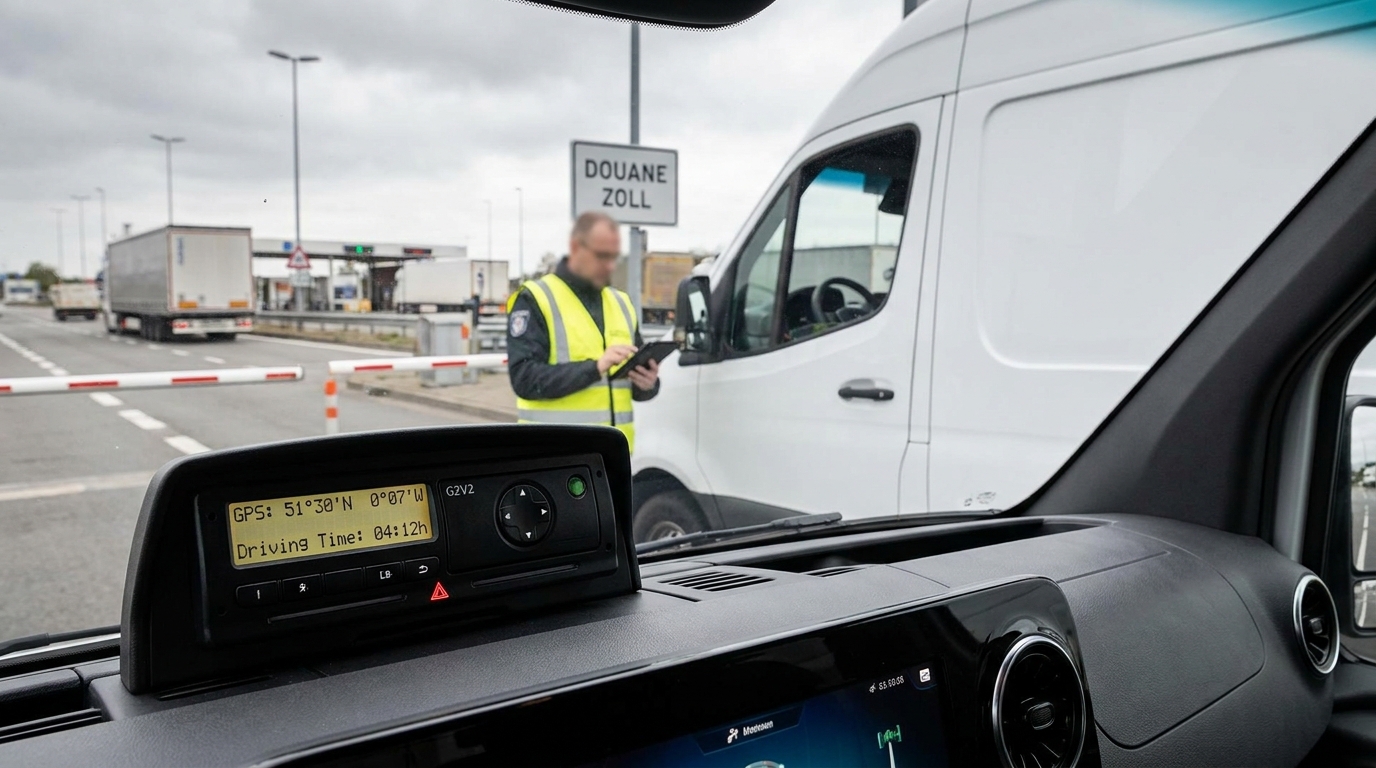
From July 1, 2026, the European transport market will face one of the biggest regulatory revolutions of the last decade. Carriers using vehicles with a gross vehicle weight of 2,5 to 3,5 tons in international transportrodowill be covered by regulations that were previously reserved exclusively for heavy road transport operators. The EU Mobility Package aligns the obligations of the so-called bus sector with the requirements applicable to truck fleets, which means a sharp increase in costs, the need to implement new technologies, and a complete overhaul of the operating models of thousands of companies across Europe.
Context: Why has light transport come under the scrutiny of regulators?
For years, vehicles under 3,5 tonnes GVM operated in a regulatory gray zone. The lack of mandatory tachograph installation and significantly more lenient driver working time regulations allowed this sector to enjoy a level of flexibility unavailable to truck carriers. However, this flexibility also became a source of growing problems—unfair competition, price dumping, and serious threats to road safety resulting from driver overload and fatigue.
EU legislators have decided to clamp down on this practice. The amendment, which comes into effect on July 1, 2026, is a direct response to long-standing demands from honest carriers, trade unions, and road transport inspectorates. From the perspective of logistics and forwarding companies, this change is a revolution that requires immediate preparatory action—not next year, but today.
The G2V2 tachograph obligation – the foundation of the new regulations
The heart of the upcoming changes is the absolute requirement to equip all vehicles with a GVM of 2,5 to 3,5 tonnes carrying out internationalrodoRoad transport or cabotage operations, equipped with second-generation smart tachographs, designated G2V2. What's particularly important for carriers planning corrective actions: the regulations do not provide for any additional transition periods or phasing of the obligation. There is a single deadline—July 1, 2026—and it applies to everyone without exception.
G2V2 class devices are not just an improved version of existing driving time recorders. They are an advanced telematics system offering functionalities that fundamentally change the way fleet and driver monitoring is performed:
- Automatic registration of state border crossings — the system independently records the moment of entry into the territory of another EU country, eliminating the possibility of data manipulation by the driver.
- Precise GNSS location tracking — the vehicle’s position is recorded not only while driving, but also during loading and unloading operations, which makes it impossible to hide the actual nature of the service being performed.
- Remote sharing of data with control services — road inspections across Europe will be able to access tachograph data without having to stop the vehicle, which dramatically increases the efficiency of inspections.
- Digital Record Integrity — advanced cryptographic security practically excludes any interference with the collected data.
Implementing the G2V2 tachograph, however, is not just a one-time expense for purchasing and installing the device. The regulations impose a number of administrative and operational obligations that will generate ongoing operating costs:
- Regular data downloading and archiving — The entrepreneur is obligated to download data from the tachograph and driver card memory every 90 days. Failure to comply with this obligation may constitute grounds for imposing a penalty.
- Cyclic equipment legalization — devices require mandatory inspection and calibration at authorized workshops every two years.
- Company card — the company must obtain an entrepreneur card, which allows access to the data stored in the tachograph.
- Driver cards — each driver must have an individual, personal card, without which driving a vehicle is a violation of the regulations.
Drivers' working hours: the end of flexibility in the bus sector
With the installation of G2V2 tachographs, the 2,5- to 3,5-tonne vehicle sector is now fully subject to Regulation (EC) No. 561/2006, which regulates driving times, breaks, and rest periods. For an industry that has operated under much more liberal rules for years, this represents a fundamental shift in its approach.
Driving time limits
The driver will be entitled to drive the vehicle for a maximum of 9 hours a dayThe only exception to this rule is that driving time may be extended to 10 hours, but only twice per week. The total weekly driving time cannot exceed 56 hours, and over two consecutive weeks, the total limit is 90 hours.
Mandatory breaks
After each 4,5 hours of continuous driving A driver must take a break of at least 45 minutes. This break may be divided into two sections: the first must be at least 15 minutes long, and the second at least 30 minutes long, in that order. Any work during the break disqualifies it as rest time.
Daily and weekly rest periods
The regular daily rest period is 11 hours. Regulations allow this to be reduced to 9 hours a maximum of three times per week, provided the reduced rest is compensated for before the end of the following week. The weekly rest period is at least 45 hours – this standard is subject to particularly stringent controls, and the ban on spending the weekly rest period in the vehicle cabin is absolute.
The consequence of these regulations for freight forwarders and planners is the need for a complete redesign of routes. Previously, express transports operated with a single driver may require the involvement of a second driver (double manning) or extended delivery times. Given the chronic shortage of skilled workers in the transport sector, this is a challenge of exceptional complexity.
Sanctions: financial risk that may undermine the company's liquidity
The new regulations won't be a dead letter. On the contrary, G2V2 technology, which enables remote data downloads, will provide road transport inspections in EU countries with unprecedented tools for conducting inspections. Infringements will be detected not only during traditional roadside inspections but also through systematic analysis of telematics data.
The list of violations that may result in sanctions includes, among others:
- Driving a vehicle without a logged-in driver card or with someone else's card,
- Exceeding the permitted daily or weekly driving time,
- Failure to comply with the required break time after 4,5 hours of driving,
- Reduction of daily or weekly rest periods without appropriate compensation,
- Lack of current data in the tachograph or untimely data download,
- Incorrect activity mode on the driver card (e.g. failure to record work time other than driving),
- Operating a vehicle without a valid tachograph legalisation.
The financial scale of fines depends on the national regulations of individual member states. However, in most European Union countries, fines for serious working time violations range from several thousand to several dozen thousand euros. For small and medium-sized transport companies, which constitute the vast majority of the bus sector, a one-time fine of this amount can directly threaten financial liquidity.
An additional, often underestimated risk is the possibility administrative immobilization of the vehicle on the roadA transport inspector who finds serious violations has the right to impound a vehicle until the violations are corrected. In the case of urgent deliveries of goods with a short shelf life or the fulfillment of contractual obligations, such immobilization can generate losses many times greater than the amount of the fine itself.
Exemptions and exceptions – narrow loopholes that inspectors will verify
The new regulations provide for several categories of exemptions from the requirement to use tachographs and working time standards. However, it should be emphasized that these are precisely defined exemptions, and regulatory bodies will be particularly scrutinizing whether a carrier actually meets the conditions for benefiting from the exemption.
The following are exempt from the obligations arising from the Mobility Package:
- Domestic transport — Operations carried out solely within the territory of a single Member State, without crossing borders, are not subject to the new regulations. The key word here is "solely" — even a single trip abroad requires compliance with all requirements.
- Non-commercial transport — Non-commercial operations, conducted strictly without remuneration, may be exempt from the new obligations. However, the line between commercial and non-commercial transport is fluid and constitutes one of the main areas of abuse that inspectors will be investigating.
- Own transport — Transport carried out by a company solely for its own needs, without providing services to third parties, may benefit from the exemption. In practice, verification of "own transport" status is one of the inspection priorities.
- Special categories of transport indicated directly in Regulation (EC) No 561/2006, including, among others, certain types of specialist vehicles and services.
Companies planning to take advantage of exemptions should ensure thorough documentation confirming the domestic or domestic nature of their transport operations. Failure to provide the appropriate documentation, even if they are actually eligible for the exemption, may result in sanctions.
Market Impact: Freight Rates, E-Commerce, and Supply Chains
The macroeconomic consequences of the new regulations will be felt across the entire European economy, not just in the transport sector. Industry analysts agree: Freight rates in the light transport segment will increase significantly — the question is only about the scale of this increase.
The most vulnerable sector is e-commerceE-commerce has built its competitive advantage largely on fast and affordable deliveries, delivered by fleets of buses. Express next-day and same-day deliveries, standard in large online stores, are based on a work model that will become legally unacceptable after July 1, 2026, without significant organizational changes. Slowing supply chains and increasing logistics costs will impact product prices paid by end consumers.
Similar challenges await courier companies and last-mile delivery operators, the catering industry serving multiple locations, construction and installation companies carrying out work in various EU countries, and event agencies and exhibition companies.
Companies with long-term contracts for transport services are faced with the need renegotiation of contract termsContracts concluded before the new regulations came into force, calculated according to existing rates, may be implemented at a loss in the new reality. The inclusion of indexation clauses that account for the increase in the total cost of ownership (TCO) of the fleet is becoming a necessity, not an option.
Action plan for carriers – what to do now?
The July 1, 2026 deadline may seem distant, but the scale of the necessary organizational, technical, and financial changes means preparations must begin immediately. Companies that delay adaptation until the final months before the regulations come into force will risk mounting problems—from queues at tachograph installation shops, to a lack of available driver cards, to insufficient time for staff training.
Recommended actions cover several key areas:
- Fleet audit — identification of all vehicles with a GVM of 2,5 to 3,5 tonnes used in international transportrodoclassification of transport in terms of possible exemptions and exceptions.
- Investment budget planning — detailed calculation of the costs of purchasing and installing G2V2 tachographs, issuing driver cards and company cards, and future operating costs (legalisation, data archiving).
- Training for drivers and management staff — employees must learn new rules for recording working time, handling tachograph cards and procedures during road checks.
- Implementation of a work time management system — software that allows for ongoing monitoring of available driver driving time limits and automatic generation of alerts about upcoming exceedances.
- Revision of delivery routes and schedules — redesigning routes taking into account mandatory breaks and driving time limits, including assessing which routes require the employment of additional drivers.
- Renegotiation of contracts — Reviewing customer contracts to address rising operating costs, including freight rates and delivery lead times.
Business Risk Perspective: Assessing Threats to Contractors
From the point of view of risk managers verifying the credibility of business partners in the transport and logistics industry, the entry into force of the Mobility Package 2026 will create new, important criteria for assessing the condition and reliability of carriers.
Companies unprepared to implement the new requirements will be exposed to several overlapping threats. First, high administrative fines may destabilize the financial situation of smaller entities. Second, vehicle stops during roadside inspections will directly impact the timeliness of deliveries. Third, the possible revocation of a transport license (in the event of an accumulation of serious violations) will translate into a complete loss of service provision.
Warning signals that transport service providers should pay attention to include: offering freight rates significantly below market rates (which may indicate a planned circumvention of the new regulations), lack of information on the installation of G2V2 tachographs in vehicles used for international transport,rodoand the inability to present current data from driver cards and recording devices.
It's worth remembering that the client of a transport service may be held jointly and severally liable for violations of regulations by the carrier in cases where the order execution schedule clearly prevented compliance with driver working time standards. Therefore, verifying the compliance of transport partners with the new regulations is not just a matter of business ethics, but a specific need to manage legal and financial risk.
Summary
The 2026 Mobility Package and its inclusion of vehicles from 2,5 to 3,5 tons is a breakthrough moment for the European light transport sector. Companies that view the upcoming changes as an opportunity to professionalize and build a competitive advantage based on regulatory compliance will emerge from this test stronger. Companies that ignore these signals or delay adaptation risk not only the financial consequences of violations but also the potential loss of the ability to continue operating in international transport.rodopronunciation
The time to act is now. Every month of delay is one less month for calm, thoughtful implementation of change—instead of chaotic adaptation under the pressure of a looming deadline.