

New taxes in Benelux and falling volumes: European road transport ahead of a liquidity crisis in 2026
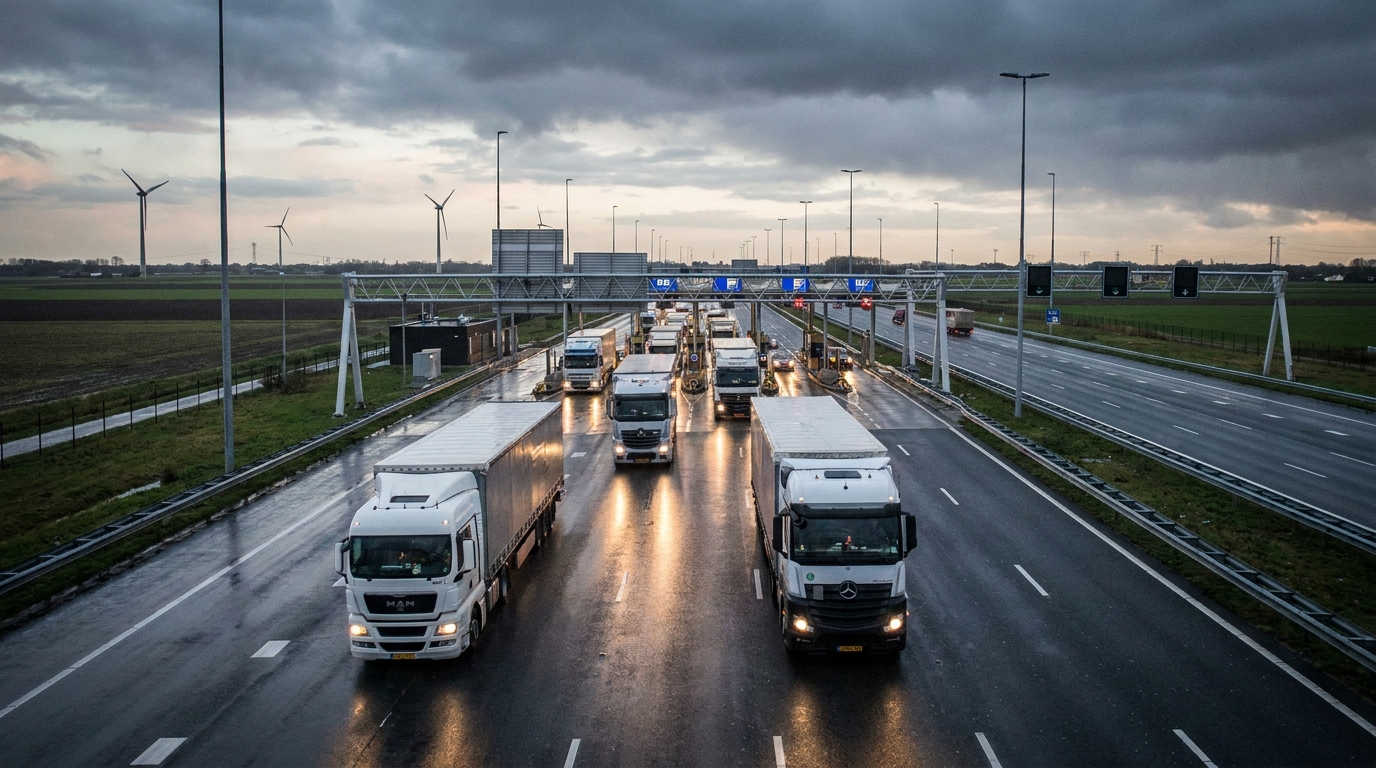
The French Road Transport Federation (FNTR) has sounded the alarm. Statistical data for the first quarter of 2026, coupled with announcements of new fiscal levies in the Netherlands and Belgium, paint a picture of a European road transport market heading towards a serious financial crisis. The segment of small and medium-sized carriers is particularly at risk, as operating margins have remained barely above the break-even point for years. If FNTR's forecasts are confirmed, the second half of 2026 could see a significant acceleration in the wave of insolvencies in the TSL industry across Western Europe.
Data from the first quarter of 2026: the increase in rates does not save falling revenues
At first glance, the data for the first three months of 2026 might seem cautiously optimistic – average road freight rates have increased by 1,4% year-on-year. Under normal market conditions, such price movements would be interpreted as a sign of an improving sector and a strengthening of carriers' negotiating position with shippers. However, the reality is quite different.
A parallel, much more alarming indicator is the 4% decline in total freight tonnage over the same period. This figure clearly illustrates the actual state of demand for transport services in Europe. The rate increase isn't due to increased demand for services—it's rather an attempt to adjust prices to rising operating costs. With concurrent shrinking transport volumes, transport companies' revenues are declining in real terms, even though the customer invoice is slightly higher.
This phenomenon—higher rates with fewer orders—is a wake-up call for industry analysts. It points to weakening demand in the European real economy and, therefore, limited growth prospects for the logistics sector, at least in the short term. Data from the FNTR and the French statistical office SDES confirm that the observed trend is not a one-off anomaly, but a persistent market pattern.
Fiscal revolution in Benelux from 1 July 2026
As if market pressure alone were not enough of a challenge, European carriers are also having to deal with a wave of new tax and para-tax regulations coming into force in key European logistics hubs.
Netherlands: new truck tax
From July 1, 2026, the Netherlands is introducing a new tax directly levied on heavy goods vehicles operating on the Dutch road network. This regulation will affect any carrier—regardless of the vehicle's country of registration—that uses the Dutch road infrastructure for transit or distribution purposes.
The significance of this decision cannot be overstated. Rotterdam is Europe's largest seaport and one of the world's most important logistics hubs. Goods from all over the world flow through Dutch roads, destined for customers in Germany, Poland, France, Scandinavian countries, and dozens of other markets. For thousands of transport companies, routes through the Netherlands are not an option, but a necessity stemming from the structure of their customers' supply chains.
The introduction of the new tax therefore means an immediate and almost inevitable increase in operating costs for companies serving these routes. Estimates of the specific tax rates are not yet fully known, but the mere announcement of the regulation is viewed by the FNTR as a serious threat to the profitability of cross-border transport.
Belgium: higher kilometer fees
Almost simultaneously, neighboring Belgium announced significant increases in kilometer tolls for heavy goods vehicles. The viatoll system has been in operation in Belgium for several years and covers a wide network of motorways and national roads. The increase means that every kilometer traveled on Belgian roads will cost carriers more than before.
For companies operating along the Western European corridor—connecting the ports of Antwerp with Europe's internal markets—Belgian kilometer tolls constitute a significant component of their variable cost structure. Antwerp, the continent's second-largest seaport, serves as a gateway for millions of tons of imported and exported goods each year. Therefore, toll increases on Belgian roads will be felt by a wide range of carriers, regardless of their size or country of origin.
The combination of both regulations—the Dutch truck tax and the Belgian kilometer toll increases—creates a fiscally synergistic effect. Routes through the Benelux, previously considered more expensive but still profitable due to access to major European ports, will become even more cost-intensive. There is no simple alternative that bypasses both countries simultaneously without significantly longer routes and additional fuel consumption.
The Cost Scissors Effect: The Margin Destruction Mechanism
Economists and risk analysts have long used the term "cost scissors" to describe a situation in which a company experiences simultaneous increases in fixed and variable costs while being unable to proportionally increase the prices of its products or services. In the transportation industry, this mechanism is particularly destructive due to the cost structure of a typical carrier.
A transport company incurs costs in several main categories: fuel, driver and staff salaries, fleet leasing or financing, insurance, road tolls, and maintenance and repairs. Most of these items are relatively fixed or difficult to control—especially in the short term. Fuel is subject to fluctuations in oil prices, driver salaries are rising due to chronic labor shortages in the industry, and lease payments are contractually predetermined.
In the scenario described, new taxes and road fees in the Netherlands and Belgium will join this list of burdens that are difficult to reduce. At the same time, declining cargo volumes limit the ability to generate sufficient revenue to cover the ever-increasing cost base. The result? Operating margins, already thin, will shrink even further, and some companies will exceed the break-even point and begin generating operating losses.
Small and medium-sized transport companies at the heart of the crisis
It's important to emphasize that the European road freight transport market is structurally dominated by micro, small, and medium-sized enterprises. Large logistics groups—though visible and recognizable—represent only the tip of the iceberg. The vast majority of orders are fulfilled by companies with several or a dozen vehicles, often managed by the owners themselves, often operating as sole proprietorships with a few employed drivers.
This market segment is characterized by several specific features that make it particularly vulnerable to the threats described:
- Low net margins — In a typical transport SME, net profit rarely exceeds 2-3% of revenue and often hovers around 1%. Any unforeseen cost increase of a few percent can turn a profit into a loss.
- High rolling stock debt — A modern tractor unit meeting Euro 6 emissions standards or higher costs from €150 to over €200. Most smaller carriers finance fleet purchases through leasing or loans, which generates fixed, non-negotiable liabilities to financial institutions.
- Weak negotiating position towards shippers — In an environment of weakening demand and intensifying price competition, smaller companies have limited ability to pass on higher costs to customers. Shippers will simply transfer orders to a cheaper competitor.
- Limited cash reserves — the lack of a financial cushion means that even a temporary deterioration in liquidity can trigger a debt spiral: delayed payments to suppliers, accumulating interest, problems with paying leasing installments.
The combination of these factors with new fiscal burdens and shrinking volumes creates arodoThis represents a very high risk for the financial stability of the SME transport sector. Companies that have previously operated on the verge of profitability may be forced to suspend or liquidate their operations. Companies with slightly higher margins will enter a difficult period of restructuring.
Green transformation as an additional investment burden
The fiscal and market context would be sufficient challenges in itself. However, the European transport sector is simultaneously facing another, equally fundamental challenge: the regulatory and cost pressures associated with the ecological transition.
The European Union's climate policy imposes increasingly stringent requirements on the transport sector.rodoFNTR Report from 2025, devoted to environmental issuesrodohealth and safety in road freight transport clearly shows the scale of capital expenditure (CAPEX) that carriers must incur to adapt to the new standards. This primarily concerns:
- Investments in zero-emission vehicles — Electric tractor units, although increasingly technologically accessible, remain significantly more expensive than their diesel counterparts. The difference in purchase price can reach up to several dozen percent, and the charging infrastructure remains insufficient.
- Alternative power sources — Hydrogen technologies are at the pilot implementation stage and require huge investments from both carriers and refueling infrastructure providers.
- Eco-driving and telematics programs — Implementing systems for monitoring driving style and optimizing fuel consumption requires both technological investments and personnel training costs.
For large transport groups, financing these investments is a difficult challenge, but it's achievable through access to capital markets, bond issuance, or financial support from EU programs. For SMEs, access to affordable external financing is much more limited, especially as banks become increasingly cautious about lending to entities in a sector where growing systemic risks are evident.
Carriers that fail to make environmental investments risk being excluded from a portion of the market—both from regulatory requirements and from the growing expectations of large corporate shippers, for whom the carbon footprint of their supply chain is becoming a key criterion in selecting logistics partners. Those that do decide to invest are burdening their balance sheets at a time when they are already struggling to maintain financial liquidity.
Market Outlook: Consolidation Is the Inevitable Answer
All the trends described above lead to one conclusion: the European road freight transport market is facing a profound restructuring. Financially weaker companies, those with high debt and low reserves, will be gradually forced out of the market—through bankruptcies, takeovers, or voluntary suspension of operations. Companies with stronger capital will acquire their market share and resources—primarily fleet and drivers.
This consolidation process, while potentially leading to increased sector efficiency from a macroeconomic perspective, will generate turbulence in the short term. Carrier bankruptcies mean unpaid debts to creditors—leasing banks, freight forwarders, fuel suppliers, and service providers—and threaten the continuity of logistics operations for the companies that entrusted them with fulfilling orders.
It's important to remember that some of the entities that will experience financial difficulties in the coming quarters are companies with established market positions, long-standing customer relationships, and seemingly healthy balance sheets. The cost-cutting effect can be surprisingly rapid—a few quarters are enough for even a relatively stable company to exhaust its cash reserves, faced with simultaneous cost increases and revenue declines.
The Business Risk Perspective: What Managers and Trading Partners Need to Know
For companies collaborating with European road carriers—whether as shippers, financial institutions, credit insurers, or logistics partners—this situation requires a review of their counterparty risk management policies. Below are key practical recommendations:
- Verification of the financial condition of transport partners — especially those operating on routes through Benelux, Germany, and France. It's worth checking current financial statements, debt ratios, and accounts receivable turnover. Companies with high Days Sales Outstanding (DSO) ratios may already be experiencing liquidity problems.
- Assessment of the carrier's cost absorption capacity — the question of whether a trading partner has a cost structure that will allow it to survive the road toll increases in the Netherlands and Belgium without a dramatic deterioration in results is today crucial for assessing the risk of continued cooperation.
- Monitoring changes in the fleet structure — A carrier that rapidly increases the share of older vehicles in its fleet at the expense of modern ones may be signaling problems financing fleet replacement. This is an indirect indicator of liquidity problems or access to credit.
- Diversification of the transport supplier base — dependence on one or a very narrow group of carriers on key routes is an operational risk that may materialize suddenly if a partner enters bankruptcy proceedings or suspends operations.
- Analysis of indexation clauses in transport contracts — It's worth reviewing whether existing contracts include mechanisms for automatic rate adjustments due to changes in tolls and taxes. The absence of such clauses can lead to conflicts and tense contract renegotiations.
Summary: Red light for the TSL industry in Western Europe
The signals emerging from the FNTR and SDES data for the first quarter of 2026 are clear: European road freight transport is entering a period of increased financial pressure. The simultaneous impact of declining freight volumes, new taxes and road fees in the Netherlands and Belgium, and the demands of a costly ecological transition are creating arodoan extremely demanding environment for the entire industry - and particularly dangerous for its largest segment, i.e. small and medium-sized carriers.
The second half of 2026 will be a test of financial strength for thousands of transport companies across Europe. For risk managers and logistics company owners, this means a thorough review of their trading partner portfolios and a refresh of procedures for assessing contractors' operational capacity.rodoIn a world where even companies with many years of tradition can find themselves in financial difficulties within a few quarters, foresight and proactive risk management are invaluable.
The EURODEBT.eu platform will continuously monitor the situation in the TSL sector and provide information on key fiscal, regulatory and market changes affecting the condition of European road carriers.










