
Nothegger Transport Logistik GmbH goes bankrupt: €36 million in debt and 400 jobs suspended
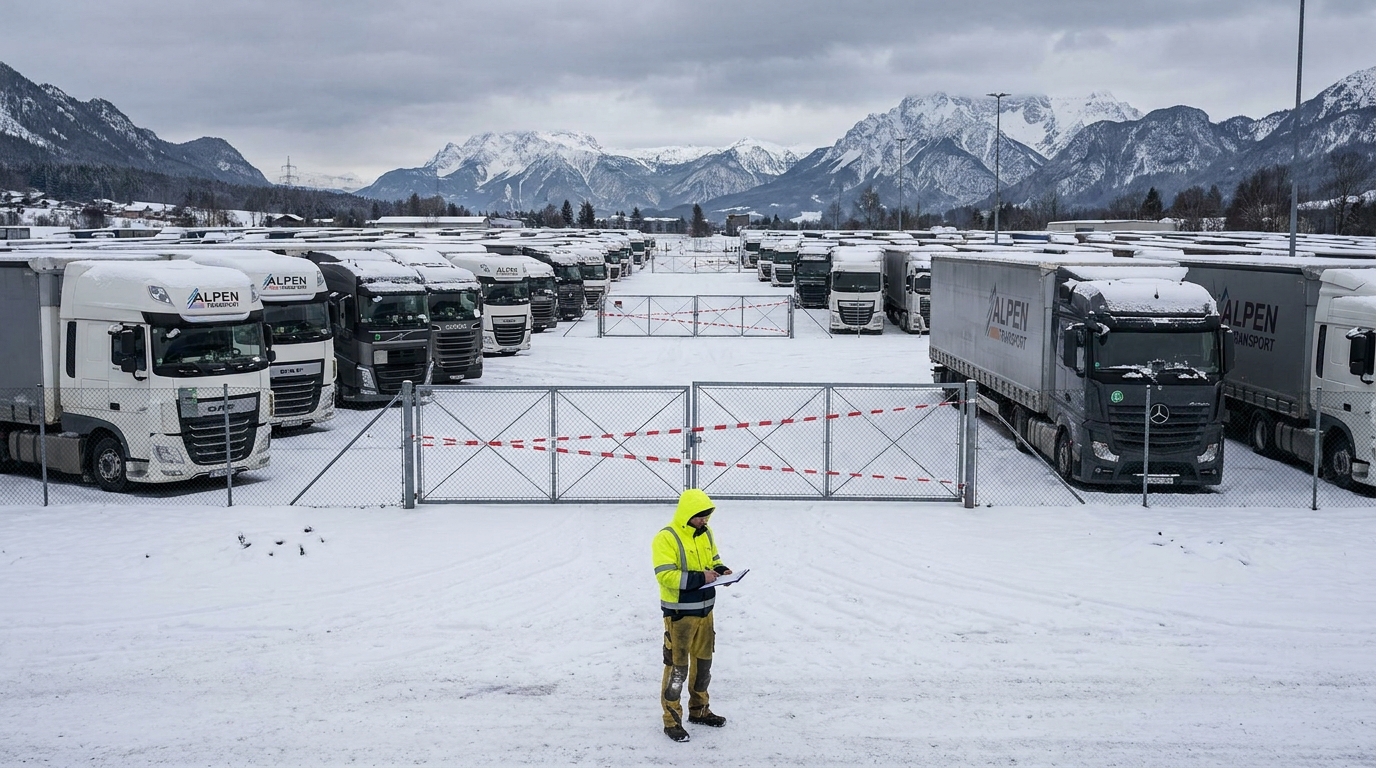
Tyrolean transport and logistics company Nothegger Transport Logistik GmbH is at the center of one of the largest bankruptcy proceedings in the region's history. As of July 23, 2026, creditors have officially recognized claims totaling €15,4 million, while a further €21 million remains the subject of ongoing legal disputes. The total exposure could therefore exceed €36 million—an amount that calls into question not only the future of the company itself but also the financial stability of dozens of its customers in Austria and Germany.
The bankruptcy that shook Tyrol
The bankruptcy proceedings against Nothegger Transport Logistik GmbH officially opened in March 2026. Even during the insolvency administrators' initial analysis, the situation was described as extremely difficult—the company was struggling with a deep liquidity crisis, a lack of trust from suppliers, and a growing mountain of unpaid liabilities. According to representatives of the Austrian creditor protection association KSV1870, this is one of the largest insolvencies in the Tyrolean transport industry in over fifteen years.
KSV1870 Director Klaus Schaller leaves no doubt about the scale of the problem: the pool of recognized and disputed claims could total over €36 million. Moreover, he warns that the final amount of recognized claims will likely be even higher than previously confirmed, as more entities file claims against the bankruptcy estate.
Debt structure: two levels of risk for creditors
Understanding the financial anatomy of this bankruptcy is crucial for any entrepreneur who has had or still has any exposure to Nothegger. The company's debt falls into two main categories:
- Claims accepted — for the amount of €15,4 million, formally confirmed during the proceedings. For creditors in this group, the prospect of recovering even a portion of their debt depends on the results of the liquidation or a possible restructuring arrangement.
- Disputed claims — another €21 million, the legal status of which is still unresolved. Creditors in this category face maximum uncertainty: they know neither whether their claims will be recognized nor when and to what extent they can expect satisfaction.
In practice, this division means that for many companies—especially smaller subcontractors and service providers—the prospect of irretrievably losing their receivables is very real. The disputed status of the €21 million is not only a legal issue, but above all a business one: contractors holding on to millions of dollars in invoices are unable to plan their own cash flows or effectively manage credit risk.
Liquidity crisis: emergency capital injections were not enough
The trustees who opened the proceedings found the company in a state of near-total cash crunch. Maintaining minimal operational continuity required immediate, extraordinary financial measures. The Nothegger family, the owners, decided to pay a €1,4 million "fortführungskaution" (fortune deposit), guaranteeing continued operations during the initial, critical period of the proceedings. Additionally, a further €1 million was raised through the sale of a portion of the shares.
Despite these measures, the company's liquidity situation has not stabilized satisfactorily. The bankruptcy administration is grappling with two overlapping structural problems. First, the company has over €6 million in outstanding receivables from its own customers—amounts that are theoretically owed to it, but whose collection during the proceedings is questionable and protracted. Second, almost all key suppliers—gas stations, fleet operators, and service companies—have lost confidence in Nothegger and have switched to a system of exclusive prepayments, further squeezing its already limited cash resources.
This mechanism is well known to industry risk analysts: loss of market confidence leads to forced prepayments by suppliers, which dramatically worsens current liquidity, which in turn prevents timely servicing of current liabilities, which further erodes confidence – and so on in a spiral that usually ends in liquidation or deep restructuring.
Labor market: nearly 400 people without guaranteed employment
The social dimension of this bankruptcy cannot be underestimated—especially in the context of the Tyrolean labor market, which is already feeling the strain of the situation in the transport sector across Europe. Nothegger Transport Logistik GmbH directly employs almost 200 people. However, the full picture is much broader: an additional 200 or so truck drivers work for a sister company, whose fate is closely tied to the success of the main bankruptcy proceedings.
In total, almost 400 people remain in a state of deep job uncertainty. Klaus Schaller from KSV1870 clearly emphasizes that at this stage of the proceedings there are no guarantees of maintaining these jobsWhile the company's continued operations to date are considered a positive sign, without finalizing an arrangement with creditors or finding a strategic investor, the risk of mass layoffs remains very real.
For risk managers in companies cooperating with Nothegger, this has significant practical implications: the lack of staff stability translates directly into the unpredictability of transport contract execution, on-time delivery and continuity of the logistics chain.
Domino effect in the industry: who will suffer the consequences?
The bankruptcy of an entity of this size is never an isolated event. In the transportation and logistics industry, where margins are low, payment terms are long, and interconnected companies are dense, the bankruptcy of one player can trigger an avalanche of problems for its business partners. In Nothegger's case, the risk of a domino effect is particularly high for several reasons:
- Transport subcontractors — Smaller transport companies that have carried out orders for Nothegger and haven't received their due payments may find themselves in financial trouble. For some, unpaid invoices can constitute a significant percentage of their annual revenue.
- Fuel and fleet service providers — the switch to a prepayment system means that these suppliers have de facto secured themselves for the future, but any arrears from the period before the crisis of confidence may be difficult to recover.
- Customers ordering transport — Companies that have entrusted Nothegger with the transport of their goods or have concluded long-term logistics contracts are now faced with the need to suddenly change partners, which involves operational costs and the risk of interruptions in the supply chain.
- Financial creditors — banks and financing institutions that granted the company loans or fleet leases will have to face write-offs and the process of recovering collateral.
The DACH space (Germany, Austria, Switzerland) is particularly sensitive in this respect – intensive trade links, shared transport corridors and high mutual dependence on efficient supply chains mean that turbulence in the Tyrolean transport market is quickly felt by companies on both sides of the Austrian-German border.
Restructuring prospects: uncertainty at every turn
The receivership has declared its intention to implement a restructuring (so-called Sanierung) and reach an arrangement with creditors. However, the road to a successful agreement is paved with significant obstacles. A key issue is the scale and status of the disputed receivables—€21 million in "strittig" status represents a significant uncertainty, complicating any mathematical modeling of a repayment plan.
A successful restructuring would typically require meeting several conditions simultaneously: finding an investor willing to recapitalize the company or acquire its assets, obtaining creditor consent for a significant debt write-off or deferral, and stabilizing the operating base—that is, maintaining contracts, the fleet, and key employees. In the current climate, when market confidence has been shaken and customers are seeking alternative logistics providers, meeting these conditions simultaneously is an extremely difficult task.
Industry analysts point out that the time window for effective restructuring in such cases is very short. The longer the uncertainty lasts, the more customers permanently migrate to competitors, the more the company's revenue base shrinks, and the more difficult it becomes to justify the economic viability of an arrangement with creditors.
Risk assessment for contractors: EURODESK.eu recommendations
From a business risk management perspective, the Nothegger Transport Logistik GmbH case is a textbook example of how quickly and violently a seemingly stable entity in the transportation industry can collapse. For risk managers and logistics company owners operating in the DACH market, there are several specific lessons to be learned:
- Verification of contractors must be continuous, not a one-off — Nothegger's situation demonstrates that a company can function efficiently for a long time, only to quickly fall into a spiral of financial problems. Regular monitoring of liquidity ratios, KSV1870 reports, and other creditor databases is an absolute necessity.
- Diversification of logistics partners — Supply chain dependence on a single large carrier or logistics operator is a concentration risk, which the Nothegger case painfully highlights. Having at least two or three alternative transport partners for key routes minimizes the impact of the sudden exit of one of them.
- Security clauses in contracts — provisions regarding the right to immediate termination of the contract in the event of opening bankruptcy proceedings, the obligation to inform about the deterioration of the financial situation or the right to suspend further payments until the situation is clarified can significantly reduce losses.
- Specific provisions for receivables — companies with open invoices to Nothegger should immediately review their receivables portfolio and consider creating provisions for possible write-offs, especially in the case of receivables classified as disputed.
- Trade receivables insurance — cases of this scale confirm the value of trade credit insurance as a tool for transferring the risk of contractor insolvency to the insurer.
Summary: high risk, low predictability
The bankruptcy proceedings of Nothegger Transport Logistik GmbH are entering a decisive phase, which in the coming months will determine whether the Tyrolean company will be able to salvage even a portion of its operations or face full liquidation. Regardless of the final scenario, the consequences for the DACH region's transportation market are already being felt and will intensify as the proceedings progress.
For all entities with any exposure to Nothegger Transport Logistik GmbH – whether as creditors, customers, subcontractors or potential future partners – the risk level should be classified as very tallThe EURODESK.eu platform recommends maximum caution when entering into any new commercial obligations with this entity and active legal action to secure and recover existing receivables.
Ongoing monitoring of bankruptcy proceedings, regular consultations with Austrian creditor protection authorities, and legal verification of all assets and collateral are the minimum set of actions that all involved should take. The situation can change dynamically—and in the transportation industry, where the liquidity clock ticks exceptionally loudly, every week of delay can mean deeper losses.