
Pfizer freezes PANSA accounts: The pharmaceutical giant cut off funding for Polish air traffic control in a PLN 5,6 billion dispute
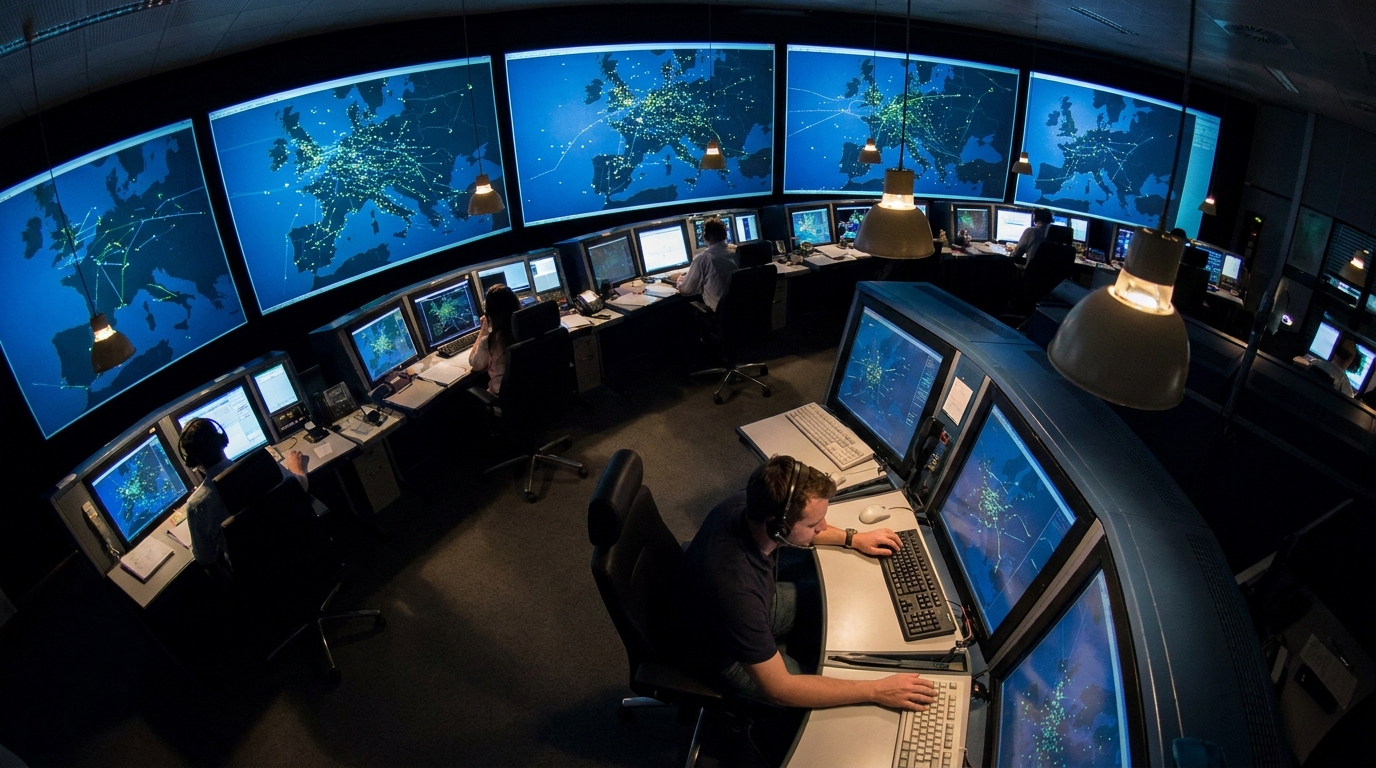
The American pharmaceutical company Pfizer has blocked the financial flows of the Polish Air Navigation Services Agency (PANSA)—the institution responsible for air traffic management in Polish airspace. Eurocontrol has become the enforcement mechanism, suspending the transfer of route fees due to PANSA following a preliminary ruling from a Belgian court. These funds represent approximately 80 percent of the agency's revenue. The immediate cause of the dispute is Poland's unclaimed COVID-19 vaccines and a related claim for nearly PLN 5,6 billion, or over €1,3 billion. This situation is unprecedented in the history of European civil aviation and raises serious questions about the safety of airspace management over Central Europe.
Origin of the dispute: vaccine contracts concluded by the European Commission
To understand the mechanics of the current crisis, we need to go back to the COVID-19 pandemic. Under the EU's joint procurement system, the European Commission negotiated and signed vaccine supply contracts on behalf of all member states. Individual governments were obligated to receive and pay for pre-agreed batches of vaccines. The contracts included both quantitative commitments and financial terms to address any failure to collect the ordered doses.
In April 2022, the geopolitical situation in Poland changed dramatically. Russia's full-scale invasion of Ukraine caused a massive influx of refugees, which at its peak reached several million people. Polish public finances were sharply burdened by spending on humanitarian aid, strengthening defense, androdoand support for Ukrainian infrastructure. Faced with these circumstances, the then-government decided to invoke the force majeure clause—a legal instrument used in situations where fulfillment of contractual obligations becomes impossible or unreasonable due to extraordinary external events.
Poland officially informed both the European Commission and the vaccine manufacturer itself that it refused to accept further batches of vaccines and to pay for them. The argument rested on three pillars: the de facto need for further doses given the vaccination coverage already achieved, the exceptional budgetary burden resulting from the refugee crisis, and the proportionality of the financial risk incurred. Pfizer rejected this argument, ultimately leading to the initiation of legal proceedings before a Belgian court in Brussels—the venue for which the European Commission is headquartered and the framework agreements concluded.
Why PAŻP? The Anatomy of Enforcement Against State Assets Abroad
The choice of the Polish Air Navigation Services Agency as the recipient of the enforcement action was no accident. To understand this decision, it's necessary to examine the specifics of so-called enforcement against foreign state assets. Once a creditor—in this case, Pfizer—obtains a preliminary judgment from a foreign court (security of the claim), it can initiate enforcement only against those assets of the debtor that are physically or legally located outside the debtor's country and subject to the jurisdiction or control of foreign institutions.
State Treasury assets located in Poland are de facto inaccessible to foreign enforcement—they are protected by the principles of state sovereignty and domestic procedural law. Therefore, Pfizer sought assets or receivables held by Poland or Polish state entities in foreign institutions. Eurocontrol, headquartered in Brussels, proved to be an ideal target. As a subject of international law,rodoA public transport operator operating under Belgian law and subject to Belgian jurisdiction, it regularly collects and transfers significant sums to national air navigation agencies. In the case of Poland, these amounts are substantial, considering that Polish skies are one of the busiest transit corridors in Europe.
Pfizer, armed with a preliminary Belgian ruling securing its claim, filed a motion to seize PANSA's receivables from Eurocontrol. The Belgian court granted the motion, ordering the organization to halt transfers. From a legal perspective, this is a classic enforcement action against a third party. From an industry perspective, it represents an unprecedented attack on critical national infrastructure using commercial law instruments.
Eurocontrol as an unexpected risk transfer point
The European Organisation for the Safety of Air Navigation plays a key role in the European system for financing air traffic management. Its primary function is to centrally collect route charges from airlines using the airspace of Member States and then redistribute the collected funds to national air navigation services. This system simplifies billing – instead of making payments to dozens of different national agencies, airlines pay a single consolidated fee to Eurocontrol.
This model has obvious operational advantages, but—as the current situation reveals—it also creates a central point of risk. As an entity registered in Belgium and subject to Belgian judicial jurisdiction, Eurocontrol becomes a potential recipient of orders issued by Belgian courts. Claims against Member States or their entities can be enforced by seizing their receivables from Eurocontrol. This is a systemic loophole that has never been exploited in such a spectacular manner before.
The implications for the air transport industry are serious. Any Eurocontrol member state that is party to a legal dispute before a Belgian court or a court recognizing Belgian jurisdiction faces a similar risk. The precedent established in the Polish Air Navigation Services Agency (PANSA) case could be used in the future by other creditors against other national air traffic management agencies.
Scale of the threat: what does 80% of blocked revenue mean?
The Polish Air Navigation Services Agency manages one of the most strategic airspaces in Central Europe. Polish skies are a key transit corridor connecting Western and Eastern Europe, and with the restricted airspace of Belarus and Ukraine, their importance has increased even more. PANSA employs several hundred people, primarily highly skilled air traffic controllers, whose training takes many years and is extremely expensive.
Over 80 percent of this institution's funding comes from route fees redistributed by Eurocontrol. Blocking these transfers means, in practice:
- Loss of financial liquidity — inability to settle current liabilities, including employee salaries and operating costs of navigation systems;
- Risk to technical infrastructure — Modern radar, navigation, and telecommunications systems require continuous maintenance, updates, and power. Lack of resources can delay or prevent these activities;
- Threat to operational continuity — in a scenario of prolonged lack of funding, the agency could be forced to limit the capacity of the airspace it serves, which would translate directly into flight delays across Europe;
- Personnel risk — failure to pay salaries to air traffic controllers would inevitably lead to the departure of specialists whose replacement would require years and huge financial outlays.
In an extreme scenario, which fortunately has not yet occurred, a complete paralysis of PANSA would mean the closure of Polish airspace – an unprecedented event in peacetime, which would paralyze hundreds of air connections daily and generate losses amounting to hundreds of millions of euros for European carriers.
Government response: budget support and legal recourse
Donald Tusk's government responded immediately, issuing public declarations guaranteeing PANSA's operational continuity. The Ministry of Infrastructure announced the launch of support from the state budget—both in the form of targeted grants and loans—to ensure the agency could continue to fulfill its operational and financial obligations despite the freeze on revenues from Eurocontrol.
In parallel, the Ministry of Health, as the authority responsible for concluding the disputed vaccine contracts, is preparing an appeal against the Belgian court's ruling. Poland is questioning both the validity of the claim itself—maintaining arguments based on force majeure and extraordinary circumstances resulting from the war crisis—and the proportionality of the enforcement measure applied. Directing enforcement against the airspace management agency, rather than the entities directly responsible for implementing the health contract, constitutes a legal argument that may prove effective in the appeal proceedings.
It's worth noting, however, that the appeals process in the Belgian court system could take months. During this time, Poland must finance PANSA from budget reserves, creating an additional burden on public finances—which, incidentally, are already strained by defense spending and previous refugee aid, which was cited as an argument in the dispute with the vaccine contractor.
A Dangerous Precedent: When a Trade Dispute Becomes a Security Threat
The current situation opens a disturbing chapter in the relationship between states and global corporations. For the first time in the history of European aviation, a commercial entity has used commercial law instruments to cut off funding from an institution responsible for airspace safety. Even if Pfizer is right on the merits of the dispute—a matter that will be decided by the courts—the very choice of enforcement method raises serious ethical and legal questions.
Polish airspace is of particular geopolitical importance. Directly bordering an area of armed conflict, it is intensively used by NATO to coordinate allied operations and military logistics. Destabilizing PANSA in such circumstances is not just a trade or transportation issue—it is a security issue at the national level.rodoand security of the North Atlantic Alliance.
This case also reveals a systemic weakness in Eurocontrol's centralized aviation fees collection model. The organization's vulnerability to court challenges in non-aviation cases should prompt European policymakers to consider safeguards to prevent similar scenarios from recurring in the future. Protection options could include amending Eurocontrol's statute to make these flows immune from enforcement, similar to the protection afforded to diplomatic missions.
Business Risk Perspective for the Transport and Logistics Industry
For risk managers in air transport and logistics companies, this case should serve as a wake-up call, requiring an update to their operational risk maps. Below, we identify key areas requiring special attention:
- Risk of transit disruptions through Polish airspace — Although the government has provided budget support for PANSA, legal uncertainty related to the legal proceedings will persist. Logistics companies operating cargo connections through Central Europe should prepare alternative routing scenarios;
- Risk of legal precedent — Other Eurocontrol member states may become targets of similar enforcement actions. Companies with air transport exposure in regions affected by legal disputes should monitor developments;
- Risk of delays and cost increases — even a partial reduction in the capacity of Polish airspace would generate a domino effect in the form of delays on European routes, higher customer service costs and potential contractual penalties;
- Monitoring the financial condition of PANSA — Until the dispute with Pfizer is finally resolved, the agency's financial condition remains dependent on government budget decisions. It's worth monitoring subsequent rulings by Belgian courts and the progress of negotiations between Poland and the European Commission on the broader issue of vaccine contract settlement.
European context: do other countries face similar risks?
Poland is not the only EU member state to refuse to accept or pay for some of the vaccines it has ordered. Several other countries have been or are in negotiations with the European Commission and manufacturers to reduce the volumes ordered. To date, none of these disputes have escalated to the level of judicial enforcement against critical infrastructure. Poland, with one of the largest and most important airspaces in the region, has become the first and most spectacular case.
It remains to be seen whether Pfizer or other vaccine manufacturers will take similar action against other countries. The outcome of the appeal proceedings before the Belgian court will be crucial for shaping European legal practice in this area. If Poland successfully defends itself against enforcement, it could discourage pharmaceutical companies from using similar methods. However, if the ruling is upheld, it would open the door to further such actions against European countries' assets abroad.
Summary: What to do about it?
The Pfizer vs. PANSA case transcends the boundaries of a typical commercial dispute and enters the realm of public safety and state policy. There are at least three key lessons for decision-makers and risk managers in the transportation and logistics industry.
First, critical infrastructure is vulnerable to new types of financial risks, which have not been considered in standard operational risk management models to date. Blocking the funding of air traffic control agencies through legal mechanisms used in commercial disputes is a real and confirmed scenario.
Secondly, Centralized financial systems – such as Eurocontrol – create risk concentration points, which can be used by external actors to exert pressure on states or their entities. Institutions managing such systems should urgently consider introducing protective mechanisms.
Thirdly, Disputes arising from centralised public procurement – such as EU vaccine contracts – can generate operational risks in sectors seemingly unrelated to the subject of the disputeAviation, logistics, and cargo companies should track the progress of this procedure as part of their ongoing monitoring of the regulatory and legal environment.
For now, the government has provided PANSA with the necessary budgetary resources, and the safety of flights over Poland is not at risk. However, the legal resolution remains open, and the precedent has been set.rodoThe air transport industry has entered a new era in which pharmaceutical disputes may determine the capacity of air corridors.