ICS2 system failure paralyzes European ports - importers lose liquidity, credit risk increases
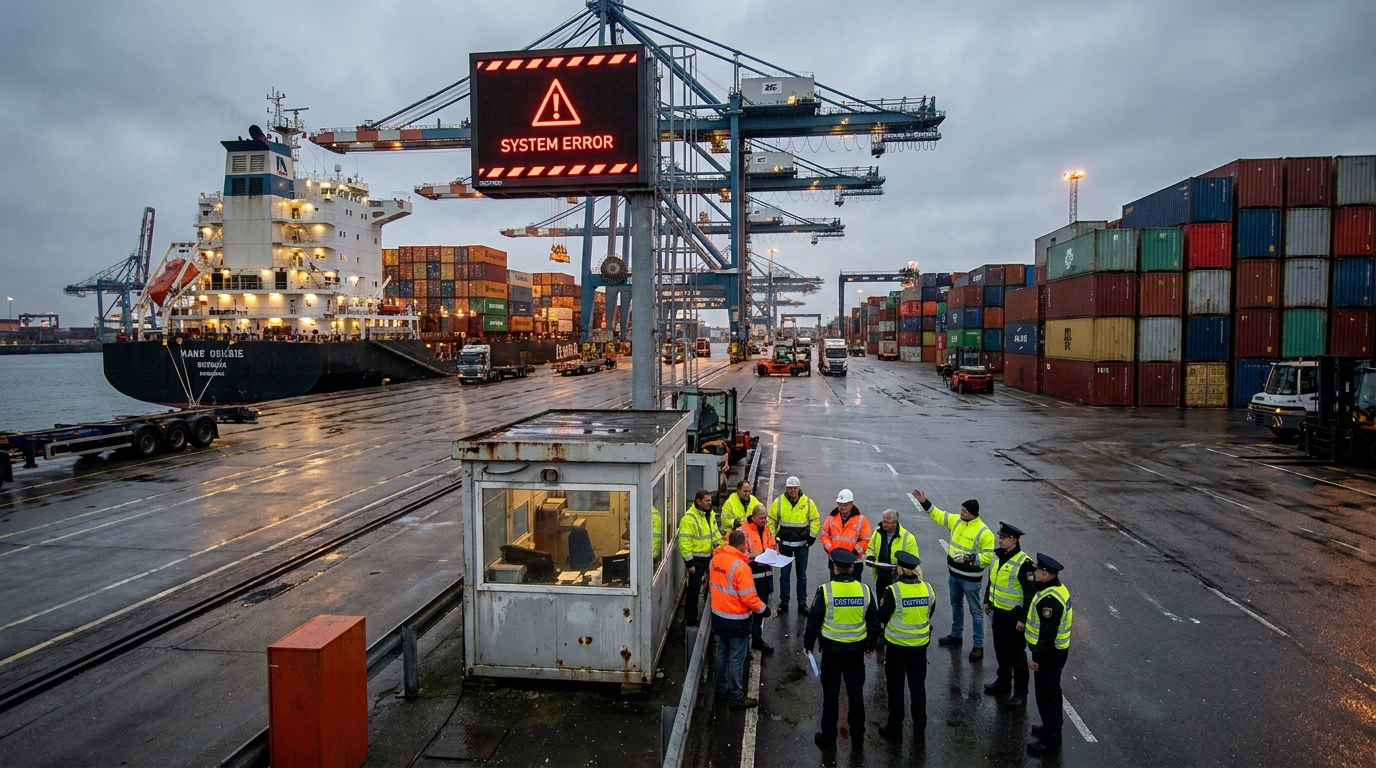
On August 7, 2026, the European customs infrastructure faced a challenge the likes of which the transport industry had not seen in years. The Import Control System 2 platform—referred to by experts as the electronic gateway to the EU customs area—no longer performed its basic functions properly. The impact was immediate and felt in every major seaport on the Old Continent: thousands of shipments were stuck in administrative limbo, awaiting documents that the infected system simply couldn't generate. Three days later, on August 10, 2026, the Danish shipping giant Maersk—one of the world's largest container shippers—issued an official statement warning customers of the growing operational and financial consequences of this glitch. The EURODEBT.eu editorial team analyzes exactly what happened, the real consequences for supply chains, and—especially important for our readers—the threats this situation poses to companies' financial liquidity and loan portfolios.
What is ICS2 and why is its failure such a serious problem?
Import Control System 2 is the second generation of the EU's customs control platform, being gradually implemented from 2021 as part of a broad modernization of the EU customs system. Unlike its predecessor, ICS2 covers all supply chain participants—from shipowners and airlines, through freight forwarders and customs agents, to postal and courier operators. The system serves as the EU's first line of border control: before any cargo enters EU territory, information about it must be registered, processed, and accepted by the platform.
In practice, this means that all so-called Entry Summary Declarations (ENS) pass through ICS2, allowing customs authorities to conduct advance risk analysis and potentially intervene before a ship docks. The platform also generates Movement Reference Numbers (MRNs)—unique identifiers without which no cargo can obtain formal customs clearance and leave the port terminal. The analogy to how a passenger identification system works at an airport is apt: ships arrive at ports, containers are physically present, but due to the lack of a key electronic document, no one can legally collect and export them.
Scale of the outage – what exactly stopped working?
The fault, which became apparent on August 7, 2026, affected several key system functions simultaneously. First, it blocked the processing of EU advance declarations (ENS), which every carrier is legally obligated to submit before goods arrive at the EU customs border. Second, the platform no longer properly handled vessel arrival notifications—a procedure necessary for a merchant vessel to formally complete its customs registration process. Third, the failure also affected Temporary Storage Declarations (TSDs), which regulate the legal status of goods held in port warehouses until their final clearance.
The most serious and tangible consequence of this defect, however, is the complete blocking of MRN generation. Their absence is the direct cause of the stoppage of goods flow at borders. Without a generated MRN, the customs office will formally cannot "see" a given shipment in the system — and therefore, is not authorized to release it for further commercial circulation. Therefore, goods wait in port terminals in a state of virtual limbo, generating rising costs and creating multifaceted problems for all parties involved.
European ports under pressure - rapidly increasing congestion
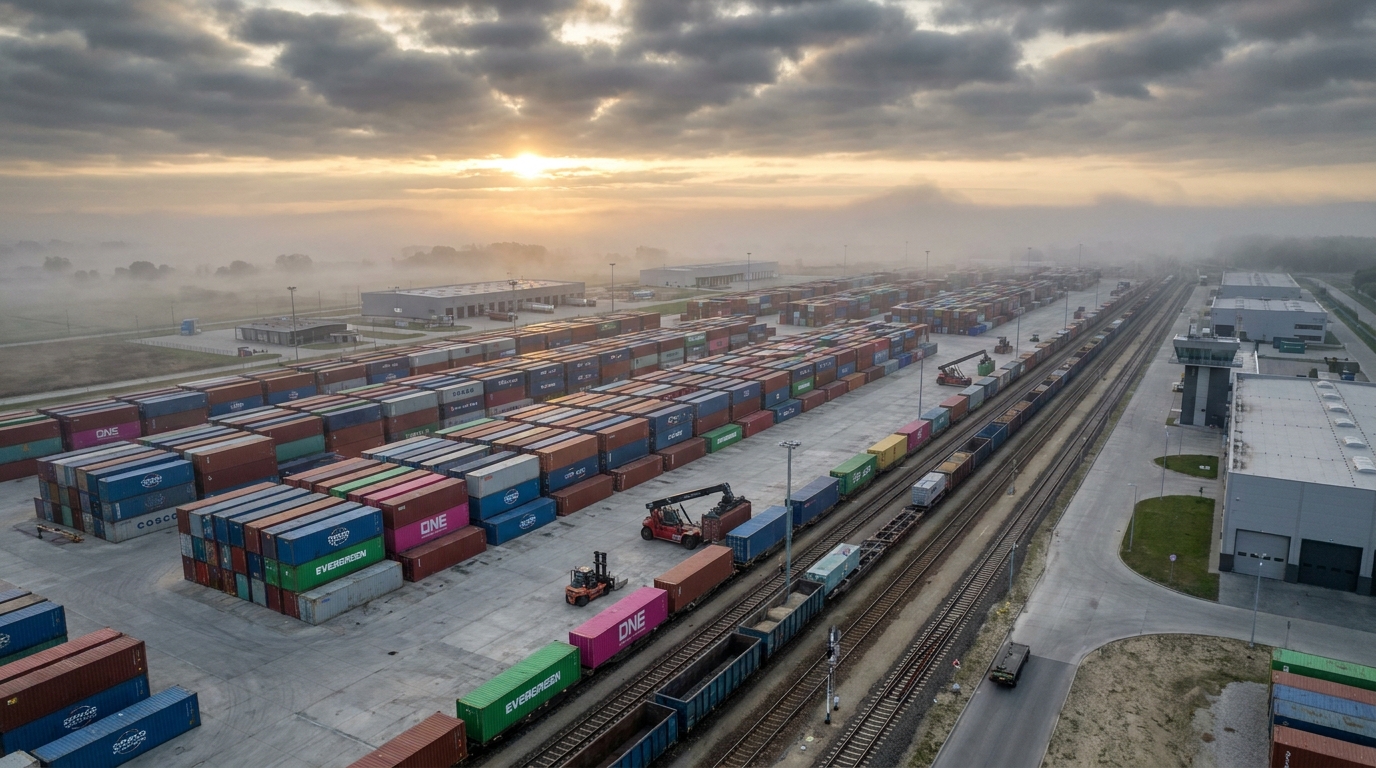
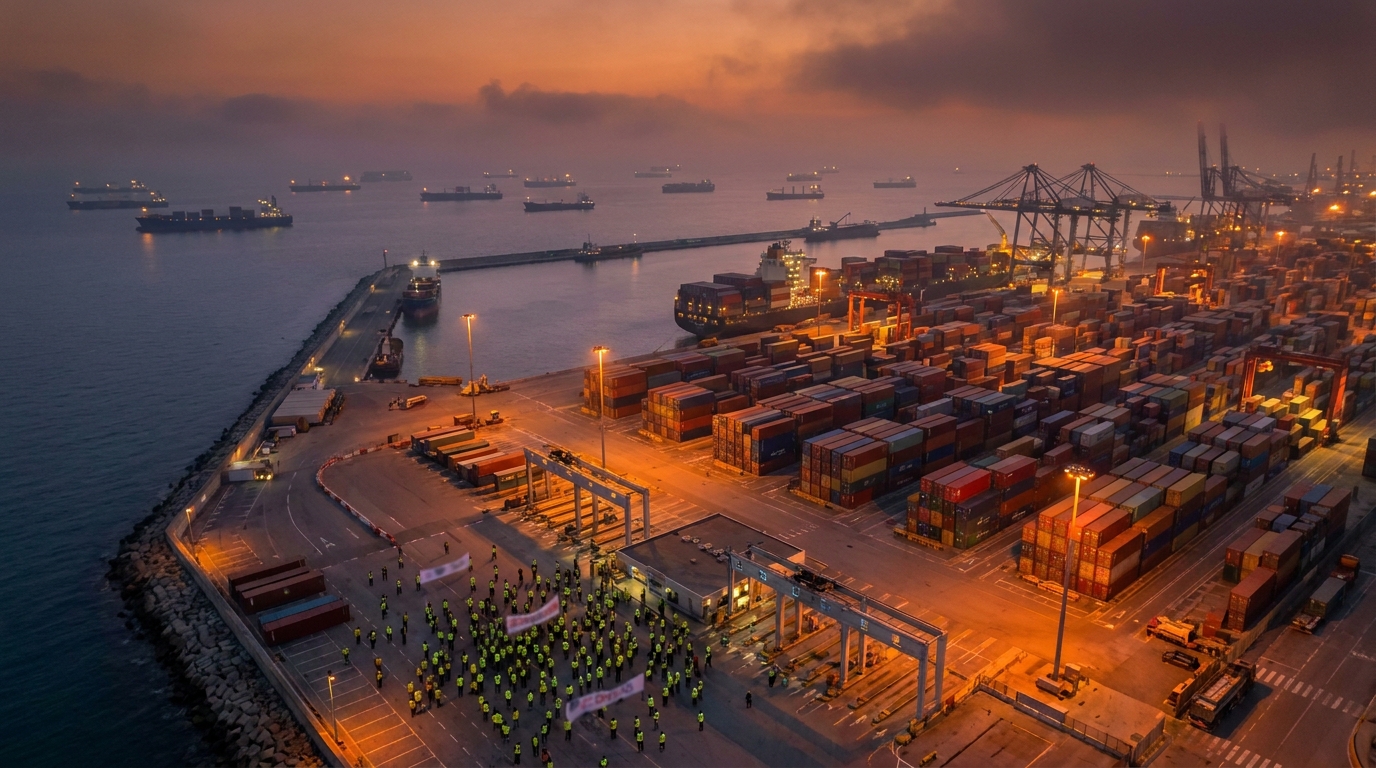
The effects of the systemic failure are most immediately apparent in seaports. Every vessel entering Hamburg, Rotterdam, Antwerp, Gdańsk, or Barcelona brings new containers that, under normal circumstances—after efficient clearance—would be sent to distribution warehouses or directly to end customers. Now, instead, they are adding to growing queues waiting for missing reference numbers to be generated.
Shipowners, including Maersk, have adopted a strategy of queuing all submitted declarations. This means that customs declarations are formally registered and wait in the system until the ICS2 servers are fully operational. While this approach minimizes the risk of losing documentation, it creates a very serious problem when the system is unblocked. When ICS2 comes back online, it will have to process a backlog of several or more days. Industry analysts estimate that this alone Catching up on arrears may take from a few to even a dozen or so business days after the fault is fixed - which means that the bottleneck at the ports will persist much longer than the technical failure itself.
The cascading effect of this disruption extends up the entire supply chain. Delays at sea will translate into delays in road, rail, and air transport delivering goods to end consumers. Just-in-time production schedules, retail chains' promotional plans, and even product availability on store shelves—all are being held hostage by a single EU IT platform.
Financial Consequences – Who Will Lose the Most?
From a financial risk analysis perspective, the ICS2 failure is a classic example of an event that quickly translates into real liquidity problems for businesses. The mechanism is relatively simple, though its consequences are complex and multi-layered.
Every importer who has entered into a trade contract with a specific delivery date faces an inevitable fact: their goods will not arrive on time. This triggers a cascade of consequences. The recipient—a trading company, manufacturer, or distributor—cannot issue an invoice for the goods that have not arrived. The lack of an invoice means no cash inflow. A lack of cash, coupled with existing liabilities to suppliers, employees, and financing institutions, directly impacts the company's operating liquidity. For businesses operating on tight margins—and the vast majority of such businesses in trade—even a delay of a few days in receivables may require additional financing or the use of credit lines.
Entities from sectors characterized by short commodity turnover cycles or sensitivity to timely deliveries are particularly vulnerable to the negative effects of failures. Automotive manufacturers, ordering components from Asia several weeks in advance and not having large warehouse buffers, may be forced to suspend production lines. Consumer electronics distributors, where sales rhythm is closely linked to product launch dates, may lose customers to competitors with available products. Companies in the sector FMCG however, they are exposed to the risk of shelf shortages and contractual penalties from retail chains for failure to deliver goods on time.
Demurrage, detention and storage – costs that are rising by the hour
In addition to the direct impact on commercial contracts, an ICS2 failure generates specific, measurable additional costs, which in the transport industry are collectively referred to as demurrage, detention and storage costs.
Demurrage This is a fee charged by a shipping company or port terminal for holding a container in port beyond a specified, free period (free time). Depending on the shipping line and location, these rates can range from several dozen to several hundred euros per container per day. With hundreds or thousands of units blocked, the total costs for importers reach levels that can threaten the profitability of entire trade transactions. Detention is a similar fee charged for keeping the container equipment itself outside the port. Storage costs these, in turn, are the costs of port storage, which port terminals charge from several to a dozen or so euros per TEU per day.
The key aspect of these costs from a financial risk perspective is that most of them are due before the goods are releasedThe importer must pay demurrage and storage fees before regaining access to their cargo—regardless of whether the delay is due to a failure of the EU system, the shipowner, or the freight forwarder. This means a sudden, unplanned cash outflow at the worst possible moment: when revenues are suspended and liabilities are mounting.
Financial Institutions Perspective – Growing Credit Risk
Banks and trade finance institutions, trade receivables insurers, and factoring companies should intensify their monitoring of client portfolios with significant exposure to imports from outside the European Union in the coming weeks. The ICS2 failure is an external operational shock that—while completely beyond companies' control—generates a real risk of deterioration in their debt servicing capacity.
EURODEBT.eu's experience shows that such events—seemingly technical and temporary—often expose previously hidden weaknesses in companies' balance sheets. A company that normally efficiently managed its receivables and payables turnover can suddenly find itself facing a liquidity gap when several shipments are held up in ports for 10–14 days. If it was also using short-term financing instruments—letters of credit, bank guarantees, or invoice discounts—managing these instruments can become a significant challenge.
The following require special monitoring:
- Companies from the automotive sector — due to the high sensitivity of just-in-time models to any disruptions in the supply of components;
- Electronics distributors — where margins are relatively low and inventory financing costs are high;
- Importers from the FMCG sector — exposed to contractual penalties from retail chains for failure to deliver goods within the agreed time;
- Small and medium-sized commercial enterprises — with limited liquidity buffers and weaker access to emergency external financing;
- Entities using receivables-based financing — for which a delay in issuing an invoice directly limits the available financing limit.
Customs authorities' reaction - what was announced and how should it be assessed?
European customs authorities officially acknowledged that the source of the outage was administrative, not the systems of logistics operators or shipowners. They also confirmed that they were working intensively to restore full functionality of ICS2 as quickly as possible. As part of the planned recovery process, they announced so-called retrospective mapping—the retroactive assignment of MRNs to declarations submitted during the outage. This solution is intended to formally regulate the customs status of blocked cargo without requiring carriers and freight forwarders to re-declare it.
However, it's worth being cautious about overly optimistic predictions regarding the pace of normalization. Industry history often shows that restoring large enterprise-class systems after major outages takes longer than the authorities responsible for maintaining them predict. Even if the technical restoration of ICS2 is relatively smooth, processing the accumulated queue of thousands of outstanding declarations will take days rather than hours—and overloaded customs servers may operate slower than usual precisely at the most critical moment after the unblocking.
Recommendations for risk managers and business decision makers
Based on the current analysis of the situation, the EURODEBT.eu editorial team makes the following recommendations for entities affected or at risk of the consequences of the ICS2 failure:
- Instant inventory of displays — Identify all import shipments whose customs status is unclear or suspended pending MRN. Obtain detailed information about each shipment from freight forwarders and customs brokers.
- Verification of commercial contracts — Check whether the relevant contracts contain force majeure clauses or provisions regarding delays resulting from administrative actions, which could constitute grounds for renegotiating delivery dates with recipients.
- Proactive contact with financing institutions — Inform banks, factors, and credit insurers about potential billing delays before they happen. Most institutions can flexibly respond to external system events when they are notified in advance.
- Active monitoring of port costs — keep track of the accruing demurrage and storage fees, and then immediately contact the shipowners to negotiate any exemptions or extensions — some shipping lines have already announced an exceptional approach to charging fees due to the government-imposed system failure.
- Updating operational risk models — the current incident should be included in the risk assessments for Q3 and Q4 2026. The operational risk premium related to dependence on central customs systems should be reassessed upwards.
- Analysis of risk concentration in the supply chain — From a strategic perspective, it is worth considering whether excessive dependence on specific ports of entry or trade routes constitutes a risk concentration point requiring diversification.
Summary: Risks that are not hypothetical
The ICS2 system outage is a stark reminder of several important truths about the nature of modern logistics and international trade. Digital customs infrastructure has become as critical as the physical infrastructure of ports and roads. A software failure can effectively block the flow of goods as much as a storm at sea or a port workers' strike—and its effects can be more difficult to predict because they affect all market participants simultaneously.
For companies using EURODEBT.eu services, the most important operational conclusion is as follows: the creditworthiness and financial liquidity of contractors, which you assess as good today, may deteriorate significantly within a few days due to external events — such as this outage — which are completely beyond the control of the entities being assessed. Operational risk and credit risk are not isolated from each other. Therefore, monitoring receivables portfolios and assessing the risk of trading partners should consider not only the company's current financial condition but also its vulnerability to operational critical points in the supply chain.
The EURODEBT.eu editorial team will continue to monitor developments and report on the progress of ICS2 restoration and the financial impact of this incident on the European transport and trade sectors. We recommend subscribing to our risk alert to receive real-time updates.