Ziegler France collapse: domino effect threatens hundreds of transport subcontractors in Europe
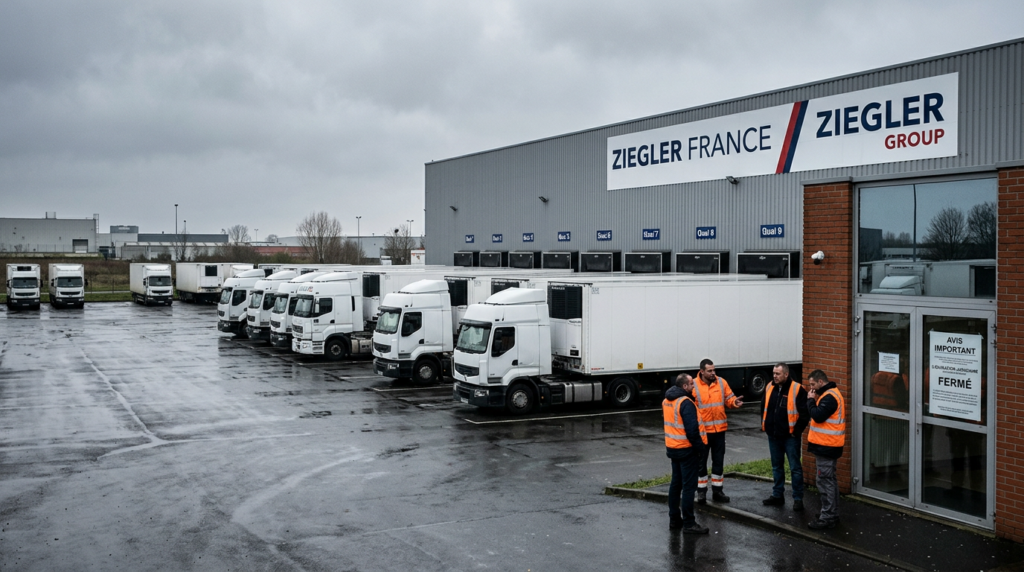
The judicial liquidation of Ziegler France – one of the largest logistics operators in the French TSL market – has sparked a wave of concern throughout the transport industry. The decision of the Lille Métropole Commercial Court on March 31, 2026, not only spells the end of the operations of this giant with an annual turnover of €445 million. Above all, it sends a devastating signal to hundreds of small and medium-sized transport companies that for months provided services to the bankrupt entity without receiving remuneration. In an urgent statement dated April 2, 2026, the Organization of Transport Routiers Européens (OTRE) issued a warning: there is a real risk of a domino effect that could shake the foundations of the supply chain in France and beyond.
The End of a Giant: What Happened to Ziegler France?
Ziegler France, along with its subsidiary Satra, has been a key component of European logistics infrastructure for years. With an impressive turnover of nearly half a billion euros, the company was a key client for dozens of small and medium-sized transport companies operating primarily in France. However, its seemingly stable market position concealed mounting financial problems, which – as we now know – lasted until at least the fall of 2024.
According to findings published after the bankruptcy filing, Ziegler France ceased to settle its liabilities as early as September 2024. Despite this, the company continued operations for the next year and a half, entering into new contracts with subcontractors and entrusting them with transportation services—without informing them of its deepening financial difficulties. The situation drastically worsened in 2025: operating profits of around €10 million a year earlier turned into losses estimated at €6–7 million. The scale and speed of this deterioration surprised even industry observers.
The immediate consequences of the announced judicial liquidation are dramatic: approximately 1500 people directly employed by Ziegler France and Satra will immediately lose their jobs. However, according to experts and the OTRE organization itself, this is just the tip of the iceberg.
Domino effect: who will pay the price of bankruptcy?
Ziegler France's operating model relied heavily on an extensive network of subcontractors. These companies—often sole proprietorships, micro-enterprises, or small family-owned forwarding companies—fulfilled transport orders on behalf of the giant, issuing invoices for services rendered. Now that the company has entered liquidation, thousands of such invoices remain unpaid.
OTRE clarifies that it refers to hundreds of companies that have not received their due payments for many months. For a large entity, missing several transfers is a difficult task to manage. For a small transport company with three tractor-trailers and a few drivers, it's often a death sentence. Lack of revenue from a key client means the inability to pay vehicle leases, social security contributions, fuel for future trips, or employee salaries. The result? An immediate loss of financial liquidity and the specter of bankruptcy.
The scale of this threat leads analysts to speak directly of a domino effect: the collapse of one large player could trigger the bankruptcy of dozens or hundreds of smaller companies that cooperated with it. These, in turn, have their own subcontractors, suppliers, and creditors – potentially expanding the circle of affected entities to subsequent levels of the supply chain.
Criticisms: Where have the control mechanisms failed?
The Ziegler France case reveals fundamental weaknesses in the system of oversight of large entities in the TSL industry. Criticism is multifaceted and aimed at various actors in this story.
Belgian parent company
Ziegler Group, a Belgian holding company that owns a French subsidiary, has been in the spotlight. Trade unions, particularly CGT, are openly accusing the group of a lack of transparency and failure to take timely rescue measures. The question on the minds of both employees and subcontractors is: was the parent company aware of the scale of the financial problems in France? And if so, why didn't it react? The group's silence on this matter raises legitimate concerns and may become the subject of further legal proceedings.
State supervision and regulators
The French Ministry of Economy has also come under scrutiny. Critics point to the failure of early warning mechanisms – both intra-group and regulatory. A situation in which an entity with a turnover exceeding €400 million fails to settle its obligations to its business partners for a year and a half, and public institutions fail to respond, raises serious questions about the effectiveness of existing oversight tools.
The system of priority of claims in liquidation proceedings
Particularly painful for subcontractors is the prospect of recovering their debts during liquidation proceedings. In such proceedings, a strict hierarchy of creditors applies: first in line are public liabilities (taxes, contributions), then secured bank receivables, and only then come the trade receivables of non-privileged contractors. This means that small transport companies that have completed orders and issued invoices may recover only a fraction of the amounts owed – or nothing at all.
The industry is now awaiting government intervention, which could introduce a mechanism for preferential treatment for the smallest creditors or launch a special protection fund. However, there are currently no signs that such solutions are being prepared.
Warning signs you might have noticed before
From a risk management perspective, the Ziegler France case is a painful lesson in how ignoring early warning signs can lead to disastrous consequences. Experts point to several key indicators that should have alerted business partners:
- Extended payment terms: As early as September 2024, some subcontractors may have experienced delays in receiving their payments. A systematic increase in the waiting time for a transfer is a classic symptom of liquidity problems.
- Sharp deterioration in operating results: A shift from an operating profit of around €10 million to a loss of €6-7 million in one year signals a serious dysfunction of the business model or a sudden deterioration in market conditions.
- Lack of communication from the contractor: Companies experiencing financial difficulties often avoid direct discussions about receivables, postpone meetings and prolong payment promises.
- Disproportion between the scale of operations and timeliness of payments: High turnover is not a guarantee of solvency – this is a myth that this case dispels in a spectacular way.
The problem is that many small transport companies lack access to tools that enable ongoing monitoring of their clients' financial health. Reporting data is often published with delays, and market signals are difficult to interpret without specialized knowledge. This information gap is one of the greatest structural threats to the transport, forwarding, and logistics industry.
Risk Perspective: Lessons for Managers and Compliance Professionals
The Ziegler France case study is a must-read in any textbook on credit risk management in the transportation and logistics industry. It offers at least four key practical lessons.
1. Belonging to a capital group is not a guarantee of security
Many subcontractors assumed that cooperation with an entity belonging to an internationalrodoThe Ziegler Group provides sufficient security. The reality turned out to be brutally different. A subsidiary can go bankrupt without any intervention from the holding company, and creditors do not automatically have claims against entities from the same capital group. Verification of the contractor must include not only its group affiliation, but above all, the individual financial condition of the specific entity with which the contract is being signed.
2. The dynamics of changes in results is more important than their absolute level
A company with a turnover of €445 million sounds solid – until it turns out its operating results are plummeting. The key risk indicator isn't revenue volume, but the direction and pace of profitability changes. Systematic monitoring of contractors' financial reports, especially operating margins and cash flow, should be standard practice for any company engaging in long-term business relationships with large clients.
3. Diversifying your customer portfolio is a matter of survival
Many companies affected by the bankruptcy of Ziegler France had this company as their main or only major client. Revenue dependence on a single partner, even the largest and seemingly most stable one, is a deadly threat to small businesses. Industry organizations have been calling for client portfolio diversification for years, and this case provides a powerful argument in favor of such recommendations.
4. Contract clauses and credit insurance are not a luxury
Given the growing risk of insolvency among large clients, legal and financial protection instruments are becoming increasingly important: clauses requiring immediate payment in the event of a contractor's deteriorating financial condition, trade receivables insurance, and factoring as a liquidity management tool. For small transport companies, implementing these solutions can be costly, but given the scale of potential losses, as in the case of Ziegler France, they constitute the only real protection.
What's next? The industry is waiting for answers.
At the time of this article's publication, the liquidation proceedings remain ongoing. The bankruptcy trustee is conducting an inventory of Ziegler France and Satra's assets, and creditors are required to submit their claims within the statutory deadline. However, practice shows that in such proceedings, the time from the announcement of the liquidation to the actual payment of any funds to non-preferred creditors is measured in years—and there is no guarantee that any payment will be made at all.
OTRE and other industry organizations are lobbying for systemic changes that would strengthen the position of small subcontractors in bankruptcy proceedings. Among other things, they are calling for the introduction of a guarantee fund for transport subcontractors' receivables – similar to the Guaranteed Employee Benefits Fund, which protects employee wages in the event of employer insolvency. Whether these proposals will find traction with the French government and European institutions remains an open question.
One thing is certain: the Ziegler France case will long remain in the collective memory of the TSL industry as proof that even seemingly established business relationships can collapse overnight – and the effects of this collapse spread much wider than just the direct employees of the bankrupt company.
Summary: Implications for Risk Management
The judicial liquidation of Ziegler France is a significant event that is changing the way we think about credit risk in the European transport and logistics industry. For risk managers and compliance specialists at TSL companies, it has led to specific actions:
- Introduction systematic financial monitoring key contractors, based on data from financial statements and market signals – at least quarterly.
- Verification payment history contractors, with particular attention to the lengthening deadlines for settling liabilities – as a leading indicator of solvency risk.
- Diversification of the customer portfolio with the establishment of the maximum threshold of dependence of revenues on one entity.
- Considering implementation trade receivables insurance or factoring as a credit risk management instrument.
- Analyze contract structures in terms of clauses protecting the subcontractor's interests in the event of a deterioration in the client's financial condition.
The EURODEBT.eu platform will continuously monitor the further course of the Ziegler France liquidation proceedings, the scale of claims filed by subcontractors and possible regulatory decisions that may affect the terms of cooperation in the European TSL sector.