The end of the era of carbon estimates in transport: EU Regulation 2026/1030 is a game-changer for the entire logistics industry
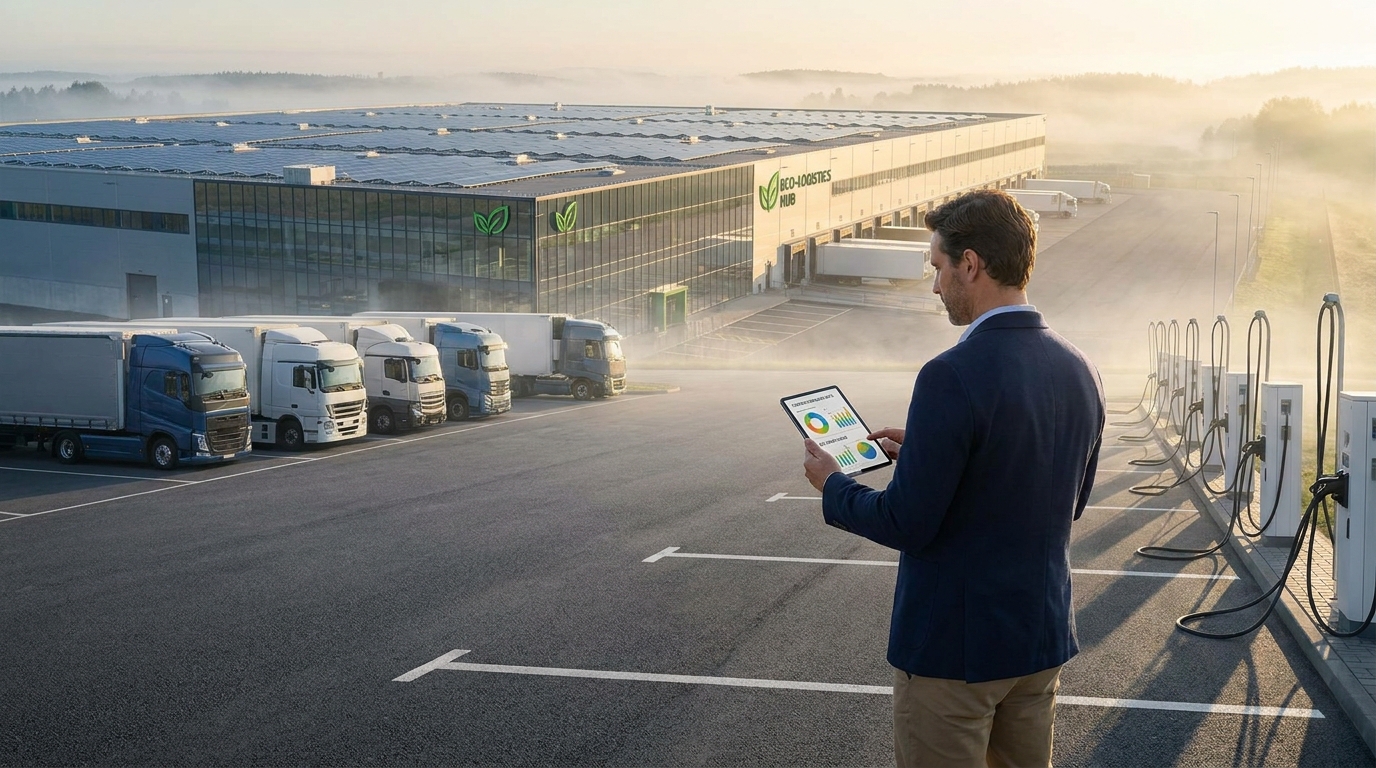
The European Union has issued a stark ultimatum to the transport and logistics industry: an end to convenient approximations and lump-sum estimates of CO2 emissions. Regulation 2026/1030, adopted at the end of April 2026 as part of the CountEmissionsEU initiative, introduces a requirement for precise, documented, and standardized accounting of actual greenhouse gas emissions. For carriers, freight forwarders, and shippers operating in the European market, this means one thing: either compliance or marginalization.
A historic breakthrough in emissions management – what exactly has changed?
In recent years, much of the European transport sector has been coping with rising expectations for sustainability reporting by relying on estimates. Under the Corporate Sustainability Reporting Directive (CSRD), many entities reported carbon costs based on conversion factors, industry data, or general fleet emissions indicators, often disconnected from the operational reality of a specific carrier. This comfortable, if unreliable, state of affairs is coming to an end.
The CountEmissionsEU Regulation introduces the standard as a generally applicable standard EN ISO 14083: 2023, which establishes a uniform, global methodological framework for accounting for greenhouse gas emissions in transport and logistics. A key element of this standard is the approach well-to-wheel — from well to wheel. In practice, this means that the carbon calculation takes into account the entire life cycle of an energy source: from extraction through production, distribution, and eventual combustion or use in a vehicle engine. A diesel tractor-trailer and an electric truck powered by a coal-fired grid will therefore be compared according to the same, fair principles.
Importantly for everyday business practice, carriers and freight forwarders will no longer be able to pass on flat-rate "carbon costs" to customers. The new regulations strictly require that all CO2 emissions burdens transferred throughout the supply chain be documented. primary data, i.e. actual operational data: information from telematics systems, actual fuel consumption on specific routes, current load parameters and vehicle occupancy.
Who will be most affected by the changes? Analysis of the impact on individual links in the supply chain.
Large shippers - the new standard in tenders
The regulatory change will have immediate, tangible effects on commercial relations between shippers and their logistics subcontractors. Large corporations with an international reachrodoCompanies operating in the food, FMCG, chemical, and furniture sectors are already facing their own Scope 3 emissions reduction obligations, meaning those generated by external service providers. Once CountEmissionsEU comes into force, they will have a specific, legally established tool for enforcing carbon data from subcontractors.
In practice, this means that full emission transparency will become a prerequisite for participation in tendersTransport companies without certified, ISO 14083-compliant carbon footprint data may simply be barred from negotiations. This isn't a distant prospect—early market signals indicate that leading European shippers are already revamping their supplier qualification questionnaires to include requirements for emission measurement methodologies.
Carriers - an opportunity for those investing in decarbonization
Paradoxically, the new regulations may prove to be a godsend for those transport companies that have been making difficult, costly investment decisions to decarbonize their fleets in recent years. Companies that have invested in biomethane or hydrogen-powered vehicles, implemented energy management systems, or optimized routes for fuel efficiency have long been unable to fully commercialize this advantage.rodoIn a world dominated by estimates, a lower actual carbon footprint has been difficult to prove.
CountEmissionsEU changes this dynamic dramatically. Standardized, verifiable emissions data becomes a competitive toolA carrier with an electric fleet and precise telematics data will be able to demonstrate to customers a concrete, numerical environmental advantage over a competitor with an older diesel fleet. This is a real commercial value that can be quantified and built into the pricing strategy.
Freight Forwarders - The Toughest Operational Challenge
Of all the participants in the supply chain, this is the one Freight forwarders face the greatest operational and technological challengeTheir business model relies on the coordination of hundreds or thousands of subcontractors—often small transport companies scattered across Europe. Until now, aggregating emissions data from so many entities has been virtually impossible without resorting to estimates. The new regulations are changing this status quo.
Freight forwarders will need to implement systems capable of:
- collecting primary data from subcontractors in real time or near real time,
- verification of the quality and reliability of the data provided,
- harmonizing information from different systems and formats used by subcontractors,
- aggregating emissions from the entire logistics chain, taking into account not only transport, but also storage, transhipment and terminal handling.
Specialized technology platforms are already emerging on the market to address this need. Solutions like TK'Blue enable intelligent aggregation of emissions data across multimodal logistics chains, integrating data from various sources and automating calculations compliant with the ISO 14083 standard. Implementing such tools is no longer an option—it's becoming an operational requirement.
CountEmissionsEU and ETS2 – two pillars of the new carbon order
Regulation 2026/1030 does not operate in a regulatory vacuum. Its adoption is closely linked to the broader architecture of EU climate policy, and in particular the upcoming emissions trading scheme for road transport and construction — ETS2, which will enter into full force in 2028.
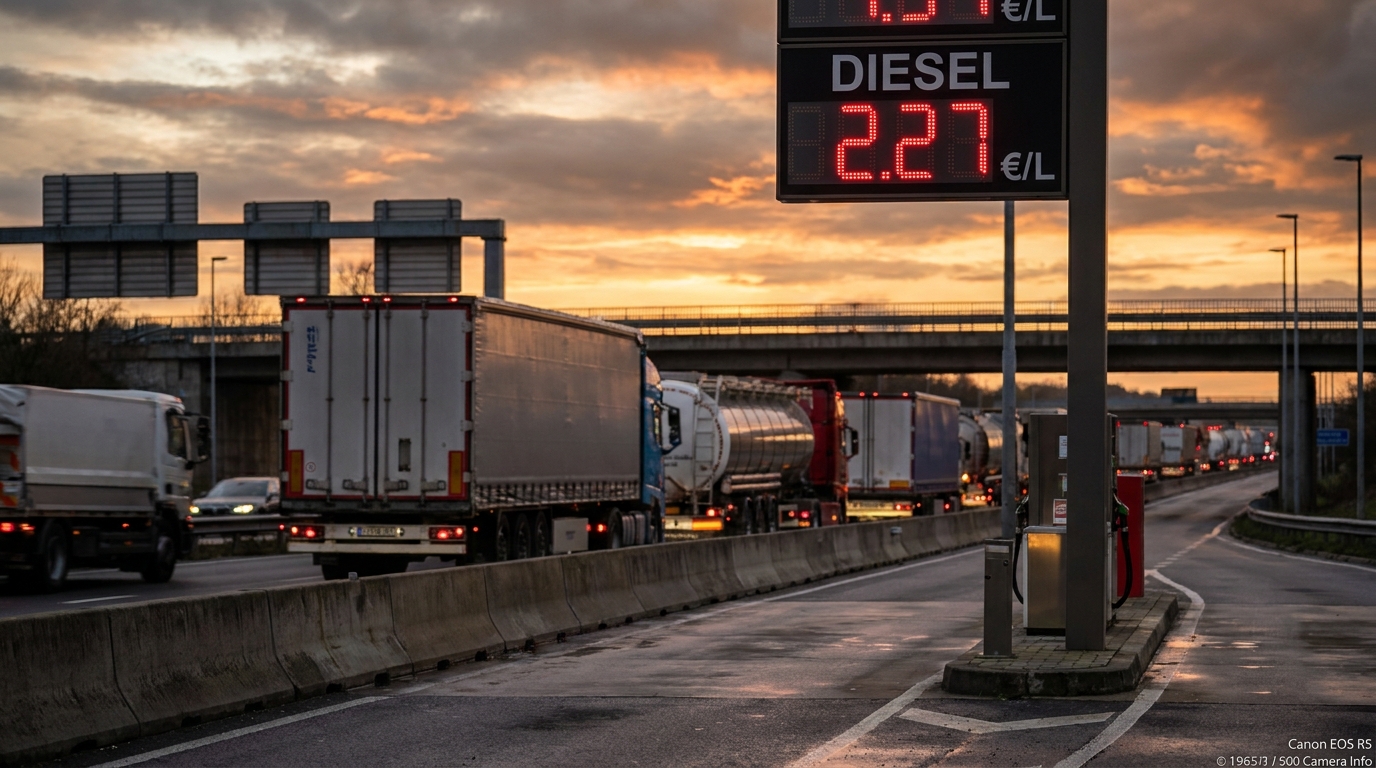
ETS2 will fundamentally transform the transport business model: the cost of CO2 emissions will cease to be a PR-related element or a voluntary ESG commitment, but will instead become a hard accounting cost, directly built into the price of every transport order. In this system, entities distributing fossil fuels will be required to purchase emission allowances corresponding to the amount of fuel burned. This cost will inevitably be passed on to retail fuel prices and, consequently, to transport rates.
In this context precise emission data required by CountEmissionsEU is becoming absolutely crucialA company that can document its fleet's low carbon footprint through investments in alternative propulsion systems or operational optimization will have a measurable cost advantage under ETS2. However, carriers relying on estimates or lacking effective emissions monitoring systems will enter 2028 without knowing the real carbon cost of their operations—which inrodoin a market regulated by allowance prices could mean a financial disaster.
Proportionality mechanisms – what do they mean for SMEs?
The authors of the regulation were aware that imposing identical obligations on corporations employing thousands of employees and sole proprietorships would be a regulatory absurdity. Therefore, the CountEmissionsEU regulations include proportionality mechanisms, which ease the burden of adaptation for smaller entities.
Key findings for the SME sector:
- Exemption from external data verification — Small and medium-sized enterprises are generally not required to engage independent auditors to certify their emissions data. This obligation primarily falls on large entities already subject to extensive non-financial reporting.
- Secondary data in transition phase — for cross-border and transit operations, SMEs will be able to use standardised secondary (benchmark) data for a certain period of time before their systems are able to generate full primary data.
- Free digital tools — The European Commission has committed to providing a free emissions calculator and extensive instructional materials to help the smallest businesses navigate the new requirements without the cost of expensive external software.
It is worth noting, however, that Exemption from mandatory certification is not the same as exemption from the need to have reliable dataIf a small carrier's client is a large corporation subject to CSRD, the pressure to provide verifiable emissions data will come from the market—regardless of what the regulation states. Therefore, many industry experts recommend that SMEs proactively prepare for the requirements, treating certification not as a burden but as a competitive advantage.
Financial and price dimensions - when ecology becomes a calculation
The CountEmissionsEU regulation will have a significant impact on transport companies' pricing strategies in the medium term. Until now, the "carbon surcharge" on transport invoices has been a relatively discretionary item—calculated using imprecise methods, varying between carriers, and often disputed by customers. The new regulations completely change this dynamic.
First, carriers will have to prove that their carbon cost reflects realityA customer who has paid the environmental surcharge will be able to request access to the data justifying its amount. In the event of a discrepancy between the declared and actual carbon footprint, the legal and reputational risk falls on the carrier.
Secondly, precise emissions data becomes a negotiating argument. A company that can demonstrate that its emissions per tonne-kilometer are 30% lower than the market average thanks to a modern fleet and route optimization has a strong argument when negotiating contracts with shippers concerned about their Scope 3.
Thirdly, in the context of the upcoming ETS2, the lack of emission monitoring systems means the inability to manage carbon costsA company that does not keep accurate records of fuel consumption and emissions per order will be unable to optimize its position in the allowance trading system.
Risks for unprepared companies – what are the consequences of non-compliance?
From a business risk management perspective, disregarding CountEmissionsEU requirements poses several categories of risks that are worth cataloging.
Regulatory risk: Failure to comply with Regulation 2026/1030 may result in administrative sanctions. The specific penalties will be determined at the national level by individual Member States. However, given the trend toward tightening oversight of ESG reporting, it is unlikely that regulatory authorities will be lenient.
Contract risk: Large shippers, themselves subject to reporting pressures, will build ISO 14083 compliance requirements into their contractual clauses. A carrier or freight forwarder failing to meet these standards may find themselves in breach of contract, opening the door to financial claims from customers.
Reputational risk: In the wedrodoIn a market where emissions transparency is becoming the norm, companies unable to provide credible carbon data will be perceived as unreliable or unprepared for the demands of the modern market. Over the next few years, this could mean systematically losing contracts to better-prepared competitors.
Financial risk (ETS2): As mentioned, from 2028, CO2 emissions will have a direct impact on operating costs through the ETS2 system. Companies without effective emission monitoring systems will be unable to rationally manage these costs or forecast their impact on financial results.
Technology as the answer – digitizing emissions monitoring
Meeting CountEmissionsEU requirements without technological support is a virtually impossible task, especially for companies operating on a supra-regional scale. The market for carbon footprint management solutions in logistics is growing rapidly, offering tools increasingly integrated with TMS (Transport Management System) systems and fleet telematics.
Key functionalities that transport and logistics companies should look for when choosing emissions management tools:
- compliance with the EN ISO 14083:2023 methodology and the well-to-wheel approach,
- integration with fleet telematics systems and real-time route data,
- the ability to aggregate data from subcontractors in one placerodowisku,
- handling emissions from storage and terminal operations,
- generating reports ready for external audit,
- scalability to handle both a small fleet and thousands of operations per month.
Investing in appropriate software should be treated not as a compliance cost, but as a strategic investment in the ability to participate in the market of the future.
Summary: Business Risk Perspective
EU Regulation 2026/1030 isn't just another bureaucratic initiative—it's a structural change to the rules of the transport and logistics market in Europe. Companies that embrace the new regulations as a catalyst for building a competitive advantage through precise emissions management can emerge from this transformation stronger. Companies that ignore the upcoming changes or postpone adaptation risk losing contracts, facing regulatory sanctions, and marginalization in a market dominated by ESG requirements.
For risk managers and owners of transport and logistics companies, the key questions today are: Does my company have systems capable of generating primary data compliant with ISO 14083? Are my subcontractors prepared to provide verifiable emissions data? Does my pricing strategy take into account the upcoming ETS2 costs?
The answer to these questions marks the line between a company ready for the European logistics market of the future and one that will be displaced by better-prepared competitors. The clock is ticking—2028, with the implementation of ETS2, is approaching faster than you might think.