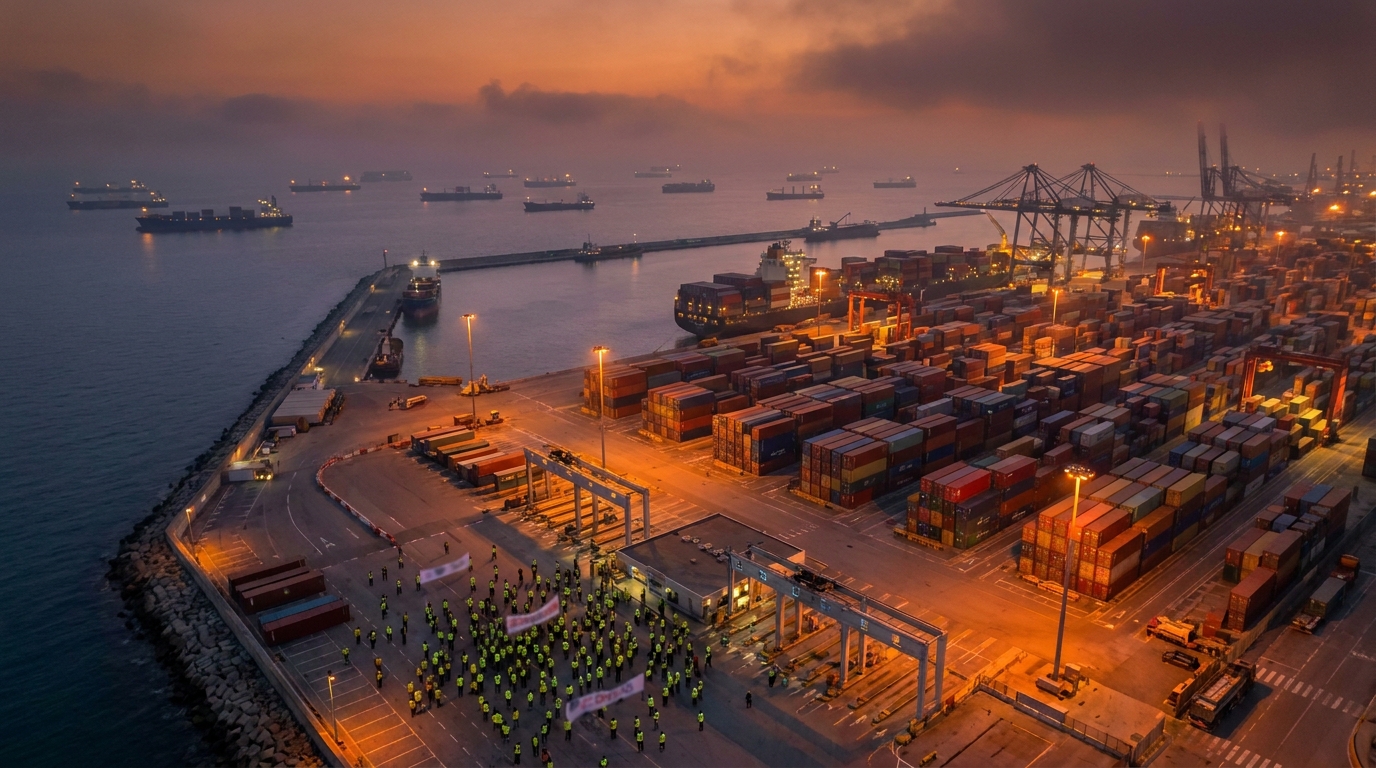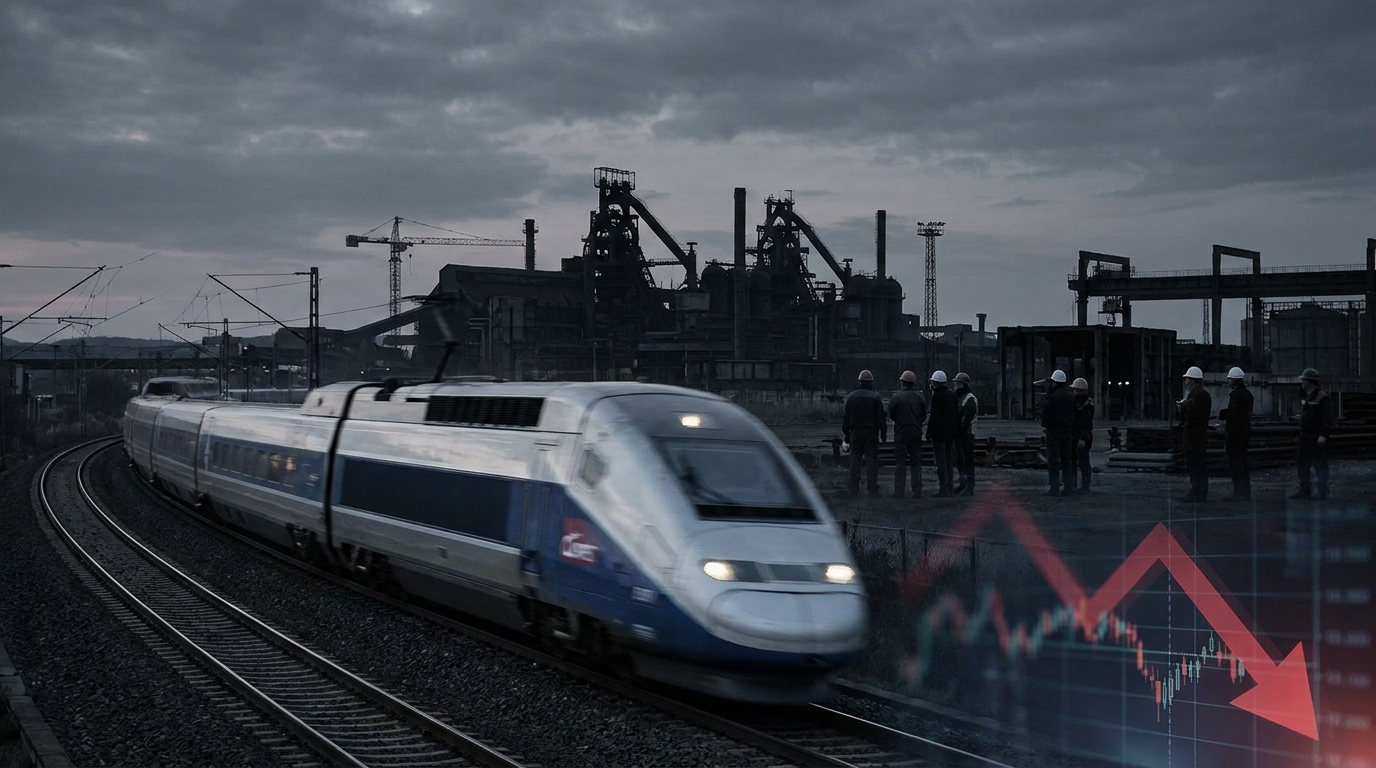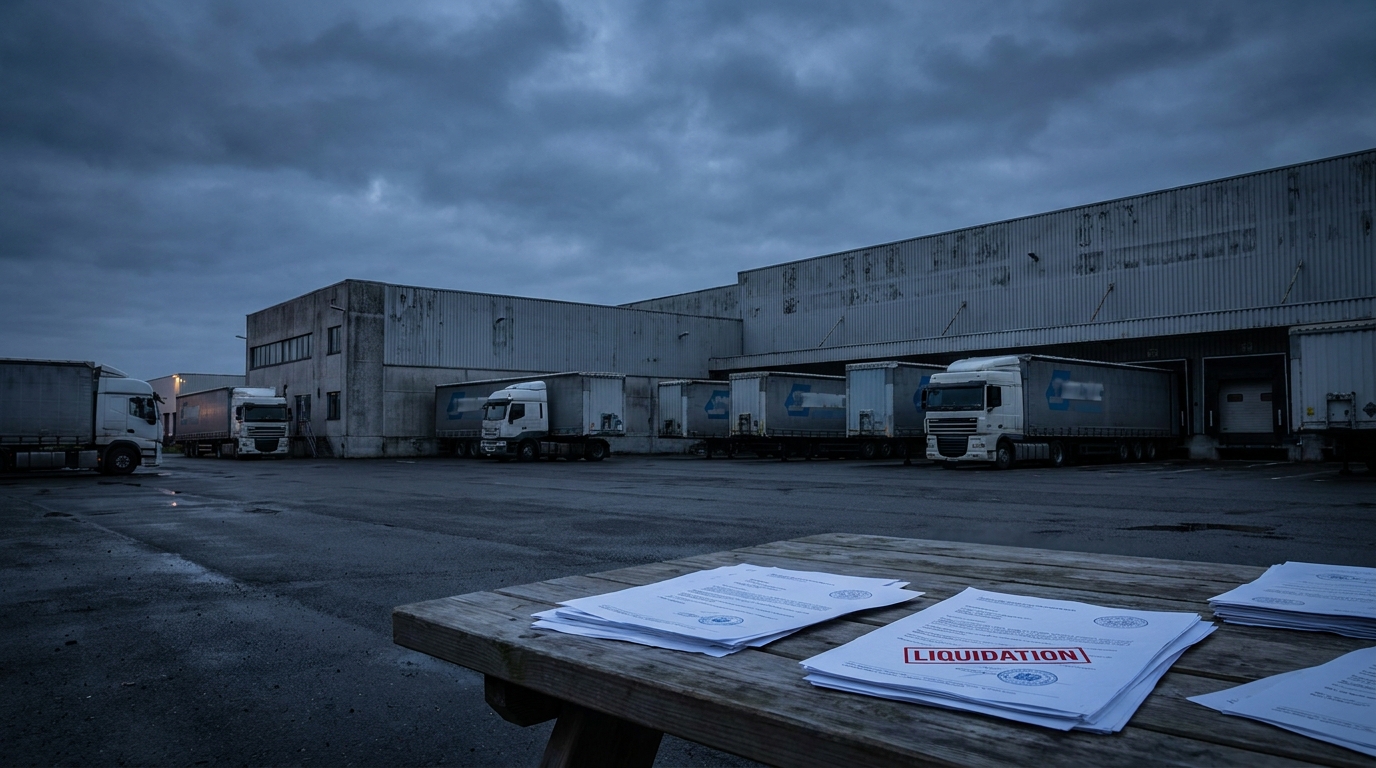

The visa crisis for Ukrainian drivers threatens the bankruptcy of thousands of Polish transport companies.
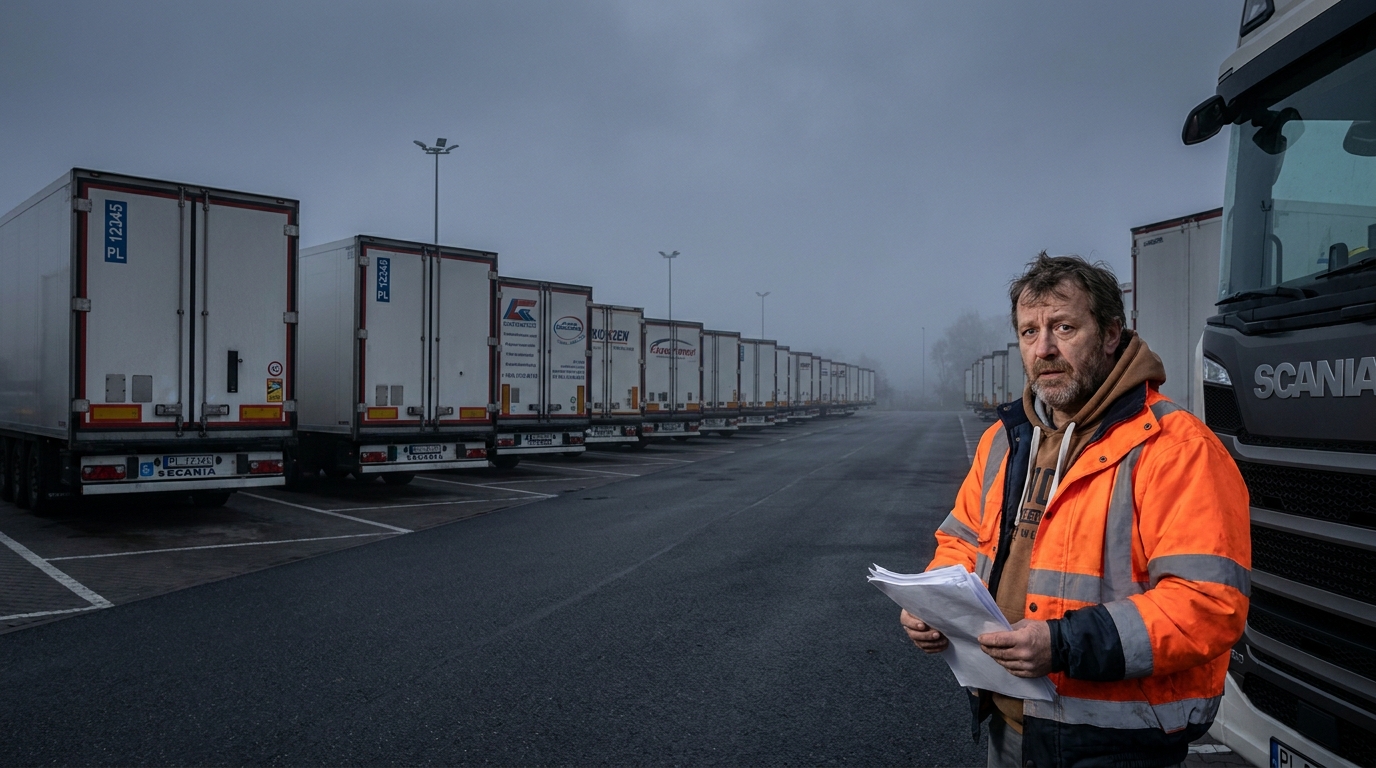
The Polish transport industry is facing one of its most serious operational crises in years. The Transport and Logistics Poland (TLP) Employers' Association and other carrier organizations have issued formal appeals to the Ministry of Foreign Affairs, explicitly warning of a scenario of mass bankruptcies. The immediate cause of this alarming situation is the administrative paralysis in the process of extending visas and employment documents for professional drivers from Ukraine—a group without which a significant portion of the Polish TSL sector cannot function.
Ukrainian drivers - the foundation of Polish logistics
To fully understand the scale of the crisis, we need to go back a few years. For over a decade, Poland has remained the undisputed leader in the European road transport market. Polish carriers handle a vast portion of intra-EU freight trade, generating billions of euros in revenue and creating tens of thousands of jobs. However, this spectacular success would not have been possible without the involvement of workers from third countries—primarily from Ukraine.
Over the past few years, Ukrainian citizens have become an absolutely key professional group in the Polish transport, forwarding, and logistics industry. Industry estimates indicate that in many companies, they constitute more than half of the entire driving staff. This phenomenon is the result of simple labor market economics: with a persistently large shortage of domestic professional drivers, employers have been forced to seek workers from the East, offering the appropriate qualifications and willingness to take on demanding work in international transport.rodopronunciation
The outbreak of the full-scale Russian invasion of Ukraine in February 2022 dramatically changed the legal and living conditions of hundreds of thousands of Ukrainian workers in Poland and other EU countries. Some of them chose to remain abroad, continuing their work and financially supporting their families back home. For Polish transport companies, their presence became invaluable—especially since the military mobilization in Ukraine had almost completely halted the influx of new workers from that direction.
Anatomy of a Documentation Crisis
The crux of the current crisis lies in a seemingly technical, but in reality extremely serious, administrative issue: expiring visas and the inability to renew them efficiently. Under the current standard procedures, a Ukrainian driver whose visa is about to expire is required to appear in person at a consulate in Ukraine. Only there can they apply for a new document entitling them to legal residence and work in Poland.
In peacetime, such a solution was logistically justified. In the realities of the ongoing war, it is completely unfeasible, and even dangerous, for the vast majority of those involved. Returning to Ukraine, under martial law and general mobilization, exposes men of military age to the real risk of conscription and loss of the opportunity to return to work abroad. For women and senior citizens, traveling amid wartime traffic chaos and the constant threat of bombing also poses a significant challenge.
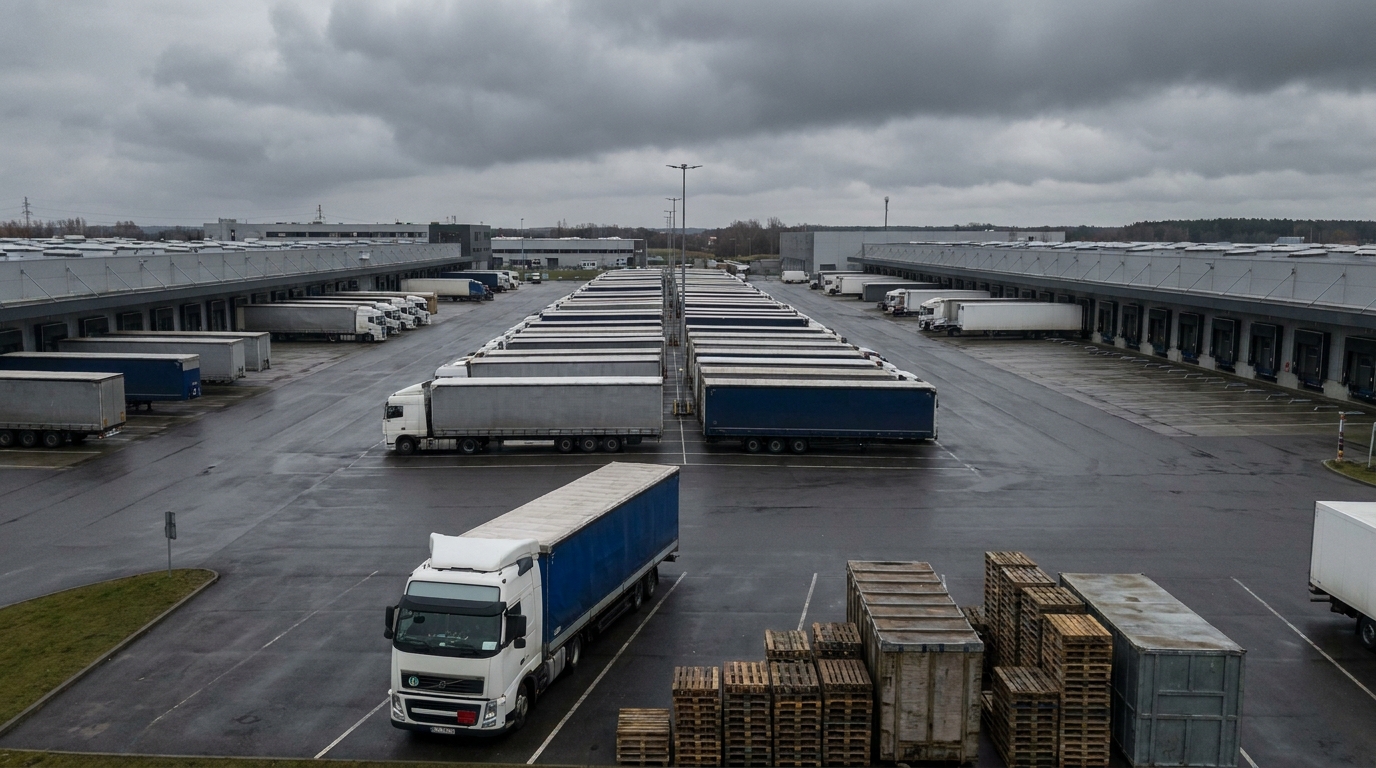
The result is clear: thousands of experienced professional drivers with the appropriate qualifications, driving license categories, driver cards, and all necessary certificates are effectively stranded in Poland due to expiring or expired residence and employment permits. The companies that employ them cannot legally put them behind the wheel—even if they have full schedules and commercial contracts with partners across Europe.
Voice from the market: the scale of the problem in numbers
A representative example illustrating the scale of the problem at the level of an individual company is the situation of Jan Załubski, owner of a large transport company employing a total of approximately five hundred drivers. More than half of them are Ukrainian citizens. As he himself admits in an interview with industry media, his company faces a dire choice: either see a swift change in regulations or become unable to fulfill its contracts.
Mr. Załubski's case is not an isolated one—on the contrary, it is a typical example for the entire industry. Among Polish carriers operating in the international transport segment,rodoFor companies where Ukrainians make up 40-60 percent of the driving staff, this is the norm, not the exception. There are entities where this percentage is even higher. For these companies, a possible entrenchment of the current administrative stalemate means one thing: a gradual but inevitable phasing out of operations.
Industry employer organizations estimate that the problem directly affects several thousand transport companies in Poland. Some of them operate in the small and medium-sized enterprise segment, where the absence of a few or a dozen drivers can mean the inability to serve key routes and customers. In this context, warnings of wave bankruptcies are not rhetorical exaggeration, but a realistic assessment of the risk.
Appeal to the Ministry of Foreign Affairs: the industry is waiting for the signature of officials
In response to the growing crisis, the Polish Transport and Logistics Employers' Association and other organizations representing the TSL sector have taken formal steps at the government level. Official letters have been sent to the Polish Ministry of Foreign Affairs containing specific proposals for emergency legislative solutions.
A key industry demand is the introduction of the option to submit visa applications directly in Poland—completely bypassing the requirement to return to Ukrainian consular offices. The proposed mechanism would allow Ukrainian drivers to apply for extensions of their residence and employment permits through the Polish Ministry of Foreign Affairs, without having to leave the country. This would be similar to other extraordinary administrative measures that Poland and other EU countries have implemented against Ukrainian citizens following the outbreak of full-scale war.
According to TLP representatives, consultations on the draft regulation have formally concluded. The industry is eagerly awaiting the final, crucial stage—the signatures of the relevant officials and the entry into force of the new regulations. Each week of delay means more drivers' documents expiring and more companies entering a critical operational capacity zone.
A problem broader than just visas: driver's licenses and cards
It's worth emphasizing that the documentation crisis affecting Ukrainian drivers isn't limited to visa issues. The complex problem also includes:
- Work permits — documents required for the legal employment of third-country nationals, subject to extension procedures that are difficult to carry out in the standard procedure under current conditions.
- Recognition of driving licenses — Ukrainian driving licenses of categories C and CE, necessary for driving heavy goods vehicles, require an appropriate recognition procedure in the EU territory, the implementation of which is difficult in war conditions.
- Driver cards for digital tachographs — without a valid driver card it is impossible to legally drive a truck in the European Union, and the procedures for issuing and extending it involve the need to have current identity and residence documents.
- Certificates of professional competence — documents confirming the completion of vocational training, the validity of which is also subject to periodic renewal.
The combination of all these administrative requirements creates a situation in which even an experienced and fully qualified driver from Ukraine may actually be excluded from the labor market for purely bureaucratic reasons, unrelated in any way to his actual competences or willingness to take up employment.
Risk of domino effect in the European supply chain
For EURODEBT.eu readers—credit risk analysts, contractor credit managers, and credit insurance specialists—the current situation in Polish transport should serve as a red flag. The potential bankruptcy of several thousand Polish carriers would not be an event confined to the borders of a single country.
Poland is the largest road transport market in the European Union in terms of the number of trucks and the volume of cargo transported. Polish transport companies regularly operate routes to all European Union countries, with Germany, France, the Benelux region, and the Scandinavian countries at the forefront. A sudden operational paralysis of a significant portion of this fleet would immediately translate into:
- Supply chain disruptions for producers and distributors throughout Europe who use the services of Polish carriers as a cheap and reliable alternative to local operators.
- Increase in freight costs on key transport corridors, resulting from a reduction in the available supply of transport services.
- Liquidity problems in the financial sector — banks and leasing companies that financed the purchase of tens of thousands of tractor units and semi-trailers with a total value of billions of euros would face massive problems with servicing leasing installments and loans by bankrupt carriers.
- Losses of supporting service providers — fuel companies, service station chains, tire and spare parts manufacturers, insurance companies — all these players would feel the direct effects of a cascading industry paralysis.
The domino effect could also extend to the freight forwarding and contract logistics sector, which relies heavily on transport subcontractors. Freight forwarding companies that have long-term contracts with shippers and rely on small and medium-sized carriers to fulfill their contracts could face contractual liability for non-performance—even if they themselves are not directly affected by the staffing crisis.
Counterparty Risk Assessment Perspective
From a practical commercial risk management perspective, the current situation urgently requires an update to procedures for assessing the operational credibility of Polish transport partners. Risk managers and credit analysts working with Polish TSL companies should urgently pay particular attention to several key indicators:
- Employment structure — What percentage of a company's drivers are Ukrainian citizens, and what is the schedule for their document expiration? A company where 60–70 percent of its drivers are Ukrainians with documents expiring in the coming months is considered a high-risk operating entity.
- Ability to fulfill contracts — Is the company able to demonstrate its ability to cover active transport orders with its legally working driver staff?
- Financial liquidity — if contracts cannot be fulfilled, operating income may fall sharply, while fixed costs (leasing, insurance, management staff costs) remain unchanged.
- Historical payment on-time rates — deterioration of operating liquidity very quickly translates into delays in settling liabilities towards suppliers of services and goods.
Transport companies that have been rapidly expanding their fleets in recent years, relying on external financing, require special attention, as they anticipate maintaining high revenues from contracts based on Ukrainian drivers. For such entities, a sudden reduction in operational capacity could mean immediate debt servicing problems.
What does the industry expect and what could change the situation?
The optimistic scenario for Polish transport assumes the rapid implementation of the regulation, which the industry has been waiting for. Allowing Ukrainian drivers to submit visa applications directly in Poland would gradually free up staff resources and restore companies' operational capacity. Industry experts emphasize that this solution is necessary not only for purely economic reasons, but also for humanitarian ones—experienced employees who have spent years building their careers in Poland should not be forced to choose between their jobs and the safety of themselves and their families.
The pessimistic scenario – prolonged legislative delays and the lack of a quick government response – threatens what employers' organizations are openly saying: a wave of bankruptcies, the effects of which will reach far beyond the borders of the Polish transport market.
It's worth noting that the problem isn't unique to Poland. Similar challenges related to the employment of Ukrainian drivers and transport workers are observed in Germany, the Czech Republic, Slovakia, and the Baltic states. Coordination of solutions at the EU level could, in the long term, provide a more systemic response to this problem, but in the short term, rapid action at the national level remains the priority.
Summary: Systemic risk requires urgent monitoring
The visa crisis affecting Ukrainian drivers in Poland is an example of a situation where a seemingly administrative problem—the extension of residence and employment permits—is turning into a serious systemic threat to the entire economic sector. The Polish TSL industry, one of the driving forces of European logistics, has reached a point where the speed and determination of government action will directly impact the health of thousands of businesses and the stability of supply chains supporting intra-EU trade.
For all entities financially linked to the Polish transport sector—trade creditors, financing institutions, credit insurers, and foreign shippers using the services of Polish carriers—the current situation requires an urgent update of their counterparty risk assessments. Monitoring of the employment structure, operational capacity, and financial liquidity of Polish TSL companies should be more intensive than usual during this period. At stake is not only the fate of individual entrepreneurs, but also the stability of one of the key elements of European trade infrastructure.