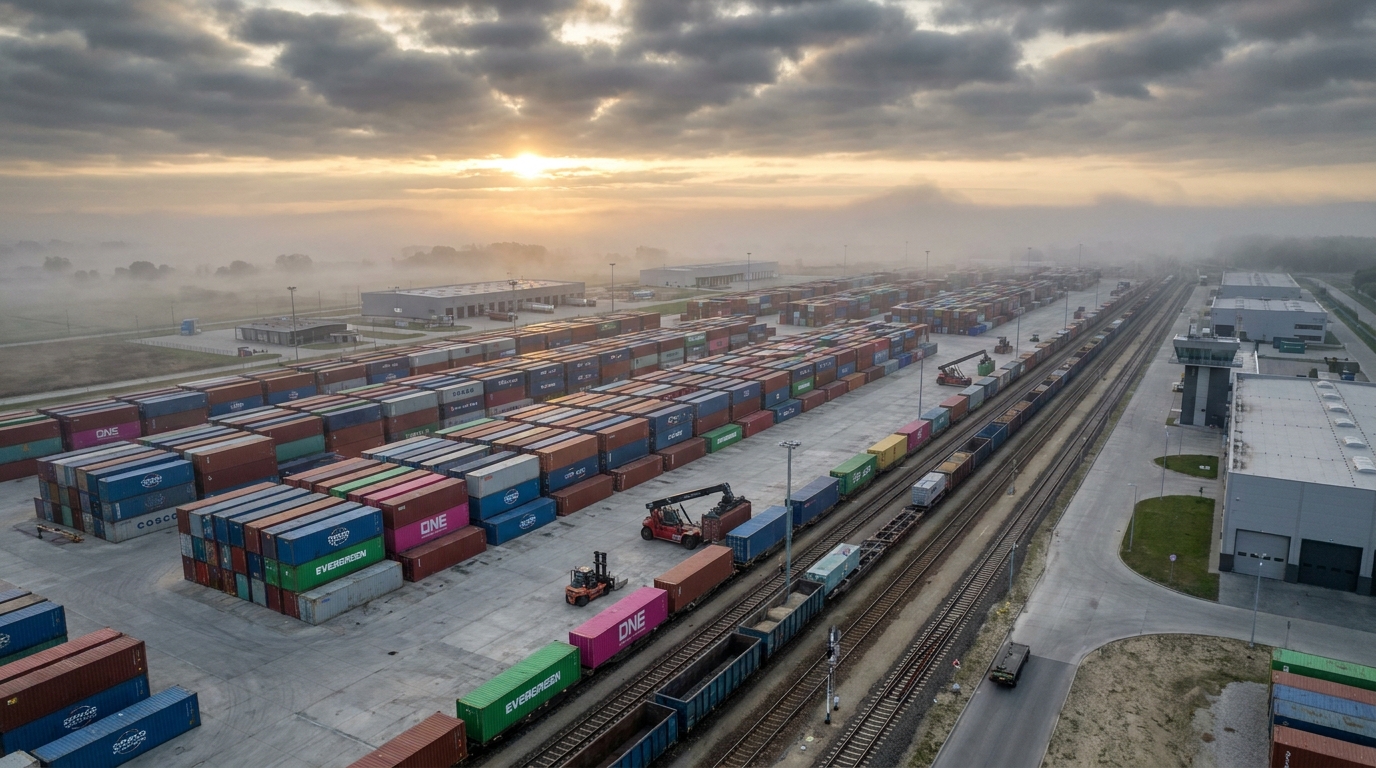

48 days to pay: payment crisis in road transport threatens thousands of SMEs
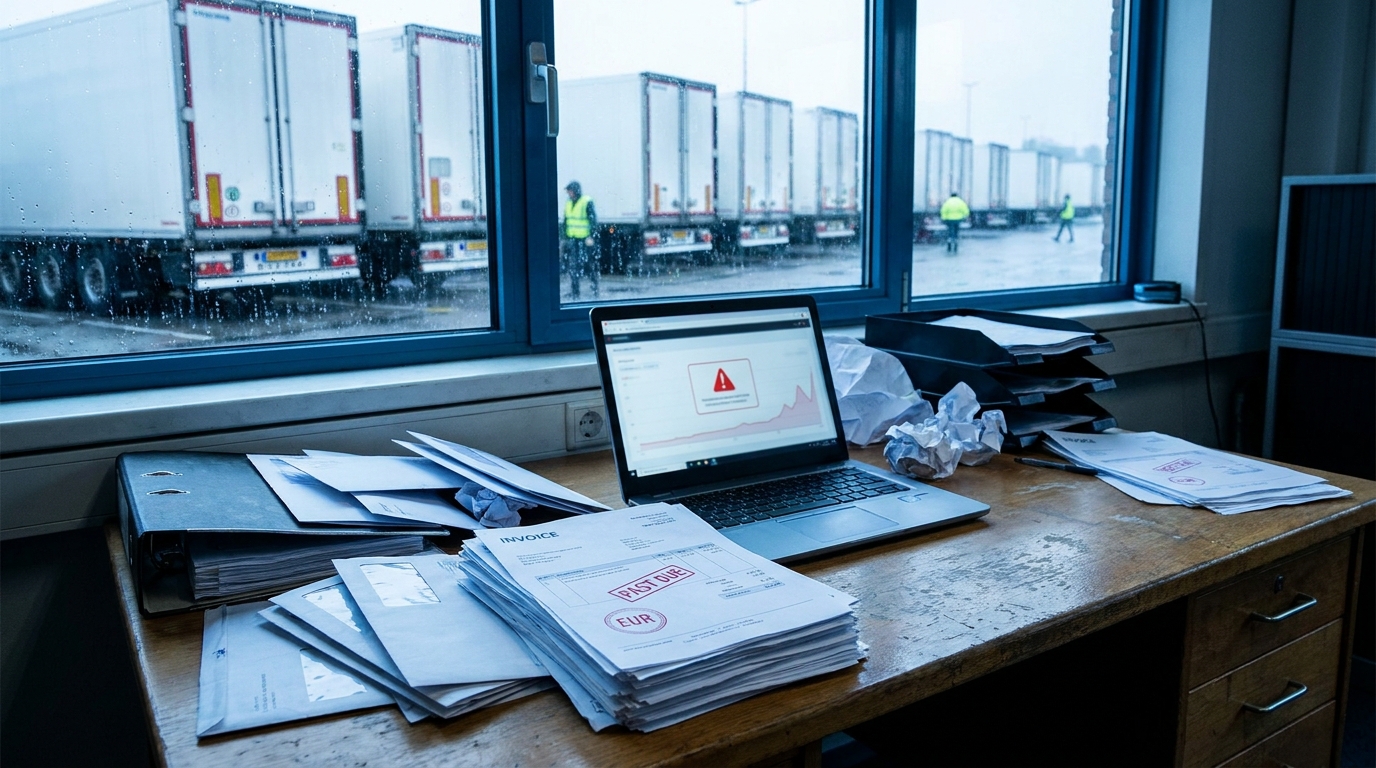
The average wait for payment in Germany’s road freight transport sector has reached an alarming 48 days, according to the latest data cited by Deutsche Verkehrs-Zeitung (DVZ), a leading German logistics industry publication. This is not merely a dry statistic. For thousands of small and medium-sized carriers operating in one of the world’s largest logistics markets, it means one thing: a dramatic cash freeze that could lead to the bankruptcy of even a profitable company. Industry experts and EU institutions are increasingly sounding the alarm that, without systemic changes and immediate action at company level, the European transport market faces a wave of bankruptcies whose effects will be felt by all participants in the supply chain.
Forty-eight days — what does this mean for a carrier?
To understand the gravity of the situation, one need only look at the specific nature of the transport industry. Road freight is a sector with exceptionally low profit margins, often hovering between 2–5% of net revenue. At the same time, operating costs are enormous and — crucially — absolutely cannot be postponed. Fuel, road tolls, lease instalments for tractors and trailers, liability and cargo insurance, drivers’ wages: all these obligations must be met continuously, week after week, regardless of when the customer deigns to make a bank transfer.
When the average wait for payment is 48 days, a carrier operates for almost half of each month solely on its own working capital or credit. In practice, this means that a company that completed a job and issued an invoice on the 1st day of the month can realistically expect to receive the funds only around the 18th day of the following month. During that time, it must pay all the costs associated with carrying out the transport itself and finance subsequent jobs. This is a classic model in which the carrier acts as a free bank for its customers.
Moreover, the DVZ report indicates that 48 days is an average — meaning that some customers pay after 60, and often 90 days or longer. Small freight forwarding and transport companies frequently report that shippers and large freight forwarders impose payment terms of 50–60 days as a condition of cooperation, leaving no room for negotiation. The smaller player either accepts these terms or loses the customer.
SMEs under fire — who is hit hardest by the crisis?
European road transport is overwhelmingly made up of small and medium-sized enterprises. Large logistics groups have extensive finance departments, bank credit lines and often their own factoring entities, allowing them to absorb payment delays. A small family business operating a fleet of three to ten vehicles simply lacks such tools.
For such businesses, a payment bottleneck is not an accounting problem — it is an existential threat. Just a few overlapping delays from different customers are enough to put a company in a situation where:
- it cannot pay for fuel on time and refuelling of the fleet is suspended,
- it falls behind on lease instalments, risking termination of the agreements by the lessor,
- it delays paying drivers’ wages, resulting in a mass departure of employees and labour law problems,
- it loses its creditworthiness and access to external financing,
- in an extreme case — it declares bankruptcy, even though its customers owe it money for services rendered.
This is the paradox of the transport industry: a company can go bankrupt while showing a positive operating result on paper if its customers do not pay on time. And this very scenario is becoming an increasingly common reality in the German transport market.
Polish carriers under double pressure
The problem is particularly important for Polish transport companies. Poland has the largest truck fleet in Europe — Polish businesses carry out a significant share of international haulage across the European Union, and Germany is their key market. Polish carriers perform a huge volume of transport through and within Germany, including cabotage operations and transit to other Western European countries.
Payment delays in the German market therefore have a knock-on effect on Polish SMEs, which are already operating under growing cost pressure. In recent years, Polish companies have simultaneously faced:
- rising labour costs — a steady increase in drivers’ wages, driven in part by the EU Mobility Package and minimum wage rules in individual countries,
- operating cost inflation — fuel, tyre, spare parts and servicing prices remain high,
- higher road tolls (Maut) — Germany is steadily expanding and updating its toll system to account for new CO₂ emission classes,
- administrative restrictions under the Mobility Package — requirements for drivers to return to their home country every 4 weeks, new cabotage rules and working time requirements generate additional logistics and operating costs.
Adding compulsory financing of customers for 48 days or longer to all these burdens creates an explosive mix that could permanently reshape the European logistics market. We are already seeing some Polish carriers scale back operations in Western markets or seek market niches that allow them to avoid relationships with customers known to have payment problems.
The European Union responds — but when and how?
The problem of payment bottlenecks is not new, but its scale in the transport sector has attracted the attention of EU institutions. Germany, as Europe’s largest logistics market, sets the rules of the game — and what happens in Berlin or Hamburg immediately reverberates across the continent.
European Union institutions are working on new regulations aimed at radically shortening permissible payment terms in business-to-business (B2B) transactions. The key proposal is to introduce an absolute limit of 30 days for settling payments — with no possibility for the parties to extend it by contract. This would effectively prohibit the imposition of 60-, 90- or 120-day payment terms, which are currently a common practice used by large customers with smaller subcontractors.
Implementing such a provision would be a breakthrough. It would force large entities to settle their obligations on time and ultimately release billions of euros frozen in unpaid invoices across Europe. Experts estimate that payment bottlenecks in the transport and logistics sector alone generate losses of tens of billions of euros annually across the continent.
The problem, however, is that such regulations — even if adopted — will enter into force only after a lengthy legislative process and a period of implementation by member states. In an industry where companies go bankrupt week after week because of liquidity shortages, waiting for EU legislation is a strategy that carries too much risk.
How to protect your company now — expert recommendations
In the face of the growing threat, industry experts and platforms such as EURODEBT.eu recommend immediately implementing specific, proactive financial risk management measures. Below we set out the key recommendations for carriers, freight forwarders and logistics companies.
1. Rigorous credit checks before accepting a job
Every new customer should be checked before a vehicle even leaves the depot. A credit check should include an assessment of the company’s financial condition, payment history, presence in debtor registers and any court or enforcement proceedings. Data from European commercial registers and company verification platforms now provide broad access to such information in real time.
Neglecting this step to secure a job quickly is a mistake that may cost more than the value of the transport itself. A carrier that does not check its customer is effectively playing Russian roulette with its financial liquidity.
2. Monitoring receivables and automating debt collection processes
Receivables management systems should automatically flag invoices approaching their due date and initiate reminder procedures without manual intervention. The first payment demand should be sent on the very first day after the due date — not after a week, not after a month.
In the transport, freight forwarding and logistics industry, there is often a cultural acceptance of delays and a reluctance to enforce payment firmly for fear of losing a customer. It is worth remembering, however: a customer that deliberately freezes a subcontractor’s cash is not a partner worth keeping. It is a source of risk that must either be eliminated or appropriately priced into the service margin.
3. Professional debt collection — without unnecessary delay
When internal payment demands produce no result, the matter should be referred without unnecessary delay to a professional debt collection firm or a law firm specialising in international transport. Every week of delay means not only frozen cash, but also a growing risk that the debtor will declare bankruptcy or transfer assets before the claim is successfully enforced.
Platforms such as EURODEBT.eu allow unreliable payers to be reported to European databases, warning other market participants and exerting real pressure on debtors — knowing that a negative payment history is public and accessible to potential partners often effectively encourages settlement of overdue amounts.
4. Factoring — releasing frozen cash
Factoring is a tool that remains underused in the transport industry, particularly among SMEs. The principle is simple: a factoring company purchases invoices issued by the carrier, immediately paying it 80 to 95% of their value. The carrier receives the remainder (less the commission) once the debtor has actually paid the invoice.
In practice, this means that instead of waiting 48 days or longer, a transport company receives cash almost immediately after issuing the invoice and providing the transport documents. Factoring costs — usually a few per cent of the invoice value — are often lower than the costs of working capital credit or, all the more so, the costs of bankruptcy caused by a loss of liquidity.
5. Reviewing commercial policy and contract terms
Transport companies should review their existing framework agreements with customers and, where possible, negotiate shorter payment terms or advance payments. It is also worth considering varying prices according to payment terms — offering a discount for payment within 7–14 days or applying a surcharge for accepting 60-day payment terms are entirely legal and increasingly common market practices.
Contracts should also include clauses on late payment interest and the possibility of recovering debt collection costs. EU law (Directive 2011/7/EU) already grants creditors the right to charge statutory interest on late payments in B2B transactions — it is worth actively exercising this right.
The business risk perspective — what managers should know
From a risk management perspective, the extension of average payment terms in the road transport sector to 48 days should be treated as a systemic warning signal, not a temporary market anomaly. Historical data show that growing payment bottlenecks in the transport industry are one of the reliable leading indicators of a wave of bankruptcies across the sector.
For risk managers and owners of logistics companies, this means taking several actions at a strategic level:
- Diversifying the customer portfolio — dependence on one or two large customers with payment problems creates a concentration of risk that can threaten the entire company,
- Building liquidity reserves — maintaining a cash reserve sufficient to cover at least 60–90 days of operating costs regardless of invoice receipts,
- Regularly monitoring the financial condition of key customers — a large customer’s financial situation can change quickly; early detection of warning signs allows exposure to be reduced before actual problems arise,
- Actively participating in industry information exchanges — platforms for exchanging information about unreliable payers, such as EURODEBT.eu, provide access to data that cannot be found in any public register.
Conclusions: an industry at a crossroads
The increase in the average payment term to 48 days in Germany’s road freight transport sector is one of the most serious warning signals the market has sent in recent years. Germany is the epicentre of European logistics — what starts there quickly spreads across the continent, affecting carriers from Poland, the Czech Republic, Hungary, Romania and all countries whose companies serve the Western European market.
EU proposals to introduce a 30-day payment limit are a step in the right direction, but European legislation is a multi-year process. Until the new rules enter into force and begin to be effectively enforced, the only effective line of defence remains: rigorous checks on customers before starting a business relationship, active receivables management, a swift response to delays and the use of modern receivables financing tools.
Companies that invest in credit risk management procedures today may be the ones that survive tomorrow — while their less cautious competitors join the growing bankruptcy statistics in the transport, freight forwarding and logistics sector. In an industry with margins this low, there is no room for naivety about payments.