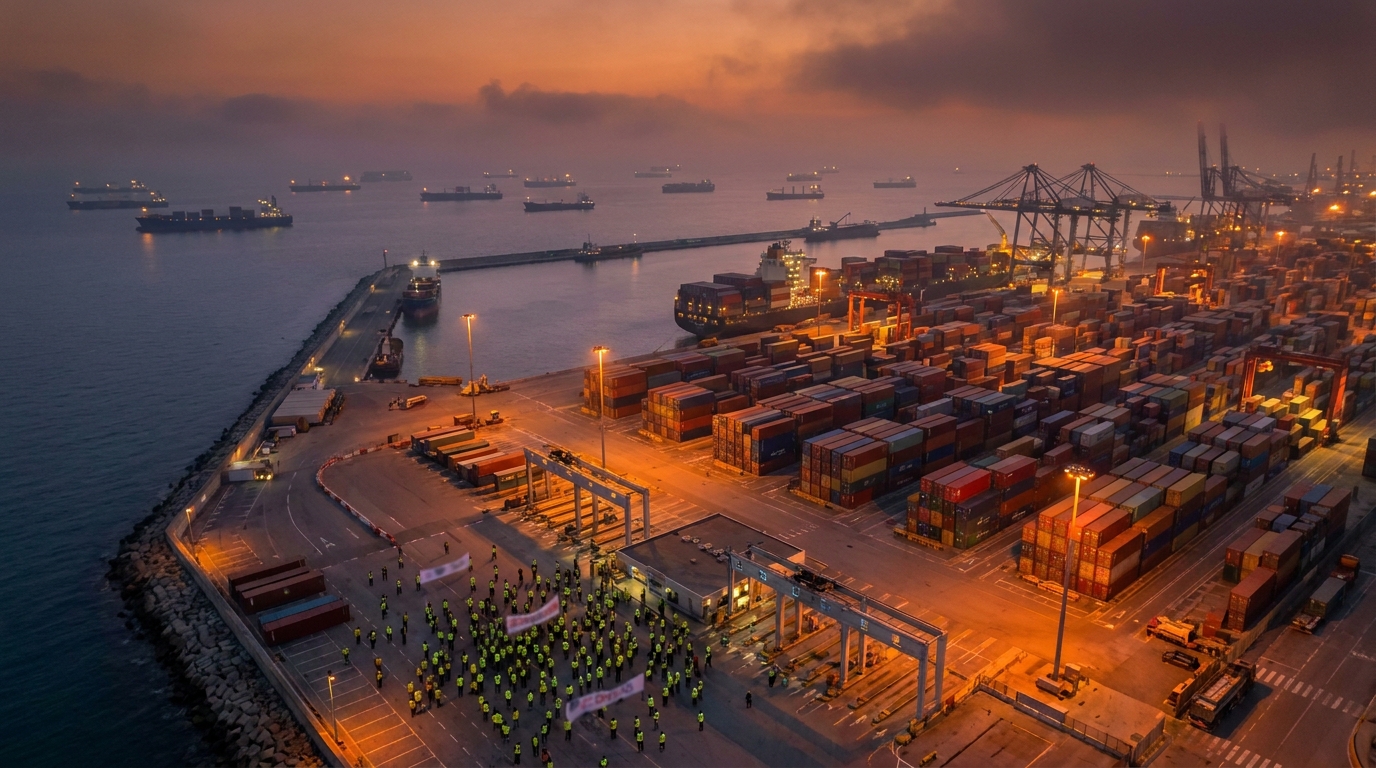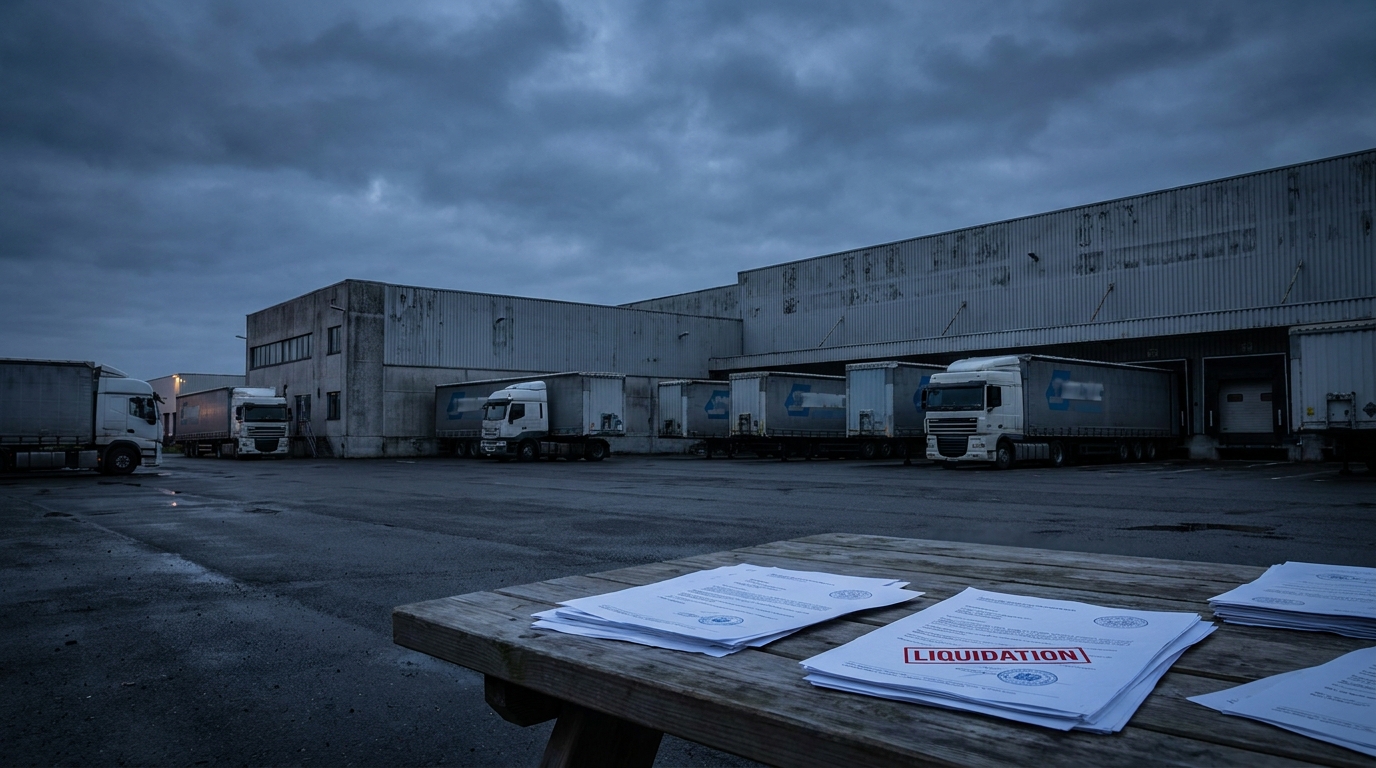
Black Sea on Fire: Attacks on Ukrainian Ports Paralyze European Supply Chains
Since the beginning of July 2026, the Ukrainian ports of Mykolaiv and Chornomorsk have been targeted by more than 130 massive attacks, which have destroyed container terminals and cargo warehouses. The escalation of strikes is causing serious disruptions to European supply chains, forcing logistics operators to seek alternative routes and confront a drastic increase in war risk insurance premiums. European companies urgently need to review their risk management strategies and prepare for a prolonged period of instability in the region.
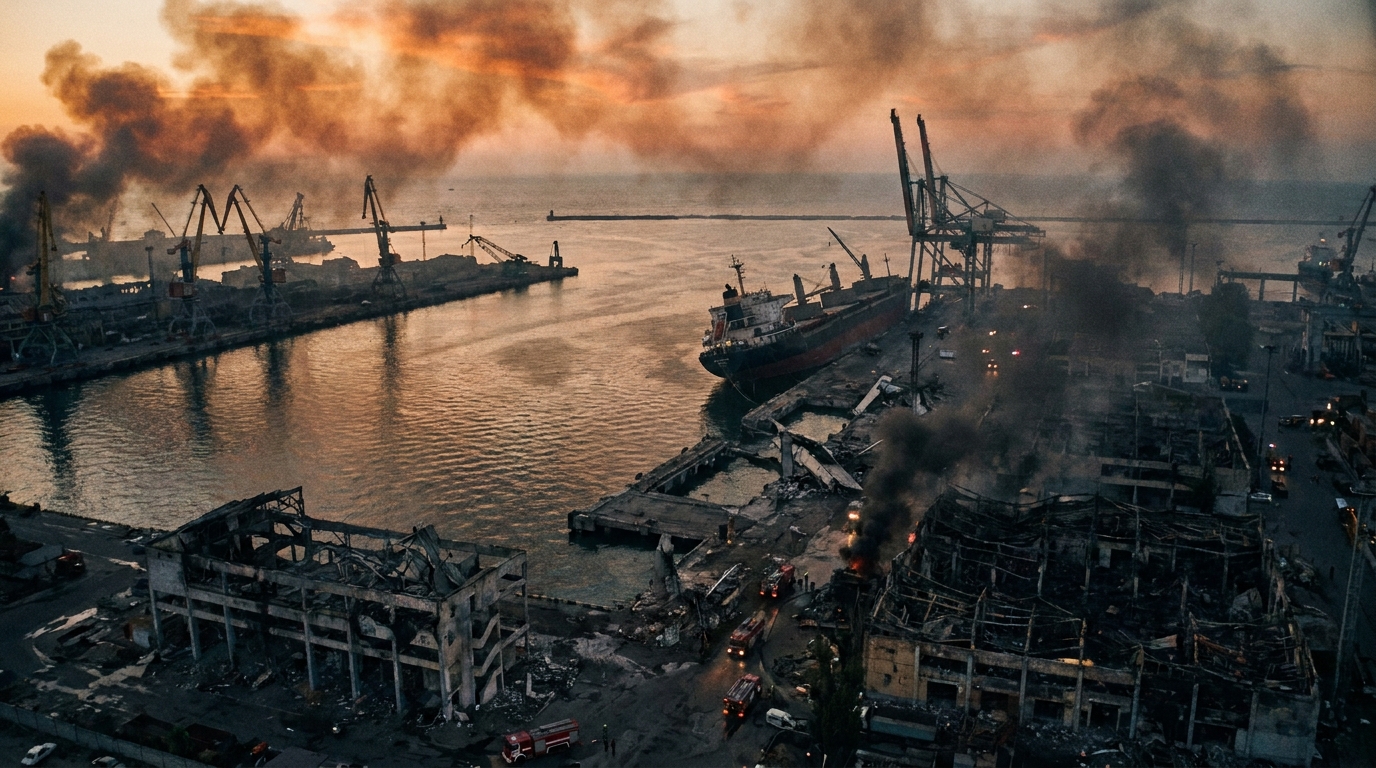
August 2026 brings a dramatic deterioration in the security situation in the western Black Sea. Since the beginning of July, Ukrainian security services have recorded over 130 massive strikes on key port infrastructure—primarily in Mykolaiv, Chornomorsk, and Odessa. Container terminals, cargo warehouses, and grain silos have been destroyed, and several commercial vessels have been hit directly in ports or in surrounding waters. This is a wake-up call for European logistics operators and trading companies, requiring an immediate review of their supply chain risk management strategies.
The scale and methods of attack - the tactic of disproportionate losses
Analysis of available intelligence and media data indicates a consistent and cost-effective strategy for conducting operations against Ukrainian maritime logistics. Attackers are using relatively inexpensive drones, including kamikaze-class unmanned aerial vehicles, supplemented by precision missiles. This allows them to inflict incomparably significant damage to expensive and difficult-to-rebuild port infrastructure at relatively low cost.
In the port of Mykolaiv At least three cargo ships moored at the quays sustained direct hits. The consequences for the operators of these vessels are serious—not only material losses but also long-term outage of tonnage. Black Sea The situation is even more dire: the local container terminal has been completely destroyed, and the extensive warehouses designed to handle long-distance cargo have ceased to exist as functional infrastructure. The paralysis of this hub means the blockage of one of the key transshipment points handling Ukrainian exports to Europe and beyond.
South of Odessa, systematic attacks on bulk carriers—vessels carrying grain, ore, and other bulk goods—have been reported. Of particular concern is a new tactic involving repeated strikes on ships that, after an initial hit, were being towed to ports for repairs or cargo evacuation. Such actions ultimately result in the stricken vessels being removed from the supply chain and significantly complicate salvage and insurance operations.
Impact on European supply chains - the domino effect
For risk managers and logistics company owners in Europe, it's crucial to understand how localized damage to port infrastructure translates into disruptions felt across the continent. This cascading mechanism affects multiple levels simultaneously.
Blocked shopping corridors
The Black Sea serves as a strategic export corridor for Ukraine—one of the world's largest producers and exporters of grain, vegetable oils, and steel products. The sharp increase in operational risk in this sea is forcing shipowners and charterers to suspend sailings or withdraw vessels from the area altogether. The result is immediate: sudden blockages of trade corridors that until recently operated smoothly.
Congested alternative land routes
When maritime export routes become too risky or inaccessible, goods seek land routes. In practice, this means increased traffic through Polish, Romanian, and Slovak border crossings, as well as the country's rail and road networks. The problem is that these alternative routes were already heavily congested before the conflict escalated—since the outbreak of the full-scale invasion, they have served as the main artery for humanitarian aid, military equipment, and Ukrainian exports. Additional volumes will not easily find their way there.
- Poland: The eastern crossings are heavily congested – extended customs clearance times and limited rail terminal capacity limit the flexibility of the system.
- Romania: The Port of Constanța has received some of the redirected cargo, but its handling capacity has its limits and the increased traffic has already affected handling times.
- Slovakia and Hungary: As transit links on land routes, they experience increasing truck traffic, which translates into delays and higher freight rates.
Bottlenecks on these alternative routes lead to longer delivery times, inability to meet contractual deadlines, and increased operating costs. Companies forced to rapidly change routes face additional planning costs, renegotiating contracts with subcontractors, and searching for spare capacity in an increasingly tight market.
Dramatic increase in insurance costs - war risk premium reaches prohibitive levels
From a financial perspective, one of the most tangible effects of the current escalation is the rapid increase in insurance premiums for maritime operations in the western Black Sea. Insurers, assessing the risk of damage or complete destruction of a vessel as very high, are radically increasing so-called war risk premiums — war risk surcharges added to standard marine policies.
In extreme cases, additional premiums reach levels at which commercial shipping in this area becomes simply uneconomic. Shipowners forced to calculate the profitability of a voyage must consider not only current freight rates but the full cost of risk—including the potential loss of a vessel worth tens or hundreds of millions of dollars. When insurance premiums consume a significant portion of shipping profits, the decision to suspend operations in a given waterway becomes rational from a business perspective.
For European ocean freight customers, this represents a double blow: higher freight rates where transport is still possible, and the need to incur the costs of alternative routes. Trading companies that base their cost models on rates from previous quarters should urgently reassess these assumptions.
Threat to Ukraine's food security and financial stability
The deliberate destruction of grain silos, fuel depots, and port terminals is damaging Ukraine's agricultural exports—one of the cornerstones of the country's economy. Ukraine accounts for a significant portion of global supplies of wheat, corn, sunflower seeds, and rapeseed. Reducing export capacity directly translates into reduced foreign exchange earnings, which in turn undermines Ukraine's financial stability and its ability to service its obligations.
From the perspective of credit risk analysis and partner risk monitoring—which are the cornerstones of the EURODEBT.eu platform—this situation signals a possible deterioration in the credit ratings of Ukrainian entities and an increase in liquidity risk in commercial transactions with Ukrainian counterparties. European companies actively trading with Ukraine should monitor these indicators with particular attention.
Additionally, a reduction in Ukrainian food supplies to global markets – particularly to North Africa and the Middle East – could fuel inflationary pressures on agricultural commodities, which will also be felt by European food processors and retailers.
What should logistics operators and risk managers do now?
The current escalation is not a short-lived episode. Trend analysis indicates a deliberate and consistent strategy aimed at permanently reducing Ukraine's export capacity. European logistics and trading companies should view this situation as a turning point requiring deeper operational changes, not just ad hoc adjustments.
Revision of the risk management strategy
Companies whose supply chains are in any way dependent on Black Sea transport should conduct a detailed audit of their exposure to this risk. Key questions include: which critical supplies pass through vulnerable ports? What buffer stocks are in place in the event of a blockage? Do contracts with suppliers and customers include force majeure clauses that adequately protect the company's interests?
Diversification of suppliers and routes
The prolonged period of instability necessitates an active search for alternative sources of supply for raw materials and goods previously sourced from or transiting through Ukraine. It is also worthwhile to establish early relationships with carriers offering alternative routes—via the Baltic Sea, through Romanian ports, or via intermodal routes through Central Europe.
Insurance policy review
If your company has insurance policies covering maritime transport across the Black Sea, it's essential to urgently review the scope of coverage, liability limits, and exclusions related to war risks. It's worth consulting an insurance broker now to assess whether the current coverage terms are adequate for your current risk level.
Situation monitoring and scenario planning
In the wedrodoIn a region with such high event dynamics, constant monitoring of operational information becomes a management element—not an option. It's worth implementing regular reviews of the situation in the region and preparing action scenarios for various variants of conflict escalation or de-escalation.
Business Risk Perspective - Summary
The intensification of attacks on Ukrainian maritime infrastructure in mid-2026 is a global event. The destruction of terminals in Mykolaiv and Chornomorsk, the shutdown of further merchant ships, and rising war risk premiums combine to create arodoa region where the costs of conducting trade with Ukraine and through its routes are rising rapidly.
For risk managers, the conclusions are clear: Dependence on a single logistics corridor is unacceptable under current conditionsCompanies that have previously treated route diversification as a theoretical planning exercise must now translate it into concrete operational actions.
The coming quarters will bring higher freight costs, longer delivery times, and greater unpredictability in regional supply chains. Companies that prepare for these conditions early—by investing in operational flexibility, diversified freight contracts, and robust insurance coverage—will gain a competitive advantage over those that only react when the problem directly impacts their operations.
The EURODEBT.eu platform will continuously monitor developments in the Black Sea region and their impact on the risks of cooperation with partners from Ukraine and neighboring countries.