

PLN 1.32 billion in debts of Polish carriers: debt crisis in the TSL industry 2026
The debt of Polish transport companies reached PLN 1.32 billion in November 2026, and the number of debtors in the industry rose to nearly 23,700 entities. The crisis is driven by rising fuel prices, chronic payment delays and the lack of protective clauses in contracts. For companies using transport subcontractors, the situation poses a real risk of sudden delivery interruptions and serious disruptions to the logistics chain.
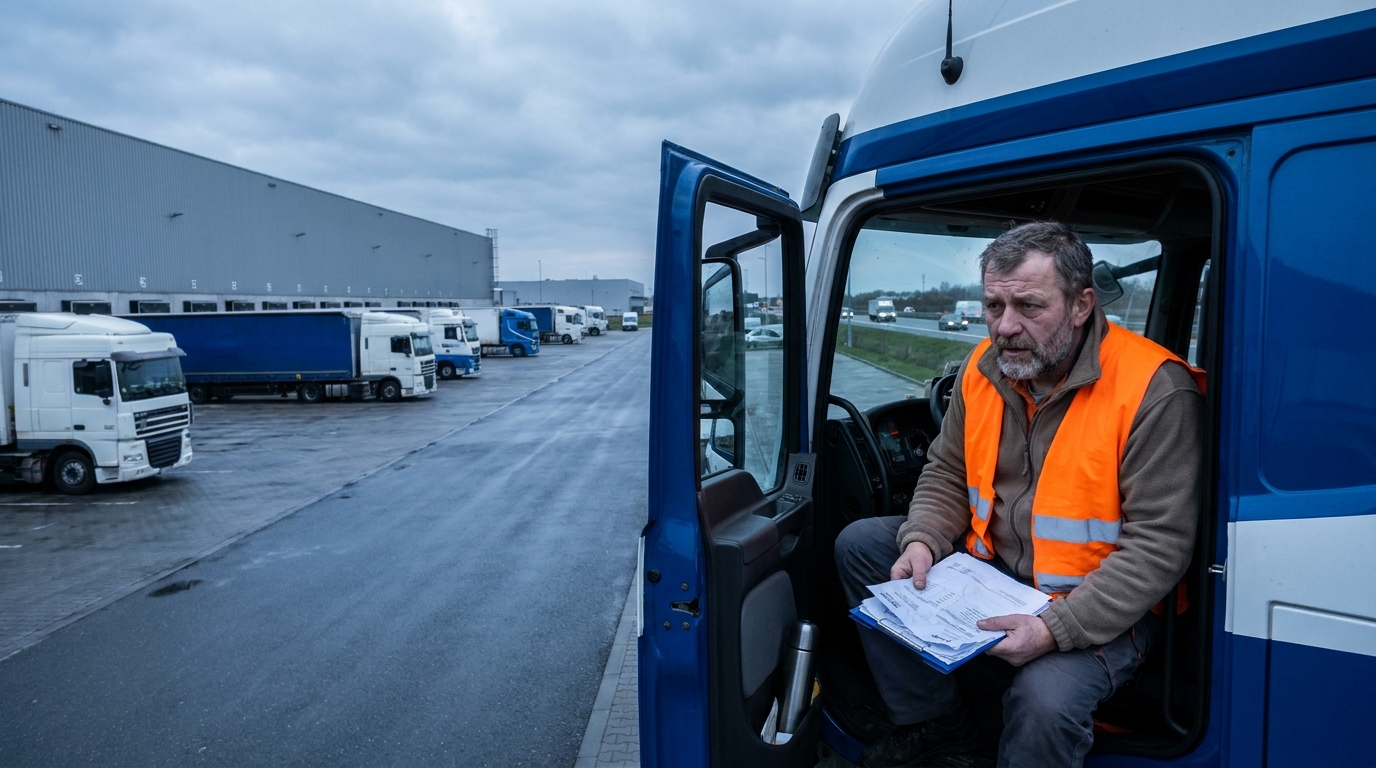
Polish transport companies have fallen into a deep liquidity crisis. According to the latest data from the National Debt Register from November 2026, the total debt of domestic road carriers has reached 1.32 billion zlotys, and the number of entities registered as debtors has exceeded 23.7 thousand businesses. This is not just a statistical record — it is a clear and worrying warning signal for the entire European supply chain, in which Polish carriers play a key role.
The scale of the crisis: over a billion zlotys in arrears and thousands of companies in trouble
Data published by the National Debt Register paints a worrying picture of the financial health of the Polish transport industry. The liabilities of companies providing road freight transport amount to PLN 1.32 billion, representing as much as 80 percent of the TSL sector’s total debt of PLN 1.66 billion. Compared with the previous year, the value of debts increased by PLN 26 million, or 2 percent. Although the growth rate itself may seem moderate, the real alarm is the rate of increase in the number of indebted entities — over the year, their number rose by as many as 716, an increase of over 3 percent, to a total of 23,738 companies.
Paradoxically, the average amount of arrears per company fell slightly — by 600 zlotys — to PLN 55.7 thousand. This is not, however, a reason for optimism. Industry analysts point out that this phenomenon instead indicates that increasingly smaller entities are being drawn into the debt spiral, losing liquidity at relatively low amounts. In other words: the crisis is not deepening among the major players — it is spreading to the smallest market participants.
Who are the debtors? Profile of an indebted carrier
An analysis of the types of entities clearly shows that sole proprietorships are bearing the greatest burden of the crisis. The KRD register lists 15,194 such carriers — they account for nearly two thirds, or exactly 64 percent, of all transport companies with arrears. The total value of their liabilities is PLN 750 million. We are therefore dealing with a huge number of small, often family-run businesses that for years formed the foundation of the Polish transport industry.
The geography of debt completes the picture. The Mazowieckie Voivodeship has the unenviable lead in the ranking, with 4,608 companies reporting arrears and total debts reaching PLN 260.6 million — equivalent to 20 percent of the entire industry’s liabilities. It is followed by the Śląskie Voivodeship with PLN 190.1 million and the Wielkopolskie Voivodeship with PLN 180.5 million. These three regions contain the country’s largest logistics hubs, which explains the concentration of both carriers and their financial problems.
However, looking at the average amount of arrears per entity, the most serious situation is in Silesia: the average debt per company reaches PLN 67.3 thousand, more than PLN 11,600 above the national average. It is followed by Podlasie with PLN 63.7 thousand and Wielkopolska with PLN 63.4 thousand. Individual cases can be dramatically larger: a company from Nowy Tomyśl is listed in the register with arrears of PLN 7.6 million, and an entrepreneur from Otwock County with PLN 7 million.
Why is transport sinking? Costs are rising, revenues are standing still
The debt crisis did not come out of nowhere. Its roots lie in the convergence of several adverse factors that struck Polish carriers almost simultaneously, creating a classic margin squeeze with no way out for the smallest market participants.
Spiralling fuel costs and lack of protective clauses
According to data from the International Road Transport Union (IRU), diesel prices in the European Union rose by an average of 12 percent in the second quarter of 2026. For a carrier with a fleet of a dozen or so tractor units, this literally means hundreds of thousands of zlotys in additional costs per year. Meanwhile, market rates rose considerably more slowly: spot transport became 11 percent more expensive, and long-term contracts only 6 percent. Worse still, a significant proportion of Polish transport companies serve clients under multi-year contracts without fuel clauses — mechanisms allowing rates to be adjusted automatically according to fuel prices. The result is simple and ruthless: carriers cover rising costs from their own cash reserves, steadily depleting them.
Chronic payment delays: a problem that has been suffocating the industry for years
At the same time, the industry is being suffocated by the chronic problem of late payments. A study conducted by Keralla Research for Bibby Financial Services produced shocking data: as many as 92 percent of transport companies regularly receive payment for services rendered after the agreed deadline. The median value of overdue receivables rose in just one year from PLN 75.5 thousand to PLN 90 thousand. For a small carrier with one or two vehicles, such an amount can literally mean a loss of liquidity and an inability to settle its own liabilities on time — lease instalments, insurance premiums or fuel invoices. The domino effect is exceptionally clear here: clients pay carriers late, and the carriers in turn fall behind on payments to banks and leasing companies. Debt accumulates, and the company — although formally active and fulfilling orders — loses its financial balance.
Higher road tolls and rising administrative costs
Higher charges in the e-Toll system are added to this cocktail of problems. For companies engaged in international transport or making intensive use of the expressway and motorway network, the increase in charges directly widens the gap between costs and revenues. Combined with rising service costs, spare parts prices and professional drivers’ wages, the industry has fallen into a classic margin squeeze, from which escape without external support or regulatory changes is extremely difficult.
Who lent money to carriers? The creditor structure
An analysis of the entities to which carriers owe money reveals which sectors of the economy bear the greatest risk associated with the crisis in Polish transport. The financial and insurance sector — banks and leasing companies — dominates, with the industry’s total debt to them reaching PLN 884.6 million, or 67 percent of all liabilities. Fuel suppliers and fleet card operators come second with PLN 241.2 million. Together, the two sectors account for 85 percent of Polish carriers’ debts.
It should be emphasised, however, that the debtor-creditor relationship is not one-sided. Transport companies themselves are waiting to recover significant funds from counterparties. The total receivables Polish carriers are seeking to recover from their debtors amount to PLN 170 million and concern nearly 9.3 thousand entities. These are primarily trading companies with PLN 54.4 million, entities in the logistics sector with PLN 46.6 million and industrial companies with PLN 24.5 million. Effective collection of even some of these receivables could significantly ease the industry’s liquidity problems — but in practice debt recovery is a lengthy and costly process.
A shrinking market: fewer licences, fewer trucks, more risk
A direct consequence of the liquidity crisis is a clear contraction in the capacity of the Polish transport industry. Data from the Chief Inspectorate of Road Transport shows that the number of active licences to provide international transport fell by 644 — to 43,280 — compared with the end of 2025. More than 640 entities that previously actively handled cross-border orders have therefore disappeared from European routes.
Data on investment sentiment is equally worrying. As many as 48 percent of surveyed carriers declared a complete suspension of investment and development plans. Instead of replacing their fleets with newer and more economical vehicles, companies are focusing solely on survival and reducing operating costs. Over the next few years, this means inevitable fleet ageing, rising maintenance costs and growing difficulties in adapting to increasingly stringent European exhaust emission standards — which in turn threatens another wave of exclusion from the market.
What does this mean for your company? Business risk assessment
For risk managers, logistics directors and business owners who use transport subcontractors, the situation described has direct, practical consequences that cannot be underestimated.
Risk of sudden disruption to supply continuity
A carrier operating on the brink of insolvency may at any moment find itself in a situation where a leasing company repossesses vehicles, a bank freezes its account or a bailiff seizes its fleet. For the client, this means a sudden interruption in the fulfilment of orders without any advance warning — particularly dangerous in time-sensitive industries such as automotive, FMCG or rapidly growing e-commerce.
Cascading effect in the supply chain
Industry experts warn of a real possibility of a cascading effect. Bankruptcies or serious financial problems among small carriers operating one or several vehicles can trigger an avalanche of disruptions across many sectors at once. Companies that suddenly lose a subcontractor are forced to seek alternative solutions urgently — often paying significantly higher spot rates or accepting delivery delays, which create losses for other participants in the chain.
Risk to receivables if a counterparty goes bankrupt
If you work with a transport company listed in debtor registers, it is worth asking yourself a key question: can you recover your receivables if it goes bankrupt? Financial creditors and leasing companies have priority in the settlement of claims in bankruptcy proceedings. For commercial counterparties, recovering money can be a lengthy process or completely unsuccessful.
How can risk be minimised? Practical tips
- Verify partners before signing a contract — check the status of potential subcontractors in the KRD, KRS and GITD licence databases. A company’s presence in a debtor register is a serious warning signal requiring a more detailed analysis.
- Monitor the financial situation of key subcontractors throughout the relationship — regular verification of partners allows you to detect growing problems early and take action before a crisis occurs.
- Diversify your carrier base — dependence on one or two small subcontractors is a direct route to serious operational disruptions. Having alternative transport service providers is an absolute minimum today.
- Check that transport licences are active — an active licence issued by GITD is a prerequisite for lawful operation. Make sure your partner has one and that it has not been suspended or revoked.
- Include protective clauses in contracts — receivables insurance, contractual penalties for failure to provide a service and clear procedures for escalating problems can significantly reduce the risk of financial losses.
Outlook: what will the future bring?
Without systemic changes, industry analysts predict two scenarios. The first — more likely if the current status quo continues — is a wave of bankruptcies among the smallest entities and accelerated market consolidation. Large transport and logistics groups will take over the customers of failing companies, and the market will become concentrated in the hands of larger players with access to external financing and the ability to negotiate more favourable contract terms with counterparties.
The second scenario assumes regulatory intervention: the introduction of mandatory fuel clauses in transport contracts, tighter payment deadline rules and more effective enforcement, as well as support programmes for small carriers investing in low-emission fleets. Such solutions could halt the sector’s ongoing deterioration and create conditions for its gradual financial stabilisation.
Summary: time for active partner risk management
Polish road carriers’ debt exceeding PLN 1.32 billion, the growing number of companies in financial difficulty and the industry’s shrinking capacity as measured by active licences and frozen investments are not abstract statistics. They represent a real threat to supply continuity, the stability of logistics chains and the financial security of every company cooperating with the transport sector. In the face of the growing crisis, active partner verification and proactive risk management are no longer an option — they are becoming an absolute operational necessity.




