

Wave of bankruptcies in transport: Europe reaches a 13-year high in bankruptcies. What does this mean for your business partners?
The number of company bankruptcies in Germany will reach 25,900 cases in 2026 — the highest level in 13 years, while the transport and logistics sector is going bankrupt at more than twice the rate of the rest of the EU economy. Eurostat data for the second quarter of 2026 show an 11.4% increase in transport bankruptcies, while Romania recorded a 73% jump in road transport in September alone. Allianz Trade experts warn that stabilisation will not occur before 2028, meaning at least two years of extremely high counterparty risk in the transport, freight forwarding and logistics sector.
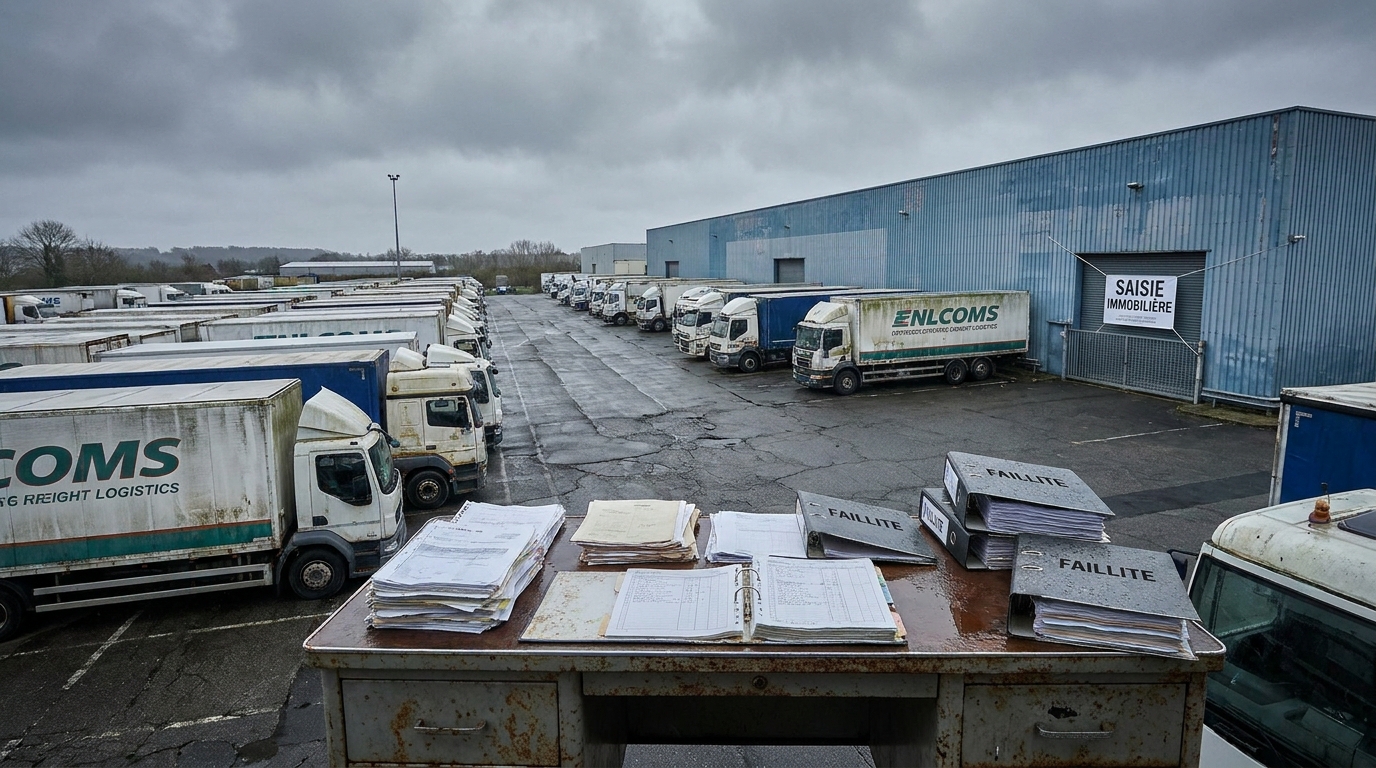
Trade credit insurer Allianz Trade published the Global Insolvencies Outlook 2028 report on 27 October 2026, painting an alarming picture of the health of European businesses. According to its findings, the number of corporate insolvencies in Germany will reach a 13-year high in 2026, and the transport and logistics industry is among the hardest-hit sectors across the continent. At the same time, Eurostat data for the second quarter of 2026 confirm that transport businesses in the European Union are going bankrupt at more than twice the rate of the rest of the economy. For risk managers and business owners in the transport, shipping and logistics sector, this means one thing: verifying counterparties and protecting receivables are becoming an absolute operational priority.
Germany: 25 900 insolvencies and the worst result since 2013
Germany, Europe's largest economy and a key market for most European logistics operators, is experiencing one of the most difficult periods in its post-war history. According to Allianz Trade forecasts, around 25 900 companies will go bankrupt there in 2026 — 8% more than a year earlier and over 85% more than in the relatively calm year of 2021. Particularly worrying is that as recently as spring 2026, analysts anticipated an increase of just 2%. The scale of the upward revision demonstrates how sharply business conditions have deteriorated in just a few months.
Compared with the pre-pandemic average for 2016–2019, the number of bankruptcies is already 30% higher. Germany has not experienced such a high level of insolvencies since 2013, when the economy was still feeling the effects of the global financial crisis. Deepening structural difficulties — weakening domestic demand, an industrial downturn, rising energy and financing costs — are hitting capital-intensive and economically sensitive industries particularly hard. Allianz Trade experts identify transport and logistics, construction, hospitality, and the automotive and machinery industries as the sectors with the highest risk profile.
Eurostat data: transport bankruptcies rising faster than in the rest of the EU
The picture of the European transport sector emerging from Eurostat data is even more telling. In the second quarter of 2026, the number of bankruptcy declarations among transport companies in the EU rose by 11,4% compared with the previous quarter. By comparison — the increase across the entire EU economy was 5,7%, while the construction and trade sectors recorded... declines over the same period (of 1,7% and 1,2% respectively).
In other words, while other sectors are starting to stabilise, transport is accelerating towards the precipice. This contrast shows that the problems facing the transport, shipping and logistics industry are systemic and are not merely a consequence of the general downturn — they stem from challenges specific to the European freight market.
Map of the crisis: who is losing, who is gaining?
The situation across the continent varies considerably by geography. It is worth examining it in detail to understand where counterparty risk is highest.
Germany and France — giants under pressure
We have already described Germany in detail. France, Europe's second-largest transport market, is heading towards a historic record in 2026: approximately 71 000 insolvencies are forecast, an increase of 3% year on year. Each of these figures represents a real risk for Polish, Czech, Belgian or Dutch companies that carry out orders for French clients or work with subcontractors there.
Romania — dramatic increase in road transport
Particularly worrying data are coming from Romania, which has been a major provider of road transport services across Europe for years. Consultancy Sierra Quadrant reported that in September 2026 alone, the number of insolvencies among Romanian road carriers rose by 73% — the highest monthly figure in years. For the whole of 2026, the total number of bankruptcies in Romania may reach 8 200 cases, an increase of 9%. For companies commissioning transport in Eastern Europe, this is a warning signal: the credibility and liquidity of Romanian counterparties require particularly thorough verification.
Belgium — crisis destroys micro-carriers
In Belgium, one of Europe's key logistics hubs, the crisis is hitting the smallest market participants hardest. According to data from the Belgian Institute of Transport and Logistics (ITLB), 297 freight transport companies went bankrupt there in the first nine months of 2026. Notably, more than 70% of the companies that filed for bankruptcy in the third quarter had fleets of no more than five vehicles. Micro-operators — often acting as subcontractors to larger logistics groups — lack sufficient capital reserves to survive a sharp rise in costs while being unable to renegotiate rates.
Poland — a green island on a red map?
Against the European backdrop, Poland stands out favourably. Forecasts for 2026 anticipate a 5% decline in insolvencies, to around 5 200 cases. Similar trends are observed in Spain and Italy (-2% each) and in Hungary, where a 21% decline is forecast. This does not mean, however, that Polish companies can feel safe — they operate in close interdependence with Western markets, and the insolvency of a German freight forwarder or Belgian logistics operator directly affects Polish subcontractors.
Why is transport bursting at the seams? An analysis of the causes
Several overlapping factors are behind the wave of bankruptcies, creating an exceptionally hostile environment for transport companies:
- Rising energy costs: Allianz Research analysts estimate that energy costs in Europe have risen by around 60% since January 2026. A direct consequence is a potential reduction in net margins in European road transport by as much as 10 percentage points. For an industry where margins have historically ranged between 2–5%, this is the difference between profitability and bankruptcy. Carriers unable to pass rising costs on to customers through higher freight rates are losing liquidity at an alarming pace.
- Tighter credit conditions: Interest rate increases by European central banks and stricter lending criteria imposed by commercial banks have made access to external finance considerably more difficult and expensive than just two years ago. Companies that relied on debt financing in previous years are now facing a dramatic increase in debt servicing costs.
- Shortage of qualified workers: The chronic shortage of professional drivers, warehouse operators and logistics specialists not only limits companies' operational capacity but also drives up wage costs. Combined with cost pressures from energy and borrowing, the rising wage bill acts as a third front of attack on profit and loss accounts.
- Weakening demand and geopolitical uncertainty: The economic slowdown in key European economies translates directly into lower transport volumes. At the same time, uncertainty surrounding the global geopolitical environment is causing clients to scale back long-term contracts in favour of flexible and short-term agreements — destabilising carriers' cash flow planning.
Domino effect: when a large player falls, many small ones perish
One of the most worrying phenomena described in the Allianz Trade report is the sharp rise in the number of major insolvencies — cases involving companies with annual turnover exceeding 50 million euros. In the first nine months of 2026, 376 such cases were recorded worldwide, including as many as 229 in Western Europe alone. In the transport sector, 18 major companies have already gone bankrupt — compared with 11 for the whole of 2025.
The collapse of a major player rarely ends there. A good illustration is the recent bankruptcy of Belgian logistics group Ziegler — a company with a long history and an extensive network of subcontractors. Its collapse caused immediate financial difficulties for dozens of smaller companies, for whom unpaid invoices issued to Ziegler meant a loss of liquidity and problems meeting their own obligations. This is a classic domino effect in the transport, shipping and logistics industry.
The problem is serious enough that industry associations are beginning to demand legal changes. The Belgian organisation TLV (Transport en Logistiek Vlaanderen) is calling for legislation protecting subcontractors modelled on the French Loi Gayssot — a regulation that, in certain circumstances, guarantees transport subcontractors direct protection against the consequences of their clients' insolvency. This debate shows that the market is slowly recognising the need for systemic solutions, although their implementation is still a long way off.
The social dimension of the crisis: millions of jobs at risk
Behind the insolvency statistics are human lives. Allianz Research estimates that in both 2026 and 2027, corporate insolvencies worldwide will directly put around 2,7 million people per year at risk of losing their jobs. In Europe alone, the problem could affect as many as 1,6 million workers.
Broken down by country, the figures for the largest economies are particularly worrying: in France as many as 268 thousand jobs are at risk, in Germany — 239 thousand, and in the United Kingdom — 213 thousand. The transport industry, with its distinctive employment structure (many self-employed workers, small subcontractors, family businesses), is particularly vulnerable to the cascading effects of insolvencies.
Outlook: when will stabilisation occur?
The good news is that it will happen — analysts predict it. The bad news is that it will not happen quickly. The global insolvency index is expected to rise by another 1% in 2027 before any possible stabilisation. A slight, measurable decline is forecast only for 2028 — Germany is then expected to see a reduction in bankruptcies of around 5%.
This means that the European transport and logistics sector will have to operate in a heightened-risk environment for at least two more years. There is no prospect of rapid cost relief, a dramatic economic rebound or a sudden solution to the staffing problem. The companies that survive this period will be those that implement appropriate risk management mechanisms today.
Business risk perspective: what should you do now?
For risk managers and business owners in the transport, shipping and logistics sector, the situation described has very concrete practical implications. Here are the key takeaways:
- Verify counterparties regularly, not just once. Companies' financial situations change rapidly — a counterparty that was reliable six months ago may have serious liquidity problems today. Data available on platforms such as EURODEBT.eu allow you to monitor changes in business partners' financial health on an ongoing basis.
- Pay particular attention to companies from Germany, France and Romania. These are the markets with the highest current counterparty risk in the transport sector. They require a more rigorous assessment before establishing or renewing a business relationship.
- Exercise caution with micro-carriers. Belgian data clearly show: companies with fleets of up to five vehicles are the most likely to fail. If you use very small subcontractors, make sure you have alternative supply chains.
- Protect receivables with financial instruments. Trade credit insurance, bank guarantees and factoring are tools that, in current market conditions, are becoming an essential part of financial management rather than a luxury.
- Monitor early warning signs. Payment delays, sudden changes in the terms of cooperation, requests for deadline extensions — all these may signal a partner's financial problems. Respond proactively before the problem grows too difficult to manage.
- Diversify your supplier and client base. Dependence on one major client or one key subcontractor in the current business climate is a risk that cannot be ignored. The collapse of one company should not jeopardise your business.
Summary: time to act, not wait
The Allianz Trade report and Eurostat data together paint a consistent, albeit worrying, picture: the European transport and logistics sector is entering one of its most difficult periods in over a decade. Insolvencies are rising faster than in any other sector, the domino effect threatens small subcontractors, and the prospect of improvement is not expected until 2028.
In this environment, passivity is a luxury no company can afford. Professional counterparty verification, active credit risk management and diversification of business partners are no longer optional — they are a condition for survival and maintaining liquidity. Platforms aggregating data on the solvency and payment history of European companies, such as EURODEBT.eu, are becoming an indispensable tool for every manager responsible for their organisation's financial security.
Sources: Allianz Trade, „Global Insolvencies Outlook 2028" (27.10.2026); Eurostat, data for Q2 2026; Sierra Quadrant, report on the Romanian market; ITLB (Institute of Transport and Logistics, Belgium).




