
Bremerhaven Strike 2026: Pay dispute paralyzes German ports and threatens European supply chains
The ver.di trade union announced a 24-hour warning strike in Bremerhaven, which spread to Hamburg and Wilhelmshaven in August 2026, paralysing key container terminals. The conflict stems from a wage dispute involving 11 thousand dockworkers — union members are demanding an 8.2% pay rise, while employers have offered 5.1%. The lack of a scheduled date for further negotiations and the expiry of the industrial peace obligation mean there is a real risk of escalation that could affect European supply chains for many weeks.
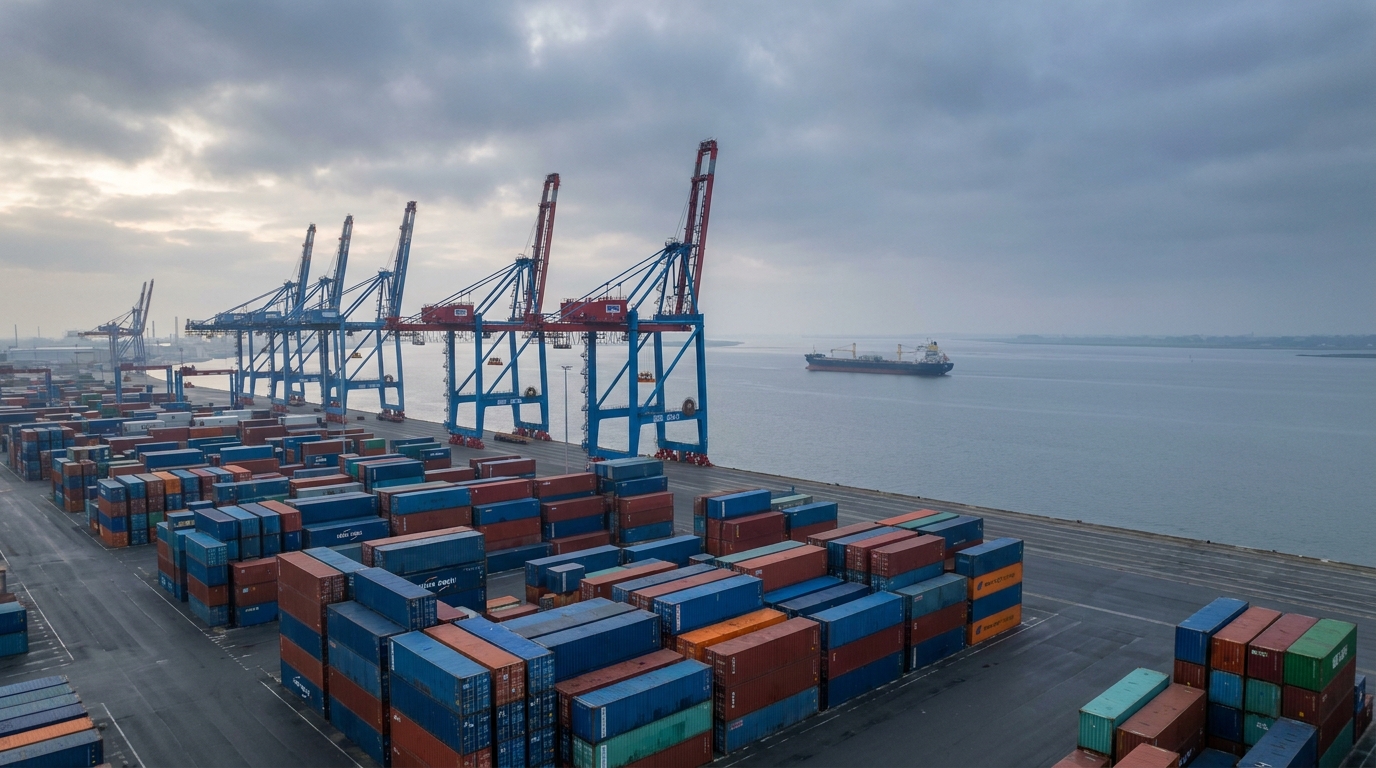
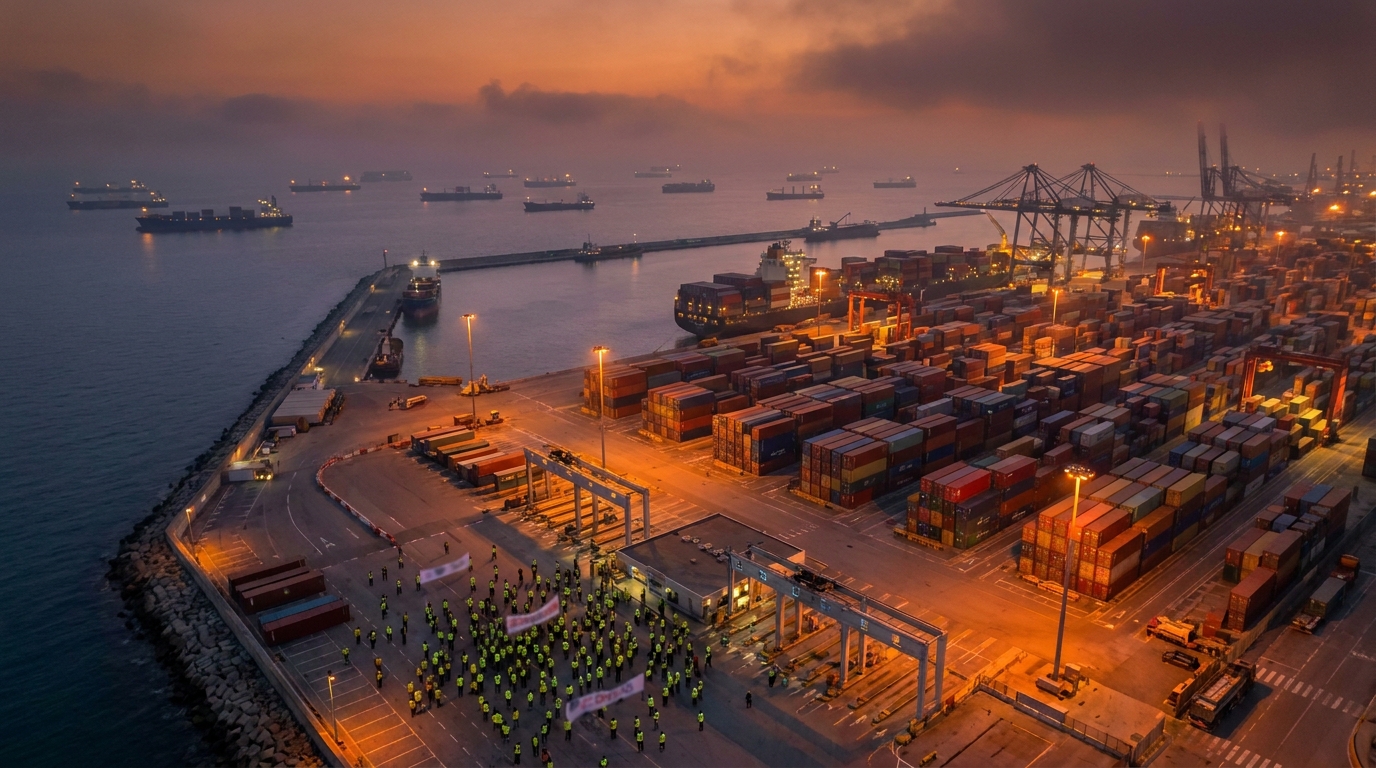
On August 11, 2026, at 6:00 AM, workers at the Port of Bremerhaven stopped work. The ver.di union announced a 24-hour warning strike, which quickly proved to be only the visible tip of a much deeper crisis. The protests spread to Germany's largest port hubs—Hamburg and Wilhelmshaven—becoming the largest collective labor dispute in the port sector in at least several years. At the center of the conflict are some 000 port workers, whose fate weighs not only on the balance sheets of individual companies but also on the liquidity of all European maritime trade.
The scale of the strike action - who stood where
The warning strike, formally planned as a 24-hour strike, affected operations at more than a dozen port companies operating in key locations along the North Sea coast. The symbolic center of the protest was the EUROGATE terminal in Bremerhaven—one of the largest and most modern container terminals in Europe—where transshipment operations were completely suspended from the very first hours of the strike.
At the same time, operations in Hamburg were paralyzed, with the protest affecting the HHLA Group's flagship terminals: Altenwerder, Burchardkai, and Tollerort. The Hamburg terminal EUROGATE and Gesamthafenbetriebs-Gesellschaft (GHB), a company that manages a wide range of auxiliary services at Hamburg ports, also joined the protests. In Wilhelmshaven, the strike began at 22:00 PM on the evening of August 17 and lasted a full 24 hours, until 22:00 PM the following day.
The practical consequence, which affected thousands of transport and forwarding companies across Europe, was the suspension of slot bookings for both truck and rail transport. This meant that ports were effectively cut off from their hinterland—the hinterland—which immediately resulted in growing truck queues, disrupted freight train schedules, and halted container acceptance and release by intermodal operators.
Origins of the dispute – why employees rejected the “final offer”
To understand the scale of the tension, one must return to the negotiating table. The dispute concerns the employment conditions of port workers in six locations: Hamburg, Bremerhaven, Bremen, Emden, Brake, and Wilhelmshaven. The talks are taking place between ver.di and the Central Association of German Seaport Operators (ZDS), which represents employers.
The employers' side presented what it described as its final offer—one from which it would not budge. The package included:
- A 5,1% increase in basic salaries in relation to the applicable rates;
- One-off holiday allowance of 300 euros for all employees covered by the agreement;
- Special allowance for container terminal workers, intended to reflect the specific requirements of this professional group;
- Contract duration: 19 months, which in practice gave employers relative cost stability for almost two years.
Ver.di consistently deemed this proposal insufficient. The union's demands are clearly stated: 8,2% salary increase with a contract valid for only 12 monthsThe rationale is simple: workers, especially those with the lowest wages, are losing purchasing power in the face of persistent inflation and rising living costs. The gap between the offer and the demand, while at first glance seemingly bridging the negotiations, proved to be a chasm in practice: workers rejected the employers' proposal by a large majority during an internal union vote.
The End of Social Peace - What Does This Mean for the Industry?
The rejection of the ZDS “final offer” by employees has one very specific legal and practical consequence: expiration of the obligation to maintain social peace, or the so-called peace obligation. Under the German labor law system, this means that the union regains full freedom to organize strikes without the constraints of ongoing negotiations.
In the real world of business: the transport and logistics industry must take into account that Further strikes – potentially longer and more costly – could occur at any time, without the need for prior notice from the union. A warning strike, by definition a short-term and demonstrative action, is in this context merely a preview of possible scenarios. If negotiations do not resume and do not result in a breakthrough—and as of the date of publication, no third round of talks is planned—the port sector in Germany faces the prospect of a profound and long-term paralysis.
Employers from ZDS express deep disappointment with ver.di's stance, pointing out that their offer was generous given the difficult economic situation across the entire port and logistics sector. Representatives of port operators emphasize that fully meeting the unions' demands of an 8,2% raise and a one-year contract could pose a real threat to the profitability, and in extreme cases, the existence, of many companies operating in port areas. This is an argument that, in today's world,rodobusiness environment – marked by rising energy costs, pressure to decarbonize and slowing freight demand – is not without foundation.
The European dimension of the crisis - supply chains under pressure
The North Sea ports—and Hamburg and Bremerhaven in particular—serve as absolutely crucial import and export gateways for all of continental Europe. Goods bound for Germany, Poland, the Czech Republic, Austria, Hungary, Slovakia, and further east flow through these terminals. Every hour of downtime in Hamburg or Bremerhaven is not just a local problem; it's a disruption felt by shippers and recipients from Lisbon to Warsaw.
The operational effects of the ongoing strike can be divided into several layers:
Direct effects - terminals and ships
The suspension of transshipment means that container ships waiting to enter port cannot be serviced within scheduled time windows (so-called berth windows). Shipowners face a difficult choice: wait for redd, bearing the costs of stopping, or direct the ship to an alternative portRotterdam and Antwerp are the most affected ports – but both of these ports are already operating at high capacity, meaning that the arrival of additional vessels will immediately increase waiting times and worsen throughput rates there as well.
Impact on land transport
The suspension of truck and freight train slot reservations is creating a domino effect throughout the supply chain. Intermodal operators—including major companies like METRANS, which operate on routes connecting ports with the continent's interior—are forced to cancel or delay freight trains. The capacity lost in a single day of strike action cannot be replaced overnight: gaps in schedules, a lack of available wagons, and occupied sidings mean that the effects of disruptions extend for days after the industrial action ends.
Increased storage density at terminals
Historical precedents – including the strikes of summer 2022 – clearly demonstrate that even a short-term halt in port operations leads to a sharp increase in the rate of yard density, or the degree to which terminal storage yards are filled. When containers cease to be delivered and delivered at a normal pace, terminal yards fill up very quickly. After operations resume, the terminal must operate under extreme load for a period of time, further reducing its efficiency and extending the turnaround time for each subsequent vessel.
Risk Perspective - What Transport and Logistics Companies Should Do
For risk managers and business owners operating in the European supply chain, the current situation is a serious wake-up call. The lack of agreement between ver.di and ZDS and the lack of a set date for the next round of negotiations mean that Operational uncertainty in northern German ports will continue in the coming weeksHere are key recommendations from a risk management perspective:
- Verification of contracts with maritime carriers: Force majeure clauses and liability terms for delays resulting from strike action should be checked. Some shipping companies may apply surcharges or change schedules without notice.
- Diversification of entry ports: Companies that have previously used only Hamburg or Bremerhaven should consider alternative routes via Rotterdam, Antwerp or Gdansk – although it should be remembered that these ports will also experience increased traffic.
- Building storage buffers: Where possible, it is worth increasing safety stocks for the coming weeks, especially in the case of goods that are critical to the continuity of production.
- Monitoring the status of negotiations: The situation can change dynamically—both for the better (an agreement) and for the worse (further strikes). It's worth monitoring ZDS and ver.di announcements on an ongoing basis and maintaining contact with forwarders.
- Analysis of contractors in the supply chain: Companies whose financial liquidity is heavily dependent on efficient port operations may be at risk of debt settlement problems. It's worth verifying the standing of key logistics partners.
An unprecedented situation? Historical context
It's worth emphasizing that wage disputes in North Sea ports are not a new phenomenon. Germany experienced similar tensions in 2022, for example, when strikes at the HHLA and EUROGATE terminals in Hamburg caused a wave of delays and increased freight costs. The situation was similar in Dutch and Belgian ports in previous decades. However, the context of 2026 is unique for several reasons.
First, the logistics sector is still recovering from the turbulence caused by the Red Sea disruption and the freight market correction following the pandemic boom. Many supply chain companies are still rebuilding margins and financial reserves. Another major shock—this time stemming from an internal labor dispute—could prove particularly painful for the most vulnerable.
Secondly, the geographic scope of the protest is exceptionally broad: the simultaneous involvement of Hamburg, Bremerhaven, and Wilhelmshaven practically eliminates the possibility of quickly redirecting cargo between ports within Germany. Companies are forced to seek alternatives abroad.
Third, the lack of a set date for the next negotiations creates an information vacuum, which in itself is a source of risk. Uncertainty about further developments hinders companies' operational planning and forces them to make costly preventative decisions.
What's next - market scenarios
Industry experts and risk analysts point to three basic scenarios for how the situation will develop in the coming weeks:
Optimistic scenario: quick agreement
The pressure of the strike is forcing both sides to return to the negotiating table and reach a compromise—for example, a 6,5-7% wage increase with a 12- or 15-month contract. Port operations return to normal within days, and delays can be rectified within two to three weeks. This is a desirable scenario, but it requires a willingness to compromise on both sides—which is currently not in evidence.
Baseline scenario: prolonged stalemate
Negotiations resume, but yield no immediate results. Ver.di organizes further short-term warning strikes at regular intervals, maintaining pressure on employers. Ports operate under conditions of chronic uncertainty, resulting in longer processing times, higher costs, and the diversion of some cargo to competing ports. The situation can last from several weeks to several months.
Pessimistic scenario: escalation to a full-blown strike
The lack of an agreement prompts ver.di to declare an indefinite general strike in all affected ports. This scenario, while statistically less likely, has catastrophic consequences for all European trade: multi-million-dollar losses for shipowners, terminal operators, and logistics companies, a sharp increase in freight rates, and a long-term paralysis of supply chains extending deep into the continent.
Summary - time for heightened vigilance
The strike in Bremerhaven on August 18, 2026, is not just a local demonstration of employee discontent. It signals that the European transport and logistics sector is entering a period of heightened operational risk, stemming from internal wage tensions that are growing amidst inflation and economic uncertainty. The dispute between ver.di and ZDS remains unresolved—and as long as it remains so, every company whose supply chain runs through northern German ports should treat this situation as an active threat, requiring a specific planning response.
In the wedrodoIn a market where on-time delivery, cost predictability, and operational continuity are the foundation of competitiveness, every day without an agreement is another day of risk. The industry is waiting for signals from Hamburg, Bremerhaven, and Berlin—and so far, there are no signs of calm.