

Deutsche Post officially becomes DHL: What does this change mean for your contracts and transport documentation?
Effective 1 September 2026, the largest German logistics operator officially changed its name from Deutsche Post AG to DHL Group, ending a long-standing mismatch between its corporate identity and global business profile. The Deutsche Post brand remains active solely as the name of the subsidiary responsible for domestic deliveries in Germany. For B2B companies and risk managers, the change means that ERP systems, KYC databases, transport documents and contracts must be updated urgently, although overall credit and systemic risk is assessed as low.
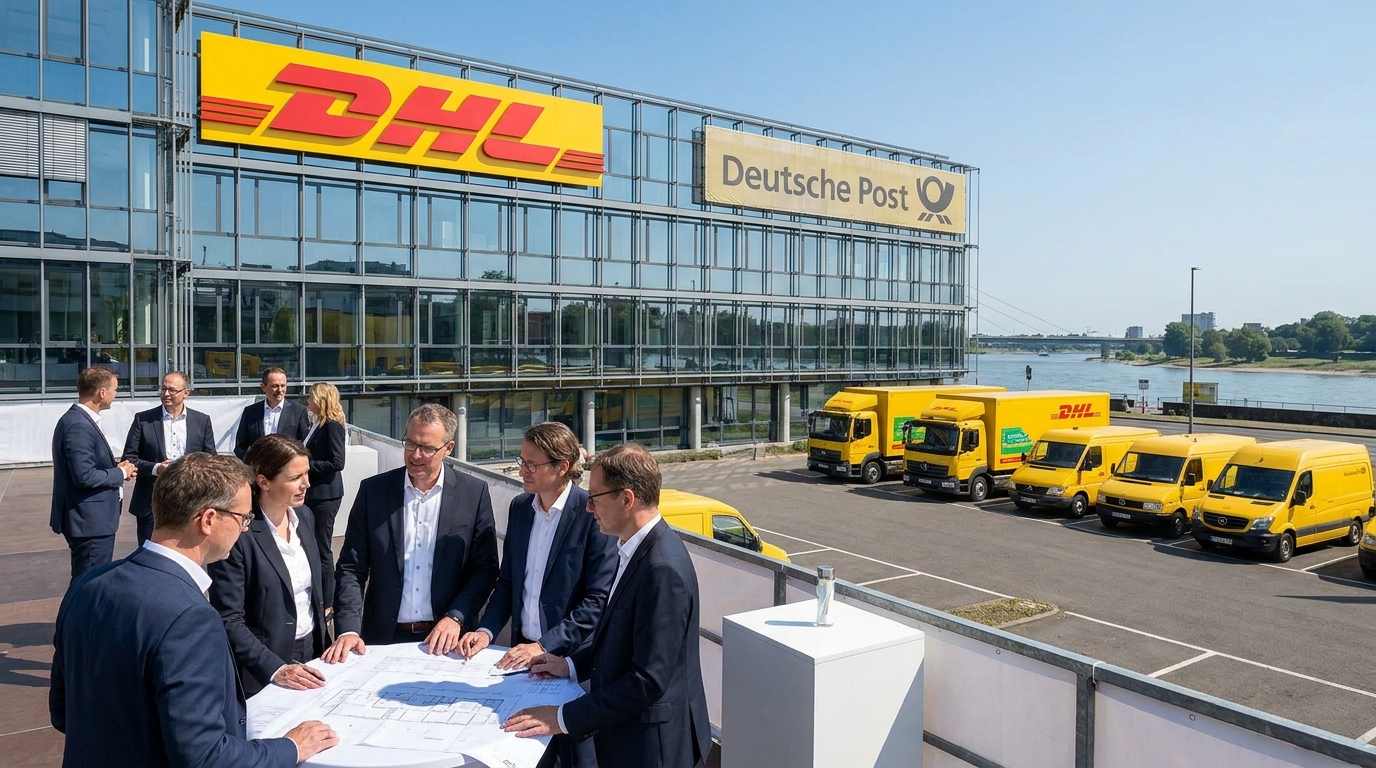
As of September 1, 2026, the European logistics market has closed a historic chapter. Germany's largest postal and logistics operator, operating for decades under the Deutsche Post AG brand, has formally adopted a new corporate name—DHL. The change, approved by the general meeting of shareholders and entered in the commercial register, is more than just a cosmetic image enhancement. For tens of thousands of transport, logistics, and trading companies across Europe, it necessitates specific administrative and legal measures that, if ignored, could result in real operational disruptions.
The end of an era for Deutsche Post AG – the birth of DHL Group
Few people remember that the DHL brand has existed within the group's structures for over two decades. In 2002, Deutsche Post took full control of the American express operator DHL, and in the following years, the global business under this banner became the driving force behind the entire holding company. For a long time, the group's name lagged behind market realities—although the company was recognized exclusively as DHL in Asia, America, and Africa, its formal headquarters in Bonn was still listed in the registers as Deutsche Post AG.
The decision to change the name at the holding level resolved this dissonance. For several years, the group's management had consistently signaled that the corporate identity should reflect the actual revenue structure and geographic scope of operations. The financial data spoke for itself—the vast majority of the group's revenue comes from international operations.rodocial services: express air shipments, sea and air freight, global supply chain management, and dynamically growing logistics services for the e-commerce sector. The traditional postal business in Germany, although still socially important, now accounts for only a fraction of the holding's total revenue.
The rebranding is part of a broader trend among global logistics corporations seeking to simplify their brand architecture and build a single, coherent identity across all markets. From a marketing and investor strategy perspective, a single, distinctive brand is significantly more effective than maintaining a complex hierarchy of names understood only by insiders.
What Stays the Same—and Why It Matters
Before we move on to the business implications, it is worth clearing up potential misunderstandings that will appear in business correspondence and internal databases of many companies in the first weeks after the change.
The Deutsche Post brand does not disappear. It remains active as the name of the subsidiary responsible for domestic postal and courier services in Germany. For the average citizen on the Rhine, nothing changes—yellow mailboxes, post offices, delivery personnel uniforms, and distinctive yellow vans remain branded with the Deutsche Post logo. The company serving the domestic market continues to operate under this name as a separate entity within the holding company.
The change applies solely to the corporate group level. DHL Group is now the parent entity, consolidating the financial results of all subsidiaries, including Deutsche Post in the German market, DHL Express, DHL Global Forwarding, DHL Supply Chain, and DHL e-Commerce Solutions. This subtle but fundamental difference is crucial when verifying contractors and drafting legal documentation.
Legal continuity - systemic risk remains low
Good news for risk managers: a name change does not imply a change in the legal identity of the entity. The company maintains full continuity—the same VAT number, the same identifier in the commercial register, and the same contractual obligations. From a contract law perspective, existing long-term contracts remain in force without the need for renegotiation or signing of new documents, provided the contracts themselves do not contain clauses that condition their validity on the party's name remaining unchanged.
This means that the systemic and credit risk associated with this transition is low. There is no debt restructuring, change of ownership, exit from the eurozone, or any event that could impact the group's solvency or its ability to meet its obligations to suppliers and customers. The credit limits and ratings assigned to the group by financial institutions and credit insurers remain essentially unchanged—although they require a formal transfer to the new entity's name.
Where does real operational risk arise?
While legal and credit risk are low, operational risk is a completely different matter—and here, any company collaborating with a group should exercise caution. Experience from previous rebrandings of large corporations shows that administrative problems, which can significantly disrupt ongoing settlements, tend to peak in the first quarters following a name change.
1. Transport and customs documentation
In the TSL industry, shipping documents are crucial: CMRs, bills of lading (Bill of Lading), air waybills (AWBs), and customs documents. If your system automatically generates these documents based on customer data stored in your ERP, and this data still identifies Deutsche Post AG instead of DHL Group, you risk making formal errors that customs authorities or cargo insurers may challenge. In extreme cases, this can lead to shipment detention, the need to supplement documentation, and costly delays.
2. Invoices and VAT settlements in intra-Community trade
VAT invoices issued or received as part of intra-Community transactions must contain accurate details of the buyer or supplier. A discrepancy between the name on the invoice and the current name in the commercial register may constitute grounds for challenging the right to deduct input VAT by tax authorities—particularly in EU countries, where interpretation of regulations can be stringent. Although in practice such a discrepancy does not always lead to a refusal to deduct VAT, it does generate the risk of additional questions during a tax audit and the need to collect explanatory documentation.
3. KYC systems and contractor verification
Banks, financial institutions, and larger B2B service providers conduct automated customer verification processes (KYC—Know Your Customer). If automated systems search registry databases for the name Deutsche Post AG and fail to find it (because the entity is already listed as DHL Group), they may generate compliance alerts or—in extreme cases—block transactions until manual verification.rodoIn a country where payment processes are largely automated, such blockages can stop transfers worth millions.
4. Framework agreements, tenders and public procurement
Companies that have concluded multi-year framework agreements with the group - for courier services, warehouse management, international transportrodoor logistics outsourcing—should verify the wording of the clauses concerning the parties to the contract. In many cases, signing an addendum updating the entity's details is sufficient. However, it's worth outsourcing this task to the legal department or legal counsel now, rather than only when a problem arises—for example, during a receivables dispute or a compliance audit.
5. ERP, CRM and supplier management systems databases
This seemingly technical task, but in practice, it can be the most time-consuming. In large organizations, customer data can be stored in dozens of different systems—from the main ERP system, through dedicated purchasing platforms (P2P), transportation management systems (TMS), to local Excel spreadsheets maintained by individual departments. Each of these systems requires updating, and a lack of synchronization between them can lead to documentation errors.
A Practical Action List for Risk and Logistics Managers
- Audit of supplier and customer databases — Search your ERP, CRM, and TMS systems for all records containing the name Deutsche Post AG and mark them for update. Be sure to verify whether the record refers to a holding company or a subsidiary serving the German market.
- Verification of long-term contracts — Review active contracts for clauses regarding the party's name and identity. Prepare a list of contracts requiring amendments and establish a timeline for their signing with the trading partner.
- Updating transport document templates — if you generate CMR lists, transport orders or customs documents automatically, make sure that the templates download current data from an updated contractor database.
- Contact the compliance department of a bank or financial institution — If you use factoring, bank guarantees or trade receivables insurance for group transactions, inform your relationship manager at the financial institution about the name change to avoid limits being blocked by automated alert systems.
- Merchant limits update — Credit analysts and credit insurers should rewrite the trade limits granted to Deutsche Post AG to the new holding company name and ensure that the mapping of subsidiaries is correct and complete.
- Training of operational teams — employees of the forwarding, purchasing and accounting departments should be informed about the change so that they do not automatically reject invoices or documents arriving under the new DHL Group name.
- Monitoring stock market announcements — if you are an investor or your company is a shareholder of a group, follow announcements regarding changes to the stock ticker and update data in investment portfolio management systems.
Logistics Market Perspective – What Does This Change Say About Industry Trends?
The rebranding of Deutsche Post to DHL is not just an internal matter for a single corporation. It is a symptom of a deeper transformation that has been underway for several years across the entire CEP (Courier, Express, Parcel) and contract logistics sectors in Europe. The traditional model of a national postal operator, financed by revenues from the sale of stamps and letter services, is in irreversible decline. Physical letters are becoming a rarity, replaced by e-commerce shipments, electronic documents, and instant messaging.
Large players—FedEx, UPS, DB Schenker, Kuehne+Nagel, and DHL—are developing integrated logistics platforms that combine transportation, warehousing, inventory management, and returns management within a single ecosystem. Those who can offer customers full, real-time supply chain visibility, flexible last-mile management, and efficient cross-border service within the European Single Market are the winners.
In this context, the decision to unify the brand under the DHL banner is a strategically coherent move. A company that wants to be perceived as a global leader in Logistics 4.0 cannot afford to maintain a schizophrenic identity—a local post office in Germany and a global express operator for the rest of the world. Brand unification sends a clear message: global logistics is the priority, and the traditional postal business—though maintained as a separate brand and company—is increasingly a residual segment.
For competitors and trading partners, this change should be a signal to monitor the group's pricing and portfolio strategy even more closely. DHL Group has the resources, network, and technology to set industry standards—from the digitization of shipping documents, through the implementation of AI in warehouse management, to the expansion into green logistics and zero-emission delivery fleets.
Risk assessment of cooperation with DHL Group - EURODEBT.eu perspective
From the perspective of the B2B company verification and risk assessment platform, the name change from Deutsche Post to DHL is an event with low systemic risk, but requires an active operational response from the counterparties. Below is a summary assessment of the individual risk categories:
- Credit and solvency risk: LOW. This change is purely corporate in nature and does not impact the group's financial situation or its ability to meet its obligations. DHL Group remains one of the largest and most stable logistics operators in the world.
- Contractual legal risk: LOW-MEDIUM. The legal continuity of the entity is maintained, but companies with contracts containing clauses sensitive to name changes should conduct verification and, if necessary, sign amendments.
- Documentation operational risk: MEDIUM in the short term. The first few months after the change are a period of increased risk of formal errors in transport, customs, and accounting documentation. However, this risk is fully manageable through appropriate updates to systems and procedures.
- Compliance and KYC risk: MEDIUM for financial institutions and companies using automated verification systems. Requires active involvement by risk and compliance departments.
- Risk of supply chain disruption: LOW. DHL Group is not reporting any operational changes to its services. This change is purely corporate in nature and does not impact route networks, delivery frequencies, or quality standards.
Summary – Be proactive, not reactive
The official transformation of Deutsche Post AG into DHL Group, effective September 1, 2026, is the logical consequence of the long-standing business evolution of Europe's largest logistics operator. This change is no surprise—it was announced and consulted with the market for many months. However, experience shows that even well-announced corporate changes generate a wave of administrative problems for contractors who approach them too passively.
Transport, logistics, and trade companies collaborating with the group should view this as an opportunity to conduct a broader data quality audit of their systems. Outdated customer data, incomplete KYC databases, and outdated contract templates are costly problems—in the form of delayed payments, disputed invoices, and unnecessary legal disputes.
The EURODEBT.eu editorial team will continuously monitor all updates related to the formal name change process in the national commercial registers of the individual countries where the group operates through its subsidiaries. We recommend that subscribers use the monitoring alerts available on the platform, which automatically notify them of changes to the registration data of tracked contractors—including rebranding and corporate restructuring events.