

European Cargo in bankruptcy: British cargo carrier's bankruptcy hits supply chains from China
British cargo airline European Cargo Limited officially entered administration on 3 June 2026, ending operations with a fleet of seven Airbus A340-600 aircraft grounded at Bournemouth and Teesside. The collapse of the carrier, which specialised in transporting e-commerce goods on China–United Kingdom routes, creates a capacity gap at regional airports and poses a direct risk to freight forwarders and importers. Administrators from Teneo Financial Advisory have taken control of the company's assets.
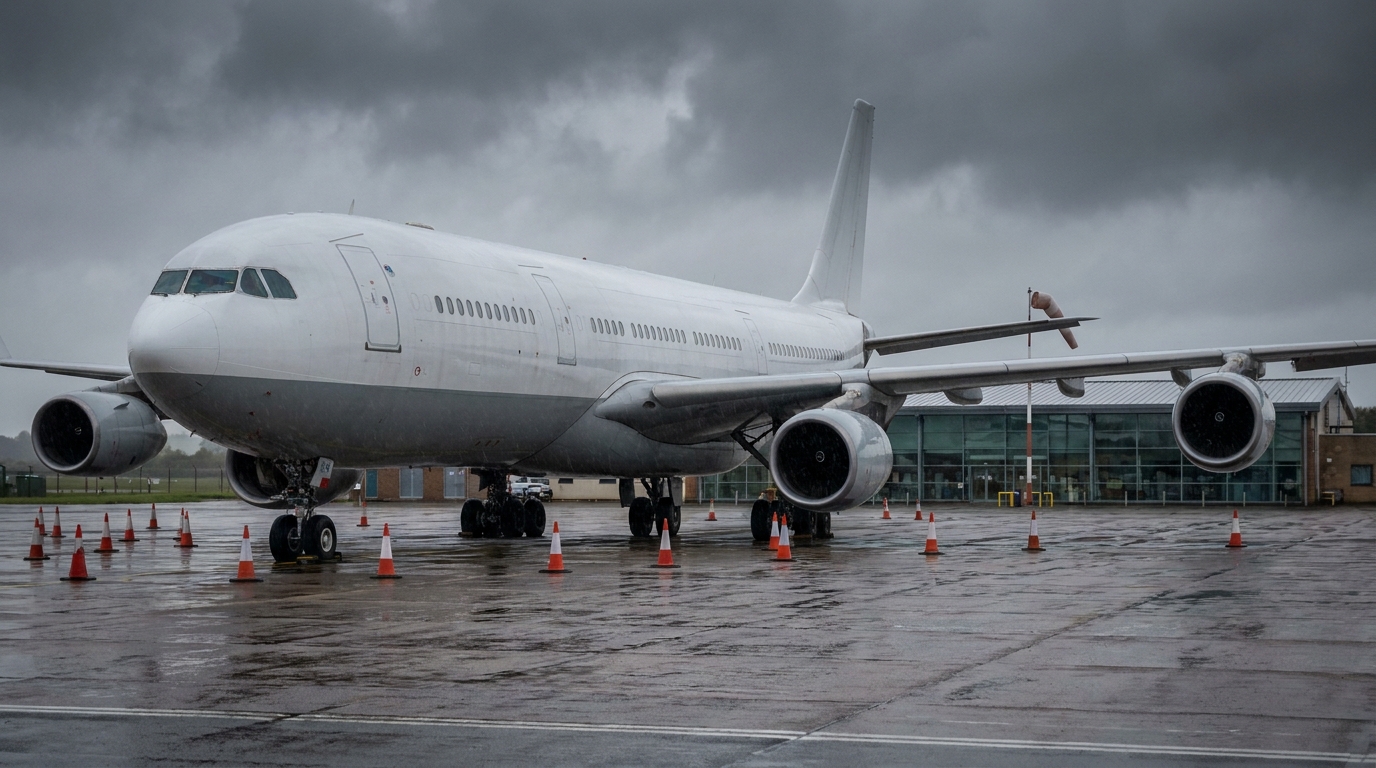
British cargo airline European Cargo Limited officially went into administration on June 3, 2026, ending its operational life with its fleet of seven Airbus A340-600 aircraft grounded at Bournemouth and Teesside airports. The decision to initiate administrative proceedings comes after weeks of effectively suspending flights, with the last operations under the SE/URO code recorded on May 19, 2026. The airline's collapse sends a significant wake-up call to freight forwarders and importers operating between China and the UK.
End of operation: fleet at standstill, managers take over
Stuart Morris, Robert Fishman, and David Soden of Teneo Financial Advisory Limited, one of the leading advisory firms specializing in restructuring and insolvency processes in the UK, have been placed under receivership over European Cargo Limited. Their priority is to secure the company's assets and investigate the feasibility of selling the assets or partially restructuring the business. In practice, this means that the fate of the aircraft, existing operating slots, and all contracts with contractors remain suspended until the proceedings are concluded.
Data from flight tracking systems, including FlightAware, confirms that the actual cessation of operations occurred even before the formal bankruptcy declaration. After May 19, 2026, none of European Cargo's aircraft operated commercial flights. Six aircraft, with registrations including G-ECLB, G-ECLC, and G-ECLN, were parked at their home airport in Bournemouth (BOH), while the seventh was transferred to Teesside Airport (MME). Teesside became the location of a particularly bitter and symbolic climax to this story.
Teesside base: opening in March, bankruptcy in June
Just three months before its formal collapse, in March 2026, European Cargo celebrated the launch of a new operational base at Teesside Airport. Plans announced at the time called for five long-haul cargo flights per week from this location—flights intended to meet demand for the rapid delivery of e-commerce goods imported from China to the British market. The announcement was presented as a new chapter in the carrier's history and evidence of a stabilized business model after the challenging pandemic period.
The reality turned out to be diametrically opposed. Ambitious plans to expand the route network were never fully realized, and the investment in opening a new base could only have deepened the company's already strained financial situation. For the Teesside region, which had been counting on the economic revival associated with the new carrier, European Cargo's bankruptcy was a painful setback—all the more so given that it occurred so soon after the official opening ceremony.
The A340 Business Model: A Risky Bet on Used Four-Engine Jets
To understand the reasons for European Cargo's demise, we need to go back to the business model that underpinned the carrier's entire strategy. The airline built its fleet exclusively around Airbus A340-600 aircraft—long-haul, four-engine aircraft that Virgin Atlantic was phasing out from passenger service. At a time when most cargo operators worldwide were investing in modern, twin-engine wide-body aircraft—such as the Boeing 777F and Airbus A330-200F—European Cargo went against the grain.
From a short-term perspective, this strategy made sense. Access to retired A340s was relatively inexpensive, and the aircraft themselves have significant cargo capacity and range, allowing direct flights between China and the UK without the need for intermediate refueling. During the peak of the COVID-19 pandemic, these aircraft were initially used to transport personal protective equipment (PPE), when global demand for such supplies was enormous and freight rates were at record levels. Over time, European Cargo transformed itself into a supplier of cargo capacity for the rapidly growing e-commerce sector.
The problem, however, was that four-engine aircraft were structurally much more expensive to operate than their twin-engine counterparts. Higher fuel consumption, more complex and expensive maintenance (MRO) checks, less readily available qualified technicians, and increasing aircraft age translated into operating costs that, in the new market conditions, were difficult to cover with freight revenue.
Market environment: belly-cargo is taking a bite out of the market, margins are falling
The collapse of European Cargo is part of a broader market trend that has been shaping the European cargo industry since 2022. After record-breaking pandemic years, when freight capacity was in short supply and spot rates hit historic highs, the cargo market has entered a phase of normalization—a normalization that has been very painful for niche operators.
A key factor that changed the cost equation for carriers like European Cargo was the massive resumption of passenger service by major airlines. Every long-haul passenger aircraft automatically has belly cargo—space in the cargo hold that passenger airlines offer to the freighter market as an additional revenue stream. As passenger networks returned to normal, hundreds of thousands of tons of additional freighter capacity came into the market, which large, integrated carriers could offer at competitive prices, covering the fixed costs of the flight with passenger revenue.
For specialized cargo operators relying on expensive, maintenance-intensive aircraft, this meant a dramatic squeeze on margins. Freight yields—the rates per kilogram of cargo transported—dropped to levels that rendered operating the four-engine A340s unprofitable. In such a situation, each month of continued operation only deepened the financial gap.
Consequences for freight forwarders and importers: capacity gap in regions
European Cargo's bankruptcy isn't just a problem for the company's shareholders and creditors. For the logistics ecosystem that handles e-commerce imports from China to the UK, the carrier's sudden withdrawal from the market means real operational disruptions.
European Cargo occupied a clearly defined market niche: offering direct cargo connections to regional airports—Bournemouth and Teesside—thus bypassing the congested logistics hubs in London (Heathrow, Gatwick, Stansted). For freight forwarders serving customers in southern England and the north of the country, this was a valuable alternative to expensive and time-consuming transits through major ports. The loss of this capacity forces importers to seek alternative solutions—often at higher costs and with longer transit times.
- Higher spot costs: Freight forwarders seeking capacity from alternative cargo carriers will have to accept higher rates than those offered by European Cargo under its contractual agreements.
- Longer delivery time: The need to route cargo through major hubs in London or continental Europe (e.g. Frankfurt, Amsterdam) can add one or two days to the supply chain.
- Risk to receivables: Companies that had open invoices or made prepayments for cargo capacity with European Cargo may have difficulty recovering funds during administrative proceedings.
- Pressure to contract capacity: E-commerce operators relying on regular deliveries from China should immediately take action to contract alternative capacity with other carriers before the problem scales up.
Warning signs you should have noticed earlier
From a business risk analysis perspective, the European Cargo case offers important lessons. Several warning signs were apparent well in advance—both to the carrier's commercial and financial partners.
First, choosing a fleet based on retiring four-engine aircraft was a strategic risk that was already apparent at the time of launch. The industry consensus on the cost superiority of twin-engine aircraft is no secret; it was publicly available and analyzed by any rational observer of the cargo market.
Secondly, the dynamics of the post-pandemic cargo market from 2022 onwards clearly indicated an impending erosion of margins. Operators who had relied on high pandemic freight rates for profitability, without a plan for market normalization, were taking significant risks.
Thirdly, aggressive expansion plans (opening the Teesside base in March 2026) at a time when the market was sending signals of falling profitability are a classic symptom of management overestimating its own financial capabilities under pressure to demonstrate growth.
For risk managers and shippers, the key lesson is simple: the financial health of niche cargo carriers should be monitored regularly, especially when they rely on a custom fleet or aggressive expansion plans in a challenging market environment.
What's next for assets and fleet?
The trustees at Teneo Financial Advisory are now tasked with monetizing the company's assets in the most advantageous manner possible. The aircraft themselves remain the key asset—seven A340-600s—although their market value is currently limited given the global trend away from four-engine platforms. Potential buyers could include operators from emerging markets or specialized companies specializing in dismantling and selling spare parts (part-out).
It's worth monitoring the progress of the administrative proceedings, considering potential receivables from business partners and the scale of liabilities to employees. Teneo Financial Advisory will publish further announcements as the work progresses, which should be monitored by all stakeholders with any financial contact with the company.
Business Risk Perspective: Conclusions for the Market
The collapse of European Cargo Limited is further evidence that the air cargo market is entering a new phase—one more demanding for specialized niche operators and more favorable for integrated carriers with both passenger fleets and dedicated freighters.rodoIn the face of decreasing margins and growing competition from belly-cargo, those who can amortize fixed costs within a diversified revenue model win.
For European transport and logistics companies, the European Cargo case should serve as a catalyst for reviewing their own supplier verification procedures. Regularly reviewing the financial health of key air capacity suppliers—with particular emphasis on fleet size, cost model, and financial history—is a fundamental requirement for managing operational risk in the supply chain.




