

Germany: Company bankruptcies increased by 15,8% in March 2026 – alarm for the transport industry and its contractors
Germany's Federal Statistical Office (Destatis) confirmed: the number of corporate insolvencies rose by 15.8% in March 2026 compared with the previous year, and the first quarter as a whole ended with a 6.5% increase in bankruptcies. The situation is worst in the transport and logistics sector, which has the highest insolvency rate of all industries. For Polish and European companies working with German business partners, this means an urgent need to review their credit policies and implement effective mechanisms to secure receivables.
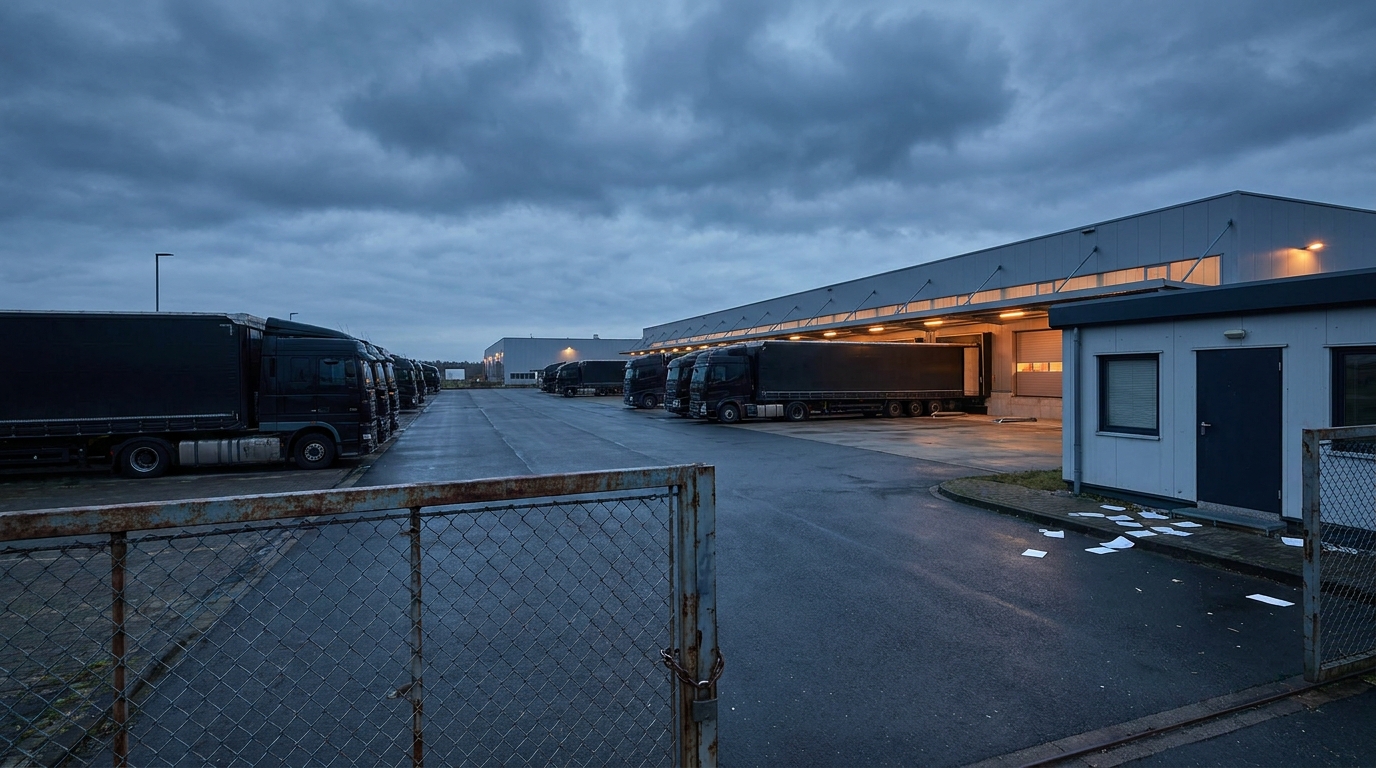
The Federal Statistical Office of Germany (Destatis) published data in mid-June 2026 that should immediately reach the desks of every risk manager working with German business partners. In March 2026, the number of declared corporate bankruptcies in Germany was 15,8% higher than in the same month of the previous yearLooking at the broader perspective, the entire first quarter of 2026 ended with an increase in bankruptcies by 6,5% year over yearFor transport and logistics companies and their suppliers across Europe – especially Poland – this data is of fundamental operational and financial importance.
The scale of the phenomenon: This is not an anomaly, but a systemic crisis
There's no doubt that a month-on-month increase of nearly 16% is a figure worth taking seriously. Germany is Europe's largest economy and a key trading partner for tens of thousands of companies across the continent. When the German business market begins to falter, the consequences are felt by subcontractors, suppliers, and logistics partners far beyond the borders of the Federal Republic.
Destatis regularly publishes data on bankruptcy proceedings initiated by German courts. The current figures are not the result of a one-off shock – they are the culmination of several months of mounting financial stress, which has primarily affected small and medium-sized enterprises. The SME segment constitutes the backbone of the German real economy, and its condition is a barometer of the country's overall economic situation.
It's worth noting that Destatis data is based on actual court proceedings, not the applications themselves. This means that the real number of companies in serious financial difficulties—those still struggling to survive or delaying filing—is in practice much higher. Market experts estimate that the "dark number" of companies unable to settle their debts but not yet formally registered as bankrupt may be many times higher than the official statistics.
The transport and logistics sector is on the front line
Sectoral data is unforgiving for the transportation and logistics industry. Of all the segments of the German economy, this is Transport and logistics have the highest insolvency rateMedia and expert analyses published by titles such as DIE ZEIT and specialized industry websites confirm this picture without exception.
Why is transportation declining the fastest? The reasons are multifaceted, but can be summarized in a few key points:
- Extremely low operating margin – For years, the transportation industry has operated with margins of just a few percent. Any increase in fuel costs, road tolls, or driver salaries immediately destroys the already thin financial cushion.
- High degree of dependence on energy and fuel prices In the diesel-powered fleet sector, diesel costs account for as much as 30-35% of total operating costs. Rapid fluctuations in oil prices directly impact profitability, or lack thereof.
- Price pressure from clients – In a trade slowdown, customers are forcing freight rate cuts while operating costs rise. It's a classic scissors-cutting tactic that cuts through every cost structure.
- Payment bottlenecks – the moment a major contractor begins to delay payments, the carrier, which must refuel itself daily, immediately loses liquidity. The domino effect is immediate and ruthless.
In addition to transportation, the construction industry is facing a particularly serious situation, where high material costs and rising interest rates have led to a decline in new investments. The HoReCa (hotels, restaurants, and catering) sector has also been hit hard, still grappling with the consequences of structural changes in consumer habits.
Geopolitics and Energy: The External Fuel of the Crisis
The current bankruptcy crisis in Germany is rooted not only in the microeconomics of individual companies but also in global geopolitical turbulence. The Association of German Insolvency Administrators and Trustees (VID) and independent analysts point to escalating tensions in the Middle East – particularly the Iran-related instability in early 2026 – as one of the key factors driving the rise in energy prices.
The sharp fluctuations in global oil and gas prices, driven by geopolitical factors, hit the German economy at a time when it had already been weakened by several years of instability. Companies that had managed to weather previous energy crises thanks to reserves or previously contracted rates lost their last protective buffer this time.
At the same time, the tightening of lending policies by German commercial banks has trapped companies in a financial trap. Rolling over short-term debt has become impossible for many. When a bank refuses to extend a credit line or a customer delays payment of an invoice, even a profitable company can face liquidity crunch overnight and be forced to file for bankruptcy.
Schutzschirmverfahren – protection for the debtor, problem for the creditor
It's worth taking a closer look at the specifics of German bankruptcy law, which have significant implications for foreign creditors. More and more companies in financial difficulties are opting for so-called liquidation instead of immediate liquidation. Protective shield proceedings – protective proceedings aimed at restructuring and saving the enterprise as a functioning economic entity.
From the perspective of the debtor themselves, this is a sensible tool. From the perspective of an external creditor – for example, a Polish freight forwarding company or a transport service provider – it practically automatically freezes all receivables. Restructuring proceedings can take months, and in the case of complex corporate structures, years. At the end of the process, the creditor may recover only a portion of their debt – often just a dozen or so percent, sometimes a few percent, of the original amount.
That's why preventive verification of the contractor It's incomparably cheaper and less painful than trying to recover funds after declaring bankruptcy or initiating restructuring. Every euro invested in monitoring a business partner's financial condition translates into many times more savings in the event of their insolvency.
Direct risk for Polish companies in the TSL sector
The Polish transport, forwarding, and logistics industry is one of the largest subcontractors for German carriers and logistics companies. Thousands of Polish companies provide freight, subcontracting, and warehousing services for contractors across the Oder River. In this context, the current Destatis data has a very specific, practical meaning.
The risk scenario is as follows: a Polish transport company executes orders for a German freight forwarder or logistics operator, issuing invoices with deferred payment terms of 45, 60, or even 90 days. During this time, the contractor's financial situation rapidly deteriorates. Before the Polish company can react, its partner declares restructuring or bankruptcy, and its receivables—often constituting a significant portion of monthly revenue—are frozen or irretrievably lost.
Such events have occurred numerous times in the history of the European TSL industry. The bankruptcies of large German freight forwarders triggered a domino effect, which in extreme cases led to financial difficulties or bankruptcy for their Polish subcontractors. Today, with bankruptcies increasing by nearly 16% year-on-year, the risk of a similar scenario recurring is significantly higher than in previous years.
Practical risk assessment: What should managers do today?
In view of the described data and trends, the risk indicator for B2B cooperation with entities from the key endangered sectors of the German economy – transport, logistics and construction – should be assessed as TALLThis doesn't mean a ban on cooperation with German partners, but it does require a strict adaptation of credit policies and verification procedures to the new reality. Here are the specific actions that should be taken immediately:
1. Immediate revision of the contractor portfolio
Every company with receivables from German contractors should conduct a portfolio review and assess which entities operate in the highest-risk industries. Historical financial data from 12-18 months ago is largely outdated today – the situation is changing too rapidly. It's essential to obtain up-to-date information on the financial condition of key partners.
2. Shortening payment terms
Accepting 60- or 90-day payment terms for contractors from high-risk sectors is, in the current environment, an unjustified burden on one's financial liquidity. Ultimately, we should strive to shorten payment terms to a maximum of 30 days, and for new or unverified partners, consider payment in advance or upon delivery.
3. Implementation of security tools
In the current market conditions, it is particularly worth considering:
- Full factoring (non-recourse) – allows the risk of contractor insolvency to be transferred to a financial institution in exchange for a commission.
- Export receivables insurance – products offered by insurance companies and institutions supporting exports (e.g. KUKE in Poland) can effectively protect against the consequences of the bankruptcy of a foreign partner.
- Bank guarantees – especially in the case of high-value contracts or long-term implementation horizons.
4. Early Warning Systems (EWS)
Implementing active monitoring of contractors' financial condition is no longer a luxury, but a necessity. Warning signs that should be particularly alerted include: payment delays – even those lasting several days and for the first time, changes in management or ownership, sudden proposals to renegotiate contracts, information from the commercial register about the initiation of proceedings, and mentions of financial difficulties in the trade press. Each of these signals should trigger a more in-depth review procedure.
5. Diversifying your customer base
Companies whose portfolio revenues from one or more German partners constitute more than 30-40% of the total should consider active diversification. Making their cash flow dependent on the financial health of a narrow group of partners in the higher-risk market is an exposure that the current situation does not justify.
Short-term perspective: Is there any chance of improvement?
Analysis of available macroeconomic factors does not provide grounds for optimistic forecasts for the coming quarters. The geopolitical situation in the Middle East remains unstable, which translates into ongoing price uncertainty in commodity markets. Cost pressures on energy- and fuel-intensive sectors of the economy continue unabated.
At the same time, the pace of recovery in investment and consumer demand in Germany is too slow to quickly close the financial gap that many companies find themselves in. The federal government's fiscal policy, while providing some stimulus measures, is operating with too much delay to address the immediate liquidity problems in the SME sector.
A realistic forecast assumes that the elevated level of bankruptcies will continue through at least the third, and probably the fourth, quarter of 2026. A stabilization or decline in the number of bankruptcies is possible at the earliest in early 2027, provided the geopolitical situation improves and energy prices decline significantly.
Summary: It's time to act preventively
The data published by Destatis clearly signals that counterparty risk exposure in B2B relationships with Germany – especially in the transportation and logistics industry – requires immediate and serious review. With bankruptcies rising by 15,8% month-on-month and 6,5% quarter-on-quarter, these figures leave no room for complacency or inaction.
Companies that conduct thorough verification of their contractors today, shorten payment terms, and implement appropriate security mechanisms will be in a much better position than those that react only when debt collection problems arise. In business – as in medicine – prevention is always cheaper and less painful than treatment.
The EURODEBT.eu platform is available to all entities interested in in-depth verification of their German contractors and the current credit risk assessment in key sectors of the European economy.




