
Italy and the Brenner Pass paralyzed: What do the general strike and the blockade of the Alpine corridor mean for European logistics?
The end of May 2026 brings a serious operational crisis to European logistics: a 24-hour general strike in Italy (29 May) paralyses ports, railways and intermodal terminals, and a day later a physical blockade of the Brenner Pass cuts off a key Alpine corridor for road freight transport. Although the hauliers' organisation UNATRAS suspended its own protest following government concessions, structural tensions in the sector remain unresolved. Logistics companies and their customers must expect serious delays, higher freight rates and the need to activate contingency plans.
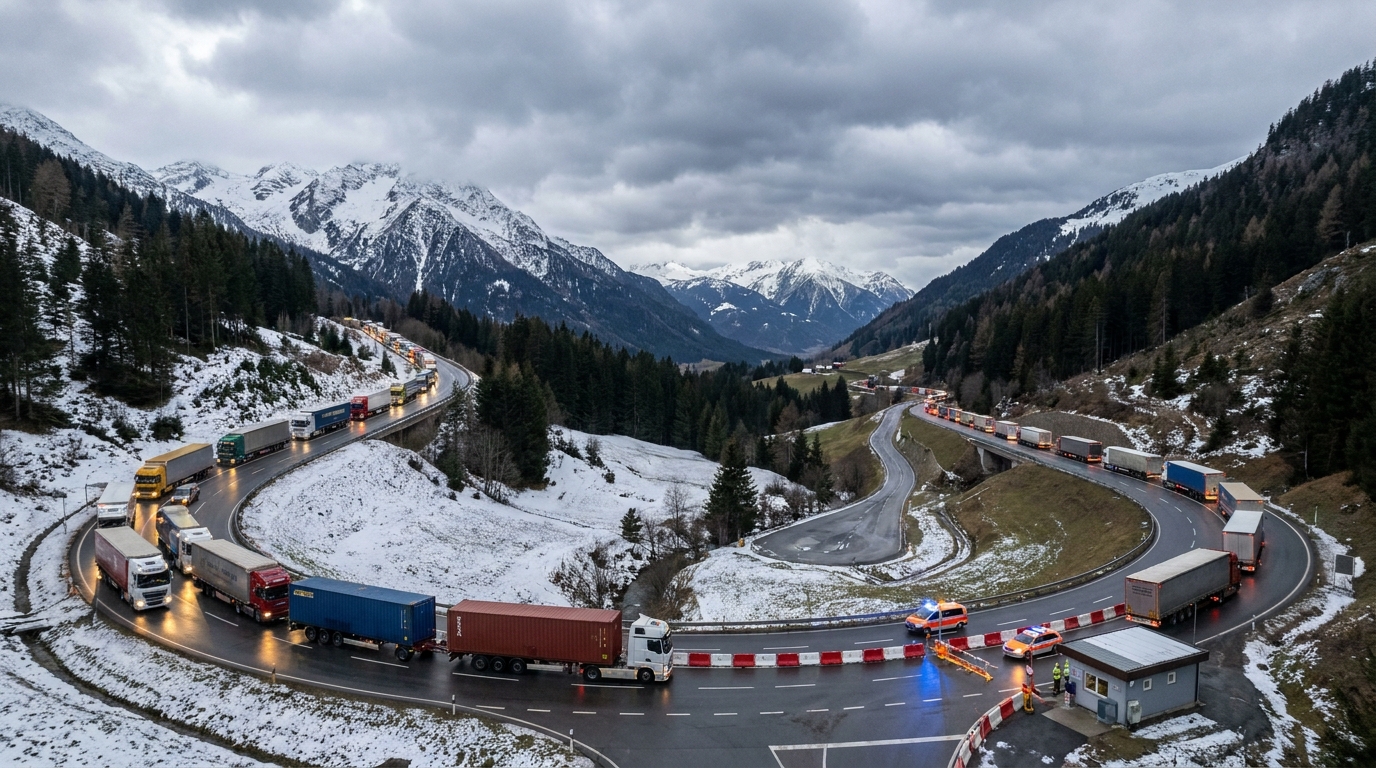
The end of May 2026 brings one of the most challenging weeks in years for the European transport and logistics sector. The confluence of a general strike in Italy, a last-minute cancellation of the UNATRAS protest, and a planned physical blockade of the Brenner Pass creates a toxic cocktail of operational risks for any company dependent on the smooth operation of North-South supply chains. Logistics managers and transport company owners should treat this week as a serious warning sign—not only because of the ongoing disruptions but also as a harbinger of broader social tensions in the TSL sector across the continent.
The origins of the crisis: UNATRAS and the cancelled strike, which changes the rules of the game anyway
To understand the scale of the current tensions, we need to go back to early May 2026. That's when UNATRAS—one of the most important associations of road hauliers and logistics companies in Italy—announced a nationwide strike scheduled for week 22, spanning May 25-29. The decision to protest was made during an extraordinary meeting of the organization's board on May 7 and was a direct response to the dramatic increase in operating costs in the industry, with diesel prices at the forefront.
The financial situation of Italian transport companies has been critical for months. High fuel prices, combined with rising insurance, wage, and vehicle maintenance costs, are pushing a growing number of carriers to the brink of profitability or even generating losses. This isn't an exclusively Italian problem—similar tensions are observed in many European countries—but in Italy, it has reached a point where the industry has decided to take the radical step of declaring a full-scale strike.
UNATRAS's demands were specific and focused on three areas. The organization demanded temporary suspension of payments of insurance and social security contributions, which was intended to directly save the financial liquidity of smaller enterprises. There were also demands radical acceleration of procedures for granting tax relief — shortening the so-called principle of tacit consent of offices from 60 to just 10 working days. The third pillar of the demands was launching dedicated financial support for entities investing in road safety and ecological solutions, including low-emission vehicles.
Letters of demand were delivered to Prime Minister Giorgia Meloni, Infrastructure Minister Matteo Salvini, and Economy Minister Giancarlo Giorgetti. The UNATRAS warnings included specific escalation scenarios: failure to reach an agreement would impact supply to retail chains and supermarkets within 24–48 hours of the strike's start, and within 3–5 days, lead to production lines being halted in industries relying on just-in-time delivery models, including the automotive, pharmaceutical, and electronics industries.
The Italian government decided to make concessions. A key element of the agreement that led UNATRAS to suspend its strike action was the commitment to refund excise tax on diesel fuel for the period from March to May 2026. This sent an important signal – the authorities clearly feared a scenario of paralysis that could have serious consequences, not only economically but also politically. The UNATRAS strike was suspended, but – crucially for further analysis – not canceled definitivelyThe industry is still waiting for promises to be fulfilled, and structural tensions within the sector remain unresolved.
General Strike May 29: Ports, Railways, Terminals - Everything Comes to a Standstill
The cancellation of the UNATRAS protest does not mean peace for European logistics. Regardless of the actions of carrier organizations, a protest is scheduled for Friday, May 29, 2026. 24-hour general strike, encompassing a broad spectrum of sectors of the Italian economy. Unlike UNATRAS, this protest is a direct response to the high cost of living and is community-wide in nature, organized by trade unions from across multiple sectors.
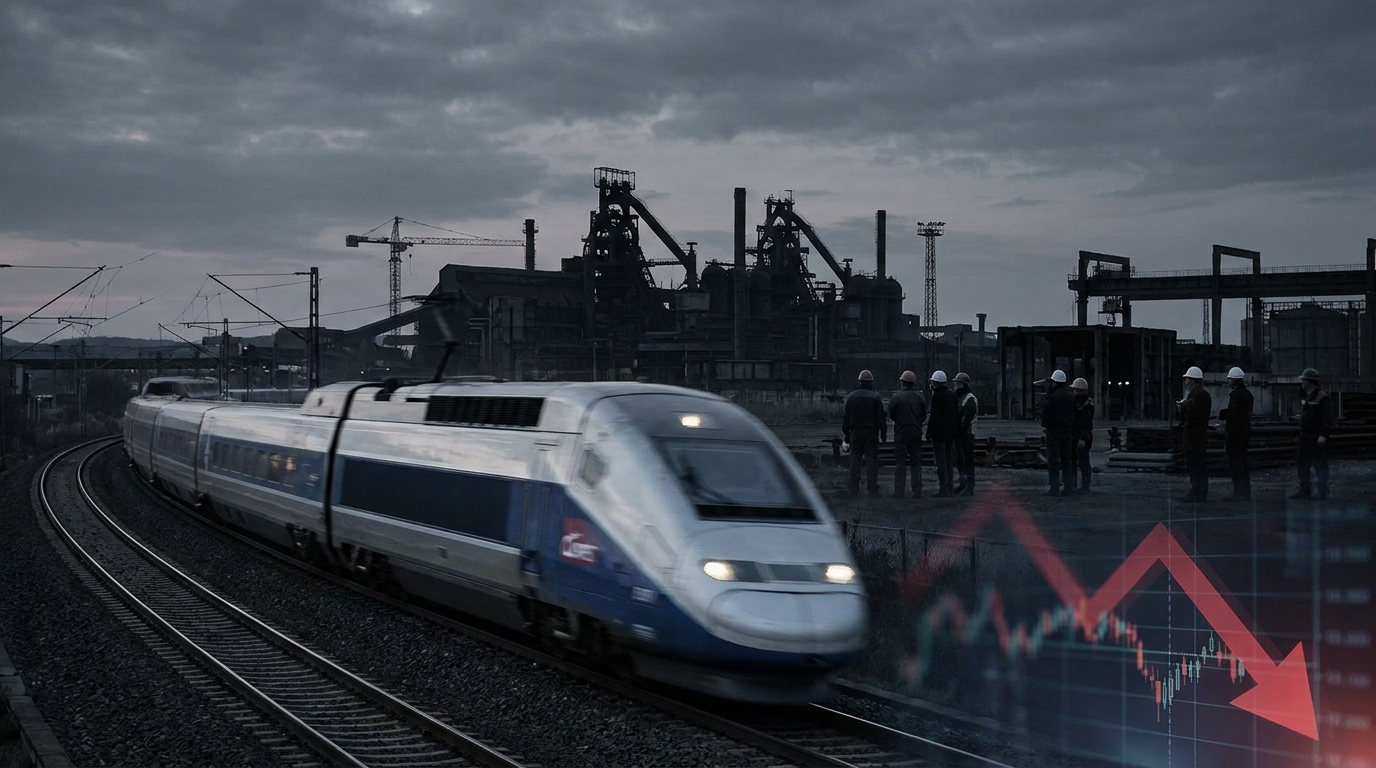
For the TSL industry, the range of sectors affected by the strike is particularly concerning. public transport in all major cities, which will make it difficult for workers to reach warehouses, terminals and industrial plants. Railways — a key element of intermodal supply chains connecting Italian hubs with Central and Western Europe — will limit or suspend freight traffic. It will be paralyzed air Transport, which will affect express cargo shipments. Finally, and particularly importantly from an operational perspective, the strike action will cover seaports and container terminals.
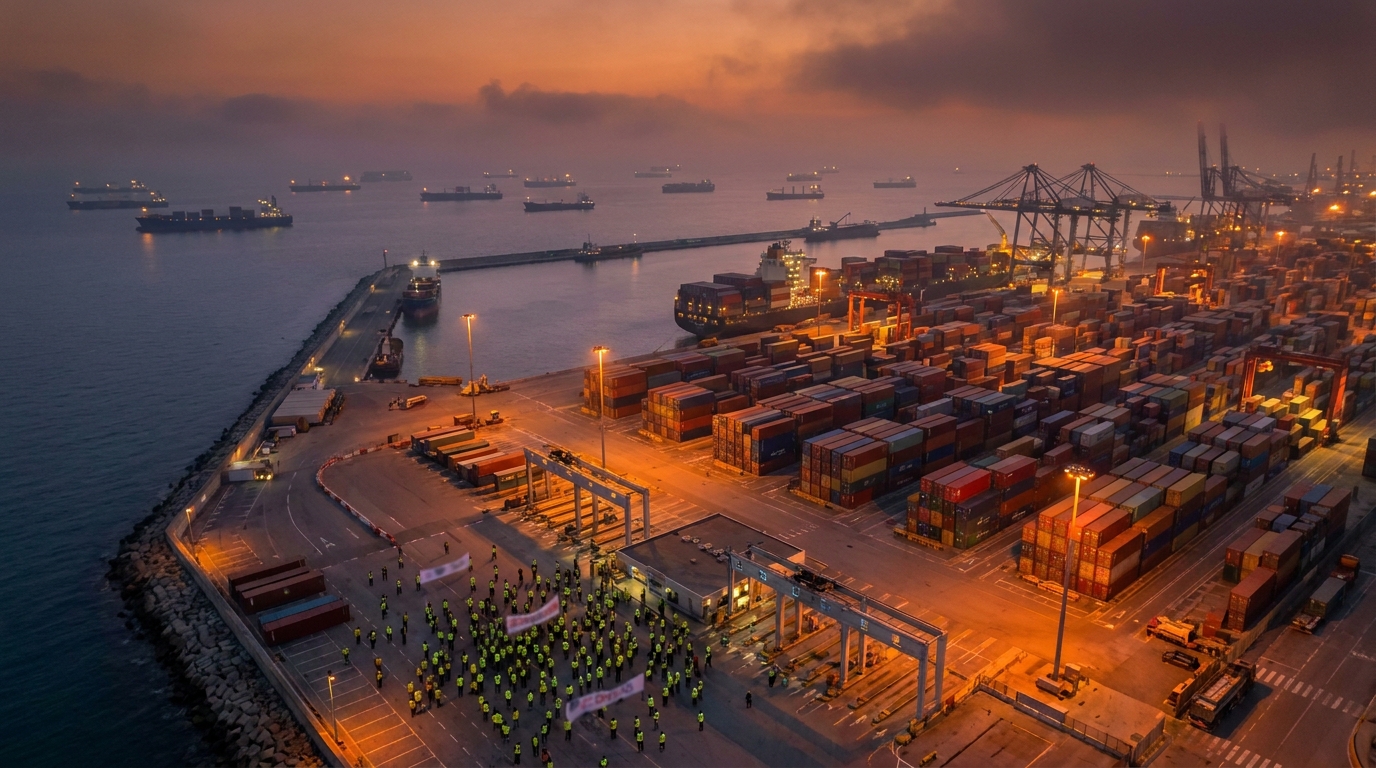
Italy is a key maritime hub for Euro-Asian and Mediterranean trade. Ports like Genoa, Livorno, Trieste, and La Spezia handle enormous volumes of containers, which then flow into the interior of the continent. Even a single day of suspension of transshipment operations creates a cumulative effect that spills over into the following days and weeks—containers waiting to be unloaded block quays, ships are diverted or face demurrage penalties, and supply chains serving European manufacturers and distributors begin to experience shortages.
What is important, even if trucks hit the roads on Friday, May 29, drivers, and freight forwarders will encounter serious bottlenecks at transshipment points. Goods arriving at the terminal may not be accepted, transshipped, or cleared because port or rail personnel will be on strike. This is a classic scenario where a domino effect impacts the entire logistics network, not just the directly paralyzed links.
Brenner Blockade May 30: Closure of a Key Alpine Corridor
As if the general strike weren't enough of a challenge, just one day later—Saturday, May 30, 2026—another physical closure of the most important freight route in the Alps occurs. On that day, the local community in the Wipptal region of Tyrol, Austria, is planning a massive demonstration against the excessive transit traffic through their region.
The result of the protest will be complete closure of the A13 motorway - Brenner Autobahn — in both directions on the section between the Schönberg toll plaza and the Brenner Pass. The closure will be in effect from 11:00 a.m. to 19:00 p.m., but the traffic ban for heavy goods vehicles comes into effect earlier, starting at 9:00 a.m. This means that the time window for truck traffic to cross the Brenner Pass is practically zero that day.
There is no question of diverting traffic to alternative routes in the region - the Tyrolean authorities have announced in advance that local alternative routes will also be blocked: B182 (Brennerstrasse) and L38 (Ellbögener Straße)This decision aims to prevent the typical scenario of heavy goods vehicles bypassing the closed highway via narrow local roads, exacerbating the chaos and exposing residents to even greater inconvenience.
An additional factor that dramatically worsens the situation is demonstration timingSaturday, May 30, 2026, marks the beginning of the Whitsun holiday season (Pfingstferien), one of the biggest peaks of tourism in Austria and Germany. Roads in the region will already be packed with vacation-bound cars, and the closure of the Brenner Pass will result in traffic spilling over into the entire road network of Tyrol and neighboring regions.
The Tyrolean authorities openly appeal to all drivers – both passenger and professional – to bypassing the entire region on this day. For the TSL industry, this means the need to seek alternative routes through Switzerland (Gotthard Pass, Simplon) or France (Mont Blanc, Fréjus), taking into account the specific restrictions, regulations and fees applicable on these corridors.
Risk Assessment: What does this mean for your business?
The overlap of the general strike in Italy (May 29) and the physical blockade of the Brenner Pass (May 30) creates a scenario of increased operational risk with very high intensityThe following conclusions are key for supply chain managers and transportation company owners:
Risk of delays and force majeure
Leading forwarding companies operating on the European market are already openly communicating to their clients that the events described qualify as case of force majeureThis means that carriers and freight forwarders formally release themselves from financial liability for delays and potential contractual penalties resulting from late deliveries. Companies that fail to review force majeure provisions in their transport contracts may be exposed to significant legal and financial risks—for both parties in the trading relationship.
Increase in spot freight costs
Any major disruption in European transport immediately translates into a sharp increase in spot freight rates. Limited truck availability in alternative transit corridors (Switzerland, France), extended transit times, and a buildup of orders with forwarders mean that companies forced to urgently transport during this period will pay significantly more than the contracted rates. It's also worth noting that the additional costs generated by downtime—penalties for trailer detention, parking costs, and driver allowances—will be passed on to shippers.
Manufacturing Companies: Immediate Review of Safety Stock
Manufacturing companies dependent on component supplies from northern Italy or via Italy from Mediterranean ports are particularly vulnerable. The automotive, pharmaceutical, and electronics industries, which rely on a just-in-time production model with minimal inventory buffers, should immediately begin reviewing the safety stock level and assess whether existing reserves will be sufficient to cover potential delays of up to 5–10 business days. In extreme scenarios—if disruptions accumulate or prolong—production downtime may become unavoidable.
Alternative routes and their restrictions
Diverting freight traffic from the Brenner Corridor to routes through Switzerland or France is possible, but it comes with significant limitations. Switzerland operates a system of limited permits for transit trucks and has its own night and weekend restrictions. The Mont Blanc Tunnel and the Fréjus Tunnel on the French side are limited-capacity corridors, which could quickly become bottlenecks in the event of mass traffic diversion. Companies planning alternative routes should consider not only travel times but also permit availability, driving ban regulations, and the actual capacity of individual border crossings.
Verification of contractors and contracts
This situation also provides an excellent opportunity to reflect on the quality of relationships with logistics partners. Companies that have long-term contracts with reliable carriers with alternative resources and routes are in a much better position than those that rely solely on the spot market or collaborate with smaller carriers lacking the operational capacity to flexibly respond to crises. Financial and operational verification of transport partners becomes particularly important in such moments.
The Wider Context: Structural Tensions in European TSL
The events described are not a coincidence. They are part of a broader trend of growing dissatisfaction in the European transport and logistics sector, which has been struggling for several years with cost pressures, driver shortages, tightening environmental regulations, androdoand growing customer expectations with simultaneous pressure to reduce freight rates.
Italy is a particularly sensitive point in this web of tensions. The fragmented structure of the industry—dominated by small and medium-sized carriers with a few vehicles—makes these companies particularly vulnerable to fuel price fluctuations and has limited capacity to absorb cost shocks. At the same time, the Italian Peninsula serves as a key transit hub for goods flowing between Central and Western Europe and the Mediterranean basins, as well as markets in the Middle East and North Africa.
The Brenner Pass, meanwhile, has been a conflicting arena for years between the interests of Tyrolean residents and the needs of European logistics. Daily truck traffic at this crossing exceeds the local community's capacity to absorb it, and years of efforts to shift transport to rail have yielded only partial results. Protests like the one planned for May 30th will continue until a long-term, systemic solution is found.
Recommendations for TSL companies and their clients
- Inform your customers and suppliers immediately about potential delays in deliveries via Italy or the Brenner Pass on 29-31 May 2026.
- Verify force majeure records in contracts with carriers and forwarders - make sure that the events described can be included in them, and check the complaints procedures.
- Evaluate alternative routes and availability of permits for traffic through Switzerland or France - contact logistics partners to book capacity on alternative corridors.
- Revise safety stock levels for critical components and goods – especially if your production or sales depend on regular deliveries from or through Northern Italy.
- Monitor the situation on an ongoing basis — although the UNATRAS strike has been suspended, tensions in the industry have not subsided and there is a risk of escalation in the coming weeks.
- Document any damages and additional costs resulting from disruptions - documentation will be necessary for any insurance claims or disputes with contractors.
Summary: A high-risk week with long-lasting consequences
The last week of May 2026 will be a test of European logistics' operational resilience. A general strike in Italy will paralyze ports, intermodal terminals, and railways. A physical blockade of the Brenner Pass will close the most important Alpine corridor for truck transport for hours. And the tensions these events expose—the structural cost problems of Italian carriers, social dissatisfaction with the rising cost of living, the conflict of interests between logistics and the people of Tyrol—will not disappear after May 31st. They will resurface.
For companies operating in European supply chains, this is a signal that diversification of routes, verification of logistics partners and building buffer reserves should become a permanent element of risk management strategies, not just a reactive response to crises. Those who prepare before escalation will emerge from this week with significantly smaller losses than those who treat these events as "temporary disruptions."