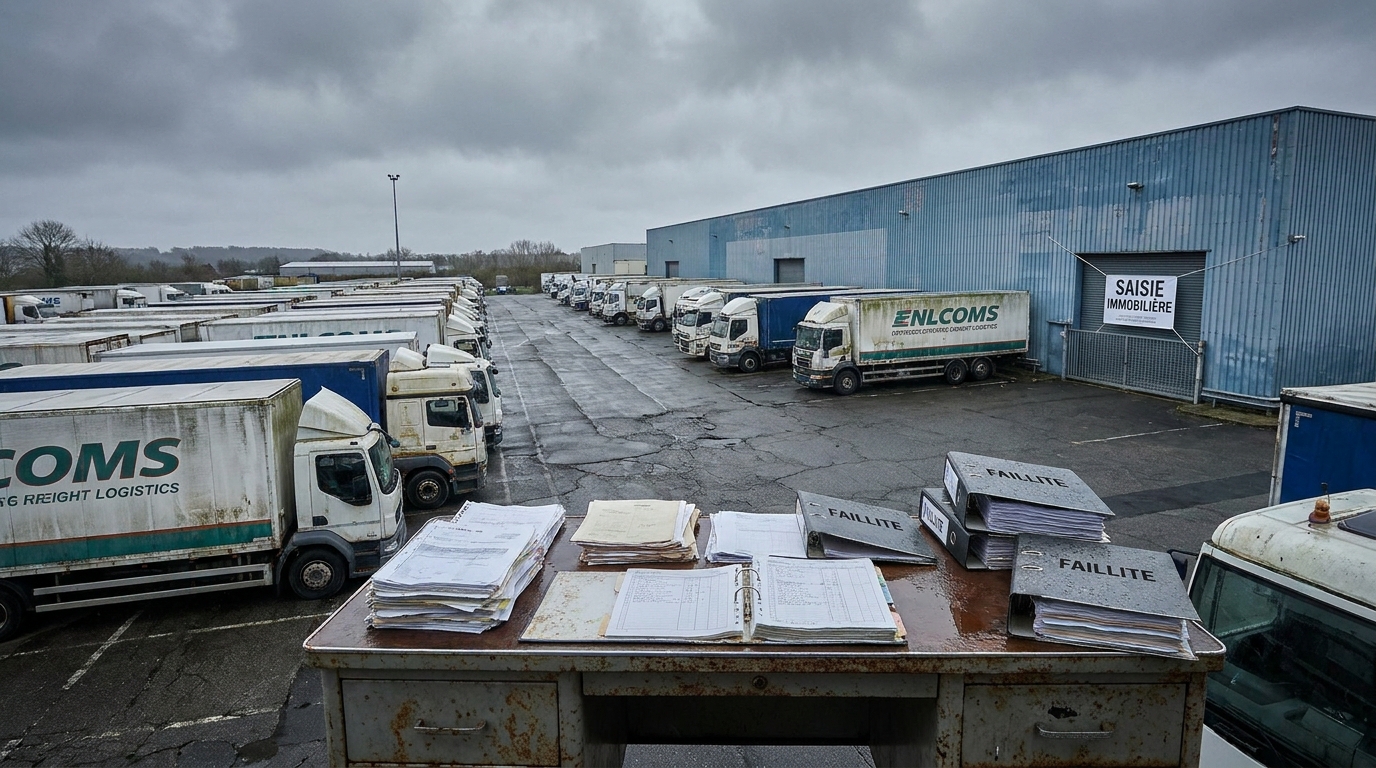

Logistics alert: 85% of companies report increased payment backlogs, with debt collection costs exceeding £420 per year

The latest report by global insurance broker and risk advisor Marsh, published in July 2026, delivers a stark warning for the European and British transport and logistics sectors. As many as 85% of surveyed companies report a significant increase in payment delays from contractors, while one in four companies operates under conditions of extreme credit risk concentration—one bankruptcy among five key clients would be enough to jeopardize more than half of their revenues. For risk managers and logistics company owners, this is a signal that should not be ignored.
The scale of the problem: payment backlogs are becoming the new normal
Data collected by Marsh as part of this year's market research paints a picture of a deep cash flow crisis among businesses in the UK and, more broadly, across Europe. Problems with timely payment are not a new phenomenon, but their current scale and growth rate suggest they constitute a fundamental threat to the operational stability of entire supply chains.
According to the report's findings, 85% of surveyed companies reported an increased number of overdue invoices over the past twelve months. This isn't a statistical anomaly—it's a clear signal of structural cash flow problems across the economy. When four out of five surveyed entities are experiencing an increase in the same problem, we're dealing with a systemic trend, not isolated difficulties for individual players.
In parallel, three-quarters of the surveyed organizations were forced to increase the value of provisions for bad debtsSuch write-offs aren't just dry accounting items—they represent real losses that deplete companies' equity, lower profitability, and limit investment opportunities. Funds that should be used to finance development, the purchase of modern vehicles, digitize processes, and train employees must instead cover gaps created by unfair or unenforceable payment policies by contractors.
Financial consequences: over £420 in debt collections per year
One of the most telling indicators in the Marsh report is the average annual cost of debt collection has risen to over £420,000 per businessThis amount is impressive, especially when compared to the operating margins typical of the transportation and logistics industry, which rarely exceed a few percent under favorable conditions.
Debt collection costs consist of both direct expenses—the services of law firms, debt collection agencies, and legal fees—as well as indirect costs, often more difficult to measure: the time spent by finance staff and management, the opportunity cost of tied-up working capital, and the negative impact on business relationships. In the logistics sector, where long-term contracts and mutual trust between partners are crucial, any debt collection case can irreversibly damage a company's reputation or deprive it of a significant business partner.
Importantly, rising debt collection costs disproportionately impact small and medium-sized businesses. Large corporations have specialized legal and financial teams and access to insurance and factoring instruments that allow them to mitigate credit risk. SMEs often have to manage debt collection on their own, often abandoning debt collection due to the proportionally high costs of the process relative to the value of disputed invoices.
Concentration of risk: one failure can destroy a company
Of particular concern is the concentration of credit risk in customer portfolios. The Marsh report indicates that approximately 25% of the surveyed companies operate in conditions of extreme dependence on a narrow group of contractors — in their case, the loss or insolvency of one of their five largest clients would mean a direct threat to more than half of their total revenues.
From a risk management perspective, this situation borders on corporate gambling. A company that relies on a single contractor for 50-60% of its turnover is effectively making its existence dependent on someone else's financial health—a health over which it has no control. Unfortunately, in the transportation and logistics industry, this type of dependency is relatively common: winning a large contract with a retail chain, industrial manufacturer, or e-commerce operator often determines a company's operational strategy for years to come, resulting in fleet expansion, staff hiring, and credit obligations tailored to the needs of a single key client.
When such a client encounters its own financial difficulties—beginning to delay payments, renegotiating contract terms, or, in the worst-case scenario, declaring bankruptcy—the domino effect immediately spreads to its suppliers. A carrier that has lost liquidity due to non-payment for services rendered is unable to timely pay tractor lease payments, fuel bills, driver salaries, or subcontractor invoices. In this way, a local financial difficulty for one company transforms into a systemic crisis affecting dozens of entities.
Logistics under particular pressure: low margins, high risk
The transportation and logistics sector is one of the industries particularly vulnerable to liquidity disruptions. The causes are structural and well-known to market participants:
- Low operating margins — typical industry margins of 2-5% leave a small buffer of financial security.
- High fixed costs — fleet depreciation, vehicle leasing, insurance, warehouse and office infrastructure generate fixed liabilities that cannot be easily reduced.
- Variable operating costs — fuel prices, driver salaries (in the face of ongoing shortages of skilled workers), road and port fees are difficult to forecast and manage.
- Long payment terms — the industry standard remains 30, 60, and often 90 days, which means that the company is de facto lending to its clients for several months.
- High capital intensity — fleet maintenance and renewal require continuous investments, financed largely by loans and leasing, which increases sensitivity to cash flow fluctuations.
In this context, payment delays aren't just an administrative problem—they pose a direct threat to business continuity. A carrier waiting 120 days for payment for a service it has provided and for which it has already paid drivers, fuel suppliers, and subcontractors effectively becomes an interest-free bank for its customers. The accumulation of such situations leads to a crisis from which many companies are unable to recover.
Macroeconomic Context: Why Now?
The intensification of payment bottlenecks and credit risk concentration observed in the mid-1920s is not accidental. It results from the convergence of several macroeconomic and structural factors:
Restrictive financing conditions
After an era of near-zero interest rates, businesses are grappling with significantly more expensive access to working capital. Revolving loans, factoring, and other receivables financing instruments have become more expensive, leading some companies to replace formal external financing with informal financing at the expense of their suppliers—extending payment terms.
Margin erosion and cost pressure
Many industries are still grappling with the consequences of previous years' inflation in energy, raw materials, and labor costs. Companies whose own financial health has weakened are increasingly resorting to delayed payments as a short-term liquidity management tool—shifting the financing burden onto their suppliers.
The Complexity of Global Supply Chains
Multi-layered, often cross-border supply chains mean that financial problems at one link can spread quickly and widely. A UK company whose German client delays payment may in turn default on its Polish subcontractor – creating a transnationalrodoyou chain of mutual delays.
Deteriorating payment morality
The Marsh report indirectly points to a significant cultural problem—the normalization of late payments as an acceptable business practice. When 85% of companies experience an increase in overdue invoices, there's a risk that late payments are becoming a socially accepted norm, rather than an exception that faces real commercial or legal sanctions.
Risk Perspective: What Does This Mean for Your Business?
From the perspective of a risk manager or owner of a transport and logistics company, the data presented by Marsh should prompt you to ask several fundamental questions about your own organization:
- What is the actual concentration of risk in the customer portfolio? Does the company know what share of revenue its three, five, or ten largest customers represent? Does it regularly analyze their financial condition?
- What is the payment history of key accounts? Are payment deadlines being met? Are there any trends suggesting a deterioration in the counterparty's liquidity?
- What credit risk protection instruments are used? Trade receivables insurance, factoring, bank guarantees – does the company actively use the available tools?
- Are debt collection procedures formalized and implemented? Many companies waste valuable time on informal negotiations instead of immediately initiating effective debt recovery procedures.
- How does the company respond to the first warning signs? A delay in the first invoice, a request to change payment terms, a change in the contractor's management staff - these are signals that require immediate reaction and verification.
Recommendations: how to reduce risk in practice?
Based on the conclusions of the Marsh report and the experience gathered by EURODEBT.eu in monitoring credit risk in the logistics sector, there are several key actions that companies should take without delay:
1. Diversification of customer portfolio
A strategic priority should be reducing dependence on individual contractors to a safe level. Adopting the principle that no single client should account for more than 20-25% of revenue is a starting point for discussion—but even this level of concentration requires particularly careful monitoring. Customer diversification is a long-term process, but fundamental to the financial stability of any carrier.
2. Trade receivables insurance
Trade credit insurance policies protect against losses resulting from a contractor's insolvency or prolonged non-payment. Credit insurers such as Euler Hermes (Allianz Trade), Coface, and Atradius also have their own systems for monitoring the financial health of thousands of businesses, providing additional information to insured companies.
3. Proactive monitoring of contractors
Business partner verification shouldn't be limited to a one-time registry check before signing a contract. It should be an ongoing process, encompassing regular checks of financial indicators, payment history, information from credit bureaus, and registry data. Platforms like EURODESK.eu offer tools to automate this process and detect warning signs early.
4. Rigorous management of trading conditions
Logistics companies should strive to shorten payment terms wherever possible and implement a system of incentives (early payment discounts) and sanctions (delay interest actually charged and enforced). It is crucial that late payment interest provisions are not merely contractual dead letters, but a genuinely applicable disciplinary tool.
5. Factoring and receivables financing
Transferring the risk of late payment to a financial institution through non-recourse factoring (with recourse to the factor in the event of debtor insolvency) or recourse factoring can significantly improve financial liquidity. Although it comes at a cost, it is often lower than the collection costs and losses resulting from capital freezing.
6. Building internal competencies in credit analysis
Companies that cannot afford a large credit control department should consider external consulting support or using automated risk assessment platforms. Investing in credit scoring tools pays off many times over, avoiding even a single significant loss due to bad debts.
Summary: Time for a Systemic Response to Systemic Risk
The Marsh report for July 2026 is a clear wake-up call. The scale of payment backlogs—affecting 85% of surveyed companies—and the growing risk of revenue loss due to the bankruptcy of key contractors indicate that the transportation and logistics sector is facing a serious structural challenge, not just a temporary market turbulence.
The average annual debt collection cost of over £420 per company is often greater than a transport company's annual operating profit. This means that some market players are working solely to recover money they are already owed, rather than investing in growth and strengthening their competitive position.
Accepting the current state of affairs as an unchanging business reality would be a serious strategic mistake. Companies that implement comprehensive credit risk management systems—combining customer portfolio diversification, receivables insurance, continuous counterparty monitoring, and rigorous debt collection procedures—will gain a significant competitive advantage in the world.rodowhich will be increasingly ruthless for entities operating without adequate security measures.
For risk managers and logistics business owners across Europe, the lesson is clear: the time to review and update credit policies is now, before the next wave of financial difficulties for contractors reaches their own doors.