

SeaLead Shipping in Liquidation: How US Sanctions Destroyed the World's 13th Largest Container Carrier in 14 Months
SeaLead Shipping, a Singaporean shipping company that ranked 13th among the world's largest container carriers just a year ago, announced its voluntary liquidation at the end of July 2026 as a direct consequence of sanctions imposed by OFAC and actions taken by the US Department of Justice. The company, which has positive net assets and no long-term debt, is entering liquidation not because of insolvency but because of a complete operational paralysis caused by links to an Iranian oil distribution network. This case serves as an unprecedented warning to the European logistics industry of the need for rigorous screening of business partners for sanctions and geopolitical risks.
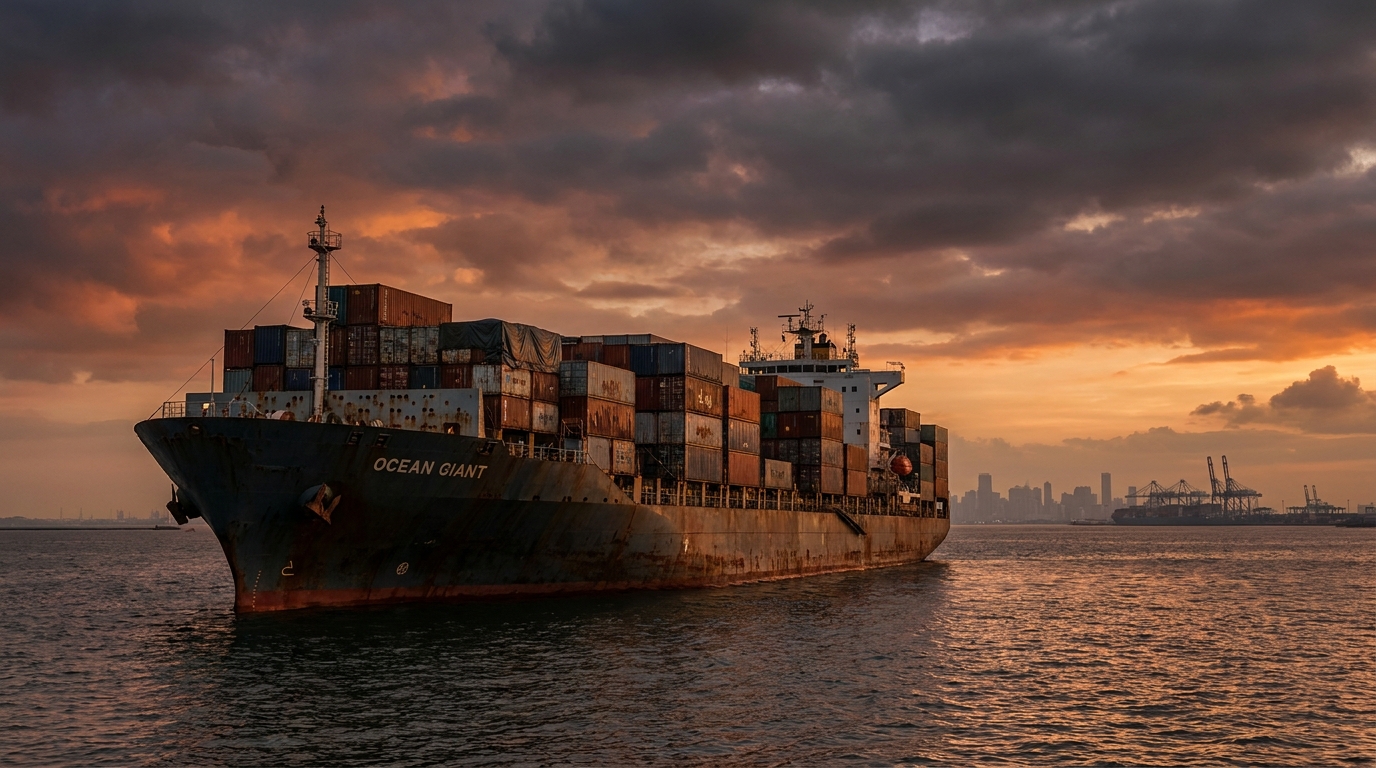
Singaporean shipping company SeaLead Shipping—which as of May 2025 had a fleet of over 208,000 TEU and ranked 13th globally among container carriers—announced voluntary liquidation at the end of July 2026. The immediate cause of its collapse was sanctions imposed by the US Office of Foreign Assets Control (OFAC) and the actions of the US Department of Justice (DOJ), which in less than a year and a half virtually wiped the company from the global maritime transport landscape. This case is undoubtedly one of the most dramatic and instructive examples of geopolitical and sanctions risk faced by the logistics industry in the last decade.
From Global Player to Zero: A Spectacular Fall in Numbers
The scale of SeaLead Shipping's shrinking operations is staggering. In May 2025, the company operated 53 vessels with a combined capacity exceeding 208,000 TEU. Just ten months later, in March 2026, the fleet had dwindled to 14 vessels and 62,500 TEU. By July 2026—when the liquidation was announced—the company had just four vessels remaining. This represents a reduction of over 92% of its fleet in a year and a few months. No natural market crisis, economic recession, or pandemic could have so quickly and completely wiped out a company of this scale.
What's particularly interesting from an analytical perspective is that SeaLead Shipping isn't going bankrupt due to insolvency. Quite the opposite. The company is entering liquidation as an entity. fully solventAccording to the official statement from management, the company's net assets are estimated at $37,4 million, consisting of:
- Cash: 6,9 million USD
- Ship fleet value: 19,9 million USD
- Value of containers: 26,2 million USD
On the liabilities side, the company reports only $15 million in short-term liabilities to suppliers and $500 in employee wage arrears. Importantly, the company has no long-term debt. Theoretically, creditors should be fully satisfied within a year of the formal opening of the proceedings. Cosimo Borelli of Admiralty Asia Partners has been appointed liquidator.
The so-called solvent liquidation — the liquidation of a solvent entity — is a relatively rare and particularly telling phenomenon. SeaLead Shipping isn't going bankrupt because it's out of money. It's going bankrupt because sanctions have cut it off from conducting any business activity. No bank will process its payments, no port will allow its ships to enter without risking secondary sanctions, and no contractor dares to sign a contract.
Origins of the collapse: ties to Iran's oil distribution network
SeaLead Shipping's troubles began in July 2025, when OFAC blacklisted 16 vessels chartered by the company. According to U.S. authorities, these vessels were linked to a vast shipping network controlled by Mohammad Hossein Shamkhani — a former high-ranking commander of the Islamic Revolutionary Guard Corps (IRGC) navy and son of Ali Shamkhani, one of the main political advisors to Iran's Supreme Leader.
The technical management of these units was handled by a Singaporean company Draco Buren Shipping, which was also placed on the OFAC sanctions list. SeaLead's operational and capital ties to a network serving Iranian interests became the starting point for increasingly broad repressive actions by US federal authorities.
These actions culminated on March 6, 2026, when the U.S. Department of Justice made an unprecedented civil forfeiture of SeaLead Shipping's funds in the amount of 2,4 million USDAccording to the indictment, this was part of a much larger pool—estimated at approximately $15,3 million—used to directly finance an illegal distribution network for Iranian crude oil, circumventing previously imposed embargoes. The DOJ's seizure sends a powerful message: American authorities went beyond simply adding the company to the list and resorted to tough criminal law.
Escalation: July Sanctions and the Domino Effect
While the initial restrictions affected SeaLead indirectly—through sanctions on chartered vessels and related entities—the July 2026 sanctions struck directly at the heart of the organization. OFAC targeted SeaLead Shipping itself and all of its key subsidiaries located in:
- India
- in the Marshall Islands
- in the United Arab Emirates
Sanctions also apply to a number of related operational and capital entities, including: Aare Lines, Hansa Shipping, Lubeck Shipping, Volta Shipping and WeFreight ShippingThis list demonstrates the extensive and multi-jurisdictional organizational structure of this shipowner—typical of companies that seek to minimize legal risk by dispersing operations across multiple jurisdictions.
An additional blow to the company's operations was the outbreak of open armed conflict between the US/Israel and Iran at the end of February 2026. The escalating geopolitical situation resulted in the de facto entrapment of part of the SeaLead fleet on Far Eastern routes – ships could neither operate freely nor call at ports where operators feared sanctions consequences.
The latest attempt to save the business through a Malaysian subsidiary operating as an NVOCC (SeaLead Shipping Malaysia) ended in failure. Other shipowners refused to cooperate en masse, fearing exposure to the so-called secondary sanctions (secondary sanctions) - a tool increasingly used by the US administration against third parties maintaining contacts with companies subject to restrictions.
Ownership structure: who is behind SeaLead Shipping?
The SeaLead case is even more complex when you look at the carrier's shareholding structure. The company was owned by four entities:
- Meteor Capital — 33% shares
- Hummingbird Capital — 32% shares
- Preetha Sunil Kumar (individual) - 20% of shares
- Access Capital Funds (based in the Cayman Islands) - 15% stake
The fragmentation of ownership between capital funds, an entity registered in tax havens, and an individual is a pattern that should raise risk analysts' concerns even when vetting a potential business partner. The presence of a Cayman Islands entity in the ownership structure—while not in itself evidence of irregularities—is one of the warning signs that KYC (Know Your Customer) and KYCC (Know Your Customer's Customer) procedures should identify at an early stage.
Business Risk Perspective: What Should the Industry Learn from This?
The collapse of SeaLead Shipping isn't a story about a company that went bankrupt due to mismanagement, excessive debt, or a market downturn. It's a story about how geopolitical connections can, in a matter of months, undo years of building a market position—regardless of the company's financial health. Below, we present key lessons for risk managers and owners of logistics companies operating in Europe.
1. The risk of sanctions is real and quick to act
There's a common misconception that sanctions target distant, exotic entities—not global players ranked in industry rankings. The case of SeaLead debunks this myth. The company was ranked 13th globally, operated under the Singapore flag, had formally clean finances, and had an extensive network of partners. Yet, within 14 months, sanctions had driven it to the point where voluntary liquidation became the only option.
2. Secondary sanctions are a real threat to Europeans
The secondary sanctions mechanism is particularly concerning from a European perspective. Shipowners refusing to cooperate with SeaLead's Malaysian subsidiary did not do so out of loyalty to US law—they did so out of concern for their own interests. Any European transport or logistics company cooperating with an entity subject to OFAC sanctions risks loss of access to the dollar system, the blocking of correspondent bank accounts, and potential criminal prosecution in the US. These are risks that should be considered when engaging in any new cooperation with entities outside the eurozone and the EU.
3. KYC and KYCC procedures are not bureaucracy - they are the foundation of security
The SeaLead case clearly demonstrates that verifying a trading partner cannot end with checking their financial condition or trading history. It also requires analysis of the ownership structure, capital and operational connections, the jurisdiction of registration of subsidiaries, and—crucially—the identity of the ultimate beneficial owners (UBO). KYCC procedures, i.e., verification of our partners' business partners, are becoming an increasingly important element of compliance in global supply chains.
4. Solvency does not protect against liquidation
One of the most unexpected aspects of this story is that SeaLead is entering liquidation with positive net assets and zero long-term debt. This is good news for creditors—they should recover their debts. But for operating partners, freight forwarders, shippers, and container lessors—it's a warning. Financial solvency is not a sufficient guarantee of operational continuity if the company is exposed to sanctions risk.
5. Carrier diversification is a strategic necessity
For importers and exporters using maritime services, SeaLead's story is a compelling case for consistently diversifying their carrier portfolio. Supply chain dependence on a single operator—especially one outside traditional, well-regulated markets—exposes a company to dramatic operational disruptions if that operator is sanctioned or goes out of business.
Market Context: The Industry Must Prepare for the New Reality
The liquidation of SeaLead Shipping is part of a broader trend of tightening sanctions enforcement against entities linked to Iran, Russia, and other restricted countries. The US administration has consistently expanded the scope of its actions—from adding individual ships to sanctions lists, through confiscating cash and assets, to dismantling entire groups of companies linked to banned energy distribution networks.
The transportation and logistics industry—by its nature global, multi-jurisdictional, and complex intermediary networks—is particularly vulnerable to the risk of unwitting entanglement in such structures. A growing number of entities attempt to circumvent sanctions through complex chains of front companies, reflagging of vessels, fictitious owners, and intermediaries.rodoIn this area, verification tools – such as those offered by EURODEBT.eu platforms – are no longer an optional addition but are becoming an essential element of risk management.
It's also worth noting that the liquidation of a company of this scale generates significant market disruption. SeaLead's clients have had to urgently seek alternative carriers, negotiate new contracts, and cope with supply chain delays. Containers and vessels are entering the liquidation process, and their potential acquisition by other operators is a time-consuming and uncertain process.
Summary
The story of SeaLead Shipping is a case study that should be included in the risk management training programs of every company operating in global transportation and logistics. The company had built an impressive market position, maintained financial liquidity, and had no long-term debt. Yet, within 14 months, it went from being the 13th largest container carrier in the world to being liquidated.
The culprit wasn't poor financial performance, but operational ties to sanctioned networks. Connections that, at least in part, could have been uncovered through rigorous due diligence and partner vetting procedures. This is why tools like sanctions screening, UBO verification, OFAC and SDN List monitoring, and geopolitical risk assessment are becoming the absolute standard in modern commercial risk management.
For European transport and logistics companies, there is one conclusion: verify partners before concluding a contract, because the cost of correcting an error – as the SeaLead case shows – may turn out to be incomparably higher than the cost of prevention.




