

The end of customs duty relief up to €150: how will EU reform change the transport and e-commerce industries?
From 1 July 2026, the European Union is abolishing the de minimis customs duty exemption for shipments worth less than 150 euros, replacing it with a flat fee of 3 euros for each goods item. This change upends e-commerce operating models and forces logistics companies to renegotiate contracts, upgrade IT systems and conduct a thorough assessment of the financial risk posed by B2C customers. The experience of France, where the mere announcement of similar regulations caused a 92 percent drop in customs volumes at CDG, shows how dramatic market reactions can be.
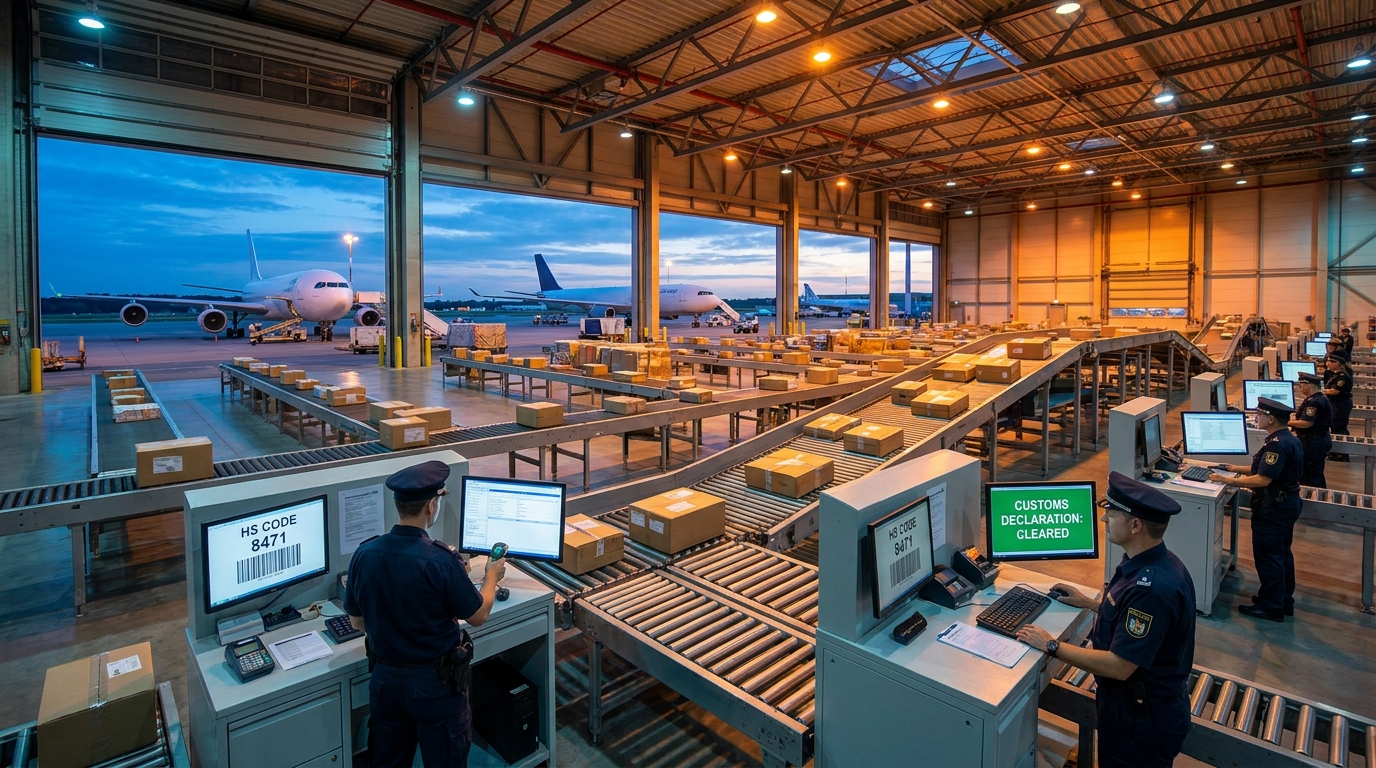
As of July 1, 2026, the European Union is eliminating one of the cornerstones of cross-border e-commerce—the long-standing duty-free threshold for imported shipments valued under €150. In its place, a flat fee of €3 per item in a parcel is being introduced. For logistics operators, freight forwarders, and transport companies serving B2C customers, this isn't just a regulatory change; it's a wake-up call requiring immediate review of contracts, operating models, and customer portfolio risk assessments.
The end of the de minimis era – what is changing and why?
For years, the de minimis threshold has served as a driving force for cheap imports from Asian countries, primarily China. Stores like Temu, Shein, and AliExpress have largely built their European business models on this loophole—mass-shipping small parcels worth no more than €150 without paying customs duties. It's estimated that in recent years, the volume of shipments benefiting from the de minimis exemption in the EU has grown to hundreds of millions of parcels annually.
European finance ministers have long raised the alarm that the system is widely abused, with non-EU sellers deliberately underdeclaring the value of shipments, avoiding fees and gaining an unfair competitive advantage over local European sellers who are fully taxed. Fiscal pressure has been compounded by arguments fromrodosible – the mass influx of cheap disposable products generates a huge carbon footprint – and concerns about consumer safety, as many imported items did not meet EU standards.
The EU customs reform is therefore part of a broader regulatory strategy: customs duties cease to be solely a fiscal tool and become an instrument of trade policy,rodoThe new €3 fee for each item in eligible B2C shipments is temporary—a more comprehensive system is planned for implementation eventually—but its mere announcement is causing significant market turbulence.
The Customs Revolution - The End of Consolidation, The Beginning of the Data Era
For the logistics industry, the most significant operational change is the need to submit mandatory customs declarations at the item level. Until now, freight forwarders and operators have relied on simplified consolidation methods, which allowed for quick and cost-effective customs clearance of large volumes of parcels. The new regulations eliminate this convenience.
Each product in the shipment will need to be described using precise identifiers—GTIN (Global Trade Item Number), EAN, or UPC—along with detailed information about the manufacturer and seller. Furthermore, HS (Harmonized Commodity Description and Coding System) codes must be assigned correctly to each item. Any coding error will result in immediate detention of the shipment and delay of clearance.
This means the logistics industry faces a significant technological challenge. Operators who previously processed millions of simplified declarations must invest in IT systems capable of handling product-level data. Integration with manufacturer and retailer databases, automatic verification of customs codes, and data quality management—these are areas where significant investment is expected in the coming months. Companies that fail to implement appropriate solutions before July 2026 will risk operational paralysis.
Key data requirements for new check-ins:
- GTIN, EAN or UPC codes — mandatory identifier for each product in the package
- HS Codes — correctly assigned to each item, without simplifications
- Manufacturer and seller details — full information for each article
- Declaration at item-line level — no more consolidation methods
- Correct value of the goods — rigorous verification of the scale of abuses to date
IOSS and the new shipment routing landscape
A key change that will directly impact the operating models of courier and freight forwarding companies is the new approach to customs clearance based on the seller's participation in the IOSS (Import One-Stop Shop) system. The IOSS system, introduced in 2021 as a mechanism for simplified VAT registration for foreign sellers, is now becoming a central element of the entire e-commerce customs architecture.
Shipments handled by sellers registered with IOSS retain the option of customs clearance at the first point of entry into the European Union. This means that logistics operators can maintain the current model of centralized distribution hubs—goods arrive at a single large logistics center (e.g., in Germany, the Netherlands, or Belgium), where they are cleared and from there distributed to destination countries.
Shipments from sellers not registered with IOSS, however, lose this capability. They must be cleared in the destination country, radically complicating routing. Instead of a single clearance point for the entire European market, the operator must organize clearances in dozens of different jurisdictions, each with its own procedural, linguistic, and tax requirements. The complexity of routing and last-mile logistics increases exponentially.
For transport companies working with e-commerce clients who do not have IOSS registration or are currently obtaining it, this division has a direct impact on operating costs. Routes, delivery times, and the total cost of handling non-IOSS shipments will be significantly higher, impacting the profitability of contracts concluded before the reform takes effect.
Financial Earthquake for E-Commerce Importers
This change primarily impacts business models based on a high-volume, low-value model. For a seller shipping hundreds of thousands of parcels to Europe each month, a €3 fee for each item can represent 15–30% of the item's value. This is a dramatic shift in cost structure that, for many players, makes the current business model simply unprofitable.
An additional blow is the issue of returns. Return rates in e-commerce are significantly higher than in brick-and-mortar retail—often reaching tens of percent in categories like clothing and electronics. Under the new regulations, customs duties paid on imports will not be automatically refunded if goods are returned. This is another financial burden that falls directly on importers and sellers—and indirectly on the logistics companies that handle their shipments and returns.
For risk managers in the transportation industry, the message is clear: the liquidity of B2C e-commerce customers, especially those operating drop-shipping or importing from Asia, could deteriorate significantly over the next 12 to 18 months. Companies that fail to adapt their operating models could quickly face insolvency.
The France Effect – the first victim of regulatory announcements
What's already happening in France is a telling warning to the entire industry. The country previously announced the introduction of a national tax on imported parcels—and the market reaction was immediate and dramatic. Paris Charles de Gaulle Airport saw a 92 percent drop in customs declarations for e-commerce shipments. Traffic hasn't disappeared—it's shifted to alternative hubs: Liège, Belgium, Amsterdam (Schiphol), and Frankfurt.
This example illustrates two important points. First, the market reacts rapidly and radically to regulatory changes—even to their announcement, even before they take effect. Second, operators of air hubs and ground distribution centers must be prepared for both a sudden influx of volume before the reform takes effect (the front-loading effect) and a sharp decline after its implementation.
Cargo industry experts—including representatives from Dimerco Express Group, Fraport AG, and DHL Aviation—agree: e-commerce will remain a key driver of the air cargo market, but the market itself will undergo a structural transformation. Cheap, individual shipments, which currently dominate volume, will give way to consolidated shipments, EU-wide cargo warehousing, and a pre-stocked inventory model in regional distribution centers.
Europe's New Logistics Map – Who Wins, Who Loses?
Customs reform will accelerate market consolidation and reshape supply chains. Large e-commerce platforms, such as Chinese giants Temu and Shein, are already investing in European warehouses and distribution centers, moving goods into the EU before they reach the end customer. This model—bulk imports, local bonded warehouses, and intra-EU distribution—will become the standard for all players with European aspirations.
For logistics companies, this means new business opportunities in the area of:
- Intra-EU fulfillment — servicing warehouses and distribution centers located within the EU
- Consolidation of sea and air shipments — bulk import is much more profitable than millions of small parcels
- Customs compliance services — companies with advanced IT systems and expertise in HS customs classification will have a strong negotiating position
- Customs warehouse services — bonded warehouses at EU borders allow for the deferment of customs duty payments until the goods are sold
Meanwhile, small and medium-sized operators, which have previously specialized in handling low-cost shipments from Asia, will come under pressure. Compliance costs, investments in IT systems, and the need to renegotiate contracts may exceed their financial capabilities. Industry analyses indicate that the reform could accelerate natural market selection—strengthening large players with advanced data infrastructure and extensive operational networks at the expense of smaller entities.
Business Risk Perspective – What Should Transport Companies Do?
From a risk management perspective, managers of transportation and logistics companies should take a number of preparatory steps now. July 2026 is just a few months away—and considering the complexity of the required operational, IT, and contractual changes, this is a very short period.
Priority areas of activity:
- Customer portfolio audit — identifying B2C customers whose business models are based on importing shipments below €150; assessing their financial stability in the new regulatory environment
- Renegotiation of contracts — reviewing contracts for clauses regarding regulatory changes; safeguarding against a situation in which the client is unable to bear new customs costs
- Verifying clients' IOSS status — assessment of which customers are registered in the IOSS system and which will have to forward shipments for clearance in the destination country
- Investments in IT systems — Implementation or updating of customs data management systems capable of handling declarations at the item level
- Capacity planning — preparation for the front-loading effect (a sharp increase in volume before July 2026) and a subsequent slowdown
- Development of the compliance offer — building advisory competences in the field of new regulations as an added value service for clients
Market scenarios – what does the industry expect?
Industry consensus assumes that the period between the reform's announcement and implementation will be characterized by intense front-loading—sellers and importers will maximize import volumes while the old rules remain in effect. This could temporarily boost the financial performance of cargo companies, particularly air cargo companies.
After July 2026, however, a significant slowdown will occur. Some players will exit the market or drastically scale back their operations. Others will switch to a consolidated import and local fulfillment model. Ultimately—according to forecasts for 2027–2028—the market will find a new equilibrium with a lower volume of small shipments but higher value and margins for individual shipments.
In the long term, the reform could prove to be an opportunity for European manufacturers and retailers to regain some of their lost competitive advantage. This, in turn, could stimulate the local e-commerce market and create new demand for intra-EU logistics services—particularly in the areas of fast delivery and returns processing.
Summary - time to decide, not wait
The abolition of the €150 de minimis threshold is one of the biggest regulatory changes in European e-commerce in years. For the transport and logistics industry, this isn't an abstract tax issue—it poses a direct threat to contract profitability, customer liquidity, and company operational efficiency. The dramatic example of France, where the mere announcement of similar regulations triggered a 92% volume collapse at a single hub, demonstrates how violent market reactions can be.
Companies that use the reform as a catalyst to modernize their IT systems, renegotiate contracts, and diversify their customer portfolios have a chance to emerge from this period of turbulence stronger. Those that wait risk finding themselves at the epicenter of the crisis without the tools to manage it. In an industry where margins are thin and volumes are crucial to survival, the time for decisions is now.




