

End of duty-free imports from China: EU introduces €3 fee per parcel from July 1, 2026
From 1 July 2026, every parcel imported into the EU from third countries with a value below 150 euros will be subject to a flat-rate customs duty of 3 euros. The European Commission has published detailed implementing rules governing this mechanism, thereby ending a long-standing customs exemption that facilitated widespread fraud involving the undervaluation of goods. Logistics operators and courier companies have limited time to integrate the new requirements into their customs systems in order to avoid delays and financial penalties.
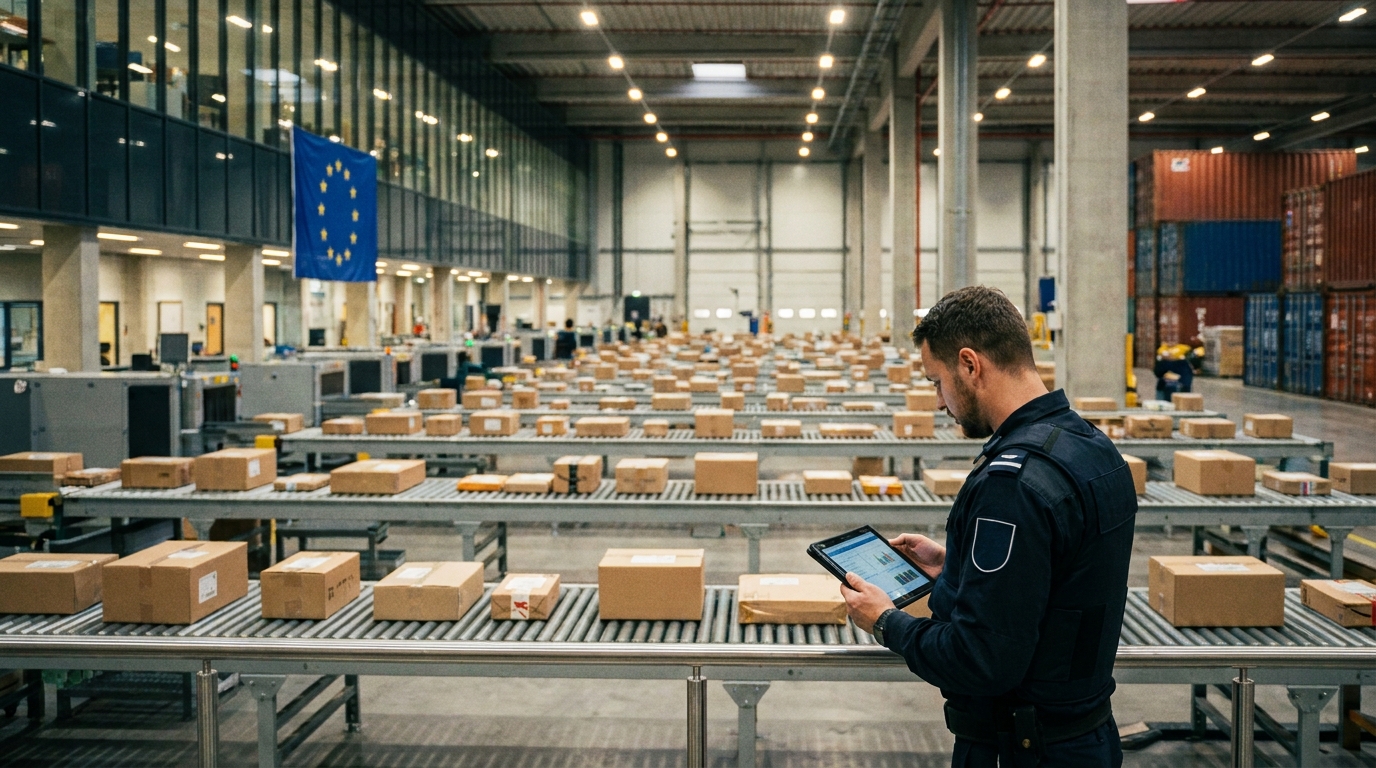
From July 1, 2026, every parcel imported into the European Union from third countries with a value under €150 will be subject to a flat customs duty of €3. The European Commission published detailed implementing rules governing this mechanism—Implementing Regulation (EU) 2026/1200 of June 5, 2026—formalizing one of the most significant changes to EU customs law in the last decade. For transport companies, logistics operators, and trading platforms, this means urgent adaptation of processes and IT systems.
Long-term customs exemption is becoming a thing of the past
For years, imports of small goods from non-EU countries were fully exempt from customs duties, provided the shipment value did not exceed €150. This mechanism was originally intended to simplify customs work and reduce the bureaucratic burden associated with handling small consumer parcels. At a time when cross-border e-commerce was a niche phenomenon, the solution operated smoothly and without major controversy.
However, the rapid growth of e-commerce—especially from Asian platforms such as Shein, Temu, and AliExpress—made the old system susceptible to mass abuse. In 2024, approximately 4,6 billion low-value parcels, nearly 91% of which originated in China. The scale of this phenomenon meant that billions of euros of undeclared goods flowed across the €150 threshold each year, evading both customs duties and, often, VAT.
The most commonly used mechanisms for circumventing the law included: deliberate undervaluation of customs value goods declared in the transport documents and artificial division of orders into smaller parcels, so that each individually fell within the limit entitling them to exemption. These practices distorted competition in the European retail market, putting local entrepreneurs at a disadvantage compared to importers who did not comply with applicable regulations.
Regulation 2026/1200 – what exactly is changing?
Commission Implementing Regulation (EU) 2026/1200 formally entered into force on 9 June 2026, but its practical application will start with the new quarter – i.e. from 1 July 2026. These provisions constitute a technical and procedural superstructure of the earlier Council Regulation (EU) 2026/382, which formally abolished customs relief for low-value shipments.
The new regulations introduce several key operational changes that are important for every entity involved in handling the import of goods into the EU:
- Flat rate customs duty of 3 euros per item — charged on every shipment valued under €150, regardless of its content or the country of shipment. The fee is calculated automatically and does not replace VAT, but is collected in addition to it.
- Modified comprehensive guarantee rules — the new regulations enable the use of general guarantees when releasing goods for free circulation under the special procedure IOSS (Import One-Stop Shop), which is a significant operational convenience for large logistics operators.
- Identification of competent customs offices — for shipments not covered by the IOSS procedure, the customs declaration for release for free circulation must be lodged at the customs office in Member State of destination of the goodsThis change is intended to prevent discrepancies between the place of customs clearance and the place of VAT collection, which have been the source of numerous procedural complications.
- New data requirements for customs declarations — The modified Annex B to the customs regulations introduces additional fields and reporting procedures that enable automated collection of the new €3 fee. Operators whose IT systems are not prepared to handle this data may encounter significant problems with customs clearance.
IOSS and VAT – what remains the same?
It is worth emphasizing that the new customs regulations they do not modify the current VAT system or distance selling rules. The IOSS procedure, implemented in July 2021 as part of the VAT reform package for e-commerce, will continue to operate under its current rules. Sellers registered with IOSS will continue to settle VAT on goods sold directly under this procedure, and the new €3 customs duty will be added to the transaction as a separate item.
For non-EU companies that don't use IOSS, the responsibility for customs duties and VAT settlement will fall on the postal or courier operator acting as a customs broker. This creates an additional administrative burden for carriers and freight forwarders, who must be prepared to handle this role for thousands of shipments per day.
Transitional nature – what after 2028?
The important context of the entire reform is its temporary natureThe €3 fee is not a permanent solution – it is a bridge solution that will remain in place until the full launch. EU Customs Data Hub, scheduled for mid-2028. Once this system is implemented, standard customs duties – differentiated depending on the product category and country of origin – will replace the current flat rate.
The EU Customs Data Hub is a key element of the broader reform of EU customs law. The new platform is intended to enable the full digitalization and centralization of customs data, eliminating information fragmentation across member states. For the logistics industry, this means another wave of systemic changes, for which businesses must prepare in advance.
Implications for logistics and forwarding operators
From the perspective of transport and logistics companies operating in the European market, the reform introduces a number of specific operational challenges that require immediate action:
- IT systems integration Customs and WMS systems must be updated to automatically calculate the €3 fee, support new fields in customs declarations, and manage payments on behalf of customers. Delays in implementation could result in checkpoint blockages at EU borders.
- Customs clearance procedures — the change in the obligation to submit declarations to the customs office of the country of destination (for shipments outside the IOSS) requires a review and update of existing logistics procedures, especially for operators serving multi-country distribution networks.
- Warranty management — Companies using the IOSS procedure should assess the opportunities and benefits of the new comprehensive guarantee provisions, which can optimise cash flow when handling large volumes of shipments.
- Communication with customers — Logistics operators serving importers must clearly communicate changes in costs and procedures, especially to small and medium-sized enterprises that may not be aware of the new customs obligations.
- Risk of penalties and delays — Failure to comply with the new data requirements in customs declarations may result not only in delivery delays but also in financial penalties imposed by customs authorities.
Impact on the e-commerce market and competition
The reform is changing the playing field in the European e-commerce market. While a €3 fee may seem small for a single parcel, its impact on the profitability of business models based on the mass import of very cheap products from Asia could be significant. Margins on products worth a few euros—typical of platforms like Temu or Shein—will be significantly reduced, especially when the customs fee is combined with administrative costs for the seller and carrier.
European retailers and manufacturers, who have complained for years about unfair competition from Asian platforms, see the reform as a step in the right direction. While equalizing customs conditions won't solve all the problems associated with price dumping, it will curb the most blatant evasion mechanisms that have for years given importers who fail to register for VAT and undervalue customs duties an unjustified competitive advantage.
It should be noted, however, that the reform also carries the risk of increasing costs for European consumers shopping abroad, and its effectiveness in reducing customs fraud will depend on consistent enforcement of the regulations by national customs administrations – especially in the context of the enormous volumes of parcels crossing EU borders every day.
Business Risk Assessment – What to Look for?
For risk managers and decision-makers in transport and logistics companies, the customs reform of July 1, 2026, generates several areas of increased risk that should be on the radar:
- Operational risk: Failure to adapt IT systems to the new data requirements before July 1, 2026, could paralyze customs services and cause massive delivery delays and loss of revenue.
- Financial risk: Companies acting as customs brokers for shipments outside the IOSS are responsible for the correct calculation and payment of customs duties – errors can result in financial penalties and claims from customers.
- Reputational risk: Delays in deliveries resulting from operational unpreparedness can seriously damage customer relationships, especially in the e-commerce segment, where delivery time is a key parameter.
- Regulatory risk in the 2028 perspective: The temporary nature of the €3 fee means that companies must now plan for the next round of adapting their systems to the full customs reform related to the launch of the EU Customs Data Hub.
Companies that embrace the upcoming changes as a catalyst for comprehensively modernizing their customs processes will be able to not only avoid risks but also build a sustainable operational advantage over competitors who hesitate to adapt. In the logistics industry, where margins are thin and the costs of errors are high, a proactive approach to regulatory compliance management is becoming a key element of business strategy.




