

Ziegler Belgium's bankruptcy: A domino effect on European logistics and a lesson in risk management
The Brussels Commercial Court declared Ziegler Belgium, one of the pillars of European logistics, bankrupt on 1 June 2026, following the bankruptcy of the group's French subsidiary in March of the same year. The bankrupt company's assets were swiftly divided between Transuniverse Forwarding, which took over seven operating locations and the customs department, and Van Moer Logistics, which took over the air freight division. This case reveals systemic liquidity problems in the traditional transport, shipping and logistics sector and is an urgent signal for risk managers to review their strategies for verifying logistics partners.
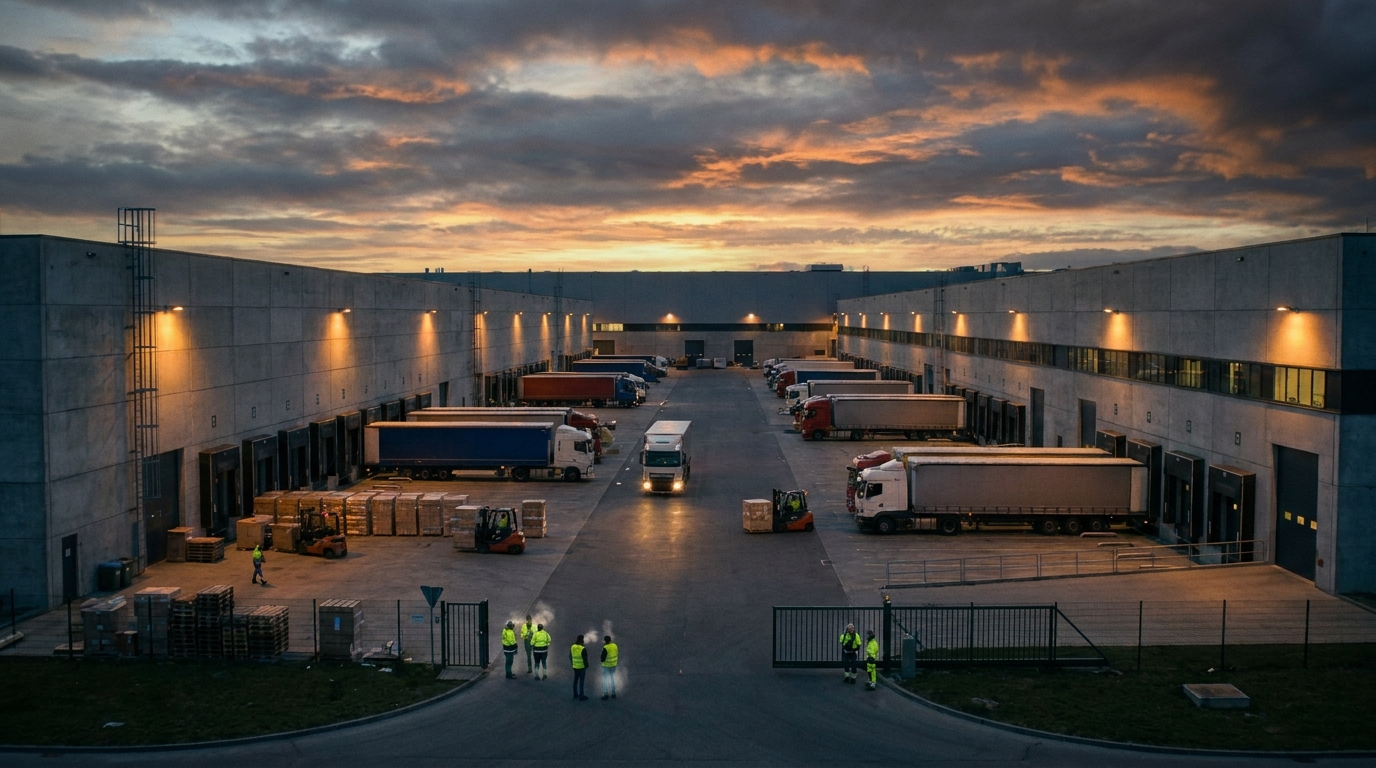
On June 1, 2026, the Brussels Commercial Court declared Ziegler Belgium, the Belgian branch of one of Europe's most recognizable logistics groups, bankrupt. This decision caps several months of a growing financial crisis, which stemmed from the March bankruptcy of the same group's French subsidiary. The bankruptcy proceedings resulted in a rapid asset division: Van Moer Logistics took over the airfreight operations, while Transuniverse Forwarding took over the lion's share of the remaining operational infrastructure. For risk managers and owners of companies in the TSL (Transport, Forwarding, and Logistics) sector across Europe, this is a clear wake-up call: the brand's size and long-standing tradition do not protect against a sudden loss of solvency.
When one falls, another falls – the domino effect mechanism
Ziegler Belgium's troubles didn't begin in Brussels. To understand the scale and severity of the crisis, one must go back to March 2026, when the group's French branch declared bankruptcy. The French logistics market had been under intense pressure for some time: rising labor costs, high fuel prices, regulatory burdens related to climate policy, and shrinking margins amidst intensifying competition from Asian logistics operators—all of this meant that the French company was no longer generating the profits that fueled the entire group.
When the subsidiary's financial liquidity in France collapsed, the Belgian headquarters immediately felt the impact. Saddled with liabilities and the need to absorb losses from its foreign subsidiary, Ziegler Belgium found itself in a classic liquidity trap. Banks and financial institutions that had previously been willing to maintain credit lines for the established market player began to tighten their financing. The trust of key trading partners eroded, and with it the Belgian company's ability to meet its current obligations. Within just a few months, Ziegler Belgium—a company with decades of market history—faced an imminent court decision.
This mechanism — where financial difficulties of one branch of the internationalrodoThe group's failures trigger an avalanche of problems in other units—a phenomenon well known to credit risk analysts. In holding structures, the flow of funds between subsidiaries can act as a safety valve, but also—with insufficient diversification and a lack of solid capital buffers—as a trigger for the entire system. The Ziegler case is a textbook example.
Division of the spoils: Who benefited from the giant's fall?
The logistics market abhors a vacuum. Even before the dust settled after a bankruptcy declaration, entities emerged ready to take over the most valuable assets of the bankruptcy estate. The trustee faced the task of liquidating assets as quickly and efficiently as possible, minimizing losses for creditors.
Transuniverse Forwarding – the main beneficiary of the acquisition
The biggest winner in this process turned out to be the company Transuniverse Forwarding, which took over the vast majority of Ziegler Belgium's operating assets. The acquired package included as many as seven key locations — warehouses and distribution centers located at strategic points in the Belgian logistics network — and extremely valuable customs service department, which has been one of the pillars of Ziegler's revenue for years.
From a business perspective, this acquisition is truly groundbreaking for Transuniverse. In a single move, the company gained not only physical infrastructure but, above all, access to a client portfolio, trained staff with industry know-how, and established relationships with customs partners and government agencies. These types of assets take years to build—their acquisition by a trustee at a fraction of their market value is a strategic opportunity that comes around once a decade.
For other players on the Belgian freight forwarding market, the takeover by Transuniverse means the emergence of a much stronger competitor, with an extensive operational network and the ability to offer comprehensive customs and logistics services under one roof.
Van Moer Logistics - an aviation opportunity in a crisis
While Transuniverse focused on ground-based logistics infrastructure, another player saw value in a completely different segment of Ziegler's business. Van Moer Logistics he quickly took over air freight division (air cargo) of a bankrupt company, securing operational continuity in one of the most difficult areas of logistics to build from scratch.
The air cargo segment requires not only capital but, above all, an extensive network of contacts with airlines, dedicated IATA-certified personnel, knowledge of aviation safety procedures, and efficient IT systems that integrate with airport and carrier systems. For Van Moer, taking over an existing air freight department represents a shortcut to years of building this expertise.
In the context of global supply chain disruptions – which we experienced particularly acutely after the COVID-19 pandemic and then in the face of geopolitical conflicts disrupting maritime transport routes – air transport is gaining strategic importance for many companies needing fast and reliable goods movement. By acquiring Ziegler's assets, Van Moer strengthens its position in this key intermodal segment.
The Wider Context: The Systemic Crisis of Traditional European Logistics
It would be overly simplistic to dismiss Ziegler Belgium's bankruptcy solely as the result of internal management failures or an unfortunate set of circumstances. In reality, the Brussels court decision is a symptom of much deeper, structural problems plaguing traditional transport and logistics groups across Europe.
Operating cost pressure
The European TSL sector is grappling with an unprecedented accumulation of cost pressures. Several key factors deserve special emphasis:
- Labor costs — drivers, warehouse operators and customs specialists are becoming increasingly difficult to find on the market, which forces a constant increase in wages, especially after the implementation of EU regulations on the minimum wage for international driversrodoed.
- Energy and fuel costs — despite some stabilization of oil prices compared to the peaks of 2021-2022, energy costs remain at historically high levels, directly affecting the profitability of each transport.
- Road and infrastructure fees — extending toll systems to other road classes and new European countries means an additional burden for companies serving cross-border routes.
- Investments in fleet decarbonization — EU CO₂ emissions regulations require costly fleet modernization. Electric and hydrogen vehicles are still significantly more expensive than conventional trucks, and the charging infrastructure remains underdeveloped on a pan-European scale.
For companies that failed to pass on rising costs to their customers in a timely manner (this is often impossible under long-term contracts) or that failed to implement timely operational modernization, each of these factors individually poses a significant burden. Their cumulative impact—as in the case of Ziegler Belgium—can prove fatal to financial liquidity.
Structural market change and new competition
Traditional freight forwarding and logistics companies are also grappling with a fundamental shift in market structure. Tech-based logistics startups, digital platforms offering freight brokerage services, and large technology corporations entering the fulfillment and last-mile delivery segments are all changing the rules of the game, often offering lower prices thanks to scalable platform models that don't require their own physical infrastructure.
A traditional logistics company with its own fleet, warehouses and agent network has to incur fixed costs regardless of volume – and these costs grow faster than revenues in the world.rododue to shrinking demand for transportation services. It is this imbalance between fixed and variable costs that is often the root cause of liquidity problems.
Implications for business partners and credit risk
The bankruptcy filing of Ziegler Belgium isn't just a problem for the company's owners and employees. It's also a potentially serious financial and operational blow for dozens, if not hundreds, of businesses that worked with the Belgian giant on a daily basis.
Payment backlogs and the risk of secondary bankruptcies
Particularly vulnerable are small and medium-sized transport subcontractorswho provided services to Ziegler Belgium. Many of them undoubtedly had open invoices—for transport, warehousing, or customs services—that they will now be unable to collect outside of bankruptcy proceedings. In practice, this means they will recover, at most, a small fraction of their debts, and only after a lengthy court process.
For a small carrier with a few trucks, which handled a significant portion of its turnover on Ziegler's orders, the loss of receivables in the amount of tens or hundreds of thousands of euros could mean a direct threat to its own solvency. This is precisely the mechanism secondary bankruptcies — the domino effect in the SME segment — is one of the most destructive aspects of the bankruptcy of a large market player.
Customers - the need for rapid reorganization of the supply chain
Companies that used Ziegler Belgium as their primary or sole logistics provider were faced with the sudden need to reorganize their supply chain. Goods in transit, forwarding contracts, and warehouse space reservations all required urgent management during a crisis.
While the takeover of operations by Transuniverse and Van Moer Logistics ensured some continuity, clients had to renegotiate their terms of cooperation and adapt their IT systems and compliance procedures to their new partners. This costs both time and money and primarily affects companies that lacked business continuity plans in the event of the failure of a key logistics provider.
The trade credit insurance market is reacting
Bankruptcies of this scale inevitably affect behavior trade receivables insurers (trade credit insurers). Following the bankruptcy of Ziegler France and then Ziegler Belgium, these institutions will likely significantly reduce or completely withdraw credit limits granted to other traditional transport groups with a similar risk profile.
For companies in the TSL sector, this means limited access to insured trade financing. Their customers, seeking to protect their receivables, will either demand prepayments or shorten payment terms—which, in turn, will exacerbate liquidity problems throughout the supply chain. This tightening credit environment could become a self-fulfilling prophecy, accelerating a wave of consolidation in the sector.
Strategic Perspective: Consolidation as the New Normal
Observing the course of events surrounding Ziegler Belgium, one can predict with a great degree of certainty that consolidation will become the dominant trend in the European logistics market in the coming quarters. The pattern is clear: large, well-capitalized companies—like Transuniverse Forwarding and Van Moer Logistics—will actively seek opportunities to acquire valuable assets of weaker competitors, often at a fraction of their market value.
On the one hand, such consolidation can be beneficial for the market in the long term: stronger players acquire infrastructure, customers, and know-how, ensuring service continuity. On the other hand, the reduction in the number of independent operators limits competition, which in the long term could lead to higher prices for logistics services and reduced flexibility in offerings to end customers.
For supply chain managers, this trend means the need regularly review your purchasing strategy in the area of transportation and logistics services. A supplier portfolio that was optimal two years ago may now represent unacceptable risk concentration.
Recommendations for companies from the TSL sector and their partners
Based on the Ziegler Belgium case study, we formulate the following recommendations for entities operating in the European transport and logistics market:
- Instant audit of your subcontractor and partner portfolio — companies should review the financial condition of their key logistics contractors, with particular emphasis on entities that are part of internationalrodoholding groups, where the risk of a domino effect is increased.
- Verification of liquidity indicators, not just profitability — Traditional analysis based on revenues and margins is insufficient. Current and quick liquidity ratios, short-term debt levels, and the availability of credit lines are key. A company can be profitable yet lose liquidity within weeks.
- Diversification of the logistics supplier base — Dependence on a single logistics provider for key operations is a strategic mistake that has been painfully apparent to Ziegler's clients. Implementing a dual-sourcing or multi-sourcing strategy in logistics reduces operational risk.
- Updating transport contracts — Standard forwarding contracts often lack sufficient protection clauses in the event of an operator's bankruptcy. It's worth consulting with lawyers about introducing provisions regarding service continuity, cargo protection in transit, and prepayment security.
- Monitoring early warning signals — delays in payments, turnover of key personnel, cancellation of contracts, reduction of fleet investments — these are typical early signals of financial problems that are worth systematically monitoring with your key logistics partners.
- Receivables insurance review — in the WednesdayrodoIn the context of increased risk in the TSL sector, it is worth consulting with an insurance broker whether the limits in trade credit insurance are still adequate to the actual exposure.
Summary: The end of a chapter, the beginning of a new mindfulness
The June decision of the Brussels Commercial Court definitively closed a chapter in the history of European logistics. The Ziegler Belgium name, associated for decades with reliability and professionalism, is disappearing from the market as an independent entity. Its assets live on—in the structures of Transuniverse Forwarding and Van Moer Logistics—but the brand, organizational culture, and its place in the market ecosystem cease to exist in their former form.
For risk analysts and supply chain managers, this story carries a clear lesson: the historical reputation and size of the company do not guarantee its solvencyIn the wedrodoIn a landscape characterized by persistently higher operating costs, growing regulatory pressure, structural changes driven by digitalization and geopolitical turbulence, no entity can be considered “too big to fail.”
Continuous, systematic monitoring of the financial condition of business partners - based on hard data, and not only on long-term relationships and reputation - is becoming not a luxury today, but a fundamental obligation of every responsibly managed enterpriseThe EURODEBT.eu platform is available to all entities seeking reliable tools for assessing the financial credibility of partners in the European transport and logistics sector.




