

European diesel stock crisis: winter price pressure looms, potentially disrupting transport sector
European diesel inventories have shrunk by nearly 30 percent on the eve of the winter season, and the end of government fuel support programs in key EU countries is deepening the crisis. Wholesale diesel prices have exceeded jet fuel prices for the first time in over a year, and small transport companies with low margins face a real risk of losing liquidity. Risk managers should urgently review fuel clauses in contracts and monitor the financial health of subcontractors.
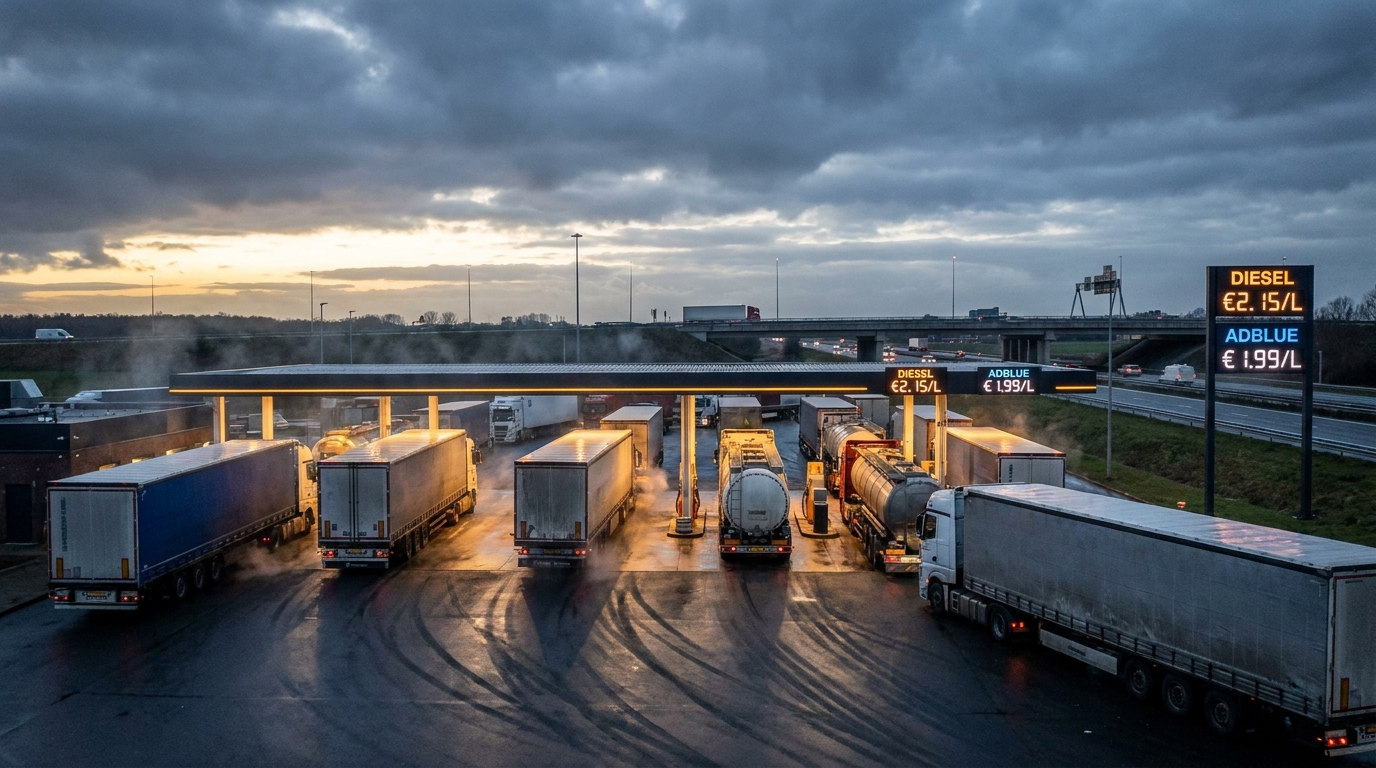
The European fuel market is entering a dangerous phase. Diesel fuel supplies across the continent have fallen by nearly 30 percent, and the winter season—traditionally marked by increased demand for diesel—is still ahead. For the transportation and logistics industry, where fuel accounts for 30 to 40 percent of operating costs, this situation could prove to be one of the most serious challenges in recent years. Risk managers and fleet owners should analyze their exposures now and prepare contingency plans.
Diesel stocks are dwindling - the scale of the problem
Analytical data collected by the iTransports platform and renowned analyst firms, including Goldman Sachs and S&P Global Energy, leaves no doubt: strategic diesel reserves in Europe have reached alarming levels. The estimated decline of nearly 30 percent is not a one-off anomaly—it is the result of accumulating structural and geopolitical challenges that are collectively impacting the European fuel market with unprecedented force.
Importantly, from an operational perspective, we are not currently facing a real threat of dry dispensers at gas stations. The threat is primarily price- and supply-related in the medium term. Nevertheless, in an industry where margins are measured in pennies per kilometer and contracts are concluded months or quarters in advance, even a moderate price increase amid reduced supply can cause serious financial turbulence.
Geopolitics is destroying raw material supply chains
The inventory crisis is driven by several overlapping factors, most of which are external and beyond the control of European market players.
Russia and the consequences of the Ukrainian conflict
Precise Ukrainian attacks on Russian refining capacities and Moscow's ban on the export of selected petroleum products have significantly reduced one of the historically important sources of refined product supply for European markets. Although Europe took steps to diversify supplies following Russia's full-scale invasion of Ukraine, replacing Russian diesel volumes proved more difficult and expensive than initially anticipated.
The Middle East and the Strait of Hormuz
At the same time, escalating tensions in the Middle East—including military action involving Iran—have severely disrupted shipping through the Strait of Hormuz, one of the world's key energy transport routes. Higher cargo insurance costs, longer routes, and delivery delays are having a direct impact on final prices in European wholesale markets.
Hard data from analyst firm Kpler illustrates the scale of the decline: European diesel imports fell from 1,97 million barrels per day in January of this year to just 1,56 million barrels per day in July—a drop of more than 20 percent in just a few months. At the same time, jet fuel imports rose, leading to an unprecedented anomaly: for the first time in over a year, European wholesale diesel prices exceeded those of jet fuel. This is a signal that energy market analysts consider highly concerning—and one that logistics risk managers should pay equally close attention to.
Diesel price becomes independent from oil - a new risk for the industry
One of the most disturbing trends that directly impacts the business model of many transport companies is the growing divergence between crude oil and diesel prices at gas stations.
The price of Brent crude oil has fallen sharply in recent months, hovering around $83 a barrel, partly in response to diplomatic signals about the possibility of peace talks in conflict zones. Meanwhile, drivers and fleet operators in Europe are experiencing little relief at the pump. This is because the price of diesel fuel is now dependent less on crude oil prices and much more on refinery capacity, reserve availability, and global trade flows—all of which remain severely disrupted.
The United States provides an excellent point of comparison, with the price of a gallon of diesel fuel rising by around 40 percent since the beginning of summer, while crude oil itself has risen by just 5 percent over the same period. This disparity illustrates a mechanism we're also increasingly observing in Europe: diesel fuel has its own price dynamics, independent of crude oil.
For transport companies, this poses a serious structural problem. Many long-term contracts between carriers and their customers contain fuel clauses indexed to crude oil prices—not the actual price of diesel at the pump. In practice, the Brent price is falling, the customer demands a reduced freight rate, and the carrier continues to pay record-high prices when refueling. This information and contractual asymmetry is becoming one of the most serious threats to the financial liquidity of logistics companies in the coming months.
The end of government fuel shields - a double blow for carriers
The situation is further complicated by the fact that it coincided with the end or significant reduction of fuel support programs in many European Union countries. Governments that, in the face of previous price shocks, had launched tax breaks and VAT reductions for the fuel sector decided to withdraw these instruments precisely at a time when market price pressures were returning.
- Germany — the reduction in energy tax on fuels expired at the end of June this year
- Spain — the reduced VAT program for diesel fuel and dedicated support for professional fleets have been completed
- Italy, Czech Republic, France — protective programs for the transport sector have ended or been significantly reduced
As a result, in much of Europe, diesel prices at filling stations remain well above the €2 per liter threshold. According to data from European fuel markets, the highest prices are currently recorded in the Netherlands (€2,42/l), Denmark (€2,34/l), and Germany (€2,256/l). For carriers serving international routes,rodoFor carriers, especially those operating in the Western European corridor, this means the need for extremely precise refueling planning and active search for cheaper price windows in transit countries - a strategy that involves time and management resources, and its effects are limited.
The phenomenon of sticky retail prices – a trap for logistics
Energy market economists have long pointed to an asymmetry in retail fuel price dynamics: prices rise rapidly when raw material prices rise, but decline much slower and more reluctantly even after oil prices fall. This phenomenon, known as "sticky" prices, is particularly acute in the current market situation.
As Międzyna emphasizesrodoAccording to the International Road Transport Union (IRU), pump prices still reflect the high transportation and refining costs of previous months. Any price correction, if any, will be spread over time—and the transport industry must pay its bills here and now. For companies operating with cash reserves sufficient for several weeks of operations, each month of increased fuel costs without the ability to pass them on to customers represents a real risk of losing liquidity.
Business Risk Perspective: Who is most at risk?
From a partner risk analysis perspective – crucial for EURODEBT.eu readers – the current situation in the diesel market creates several clear higher-risk groups in the transport and logistics sector.
Small and medium-sized transport companies (SMEs)
This is the segment most vulnerable to the turbulence described. Smaller transport companies inherently have lower margins, limited capital buffers, and less bargaining power in contract negotiations. They lack the ability to hedge their bets on futures markets or negotiate long-term fuel contracts with large suppliers. Many of them are already operating at break-even points at current market rates. Continued cost pressure in the coming months will likely lead to increased payment backlogs, extended payment deadlines for suppliers and subcontractors, and, consequently, a wave of bankruptcies in this segment.
Carriers with oil index contracts
Companies that signed long-term contracts with fuel clauses indexed to Brent crude oil prices—rather than actual diesel prices—may soon find themselves in an extremely difficult situation. As oil prices decline and diesel remains expensive, margins shrink dramatically. Reviewing the structure of fuel clauses in all active contracts should now be a priority for both carriers and transport service providers concerned about the stability of their supply chains.
Operators dependent on Western European routes
Companies that heavily utilize the roads of Germany, the Netherlands, Denmark, and Austria incur disproportionately higher fuel costs compared to competitors operating in the lower-cost corridors of eastern and southern Europe. This cost imbalance can be a decisive factor in determining competitive advantage or otherwise in tenders for logistics contracts.
Inflation risk for the entire economy
The effects of the diesel supply crisis will not be limited to the transportation industry. Diesel fuel is essential for a vast portion of the real economy: agriculture, construction, industrial heating, and last-mile delivery fleets. Rising transportation costs directly impact the prices of almost all products delivered to stores and warehouses.
In the coming winter months, as diesel demand seasonally increases and reserves remain low, there is a real risk of sustained inflationary pressures driven by energy and transportation costs. Analysts at Goldman Sachs and S&P Global Energy estimate that the risk of structurally high prices resulting from physical shortages is currently higher for diesel than for crude oil itself—making this commodity category a unique macroeconomic risk factor.
What should risk managers do now?
In the face of the described scenario, professional risk management in the supply chain and transport requires taking specific preventive measures:
- Fuel Clause Audit — verification of all active contracts in terms of whether the indexation is based on the oil price or the actual diesel price; renegotiation of terms if necessary
- Monitoring the condition of subcontractors — active verification of the financial stability of small and medium-sized carriers in the supplier portfolio; increased frequency of checking debtor registers and business intelligence agencies
- Diversification of the transportation supply chain — avoiding excessive concentration of volumes in one carrier, especially a small one, which may not survive the next months of price pressure
- Cost scenario analysis — including variants in the budgets for Q4 2024 and Q1 2025 assuming a further increase in diesel prices by 10–20 percent compared to current levels
- Overview of payment terms — considering shortening payment deadlines for small carriers as a form of supporting their liquidity in exchange for a guarantee of continuity of route service
Summary
The European diesel market is entering winter with historically low inventories, disrupted supply chains, and without the government price shields that cushioned cost shocks in previous years. The combination of these factors, along with sticky retail prices, a growing divergence between oil and diesel prices, and falling spot freight rates, creates a particularly unfavorable set of circumstances for logistics companies—especially those in the SME segment.
For risk managers and transport company owners, the signal is clear: the time for reactive management of this threat has passed. It's time for proactive preventative measures—both in terms of their own finances and in verifying their business partners. Companies that neglect to monitor the health of their transport subcontractors in the coming months may find themselves unexpectedly deprived of logistics capacity at the worst possible moment—in the midst of the winter operating peak.




