

AirBaltic Bankrupt? Latvian Carrier Files Chapter 11 - What Does This Mean for the Logistics Industry?
Latvian carrier airBaltic filed for creditor protection under Chapter 11 in New York on 14 September 2026, while securing EUR 350 million in DIP financing. The immediate cause of the crisis is a fuel shock triggered by an armed conflict involving Iran, which has led to an almost twofold increase in aviation fuel prices. For the logistics industry and cargo partners, this means an urgent need to assess exposure to counterparty risk and take steps to secure receivables.
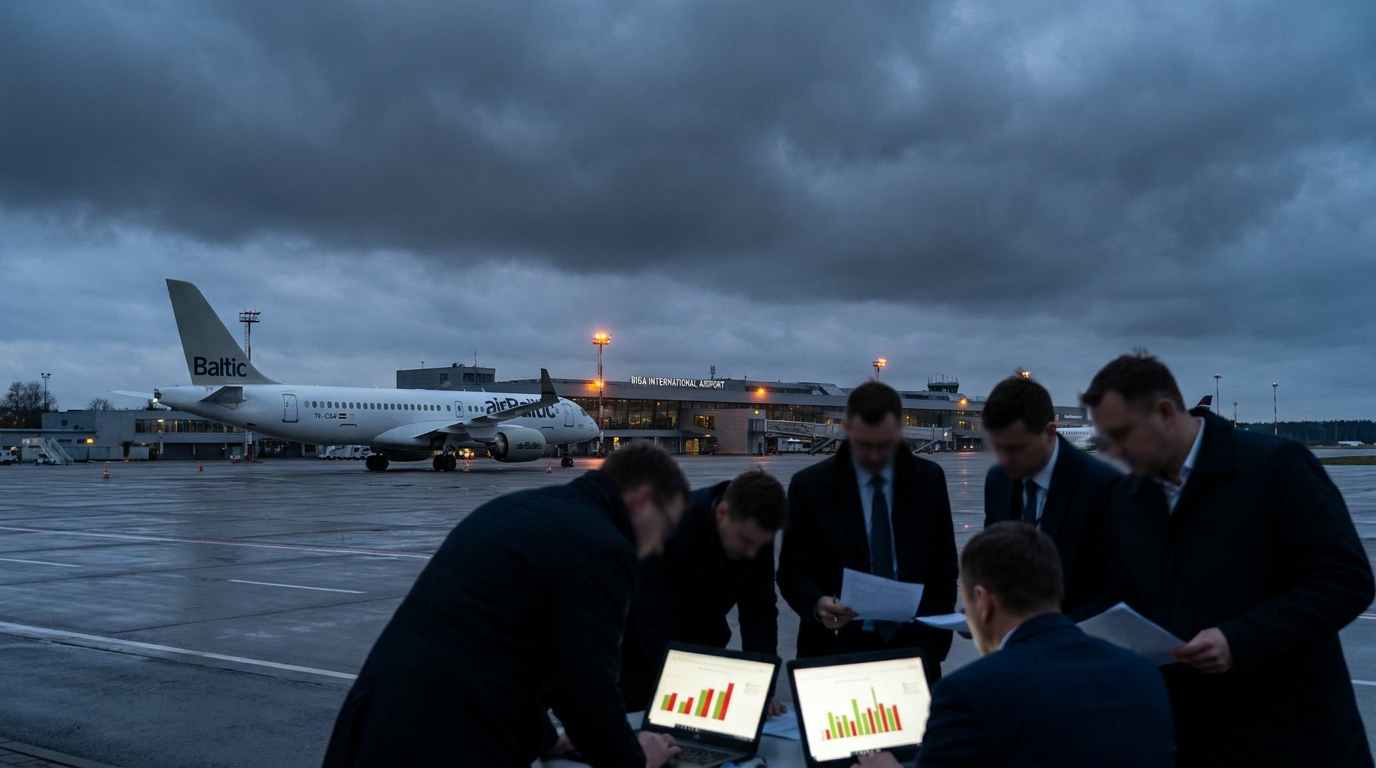
On September 14, 2026, LatvianrodoThe airline airBaltic has filed for Chapter 11 protection from creditors in a US court. This decision shook the European air transport market and immediately raised serious concerns among logistics partners, cargo operators, and B2B service providers across the Baltic region. While the company assures that it will continue operations and maintain all scheduled connections, the industry consequences of this restructuring will be felt for many months—both for the carrier's direct customers and the broader European air logistics ecosystem.
What happened and why is it important?
Air Baltic Corporation AS, a company operating under the airBaltic brand, has filed a formal petition for creditor protection under Chapter 11 of the U.S. Bankruptcy Code. The proceedings also covered two wholly owned subsidiaries: Air Baltic Training SIA, responsible for flight training, and Baltijas Kravu Centrs SIA, which handles cargo operations. The petition was filed in the United States Bankruptcy Court for the Southern District of New York.
For the uninitiated, Chapter 11 is a restructuring procedure that allows a debt-ridden company to continue operating under court supervision while simultaneously restructuring its obligations to creditors. It's not liquidation—it's a controlled restructuring process intended to give the company time and tools to get its finances in order. The key difference between Chapter 11 and typical bankruptcy is that the company doesn't cease operations—it continues to operate, protecting itself from enforcement during the restructuring.
For the logistics and transportation industry, however, this raises serious questions: will current cargo orders be fulfilled? Will invoices be paid? What about historical receivables? The answers to these questions are crucial for dozens of companies cooperating with the carrier across Europe and the Baltic region.
The background to the crisis – geopolitics and the oil shock
To understand the scale of the problem, we need to go back to the origins of airBaltic's financial collapse. The direct cause of the company's dramatic deterioration in liquidity is the global fuel crisis triggered by the ongoing armed conflict with Iran. This resulted in an unprecedented increase in aviation fuel prices—according to available data, these costs almost doubled in a very short period of time, drastically increasing the operating costs of carriers worldwide.
For small and mid-sized airlines like airBaltic, which lack the extensive hedging mechanisms and capital reserves of large global players, such a price shock is a potentially existential threat. Previous fixed costs—including multi-year leases for the Airbus A220 aircraft that form the core of the carrier's fleet—were not designed with a doubling of fuel costs in mind.
It's worth noting that airBaltic isn't the first victim of this crisis. In May 2026, American budget airline Spirit Airlines found itself in a similar situation, declaring bankruptcy. Industry analysts warn that if the current geopolitical instability persists, the list of victims could grow—particularly among regional European carriers with limited scale and weaker access to capital markets.
DIP Financing – A Court-Overseen Lifeline
A key element of the restructuring process is airBaltic securing debt-in-possession (DIP) financing, which is debt financing provided to an entity under bankruptcy protection. This secured a €350 million package, which is approximately $404,5 million in US dollars.
The financing consortium is coordinated by Strategic Value Partners and its participants are recognized financial institutions:
- Barclays — a British investment bank with extensive experience in corporate restructuring
- Hayfin Capital Management — European Alternative Credit Fund
- Morgan Stanley — global investment bank
- Oaktree Capital Management — one of the world's largest alternative credit asset managers
The cost of this financing was set at the Secured Overnight Financing Rate (SOFR) plus 800 basis points, which, at current market rates, translates to a total cost of capital of approximately 12% per year. This is a high cost, but comparable to market standards for DIP financing in restructurings of this type—and significantly lower than the alternatives previously considered by the company's management.
The DIP financing is primarily intended to guarantee operational continuity: maintaining flight schedules, passenger service, and—crucially from the logistics industry's perspective—continuing cargo operations in Europe and the Baltic region. Court-approved financing provides the carrier with a "shield" against immediate creditor claims, enabling a smooth restructuring of liabilities without the risk of sudden operational paralysis.
Dramatic Negotiations – 25% vs. 12%
The current restructuring plan wasn't the first one considered by airBaltic's management. Before filing for Chapter 11, the company engaged in intense, multi-week negotiations with existing bondholders, who collectively held approximately 70% of the company's debt.
The alternative rescue scenario involved securing €257 million in emergency financing through a new bond issue. Polus Capital Management and Klirmark Capital were to support this initiative. However, the terms were problematic: the bonds were to bear interest at a staggering 25% annually—which, given airBaltic's debt structure, would have been financially prohibitive in the medium term.
Latvian Prime Minister Andris Kulbergs has been critical of the matter, publicly rejecting the idea. In his view, such a drastic interest rate would merely be a temporary band-aid on a deeper wound—it would not address the company's fundamental structural problems: accumulated historical debt and skyrocketing aircraft leasing costs. The Latvian government had previously, in April 2026, granted airBaltic a €30 million state loan, but given the scale of the fuel price shock, this amount proved far from sufficient.
The choice of Chapter 11 over European restructuring mechanisms—both the UK's Part 26A Companies Act and Latvian domestic procedures—was closely linked to the possibility of securing DIP financing on acceptable terms. The preferential financing consortium contingent its involvement on the company being protected by US law. In this context, the decision to file overseas was driven by the logic of capital markets, not solely by the will of management.
What Chapter 11 Means in Practice – The Legal Perspective
For airBaltic's business partners, understanding the Chapter 11 mechanism is of crucial practical importance. This procedure triggers the so-called automatic stay—an automatic ban on all debt collection activities against the debtor without court approval. This means that fleet lessors, ground service providers, airport operators, and other creditors they cannot unilaterally enforce their claims — at least until a restructuring plan is developed and approved by the court.
From the creditors’ perspective, several categories with varying degrees of risk can be distinguished:
- Current receivables (post-petition) — Invoices for services provided after the application submission date (September 14, 2026) should be paid on an ongoing basis from DIP funds. This is a relatively safe position for suppliers continuing to work with the carrier.
- Historical claims (pre-petition) — Receivables incurred before the application is filed are subject to restructuring procedures and may be subject to a significant reduction (so-called haircut). Unsecured creditors in this category are particularly vulnerable to losses.
- Secured creditors — holders of liens and mortgages on company assets have a stronger negotiating position, but their claims are also subject to court supervision.
Fleet leasing is also a significant issue. Aircraft constitute the single largest component of airBaltic's operating costs. Chapter 11 gives the company the tools to renegotiate or terminate unfavorable lease agreements—which, in turn, will have repercussions for global aviation lessors and asset finance markets.
Risks to the Logistics and Cargo Industry - EURODEBT.eu Assessment
From the point of view of risk managers and owners of logistics companies cooperating with airBaltic or considering such cooperation, it is necessary to soberly assess the contractor's current risk profile.
Operational risk
In the short term, the risk of immediate disruption of cargo operations is moderateDIP financing provides the company with funds for ongoing operations, and court oversight of the process eliminates the possibility of a sudden, uncontrolled shutdown. airBaltic continues to operate scheduled flights and declares full operational continuity.
However, the medium- and long-term picture is more complex. The success of the entire restructuring depends on many variables, including the outcome of negotiations with bondholders, the possibility of renegotiating lease agreements, and, above all, stabilization of jet fuel prices. If external market conditions do not improve, there is a real risk of conversion from Chapter 11 to Chapter 7 liquidation.
Credit risk and receivables
For companies with historical (pre-petition) receivables against Air Baltic Corporation AS or its subsidiaries, the situation is serious. You should immediately:
- Identify and catalog all open receivables owed to the company
- File your claims with the bankruptcy court in a timely manner (court procedures specify the deadlines for filing claims)
- Secure documentation confirming the existence and amount of the receivable
- Consider consulting with law firms that specialize in U.S. bankruptcy law or have experience with transatlantic restructurings.
Reputation and partnership risk
airBaltic's restructuring will impact the carrier's entire partner ecosystem in the Baltic region. Airport operators in Riga, Tallinn, and Vilnius, as well as catering, ground handling, and IT providers, must anticipate possible payment delays or rate renegotiations. Logistics companies using airBaltic's network to distribute cargo in Central and Eastern Europe should prepare alternative plans and diversify their cargo operations.
The Wider Market Context – A Warning Signal for the Industry
The airBaltic case is not an isolated incident—it's a symptom of deeper structural stress in the European aviation sector. The combination of geopolitical instability, fuel shocks, and strained balance sheets following the COVID-19 pandemic has created arodoa situation in which even carriers with strong state support may find themselves on the brink of insolvency.
A key question for the European air cargo market is: who will fill the potential capacity gap if airBaltic's restructuring doesn't go as planned? Regional Baltic routes are served by a relatively small group of carriers, and a sudden reduction in capacity in this segment could translate into higher freight rates and longer transit times for shipments handled through this geographic hub.
It's also worth noting the unprecedented nature of this choice of jurisdiction. A European airline based in Latvia—an EU member state—is opting for the protection of US law because that's the only place it can obtain financing on reasonable terms. This phenomenon demonstrates the strong position of the US capital market in global corporate restructuring and the continued weakness of European mechanisms to support strategic entities in crisis situations.
Recommendations for companies with exposure to airBaltic
Based on the analysis of available information, EURODEBT.eu recommends the following actions to entities with active or planned cooperation with airBaltic:
- Instant receivables audit — verifying which receivables are pre-petition (pre-September 14, 2026) and which are post-petition. This is a fundamental division for assessing the risk of recovery.
- Suspension of trade credit — until the restructuring terms are clear, we recommend considering tightening payment terms or switching to cash settlements with the carrier.
- Monitoring court proceedings — Chapter 11 court documents are publicly available. Key deadlines and court decisions should be monitored closely, as they set the stage for creditors.
- Diversification of cargo operations — Logistics companies heavily dependent on the airBaltic network should immediately identify alternative carriers in the Baltic region and establish contingency relationships.
- Contact with a legal advisor — in the case of significant financial exposures, consultation with bankruptcy law specialists (especially those familiar with the Chapter 11 regime) is essential.
Summary – restructuring under control, risk still real
airBaltic entered Chapter 11 with solid DIP financing, a strong creditor consortium, and a clear intention to continue operations. This is a controlled scenario—though one fraught with many variables that could change its course. The geopolitical backdrop of the fuel crisis remains unpredictable, and the new cost realities in the aviation industry have not disappeared with the filing of the court filing.
From a business risk management perspective, logistics partners and B2B service providers should treat airBaltic's current situation as a high-risk counterparty scenario—regardless of any declarations of operational continuity. The history of the airline industry is full of both successful restructurings (such as those of Delta Air Lines and American Airlines in similar procedures) and processes that, despite a seemingly positive start, ended in complete liquidation.
EURODEBT.eu will monitor airBaltic's restructuring proceedings and provide information on key court rulings and decisions affecting the position of creditors in Europe. For companies exposed to this carrier, knowledge and prompt action can be crucial to the amount of debt actually recovered.




