

Bankruptcies to rise by 72% in September 2026 - an alarm for the TSL industry and its business partners
In September 2026, the number of declared bankruptcies in Poland rose by 72% compared with August, reaching 43 cases — the third-worst result in the current year. At the same time, 422 companies initiated restructuring proceedings, over 14% more than a year earlier. The MGBI report points to a deepening liquidity crisis, particularly severe for the transport, shipping and logistics industry, which is recording the highest level of debt and operational risk across the entire Polish SME sector. Risk managers should immediately intensify their monitoring of the receivables portfolio and consider additional financial safeguards.
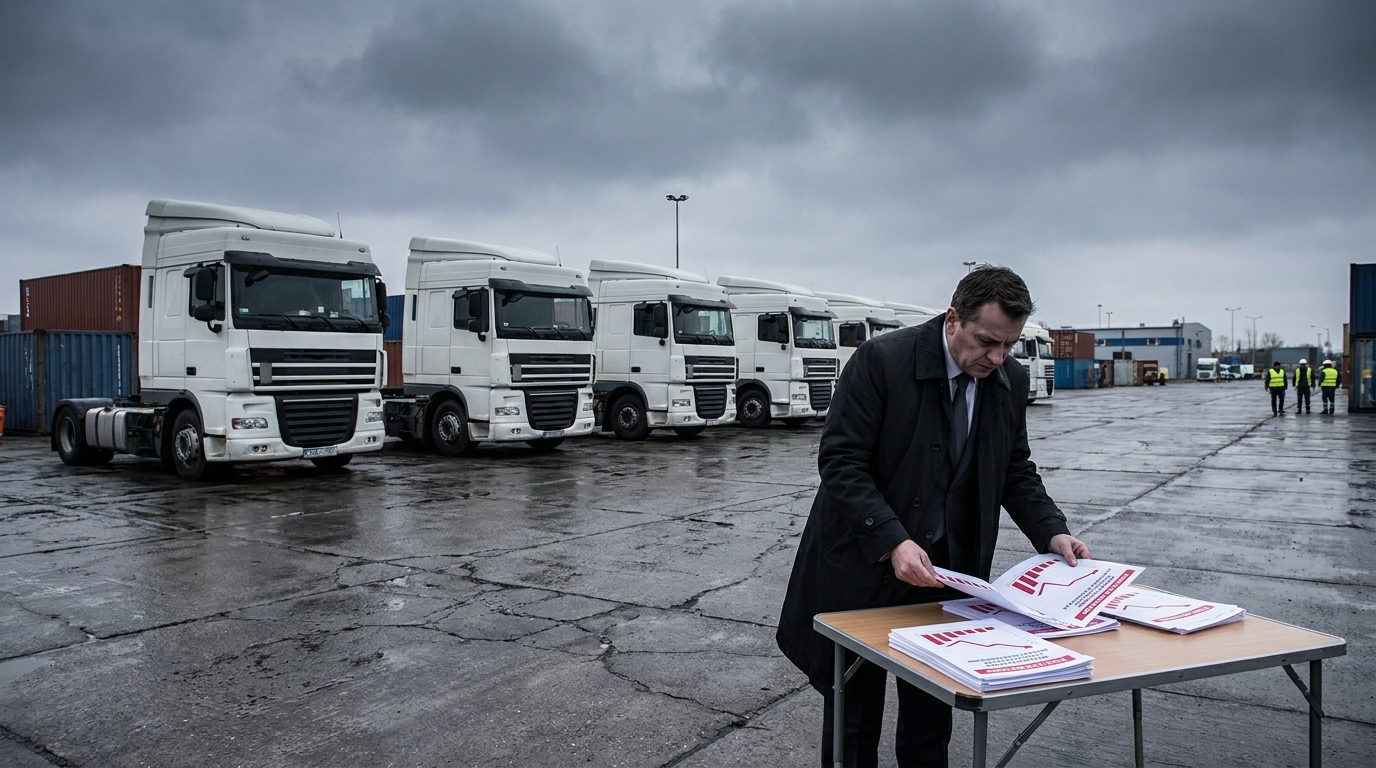
Data published on October 8, 2026, by MGBI leaves no doubt: the Polish economy is entering a phase of significant acceleration in bankruptcy proceedings. In September, commercial courts declared 43 companies bankrupt, a 72% jump compared to the 25 announcements registered in August. Simultaneously, as many as 422 companies initiated restructuring proceedings—over 14% more than a year earlier. For risk managers operating in the transportation and logistics sector, and more broadly—for the entire SME ecosystem in Poland—these numbers should trigger alarm procedures.
The third worst month of the year — but in a broader context
While a 72% month-on-month jump is striking in itself, a more complete picture emerges only when September's results are compared with data from all of 2026. In terms of the absolute number of bankruptcies, September ranks third among the most difficult months—behind March, when 49 companies filed for bankruptcy, and July, with 47. This is a significant signal: we are not dealing with a one-off anomaly, but with a structural phenomenon that persists, with varying intensity, for most of the year.
Year-on-year, the September 2026 result is 13,16% worse than the September 2025 result, when 38 entities declared bankruptcy. This relatively moderate annual increase might suggest cautious optimism were it not for the context: August 2026 was an exceptionally mild month, and the upward dynamics between August and September partially reflect the return to normal rhythm of commercial courts following the summer break. The resumption of adjudicative activity after the summer break regularly brings an acceleration in bankruptcy proceedings—however, the scale of the current acceleration clearly exceeds historical seasonal patterns.
Each of the 43 bankruptcies declared not only ends the operations of a specific entity but also poses a direct threat to its creditors—suppliers, subcontractors, lessors, and lenders. In the Polish economy, where supply chains are densely intertwined, a single bankrupt can trigger a domino effect encompassing dozens, or even dozens, of related companies.
Fewer applications, more announcements – an apparent paradox
An interesting, yet disturbing, phenomenon observed in September 2026 is the apparent discrepancy between the number of bankruptcy petitions filed and the number of actual court announcements. In September, 138 bankruptcy petitions were filed with the courts—27,75% fewer than in August (191 petitions) and 19,30% fewer than a year earlier.
At first glance, this might seem like good news. However, a correct interpretation of this phenomenon requires considering the procedural cycle: applications filed in previous months—primarily in June, July, and August—are currently being reviewed and culminating in the issuance of bankruptcy decisions. The August record of 191 applications has only now resulted in a wave of announcements. September's statistics do not reflect the current condition of businesses; they reflect the situation from a few weeks ago.
Moreover, the decline in new filings doesn't necessarily mean the situation is improving. Instead of filing for bankruptcy, a growing number of entrepreneurs are opting for restructuring proceedings—a legal instrument that has become increasingly popular in Poland, and often a more convenient alternative to traditional liquidation.
Restructuring boom: 422 companies in one month
In September 2026, 422 companies initiated restructuring proceedings. This represents an 8,76% increase compared to August (388 companies) and an impressive 14,05% increase year-on-year—370 entities utilized this instrument in September 2025. The number of restructuring applications filed was 346, a 10,82% decrease from the previous month—but still at a level that maintains very high pressure on the judicial and debt collection systems.
For the creditor—which in practice means any company providing goods or services with deferred payment terms—the initiation of restructuring proceedings by a contractor means immediate and far-reaching legal consequences. Primarily, this means suspending enforcement proceedings and blocking standard debt collection activities. The creditor is forced to participate in an arrangement, which typically involves partial debt forgiveness and spreading the repayment of the remaining balance over many years. In extreme cases, the actual recovery of receivables from the restructured entity amounts to only a dozen or so percent of their original face value.
The cumulative number of active restructuring proceedings in Poland has been growing for several quarters. This means that more and more frozen debts — debts whose enforcement is legally suspended and whose repayment remains uncertain. This poses a direct threat to the financial liquidity of companies that diligently fulfill their obligations yet must wait weeks or months for their payments.
The TSL industry: the highest risk in the Polish SME sector
Of all the sectors of the Polish economy, Transport, Forwarding and Logistics (TFL) remains the focus of risk analysts' attention. MGBI data clearly indicates that the TSL industry is characterized by the highest level of debt and operational risk throughout the Polish SME sector. The reasons for this state of affairs are multi-layered and mutually reinforcing.
- Low operating margins — Road transport is a business based on razor-thin margins, where any increase in costs directly impacts profitability. With fuel, tire, service, and driver wage costs rising faster than freight rates, many companies operate at or below break-even.
- Economic slowdown in Germany — Poland's main trading partner has been struggling with an industrial recession for several quarters. Fewer production orders in Germany directly translate into a lower volume of transport outsourced to Polish carriers—especially on the Poland-Germany route, which is one of the most important axes of European road transport.
- Rising road tolls in the EU — more and more countries are extending their toll collection systems to heavy goods vehicles, increasing rates and introducing environmental componentsrodoFor Polish carriers serving Western European routes, this means a systematic increase in operating costs, which is difficult to pass on to customers in the current pricing climate.
- Wage pressure and driver shortages — The job market for professional drivers remains tight. Transport companies must compete for employees by increasing wages, which, combined with pricing pressure from clients, creates a classic cost trap.
- Regulatory requirements — implementation of further standardsrodotax regulations, cabotage requirements or working time monitoring systems generate additional administrative and investment costs that small and medium-sized carriers often cannot afford.
The synergistic effect of these factors is that a growing number of transport companies are losing their ability to settle their liabilities on time. This applies not only to trade creditors but also to vehicle and trailer leasing obligations, which in turn threatens leasing companies exposed to the transport, forwarding, and logistics sector.
The domino effect in the supply chain
Financial problems in the TSL industry are not isolated. Due to the central role transport plays in the functioning of the entire economy, difficulties faced by one carrier or freight forwarder can quickly spill over into other sectors. The following sectors are particularly at risk:
- Leasing companies financing fleets of heavy goods vehicles - in the event of insolvency, lessees must recover and monetize the assets in a market already saturated with used vehicles.
- Gas stations and fuel suppliers offering fleet cards with credit - arrears in this group are growing, forcing distributors to tighten their credit policies towards the entire TSL sector.
- Spare parts suppliers and mechanical services — transport companies working on trade credit delay payments for repairs and parts, which destabilizes the cash flow of workshops and distributors.
- Insurance companies — the increase in the number of claims and difficulties in recovering premiums in the TSL sector leads to tightening of insurance conditions for the entire industry.
In practice, this means that even companies that do not run transport activities themselves may feel the consequences of the TSL crisis – through their subcontractors, sub-suppliers or logistics partners.
Recommendations for risk management departments
The September 2026 data should be treated as a signal for heightened vigilance, not a pretext for panic. The Polish economy has mechanisms in place to absorb such shocks, but taking advantage of them requires a proactive approach from finance and risk management departments.
Intensive monitoring of the receivables portfolio
In the current environment, it is essential to continuously monitor the financial situation of key contractors, including verification in court registers, debtor databases, and public registries of restructuring proceedings. Particular attention should be paid to companies exporting to the German market or heavily dependent on demand from Germany, entities in the TSL, leasing, and fuel sectors, as well as those with a history of late payments—even if they always ultimately settled their obligations.
Shortening payment terms for high-risk entities
If the analysis reveals a higher counterparty risk profile, it's worth considering shortening trade credit payment terms or switching to an advance payment model. While this can be a difficult conversation in commercial negotiations, the potential losses resulting from unrecovered receivables far outweigh the cost of lost commercial flexibility.
Credit insurance and factoring
Financial instruments like factoring and trade receivables insurance are no longer the exclusive domain of large corporations. With 422 restructuring proceedings opened in a single month, any company exposed to B2B risk should consider transferring this risk to a specialized financial institution. The cost of trade receivables insurance is typically a fraction of the potential loss—and given the current level of market risk, this protection makes clear economic sense.
Summary: Liquidity crisis continues, risk increases
MGBI data for September 2026 clearly confirms that the liquidity crisis in the Polish SME sector is not a temporary or seasonal phenomenon. A 72% month-on-month increase in bankruptcies, the third-worst result of the entire year, and a simultaneous record-breaking restructuring boom—these are elements of a picture that should mobilize every manager responsible for a company's financial security.
The TSL industry remains the epicenter of this crisis. The combination of low margins, high operating costs, weakening Western European demand, and growing regulatory pressures create conditions in which even relatively well-managed transport companies can find themselves in a liquidity trap. Any company with ties to the TSL sector—directly or through the supply chain—is potentially vulnerable to the contagion effect. FAQs about the financial condition of a business partner and adequate security for receivables are now not a luxury, but a necessity.




