

DSV acquires DB Schenker for €14,3 billion. What does the change in logistics leadership mean for Polish carriers?
Danish giant DSV has officially acquired DB Schenker for 14.3 billion euros, creating the world's largest logistics operator. In the Polish market, DSV Road recorded an almost twofold increase in sales, and the new groupage network is changing the balance of power across the entire transport, shipping and logistics industry. For small and medium-sized carriers, this means growing pressure on margins, the risk of marginalization in profitable market segments and the need to urgently adapt their business strategy.
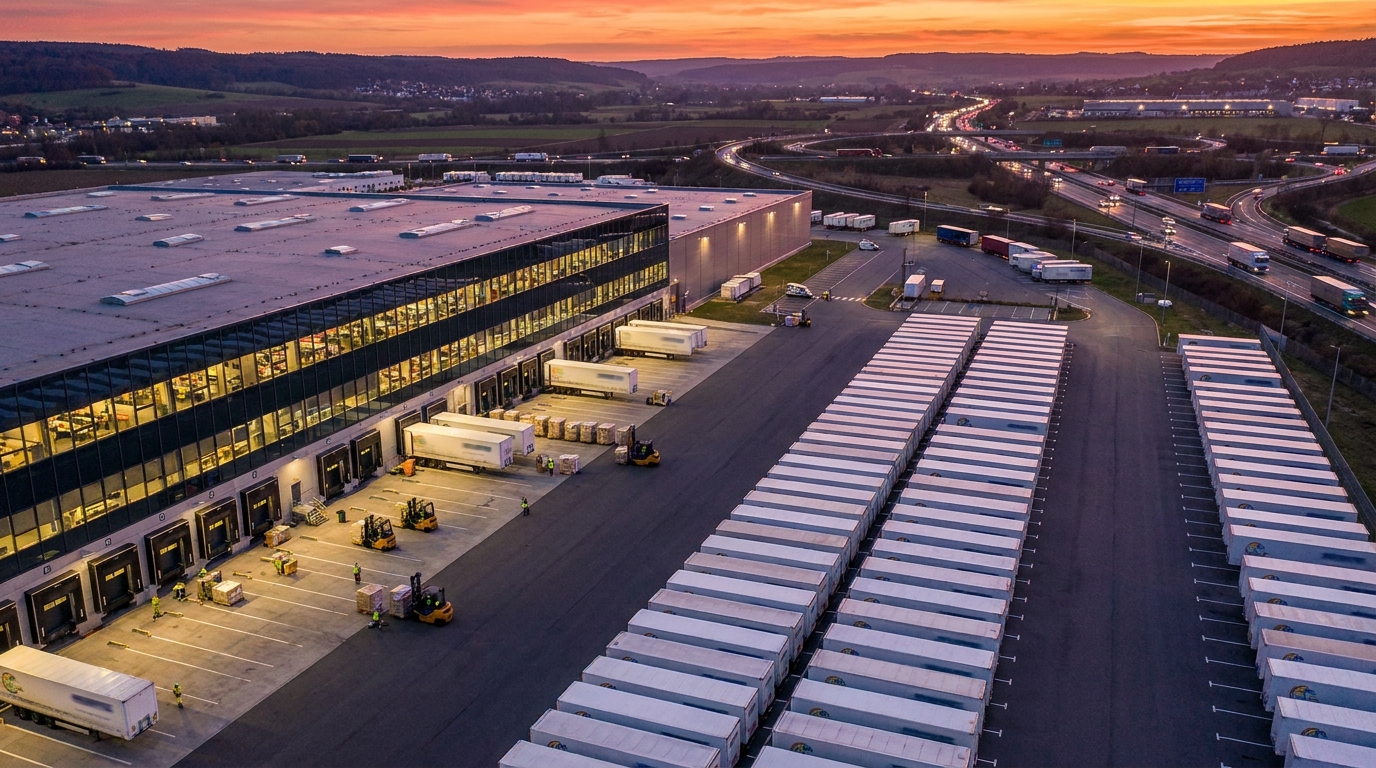
The finalization of one of the largest transactions in the history of the European transport and logistics industry has become a fact. Danish logistics giant DSV has officially acquired DB Schenker for approximately €14,3 billion, creating an entity unmatched globally in terms of operational scale. The European Commission's approval, granted in early 2025, paved the way for the integration of the two powerhouses—and set in motion a cascade of changes that will impact the entire European transport and logistics sector. For Polish carriers, freight forwarders, and SMEs operating in the transport and logistics industry, the new balance of power poses a challenge that cannot be underestimated.
The historic transaction and its regulatory background
The European Commission approved DSV's acquisition of DB Schenker under standard merger control procedures. Brussels found that, despite the emergence of a global giant, the market for freight forwarding services—road, air, sea, and contract logistics—remains sufficiently fragmented to allow customers to retain a real choice of suppliers. This argument proved crucial: the EC did not find a dominant position posing a threat to competition.
The combined entity employs an estimated 147 employees in over 90 countriesIt's no longer just a large company—it's an organization capable of shaping industry standards on a global scale. DSV Group CEO Jens H. Lund announced that the integration will significantly strengthen competitiveness across all three key divisions: Air & Sea, Road, and Solutions.
Germany as a pillar of the new organization
Germany, DB Schenker's traditional operational center, will retain particular importance in the new structure. DSV has committed to maintaining many central functions at Schenker's current headquarters in Essen. Furthermore, it announced investments of EUR 1 billion in the German market over the next three to five years. This is a signal that the new owner treats Germany not as an area for restructuring, but as the strategic foundation of the entire group.
From the perspective of Polish companies collaborating with both organizations, the operational stability of the Essen center is good news—at least in the short term. However, the key question is how quickly and efficiently the integration of IT systems, operational procedures, and management structures on both sides of the border will proceed.
Revolution on the Polish TSL market - general cargo as a battlefield
Poland is one of the largest road transport markets in Europe. A country with a strong tradition of transport entrepreneurship, largely based on the SME sector, is now facing a new reality. DSV Road, the division responsible for road transport, has noted almost doubled sales after integration with Schenker's structures, placing itself among the absolute leaders of the Polish market.
The DSV group's strategy in the area of road transport clearly focuses on development of the groupage network (groupage). Groupage—i.e., handling shipments that do not constitute a full truckload (LTL, Less than Truckload)—is one of the most profitable and dynamically growing market segments. DSV-Schenker's consolidated network enables:
- Optimization of operating costs by better filling the cargo space of vehicles (higher so-called load factor),
- Reducing transit times thanks to a denser network of terminals and line connections,
- Technological standardization — integration of shipment tracking systems, electronic documentation and customer data exchange platforms,
- A stronger negotiating position towards both clients and subcontractors.
For Polish transport companies, which have so far successfully competed in the groupage services niche, the emergence of such a powerful player is a wake-up call. The new entity possesses resources, scale, and technology that cannot be replicated by single family businesses or even regional operators employing dozens of people.
Risks for the SME sector - threat analysis
From the perspective of business risk assessment and verification of companies' payment credibility – the key competences of the EURODEBT.eu platform – market consolidation around DSV generates a number of significant threats for smaller entities.
1. Pressure on freight rates
The dominant player has enormous bargaining power. In relationships with subcontractors—small and medium-sized carriers fulfilling orders as sub-market contractors—DSV can dictate pricing terms. In practice, this means risk reduction in operating margins smaller companies that have no alternative to orders from a large forwarder. For companies with low equity and limited liquidity reserves, any significant rate cut could undermine their financial stability.
2. Marginalization in the general cargo segment
One of the most profitable market segments—general cargo—may become the exclusive domain of large chains. Smaller companies, deprived of access to their own terminal infrastructure and extensive network connections, may be relegated to the role of only traction subcontractors: those performing physical transport, but without direct contact with the end customer and without access to the margin on comprehensive services. This is a structural change in the business model that, in the long term, weakens the position of smaller players.
3. Dependence on one or more clients
Transport companies whose revenue portfolio relies heavily on orders from a single large forwarder—in this case, potentially the integrated DSV-Schenker—are particularly vulnerable to concentration risk. Renegotiating terms of cooperation, changing payment procedures, or simply deciding to internalize certain routes could undermine their financial liquidity. Diversification of the customer portfolio becomes a key security factor in this context.
4. Technological barriers as a new form of exclusion
DSV consistently invests in the digitalization of its logistics processes. Integration with the group's IT systems—data exchange platforms, shipment tracking systems, and electronic shipping documentation—is becoming a de facto requirement for accessing orders. Companies lacking the appropriate IT infrastructure or unable to cover the costs of technical integration may be excluded from the supplier ecosystem. Paradoxically, technology is becoming the new barrier to entry — as effective as capital or rolling stock.
A chance in the transition window – for whom and for how long?
Every major merger brings with it not only threats but also temporary opportunities. The operational integration of DSV and Schenker is a process that—based on historical industry precedents—can take many months, even years. During this time, new challenges may arise. temporary operational turbulence: delays in handling shipments, disorganization of the terminal network, outflow of key employees, confusion in IT systems.
This is a paradoxical window of opportunity for medium-sized logistics operators who can offer customers something that large corporate structures cannot provide during the integration phase: flexibility, speed of decision-making and personalization of serviceCustomers who experience relationship problems with the new organization will actively seek alternatives—at least until the integration is complete.
However, this window is inherently temporary. In the long term, the massive investments in digitalization, infrastructure, and connectivity announced by DSV will create permanent competitive barriers, difficult to overcome for entities with limited investment capital.
Risk Verification Perspective - Recommendations for the Industry
In light of these changes, financial institutions, risk managers, and logistics company owners should consider revising their models for assessing the financial health of their TSL business partners. Here are some key recommendations:
- Increased monitoring of the financial liquidity of transport SMEs — especially companies whose revenues are strongly concentrated on one or a few large clients from the forwarding sector.
- Customer portfolio diversification analysis as a criterion for assessing a company's resistance to market changes - companies dependent on DSV for more than 50% of revenues require special attention.
- Verification of technological capabilities partners - companies that do not have systems enabling integration with the platforms of large operators should be treated as entities exposed to the risk of losing access to key orders.
- Tracking freight rate dynamics in the general cargo segment as a leading indicator of the condition of the SME transport sector.
- Adaptation strategy assessment companies – entities that actively invest in specialization, technology or consolidation with other small carriers show a higher level of resistance to market pressure.
Summary - The rules of the game have changed
The acquisition of DB Schenker by DSV is not just a corporate event of a financial nature. a fundamental change in the architecture of the European logistics market, which will have real impacts at the operational, pricing, and technological levels for years to come. The new industry leader has the resources, scale, and ambition to inevitably redefine service standards, subcontractor requirements, and pricing dynamics across the sector.
For the Polish TSL market—strongly based on the entrepreneurship of small and medium-sized companies—a time of difficult choices is approaching. Specialization, consolidation, investment in technology, or the search for new market niches: these are strategies that can protect smaller entities from marginalization. Companies that fail to adapt risk a gradual loss of market position—not as a result of a single dramatic decision, but as a result of the slow erosion of margins and access to orders.
As a platform for company verification and risk assessment, EURODEBT.eu will continuously monitor the effects of this integration on the financial health of TSL sector entities in Poland and across Europe. Changes at the top of the industry pyramid always have repercussions at its base—and this is where the greatest risks lie.




