
EU cracks down on human trafficking: new strategy changes the rules of the game for transport and logistics companies
On 16 October 2026, the European Commission announced a new strategy to combat human trafficking, which directly targets the informal labour market in the transport and logistics sector. The strategy provides, among other things, for the establishment of a European business coalition, tighter labour inspections and a new system of sanctions enabling the freezing of assets of entities linked to labour exploitation. For transport, shipping and logistics companies, this means the need to immediately review subcontractor verification procedures and implement rigorous due diligence mechanisms throughout the supply chain.
On October 16, 2026, the European Commission announced a groundbreaking, comprehensive strategy to combat human trafficking in the European Union. The initiative, a response to the alarming increase in the number of victims of this practice, explicitly targets economic sectors most at risk of labor exploitation—including transport, logistics, construction, and agriculture. For risk managers and owners of transport companies, this means one thing: it's time for a thorough review of supply chains, subcontractor verification procedures, and compliance policies.
The scale of the problem: 20,000 victims and counting
Before we analyze the strategy's implications for the TSL industry, it's worth recognizing the scale of the phenomenon Europe is facing. According to European Commission data, over 20,000 victims of human trafficking will be registered in EU member states in 2023-2024 alone. This represents a 16,1% increase compared to previous measurement periods—and this is assuming only detected and reported cases. Security experts and NGOs agree: the actual number of victims is many times higher, as a significant portion of cases never reach the statistics.
Human trafficking is no longer a one-dimensional phenomenon. Indeed, the topic of sexual exploitation dominates public debate—and with good reason, as women and girls constitute a staggering 63% of all registered victims, and this type of exploitation most frequently affects them. Children constitute 15% of victims. However, from the perspective of the business sector, and especially the transportation industry, another dimension of this crime is crucial: labor exploitation and forced labor. In this category, as many as 74% of victims are men—often economic migrants, individuals without legal status, or those who find themselves in a situation of extreme financial dependence on their employer or employment agency.
Data also indicates that 64% of registered victims are citizens of countries outside the European Union. Criminals deliberately recruit those most susceptible to manipulation—those unfamiliar with local law, unable to speak the host country's language, and cut off from social support networks. These individuals often end up in the so-called gray zone of the labor market—with unregistered carriers, dishonest temporary employment agencies, and subcontractors willing to offer services at prices unattainable through legal employment.
The six pillars of the new strategy and what they mean for business
The European Commission's new strategy is based on six key areas of action. Each of them has specific implications for transport and logistics market participants.
1. Digital technologies in the service of prosecuting criminals
The Commission intends to fully leverage the potential of regulations such as the Digital Services Act and the work of the European Internet Forum. The EMPACT platform will promote innovative digital forensics methods, including big data analysis, network monitoring, and the surveillance of hidden online labor markets.
For transport companies, this means an increased risk that any digital footprint—job postings, contracts concluded via platforms, data from telematics systems—could become subject to law enforcement scrutiny. Companies using third-party platforms to source drivers or logistics intermediaries should ensure they thoroughly verify the legality of these entities.
2. Business coalition and labor inspectors - new allies in the fight against exploitation
This pillar is drawing the most attention from risk managers. The European Commission has announced the creation of European business coalition against human trafficking — a structure of responsible companies that voluntarily commit to implementing human rights due diligence standards in their supply chains.
In parallel, the strategy assumes strengthening cooperation between law enforcement agencies and labor inspectors, coordinated by the European Labour Authority (ELA). To put it bluntly: labour inspectors are to become the first line of detection of forced labour and human trafficking in the worldrodobusiness districts. Their visits—so far focused mainly on health and safety issues and employment legality—will gain a new dimension and new investigative powers.
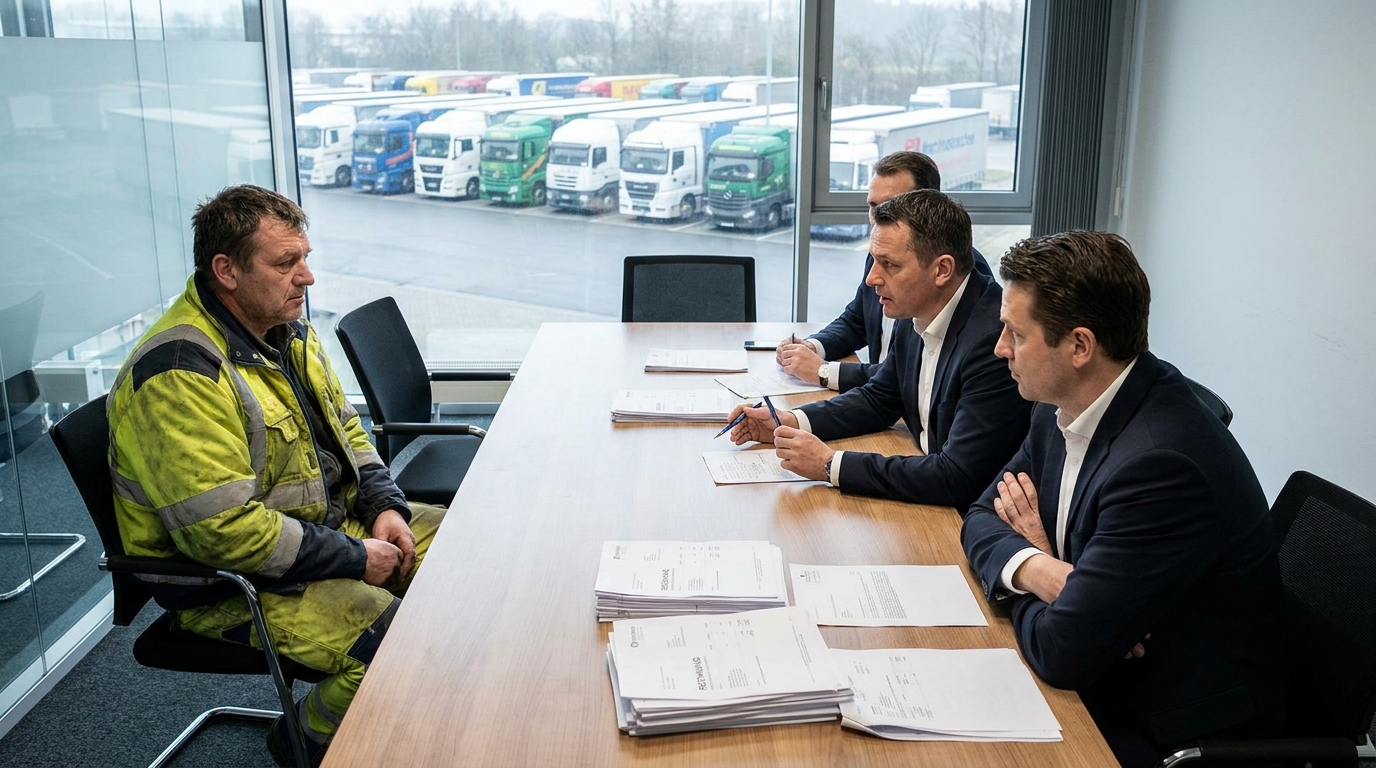
For transport and logistics companies, especially those that heavily utilize temporary workers, employment agency drivers, or subcontractors from third countries, this is a wake-up call. Unannounced inspections, combined with the authority to examine employee accommodation conditions, analyze contracts, and verify financial flows, can uncover irregularities that the employer itself may have been unaware of—or downplayed.
3. Breaking the trancerodocriminal networks
The third pillar is a comprehensive toolkit to combat organized crime involved in human trafficking: enhanced cross-border cooperation between services, criminal intelligence, financial investigations, and effective asset recovery. A key element here is the new sanctions regime, proposed by the Commission in July 2026, which will enable asset freezing persons and entities associated with the practice and cutting them off from the profits.
The latter is particularly important from a compliance perspective. The new sanctions regulations, partly modeled on the mechanisms applied to entities circumventing sanctions related to the war in Ukraine, may apply not only to direct perpetrators but also to entities that—even unknowingly—benefited from exploitation or financed criminal chains. A transport company that regularly collaborates with a subcontractor violating labor rights may come under the scrutiny of authorities applying the new regulations.
4. Migration under the microscope: Frontex and the Migration Pact
The fourth pillar of the strategy focuses on the intersection between migration and human trafficking. A modernized Pact on Migration and Asylum and a strengthened Frontex mandate are intended to identify victims as they cross the EU's external borders—before they fall into the hands of criminal networks or enter the informal labor market.
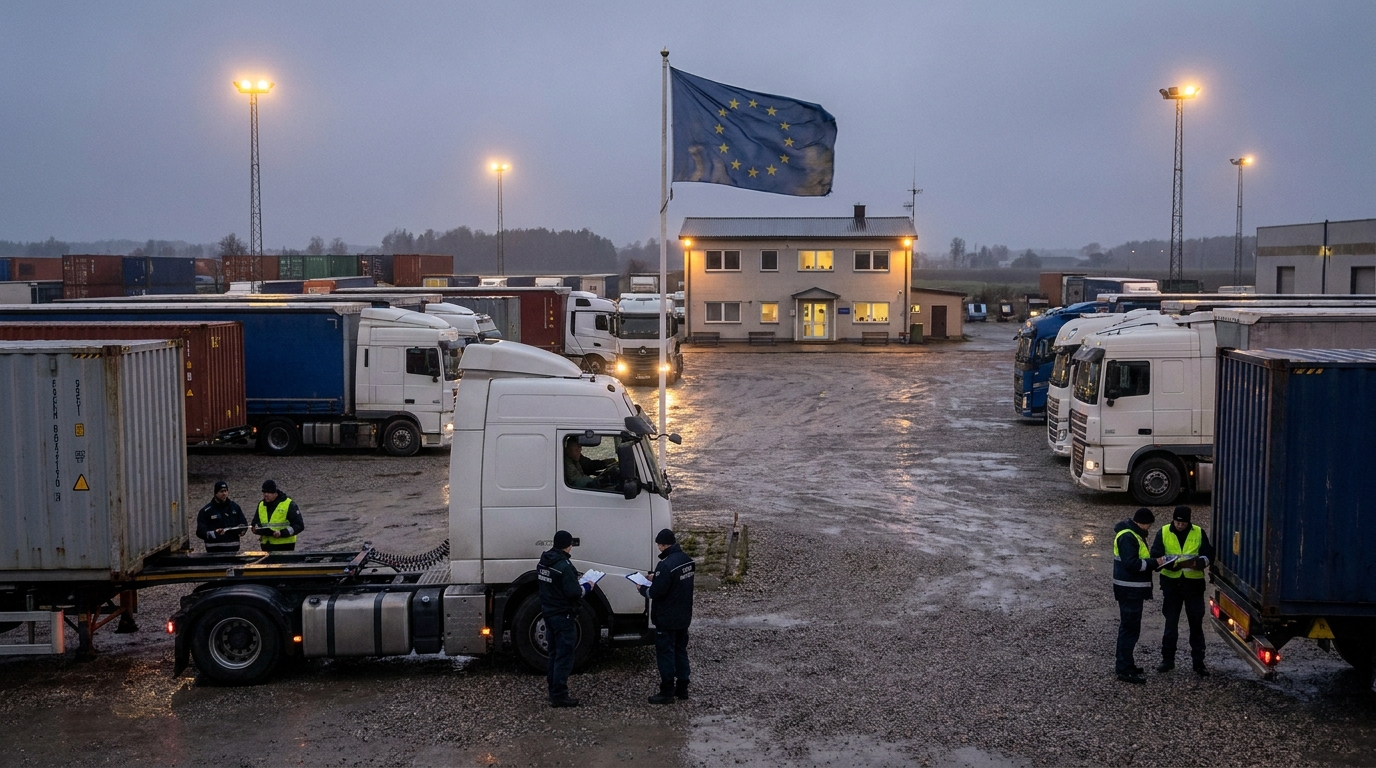
For the transport sector, this pillar translates into intensified controls at border crossings, including deeper verification of cargo and passengers. Companies conducting internationalrodoRoad operations, especially on eastern routes, should prepare for extended briefings and more detailed questions regarding crew composition and drivers' employment conditions.
5. Preparedness for humanitarian crises
The fifth pillar draws lessons from the experiences of recent years—in particular, the massive influx of refugees from Ukraine after 2022. Crisis situations create ideal conditions for criminals profiting from human trafficking: chaos, enormous need, and lost and vulnerable people. The strategy envisages the development of early warning and rapid response systems that will protect those migrating in crisis situations.
This pillar indirectly affects logistics companies involved in humanitarian operations or providing transport services in crisis-affected regions. The vetting standards for employees and subcontractors in such operations will likely be tightened.
6. Victim Protection: New Standards in Court Proceedings
The sixth pillar focuses on directly improving the situation of victims of human trafficking—improved access to psychological, legal, and material support, as well as changes in court procedures to facilitate victims' testimony and obtaining compensation. Although this area may seem furthest from the day-to-day operations of transport companies, it has a significant image-enhancing dimension: employee treatment standards and reporting mechanisms are becoming a key element of companies' reputational assessments.
Transport and logistics: why is this sector particularly vulnerable?
The TSL industry has been operating for years under intense cost pressure, driver shortages, and increasing market fragmentation.rodoa region where the temptation to use the cheapest available labor—regardless of its source—is exceptionally strong. This is precisely why transportation, alongside construction, agriculture, and the food industry, has become the focus of regulatory attention.
The mechanisms by which forced labor or exploitation can infiltrate legitimate transportation supply chains are well known to experts:
- Temporary employment agencies operating without appropriate licenses or conducting double-entry bookkeeping of salaries - on paper the employee earns according to the regulations, in reality he gives part of the salary to the intermediary.
- Subcontracting structures multi-level outsourcing, in which the client at the top of the chain loses real insight into the working conditions of the people actually carrying out the order.
- Cabotage and cross-border operations, in which drivers from countries with lower wage standards are formally employed by companies in third countries, but de facto they work in conditions that violate EU law.
- Employment-related accommodation — workers dependent on their employer not only economically but also for housing, which is a classic indicator of a situation of forced labor.
The new EU enforcement strategy – combining the actions of labour inspectors, law enforcement agencies and customs and border control – will make these practices much harder to hide and much more costly if detected.
Sanctions regime: what are the threats to companies linked to exploitation?
Many transport companies may be tempted to adopt a minimalist approach: "We're clean, it's our subcontractors' problem." New EU regulations, modeled on the approach adopted in the Sustainable Development Due Diligence Directive (CSDDD) and the regulations banning the import of products manufactured using forced labor, fundamentally reject this logic.
In line with the legislative direction set by the 2026 strategy, Supply chain due diligence is no longer a matter of goodwill – it is becoming a legal obligationCompanies that fail to document that they have actively screened their suppliers, subcontractors, and business partners for risks of labor exploitation may face:
- severe financial penalties imposed by national and EU authorities;
- freezing of assets in the event of suspected links with criminal networks – even at the investigation stage, before sentencing;
- a ban on using EU public funds and tender procedures;
- serious image losses which, in the era of social media and ESG, may permanently exclude the company from the group of preferred partners of large clients.
It is worth remembering that Commissioner for Home Affairs and Migration Magnus Brunner and Vice-President of the European Commission Henna Virkkunen clearly emphasize that criminals involved in human trafficking constantly adapt their methods. Therefore, the strategy assumes not a one-time intervention, but continuous, dynamic process of improving law enforcement mechanisms — with regular reviews of the effectiveness of the solutions adopted.
Practical steps for transport and logistics companies
Given the announced regulatory changes, companies in the TSL sector should take specific preparatory steps now. Below, we present the recommended course of action from a compliance risk management perspective:
- Supply chain audit — conducting an internal or external review of all employment agencies, subcontractors and intermediaries in terms of the legality of employment, pay conditions and accommodation of workers.
- Due diligence when onboarding partners — implementing standardized procedures for verifying new suppliers, including checking licenses, references and labor inspection history.
- Zero tolerance policy — formally implementing and communicating an internal policy on the prohibition of forced labour throughout the value chain, along with a whistleblowing mechanism.
- Training for management staff — sensitizing operational managers, fleet managers and purchasing officers to warning signs that may indicate worker exploitation.
- Joining the European business coalition — companies that decide to voluntarily engage in the Commission's initiative can count on a better negotiating position with regulatory authorities and a positive image effect among business partners requiring ESG reporting.
- Monitoring legislative changes — tracking progress in implementing the revised Directive on Combating Trafficking in Human Beings (2024 amendment) and new legislative proposals announced as part of the 2026 Strategy.
Risk Perspective: What Will the Next 12-24 Months Bring?
The announced strategy is a programmatic document—it sets directions, but its full translation into the harsh reality of control and sanctions will occur gradually, as new directives are transposed into national law and enforcement mechanisms are launched. However, the history of EU legislation in areas such as the Mobility Package and the CO₂ Emissions Regulation shows that when the Commission declares priorities, markets begin to feel them sooner than most companies expect.
Over the next 12–24 months, you can expect:
- an increase in the number of joint inspections by ELA labour inspectors and national services at the facilities of logistics and warehousing companies;
- intensification of road checks combined with verification of drivers' employment conditions;
- growing pressure from large contractors and retail chains to provide documentation confirming compliance in the supply chain;
- the first sanction proceedings under the new asset freezing regime, which will serve as a warning signal for the entire market.
Companies that adopt the Commission's new strategy now as a catalyst for streamlining their own processes will gain a dual advantage: they minimize the risk of violations and build a transparent, attractive image for discerning corporate clients. Companies that neglect the strategy may face not only audits but also serious legal and financial consequences in a few quarters.
Summary: Compliance is not a cost, it is an investment
The new EU Anti-Trafficking Strategy of 2026 is a game-changer not only for law enforcement but for the entire business ecosystem in Europe. The transport and logistics sector, due to its operational structure and level of reliance on external labor, is a focus of regulatory attention. Increased risk of inspections, a new sanctions regime, and growing supply chain due diligence requirements are not a passing trend—they are a permanent shift in the regulatory landscape.
For risk managers and TSL company owners, the message is clear: investing in compliance, business partner verification, and supply chain transparency is no longer a matter of ethics or voluntary commitment to ESG values. It is becoming a fundamental requirement for safe and legal operation in the European market.