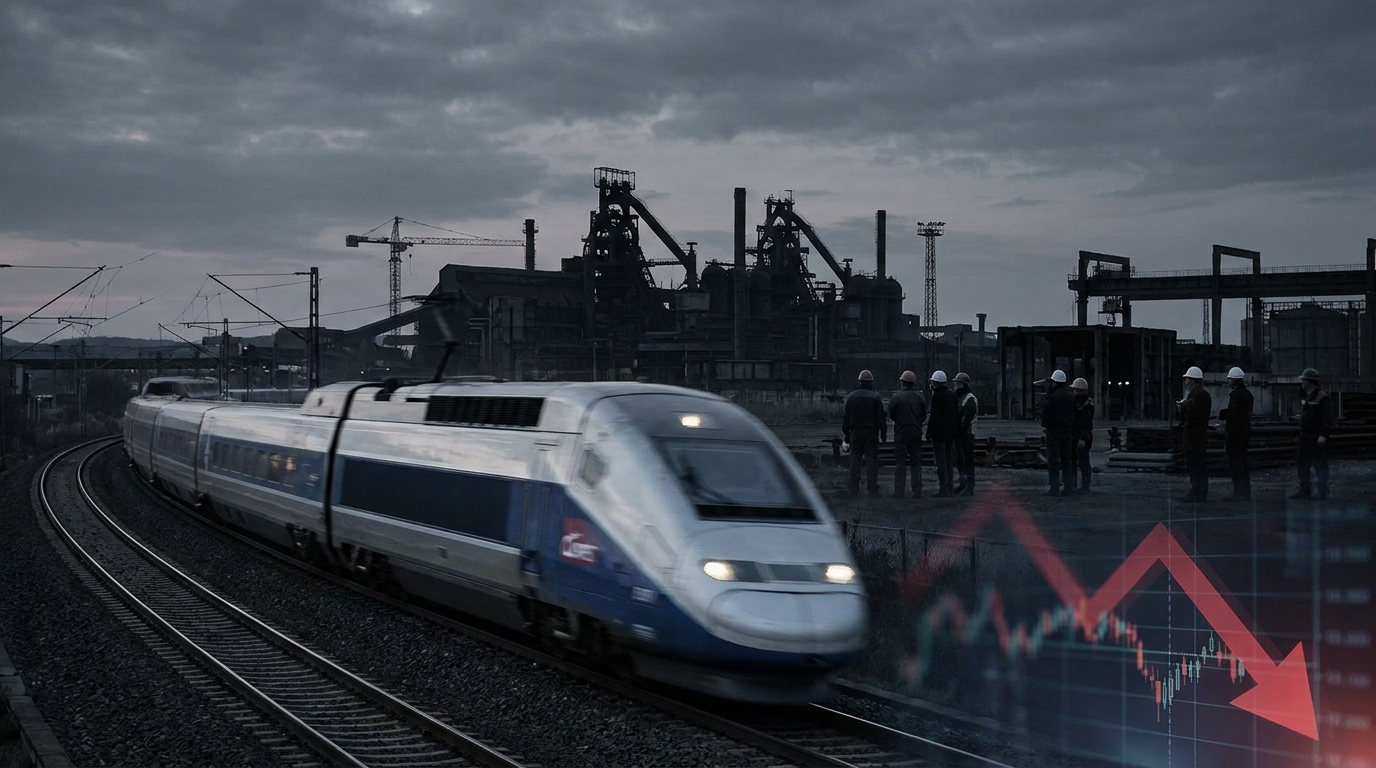

General strike in France on September 29, 2026: When "force majeure" does not protect the supplier from contractual penalties
A nationwide strike in France scheduled for 29 September 2026 threatens to paralyse European supply chains and trigger a wave of disputes over the force majeure clause. Legal experts warn that many suppliers will attempt to invoke force majeure without justification to avoid contractual penalties — however, French courts examine facts, not declarations. Logistics companies must act immediately: audit contracts, collect evidence and be prepared to arrange substitute performance at the expense of an unreliable partner.
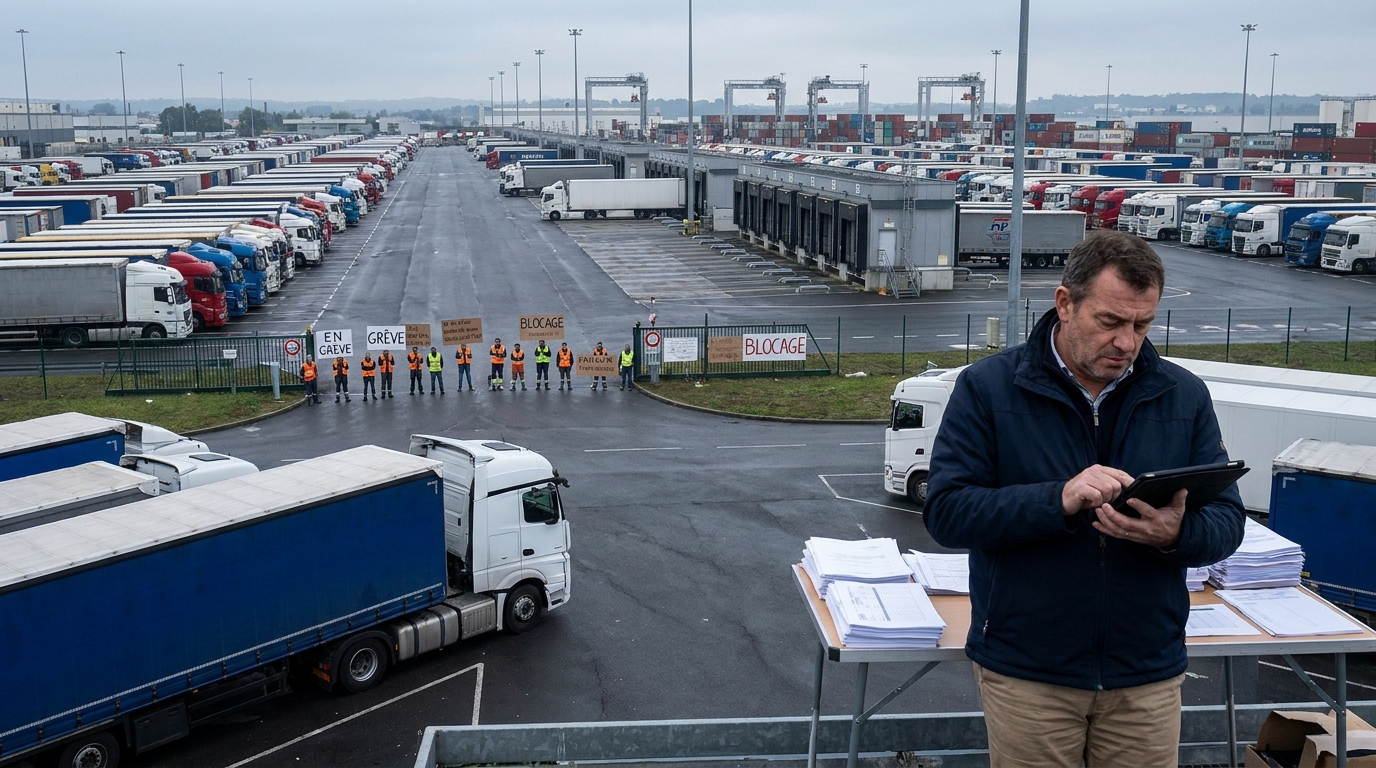
The nationwide strike planned in France for September 29, 2026, threatens to severely paralyze European supply chains. Road and rail transport, seaports, and major urban agglomerations are expected to face mass labor mobilization, the scale of which has not been seen in recent years. For logistics and retail companies operating in the French market—including hundreds of Polish and Central European enterprises—the coming days may prove to be a test not only of operational flexibility but, above all, of legal preparedness in the event of contractual disputes with suppliers.
Strike in France as a catalyst for force majeure disputes
Kohen Avocats, a Paris-based law firm specializing in commercial law and contract disputes, has published a detailed legal analysis on the consequences of the upcoming strike for supplier-customer relationships. Attorney Reda Kohen warns bluntly: many suppliers, both French and foreign, operating in France will routinely and often baselessly invoke the clause. force majeureto avoid contractual penalties for failure to meet deadlines or complete failure to complete orders.
This phenomenon is nothing new—we see it with every major disruption, from the COVID-19 pandemic to industry strikes—but the scale of the mobilization planned for September 29, 2026, combined with the growing legal awareness of both suppliers and their customers, means that this time, disputes could be particularly intense and costly. Companies that fail to prepare adequately risk not only temporary supply disruptions but also real, multi-million dollar financial losses.
What is force majeure in French law - and why it is not an absolute shield
The institution of force majeure as enshrined in the French Civil Code (Code civil) is interpreted by the French courts in a manner extremely rigorousIn order for a supplier to successfully invoke force majeure and be released from contractual liability, three cumulative conditions must be met:
- Externality of an event (extériorité) — the obstacle must be completely beyond the debtor’s control and cannot result from his own organizational omissions or management decisions.
- Unpredictability (imprévisibilité) — the event must have been reasonably unforeseeable at the time the commercial contract was concluded. If the risk of a strike was known or should have been known to a professional market participant, this condition is waived.
- Inevitability and impossibility of prevention (irrésistibilité) — even if the event occurred, its consequences could not have been avoided by any reasonable measures, such as changing the route, selecting an alternative carrier or modifying the delivery schedule.
In the case of the strike on September 29, 2026, meeting all three conditions simultaneously is – according to experts from the Kohen Avocats law firm – highly doubtfuland even difficult to prove for the average supplier. The reason is simple: in the transport sectors (road, rail, maritime) official strike notice — formal announcements of strikes — with the advance notice required by law. This means that every professional company operating in the French market she knew or should have known about the upcoming strike and had time to take preventive measures.
The argument about the unforeseeability of the event is therefore made at the outset. French courts have repeatedly emphasized that force majeure is not a clause protecting passive economic entities - its application requires proof that the debtor acted actively and in good faith, trying to neutralize the effects of the obstacle by all reasonably available means.
Four legal tools every client should know
So what should companies—Polish, German, Belgian, Dutch, or any other—do that have active contracts with suppliers operating through France or on the French market? Kohen Avocats recommends a four-step approach that protects clients' interests at every stage of a contractual dispute.
1. Formal demand for performance of an obligation (Mise en demeure)
The first and absolutely crucial step is to immediately send the supplier a written notice to perform the contract – the so-called noticeThis document serves a dual purpose: first, it formally triggers legal deadlines and paves the way for further procedural steps; second, it clearly signals to the supplier that the customer does not intend to passively accept excuses and is ready to enforce its rights. The demand should precisely specify the obligation it concerns, the deadline by which the supplier must respond or fulfill it, and clearly state that failure to respond may result in termination of the contract due to the supplier's fault.
2. Replacement at the supplier's expense (Remplacement aux frais du fournisseur)
If the supplier does not respond or maintains its position, invoking force majeure, the customer has the right - after fulfilling the appropriate formal conditions - to engage another carrier or supplier at the expense of the original contractorThis is one of the most powerful tools commercial law provides in crisis situations. The difference in prices resulting from the urgent procedure (the so-called premium for immediate service) burdens the unreliable contractual partner.
Key caveat: every penny spent must be rigorously documentedInvoices, offers from alternative carriers, email correspondence, order confirmations—all of this will become evidence in any potential legal proceedings. Documentary chaos at this stage can undermine even the strongest legal position of the client.
3. Expedited Security Proceedings (Référé)
French procedural law provides for the possibility of bringing a case to court in accordance with referred — quick security proceedings that allow for obtaining an advance payment on undisputed receivables (so-called provision) without the need for a full, lengthy civil trial. This tool is especially valuable when the client has already suffered specific, measurable financial losses and needs quick cash flow to stabilize their operations.
Mode referred However, it requires proper preparation: complete documentation, a clearly demonstrated undisputed claim, and the efficient operation of a legal representative. Companies that enter this procedure with incomplete files waste time and money.
4. Termination of the contract due to the fault of the supplier and compensation (Résolution et dommages-intérêts)
In extreme cases - when the supplier consistently fails to fulfill its obligations and continuing the cooperation only generates losses - the client may decide to termination of the contract due to the contractor's fault (résolution aux torts du fournisseurThis is an irreversible step, requiring a precise calculation of damages: both actual losses incurred (damnum emergens) and lost profits (lucrum cessans). A well-documented and properly assessed compensation claim can prove to be a significant disciplinary instrument for unreliable industry partners.
Latest case law: courts verify facts, not declarations
Analyses of the case law of French courts from 2025–2026 leave no doubt: judges are examining the actual efforts of the parties more and more precisely, the content of concluded contracts and the actual course of events - instead of uncritically accepting declarations of force majeure. An example of this tendency is the high-profile case from July 2025, which ended with a penalty of 21,5 million euros for unjustified suspension of the framework agreement by the party that invoked force majeure without meeting the statutory requirements of this clause.
This judgment has a significant signaling effect on the entire transport and logistics industry in Europe: courts do not tolerate the instrumental abuse of force majeure as a convenient "escape clause" from difficult contractual obligations. Any invocation of force majeure must be supported by specific, verifiable evidence - and the lack of it or the supplier's negligence in documenting it will turn against him.
Risk Perspective: What Happens to Companies That Don't React
From a business risk management perspective, the strike of September 29, 2026, generates several overlapping categories of risks for European companies cooperating with partners in France:
- Operational risk — direct delays in the supply chain, lack of goods in warehouses, inability to meet own obligations to final recipients.
- Legal risk — unconscious acceptance of the supplier's narrative of force majeure, which may result in the loss of claims for damages or contractual penalties.
- Reputational risk — own delays towards end customers resulting from passivity towards an unreliable supplier.
- Financial risk — costs of substitute performance, losses resulting from production or commercial downtime, loss of contracts with end customers.
EURODEBT.eu's experience in monitoring payment and contract risks in the transportation industry shows that companies that react passively to these types of disruptions—accepting partners' excuses without verification and failing to take legal action—lose many times more than those that invest in proactive crisis management. Passivity is the most expensive strategy in contract disputes.
Practical recommendations for risk managers and business owners
Based on the legal analysis of the Kohen Avocats law firm and the experience gathered by the EURODEBT.eu editorial team, we formulate the following recommendations for European companies operating with partners in France or through French logistics hubs:
- Conduct an instant contract audit. Check which contracts contain clauses force majeure, how they are defined, and whether they include provisions regarding the supplier's obligation to mitigate damages. Clauses that are too broad or imprecise may be interpreted to the supplier's advantage.
- Contact your suppliers proactively. Before a strike occurs, request written contingency plans from partners whose supplies may be disrupted. The absence of such a plan is already a red flag.
- Collect and archive your documentation now. All correspondence, offers from alternative carriers, schedules, order confirmations—collect and date every document. In legal disputes, the one with the best records wins.
- Ensure access to legal services ready to act quickly. Mode referred i notice require action within days, not weeks. It's worth contacting a law firm familiar with French law in advance.
- Identify alternative suppliers and carriers. Even if they are not needed, simply having them in your contact database strengthens your negotiating position with your primary partner.
- Monitor strike announcements. Official strike notice are publicly available - tracking their content and scope allows for a precise assessment of which sectors and routes are at risk, which has a direct impact on legal arguments.
Summary: Strike as a Test of Contract Readiness
The nationwide strike in France on September 29, 2026, will be a serious test for European supply chains—but not just in terms of logistics. Above all, it will prove to be a test contractual maturity and legal readiness companies cooperating with partners in France.
A force majeure clause, although it exists in every civil law system, is not—and should never be treated as—an automatic umbrella of protection for suppliers who fail to take any preventive measures. Recent French case law clearly confirms that courts hold parties accountable for actual actions, not declarations. A supplier who knew about the strike, failed to organize alternative routes, and failed to inform the customer in advance has little chance of successfully invoking it. force majeure.
For risk managers and owners of transport and logistics companies in Poland and throughout Central Europe, there is one clear conclusion: The time to act is now, before September 29thAuditing contracts, contacting suppliers, building an evidence base, and securing access to legal services are investments that can protect against losses many times greater than their cost.
The EURODEBT.eu editorial team will continue to monitor developments and report on specific cases of contractual disputes related to the strike of September 29, 2026. We encourage companies to share their experiences and report contractors of concern through our verification system.