
IT Failure at the Port of Rotterdam: Paralysis of ECT Terminals and Real Threats to the Liquidity of Logistics Companies in Europe
An IT system failure at the Port of Rotterdam's ECT Delta and ECT Euromax terminals caused serious operational disruptions affecting hundreds of transport and freight forwarding companies in Northern Europe. Rising Detention & Demurrage costs, the risk of contractual penalties and the freezing of working capital pose a direct threat to the liquidity of smaller participants in the transport, shipping and logistics market. EURODEBT.eu experts recommend an immediate contract audit, documentation of delays and securing credit lines as key remedial measures.
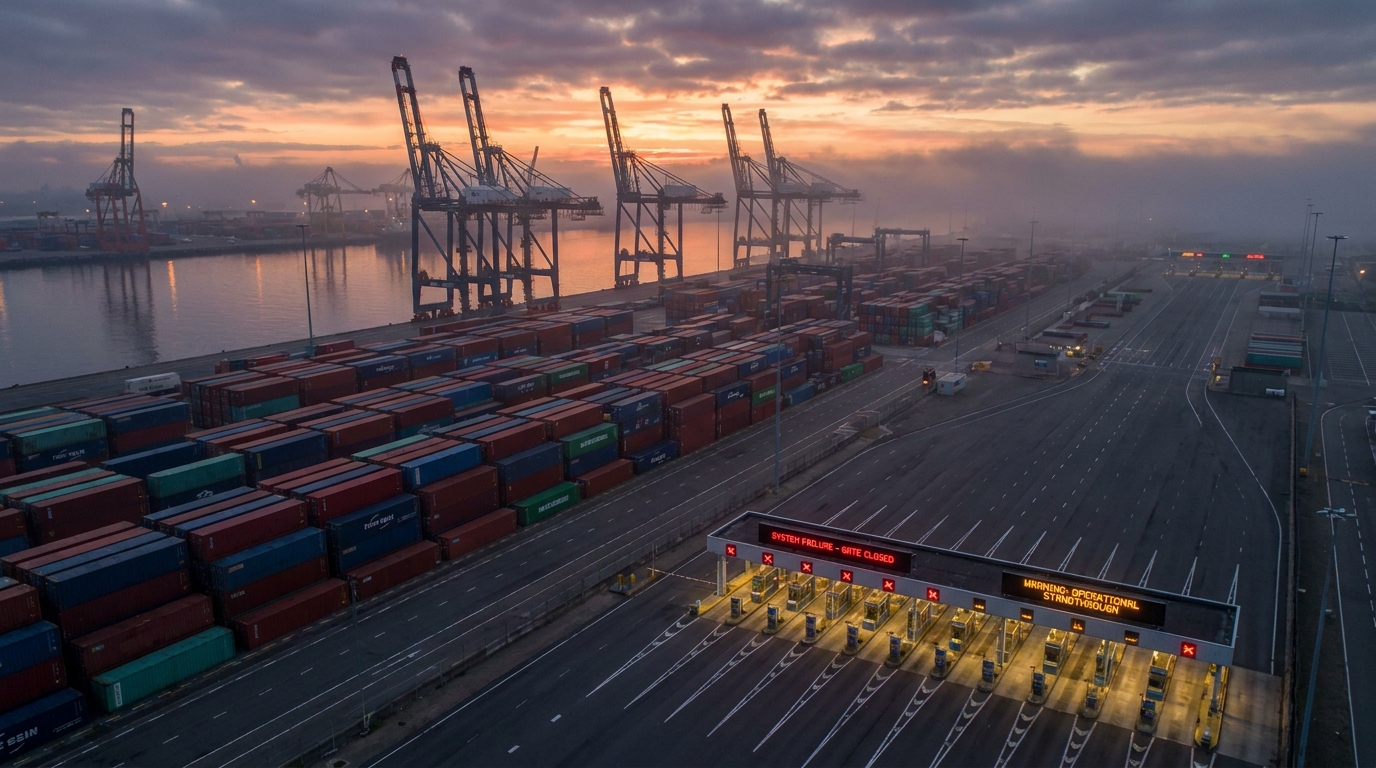
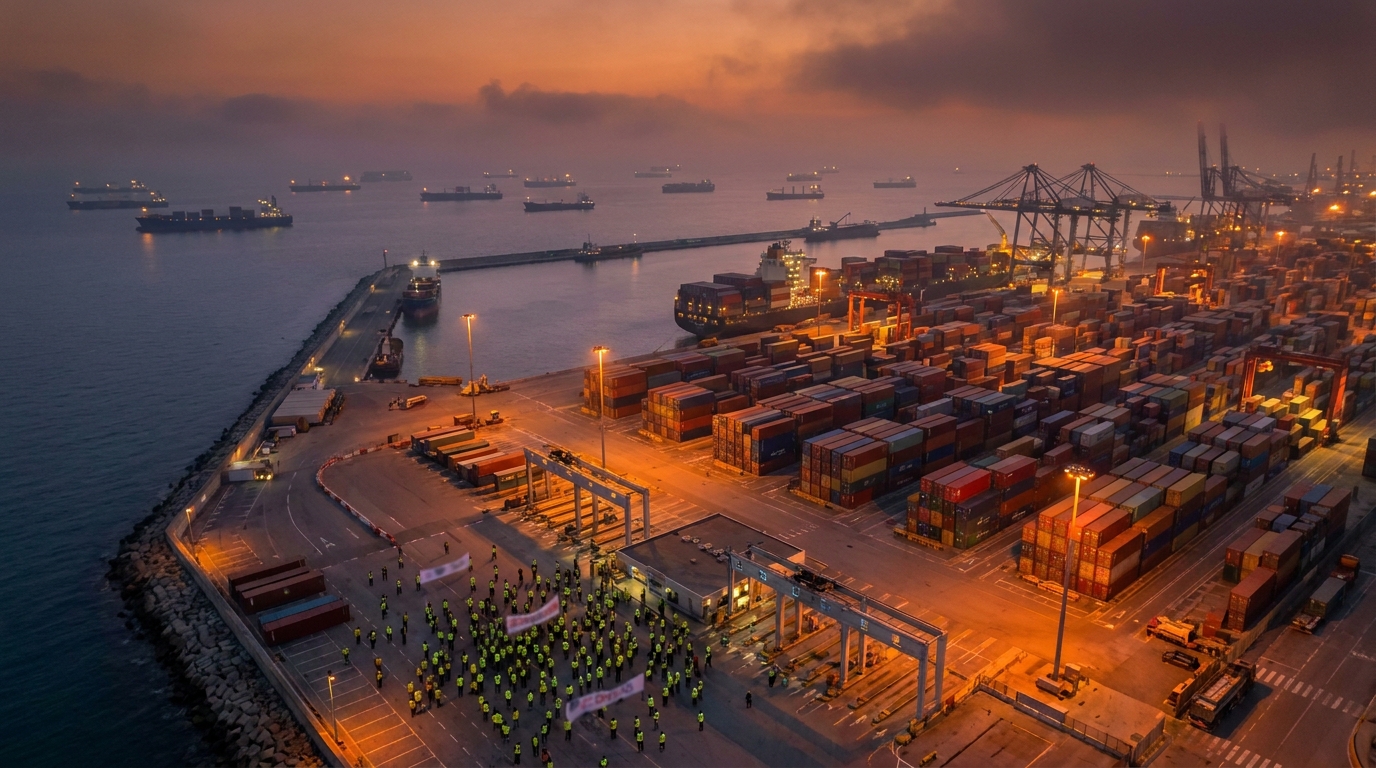
Europe's largest seaport is in the midst of a serious operational crisis. An IT system failure at the Port of Rotterdam has led to the suspension of operations at two key container terminals—ECT Delta and ECT Euromax—generating a wave of delays, rising demurrage costs, and a real threat to the financial liquidity of hundreds of transport and freight forwarding companies operating in Northern Europe. For many smaller carriers and logistics subcontractors, each additional hour of downtime represents a tangible loss to already tight operating budgets.
The scale of the disruption: two terminals, thousands of containers, hundreds of companies affected
The Port of Rotterdam handles over 14 million TEUs annually, serving as a central logistics hub for all of Western and Central Europe. The ECT Delta and ECT Euromax terminals—part of the Hutchison Ports group—account for a significant portion of this capacity. When the IT systems managing entry gates, quay scheduling, and container release went down, the impact was immediately felt not only by the companies directly operating these terminals but also by the entire logistics ecosystem powered by Rotterdam.
Road hauliers who had scheduled cargo pickups were faced with closed gates and an inability to authorize container pickups. Shipping companies and freight agents were unable to monitor the status of their cargoes in real time. Freight forwarders serving importers from Germany, the Netherlands, and Poland began receiving reports of delays that would normally be unacceptable to their customers.
Detention & Demurrage: A Financial Time Bomb for the TSL Sector
From a financial risk analysis perspective, the IT systems failure in Rotterdam triggers a mechanism that could be particularly damaging for smaller market participants. Detention and Demurrage (D&D) — fees charged by shipowners for exceeding the permitted time of free use of a container or for keeping it within the terminal.
The problem with D&D costs in crisis situations is that they are automatically charged, regardless of the cause of the delay. The shipping company issues an invoice—whether due to the forwarder's negligence or a terminal paralysis caused by an IT outage. While formally challenging such charges is possible, it requires time, documentation, and legal expertise that smaller operators often simply don't have.
In the European context, the situation is even more challenging because in the United States, the Federal Maritime Commission (FMC) has taken specific regulatory measures to curtail unfair D&D charges in cases where the delay is the fault of the terminal or shipper. Europe lacks similar protection mechanisms for carriers and freight forwarders, which puts TSL companies in a weaker negotiating position.
- Automatic billing: Shipowners' systems record exceeding deadlines without taking into account the operational reason
- Lack of European protective regulations: unlike the US market, European TSL companies do not have effective regulatory tools to defend against unjustified D&D
- Cumulative effect: If the terminal is paralyzed for several days, D&D costs for one container can reach several hundred euros per day - with a portfolio of several dozen containers, this constitutes a serious burden on the balance sheet
- Working capital freeze: waiting for the resolution of disputes can take weeks, during which the company must finance these costs from its own funds or a loan
Who is most at risk? Market participant risk profile
Not all companies in the transport and logistics sector will suffer the same consequences of the crisis in Rotterdam. Risk analysis indicates several groups of entities are particularly vulnerable to the current disruptions.
Small and medium-sized transport companies
Companies with fleets of several or a dozen trucks, often operating as subcontractors for larger logistics operators, are most vulnerable to the immediate impact of downtime. Every day a driver waits at the terminal without the ability to collect a container generates costs—salaries, allowances, fuel consumption, and vehicle depreciation—without any revenue. For companies operating on single-digit EBIT margins, such a situation can quickly turn into a challenge in meeting current liabilities.
Freight forwarders handling time-sensitive cargo
The situation is particularly acute for forwarding companies handling time-sensitive cargo—industrial components, perishable goods, and just-in-time production materials. These forwarders' clients are often large manufacturing plants, whose contracts include stringent penalty clauses for delays. When a supplier fails to deliver on time, penalties flow down the chain, ultimately reaching the forwarder and carrier, even if the delay is the result of a port infrastructure failure.
Companies with significant exposure to the Dutch, German and Polish markets
Rotterdam is the gateway for a huge volume of goods imported and exported through the Netherlands, Germany, and Poland. Companies from these countries that lack alternative supply channels through other ports (Antwerp, Hamburg, Bremerhaven) are forced to wait out disruptions or incur significant costs to redirect their cargo.
Force Majeure or Carrier Liability? Legal and Contractual Aspects
One of the key legal issues that arises in any operational disruption of this scale is the issue of whether the event qualifies as force majeure (Force Majeure)Carriers and freight forwarders facing customer claims should immediately review their contracts for the following:
- Does the contract include a force majeure clause and how is it defined – does it cover port infrastructure failures?
- Do the carrier's general conditions (e.g. based on NSAB or CMR) contain exclusions of liability in the event of external disruptions?
- What are the information obligations towards the customer when an event that disrupts delivery occurs?
- Is there an obligation to take steps to minimise the damage – e.g. redirecting the cargo to an alternative port?
It is important that communication with customers is conducted proactively and in writing – an email confirmation that the customer has been informed of the disruption, indicating the external cause of the delay (a failure of the ECT terminal's IT system), can be an important element of documentation in a possible legal dispute or insurance process.
Rotterdam and the Resilience Strategy: Lessons from the Past
The IT system failure at the ECT terminals is not the first major operational incident at the Port of Rotterdam. In 2017, a NotPetya malware attack paralyzed the operations of Maersk—one of the world's largest shipping companies—causing losses estimated at over $300 million. Some of these losses directly affected operations in Rotterdam.
The experiences of that period prompted the port authorities to seriously reassess their strategic priorities. The Port of Rotterdam, under the leadership of its management board, is gradually shifting its focus from maximum operational efficiency towards building resilience — the ability to continue operations or quickly return to normal functioning after a disruption.
A practical expression of this strategy is the strengthened cooperation with the Dutch Ministry of Defense, emergency services, and local government in testing crisis scenarios. The port conducts regular exercises simulating various disruption scenarios—from cyberattacks to natural disasters and energy supply disruptions. The goal is to shorten response times and minimize operational losses in the event of a real incident.
The current outage, however, demonstrates that even the best-planned resilience strategies have their limits. Centralized IT systems managing terminal gateways and quayside operations constitute a bottleneck, the failure of which quickly translates into operational paralysis of entire supply chains.
Geopolitical Implications: Critical Infrastructure Under the Microscope
The disruptions in Rotterdam are part of a broader trend of increasing vulnerability of European critical infrastructure to various types of shocks—from cyberattacks to technical failures, from geopolitical conflicts to climate events. The Port of Rotterdam is not only a trade hub but also a logistics hub for the flow of strategic goods: food, medicines, energy resources—including liquefied natural gas (LNG) and crude oil.
In the context of growing geopolitical tensions in Europe and hybrid threats, securing the continuity of the flow of these goods becomes a matter of security on therodoand not just commercial efficiency. Every failure—regardless of its cause—reveals potential vulnerabilities in the system that may be taken into account by actors hostile to European interests.
For logistics companies and their customers, this means one thing: diversifying supply routes and ports of entry is no longer an option, but a strategic necessity.
Practical recommendations for companies in the TSL sector and their contractors
Based on the analysis of the operational situation and financial risk, EURODEBT.eu experts recommend that logistics companies and their business partners take the following actions:
In the immediate term (0-72 hours)
- Verification of cargo status — Each company should contact its agents and shipping line to determine the current status of containers and the estimated time of resumption of operations at ECT terminals
- Documenting container release refusals — All denials, gate closures, and delays should be recorded in writing (email, screenshots from tracking systems) as a basis for later disputes of D&D charges
- Proactive communication with customers — immediate notification of the recipients of the goods about the disruption and its external causes, with written confirmation
In the short term (up to 2 weeks)
- Analysis of alternative ports — assessment of the possibility of redirecting cargo via Antwerp, Hamburg or Bremerhaven, with calculation of additional transport costs and comparison with the costs of demurrage in Rotterdam
- Legal audit of contracts — review of customer contracts for force majeure clauses, delivery times and complaint procedures
- Securing financial liquidity — in the case of companies with exposure to a dozen or more containers in ECT, it is advisable to activate or increase a credit line as a buffer to cover unforeseen D&D and downtime costs
In the strategic perspective (over 1 month)
- Diversification of entry ports — developing permanent alternative logistics routes so that no single port is the exclusive entry point for critical goods
- Revision of agreements with shipowners — negotiating D&D terms taking into account the circumstances of disruptions on the terminal side
- Implementation of business continuity plans (BCP) — development or updating of emergency procedures in the event of operational disruptions at key ports
Business Risk Perspective: Who Might Have a Solvency Problem?
From the point of view of credit risk analysis and assessment of contractors’ solvency – the key competences of the EURODEBT.eu platform – it is worth indicating what signals should arouse vigilance among risk managers cooperating with companies from the TSL sector.
Companies that are particularly vulnerable to a deterioration in their financial situation as a result of the Rotterdam crisis are primarily those that combine several unfavorable features at the same time: high concentration of turnover on cargo passing through ECT Delta or ECT Euromax, low buffer financial liquidity (current liquidity ratio below 1,2), contracts with customers containing severe contractual penalties for delays, lack of Force Majeure clauses or their narrow definition, and lack of business interruption insurance.
In the coming weeks, risk managers should pay particular attention to early warning signs in their relationships with logistics service providers: payment delays, requests for extensions, sudden changes in payment behavior, and announcements of operational difficulties. Each of these signals, in the context of the Rotterdam crisis, could herald more serious financial problems.
Summary: A local incident with global consequences
The IT system outage at the Port of Rotterdam isn't a trivial technical incident—it's a powerful reminder of how fragile the global logistics architecture remains, based on centralized systems and a lean philosophy optimized for efficiency over resilience. For hundreds of transport and freight forwarding companies operating in Northern Europe, disruptions at ECT terminals mean very specific, measurable financial losses—rising D&D costs, potential contractual penalties, tied-up working capital, and operational chaos.
Companies that remain calm and act methodically in this situation—documenting delays, proactively communicating with customers, securing liquidity, and exploring alternative logistics options—have a chance to emerge from the crisis without significant losses. Those that passively wait for a return to normalcy risk mounting financial problems that, in the worst-case scenario, could threaten their solvency.
EURODEBT.eu will continuously monitor the developments in the Port of Rotterdam and its consequences for the TSL market in Europe, providing up-to-date risk analyses and assessments of the financial credibility of entities operating in this sector.