
Joint and several customs debt is devastating Polish logistics. Customs agencies and carriers are on the brink of bankruptcy.
The National Revenue Administration is conducting large-scale enforcement proceedings against Polish customs agencies, freight forwarders and carriers, demanding repayment of multimillion customs debts arising from fraud committed by importers from China. The mechanism of joint and several liability allows tax authorities to shift the burden of obligations onto entities acting in good faith that had no knowledge of the crime. The failure to suspend enforcement during appeals threatens a wave of bankruptcies among key logistics operators and the paralysis of strategic transport corridors, including the terminal in Małaszewicze.
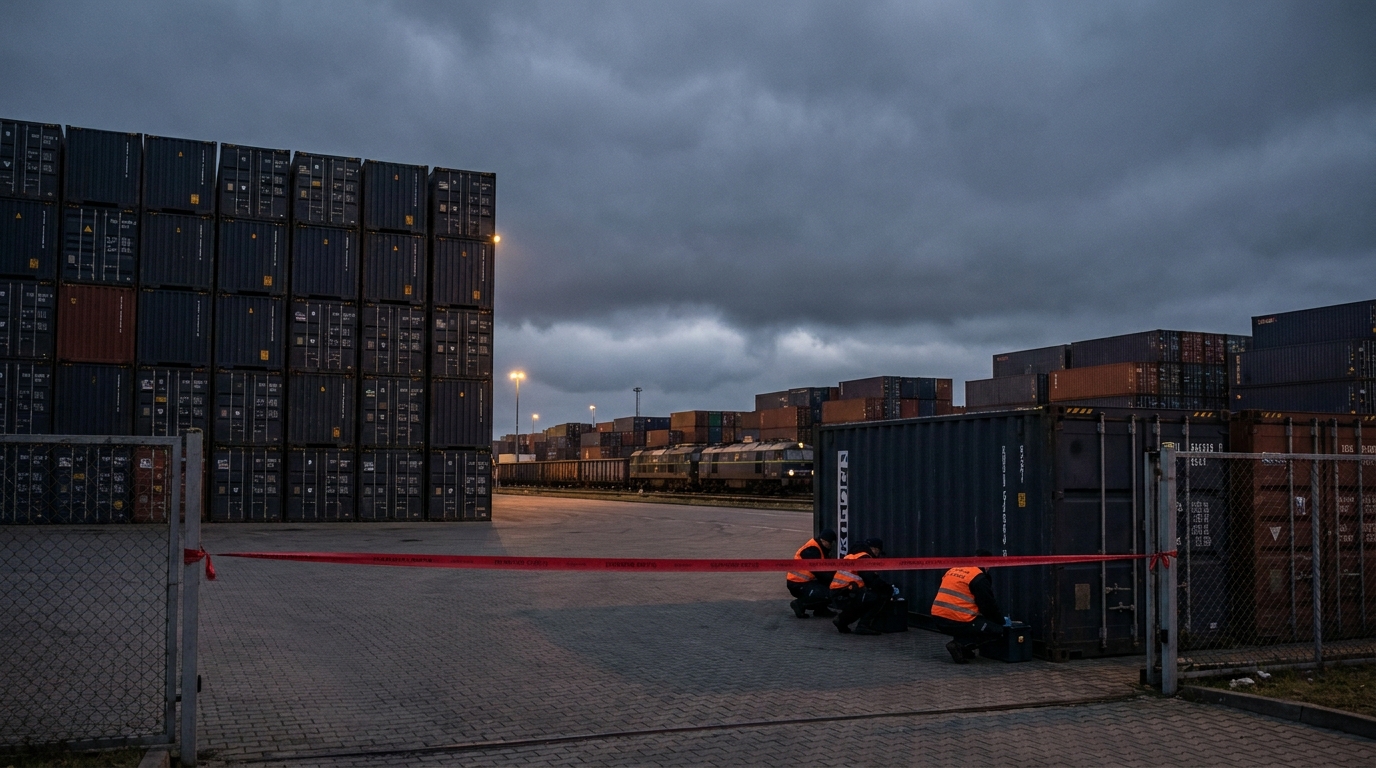
The Polish transport, forwarding, and logistics industry is grappling with a crisis unlike any it has seen since the country joined the European Union. The National Revenue Administration (KAS) is conducting mass enforcement proceedings against customs agencies, freight forwarders, rail carriers, and intermodal carriers, demanding payment of multi-million-dollar customs debts. These debts are the result of extensive tax and customs fraud committed by importers of goods from China—most of whom are currently untraceable or completely insolvent. The joint and several liability mechanism, rooted in EU and national customs regulations, allows tax authorities to shift the burden of these liabilities to entities that merely processed shipments—without knowledge of the ongoing fraud and without any profit from the fraud.
Where Did the Crisis Come From? Customs Fraud Mechanisms on the New Silk Road
To understand the gravity of the situation facing Polish logistics companies, we need to go back to the years 2021–2026 and examine the customs fraud mechanism, which for years remained beyond the reach of effective control. Goods imported from China—primarily electronics, clothing, accessories, and bicycles—entered the European Union primarily via two routes: by rail through the Polish border crossing in Małaszewicze, as part of the transcontinental connections of the New Silk Road, and by sea through ports such as Piraeus in Greece.
The key instrument of the fraud was the massive undervaluation of goods for customs purposes and their deliberate misclassification in declaration documents. A striking example, cited by both European investigators and industry representatives themselves, involved expensive electric bicycles, which were reported as significantly cheaper exercise (spinning) bikes. This allowed importers to circumvent the high EU anti-dumping duties imposed on e-bikes manufactured in China by paying a fraction of the fees due. This practice was carried out by organized criminal groups, largely led by Chinese citizens, operating in a coordinated manner across multiple EU member states simultaneously.
The European Anti-Fraud Office (OLAF) and the European Public Prosecutor's Office (EPPO) conducted extensive investigations, leading to Operation Calypso—a coordinated operation spanning 14 EU Member States. Its goal was to dismantle the criminal networks responsible for the long-term scheme. According to EPPO estimates, this scheme operated for at least eight years and resulted in approximately €350 million in lost customs duties and over €450 million in fraudulent import VAT.
Joint and several liability – a weapon against the innocent?
At the heart of the current dispute in Poland is the concept of joint and several customs debt. Applicable regulations—both the EU Customs Code and national tax regulations—provide that, in certain cases, liability for unpaid customs duties can be shared jointly and severally among all supply chain participants who, in any capacity, participated in the clearance of goods. In practice, this means that if an importer fails to pay or is uncollectible, tax authorities may contact the customs agency that handled the clearance, the rail carrier that delivered the container, or the freight forwarder who coordinated the entire operation.
Marek Tarczyński, President of the Polish Chamber of Forwarding and Logistics (PISiL), points out the fundamental injustice of the current situation: in the vast majority of cases, the actual crime—namely, the alteration of cargo declarations and the reformulation of customs declarations—occurred after the transit in Poland had been properly and procedurally completed. Document falsification occurred in destination countries, such as Belgium and Hungary. Despite this, the financial burden of claims falls primarily on Polish logistics operators, who were merely the physical means of transport—acting in good faith, based on documents that were unquestionable at the time of issuance.
The industry emphasizes an argument that seems fundamental from a legal perspective: carriers and customs agents do not own the goods they transport. Furthermore, they have neither the legal authority nor the physical means to verify the contents of sealed containers. The responsibility for cargo inspection rests solely with state customs services, equipped with the appropriate human, technological, and legal resources. Shifting responsibility for the consequences of inspection omissions onto private transport companies is, according to industry representatives, deeply unfair and without factual basis.
Dramatic scale of claims and financial paralysis of companies
Claims filed by the National Revenue Administration (KAS) are complex and encompass several categories of liabilities simultaneously: outstanding basic customs duties, import VAT, anti-dumping duties (which, in the case of electric bicycles from China, can reach several dozen percent of the goods' value), and interest accruing over the years. The total amount of claims often exceeds the total net assets of the company against which they are filed many times over. For a sector largely composed of small and medium-sized enterprises operating on the low margins typical of logistics services, financial liabilities structured in this way effectively spell the death of the company.
The situation is drastically exacerbated by a procedural issue: simply filing an appeal against a KAS decision does not automatically stay its execution. This means that enforcement authorities can seize a company's bank accounts, real estate, and vehicle fleet during the appeal process—which, in Polish court conditions, can last for years. A company that is still legally a party to the dispute and has not been found guilty may lose its financial liquidity and go bankrupt long before the court rules on the validity of the claim. MP Barbara Oliwiecka emphasized this aspect of the crisis during a meeting of the parliamentary subcommittee on rail transport, calling for the urgent development of protective mechanisms for affected companies.
European and global industry organizations are reacting with growing concern. CLECAT, the European association of freight forwarders and customs agents, and FIATA, the global federation of freight forwarding associations, have sent official letters to the European Commission's Directorate-General for Taxation and Customs Union (DG TAXUD), demanding urgent intervention and clear clarification of the rules on the liability of supply chain participants. Organizations representing rail and combined transport have also joined the conversation: CER (Community of European Railways and Infrastructure Managers) and UIRR (International Union of Rail Transport).rodoyou Association of Combined Rail-Road Transport Companies).
Małaszewicze – the logistical heart of Poland under pressure
The crisis is particularly significant because of the role that Poland—and in particular the Małaszewicze transshipment terminal—plays in Europe's logistics infrastructure. Małaszewicze is the largest rail entry point for goods from Asia into the European Union, serving as a key hub on the New Silk Road. Tens of thousands of containers carrying goods from China, Japan, Korea, and other Asian countries pass through this terminal each year, then reach destinations across Europe.
If Polish customs agencies and freight forwarders, terrorized by the National Revenue Administration's (KAS) enforcement actions, cease or drastically reduce rail transit services—an increasingly realistic scenario in the face of mass enforcement proceedings—the consequences will be felt across the entire European import market from Asia. A similar threat applies to Polish seaports (Gdańsk, Gdynia, Szczecin) and cargo airports, where customs agents play a vital role in cargo clearance. The paralysis of these hubs would mean significant supply chain disruptions for companies across the continent.
Business risk perspective for contractors of Polish logistics companies
For foreign companies using the services of Polish logistics operators, customs agencies, and freight forwarders, the situation requires an immediate and thorough risk assessment. Below are key factors that should be of interest to every risk manager working with entities in the Polish TSL sector:
- Risk of sudden loss of operator: Companies subject to KAS enforcement proceedings may quickly lose financial liquidity and cease operations, even if their legal situation is ultimately resolved in their favor. It's worth verifying whether key logistics partners are subject to such proceedings.
- Risk of continuity of customs services: Customs agencies struggling with claims may lose their authority or operational capacity, which may result in delays or the inability to clear customs for their clients.
- Systemic risk for transit through Poland: Massive bankruptcies of operators could disrupt the operation of key transport corridors running through Poland, affecting delivery times and the availability of transhipment capacity.
- Legal and reputational risk: Companies that have used the services of entities unknowingly linked to customs fraud may face additional inquiries from customs and tax authorities in their countries.
- Risk of cost increases: Even if the crisis is finally resolved systemically, legal uncertainty and the need for logistics companies to create financial reserves will likely translate into higher prices for customs and forwarding services.
What the industry expects – demands and possible solutions
ŚrodoThe logistics and forwarding community isn't limited to raising alarm bells—it also presents specific proposals that, if implemented, could stave off the crisis or at least limit its most severe effects. Among the most important proposals are:
First, the industry is calling for the introduction of a mechanism to suspend the enforcement of KAS decisions for the duration of appeal proceedings, with the simultaneous possibility of establishing security in a form other than immediate seizure of assets. This solution would allow companies to survive until the case is finally adjudicated.
Secondly, it is proposed to clearly clarify in the regulations that joint and several customs liability cannot be imposed on entities that had no knowledge of the crime or benefited from it—and that exercised due diligence in handling the shipment. Such a change would likely require intervention at the EU level, in the form of an amendment to the Union Customs Code or the issuance of a binding interpretation by the European Commission.
Thirdly,rodoThe industry association is calling for the creation of a system of public guarantees or insurance for entities that have fallen victim to organised crime groups operating in the supply chain – similar to the solutions used in some Member States in the case of VAT fraud.
Fourthly, it is proposed to strengthen and accelerate customs controls on the eastern border, so that the burden of verifying cargoes shifts to authorized state services and not to private logistics operators.
The reaction of state institutions – is there a chance of rescue?
At the national level, this topic has been brought to the attention of the parliamentary subcommittee for rail transport, demonstrating a growing awareness of the seriousness of the problem among members of parliament. MP Barbara Oliwiecka's intervention and her call for a systemic solution are a step in the right direction, but parliamentary debate alone does not halt ongoing enforcement proceedings.
At the European level, DG TAXUD's responses to industry organizations' submissions will be crucial. If the European Commission determines that the current practice of applying joint and several liability provisions is inconsistent with the spirit of EU customs law or violates the principle of proportionality, this could pave the way for a systemic change in the approach of Polish tax authorities.
It's worth noting that Poland is not the only country where the problem of joint and several customs debt has affected legitimate market participants. Similar tensions are emerging in other transit countries, giving this issue a pan-European dimension and requiring a coordinated response from EU institutions.
Summary: Time for urgent action
The customs debt crisis in Poland is one of the most complex and dangerous challenges the logistics and freight forwarding sector has faced since EU accession. Its roots lie in organized customs crime, its scale is defined by hundreds of millions of euros in losses to EU budgets, and its victims are companies that operated legally and were not involved in the crime.
For risk managers and business owners using the services of Polish logistics operators and customs agencies, this crisis should be a wake-up call, requiring an immediate review of business continuity plans. Diversifying logistics service providers, closely monitoring the financial health of key partners, and monitoring legal developments are becoming essential due diligence in the current circumstances, not optional extras.
If Poland—in cooperation with EU institutions—does not develop a fair and proportionate solution in the coming months, the risk of a wave of bankruptcies among key logistics operators will become a reality. The consequences of this scenario will be felt not only by the Polish economy but also by the entire European market for importing goods from Asia. At stake is not only the future of specific companies—the smooth operation of one of the continent's most important logistics hubs.