

Petrotel Lukoil in bankruptcy: 460 Romanian companies on the verge of bankruptcy, TSL industry on fire
The closure of the Romanian Petrotel Lukoil refinery in Ploiești threatens the existence of nearly 460 companies, mainly in the transport and agriculture sectors, as well as up to 8 000 jobs. The immediate cause of the crisis is US sanctions on Russian assets, which have made it impossible to restart the facility responsible for 20% of Romania's oil refining capacity. Moldova, a traditional recipient of fuel from Ploiești, will also feel the effects, and the European trading partners of Romanian companies urgently need to revise their credit limits in the region.
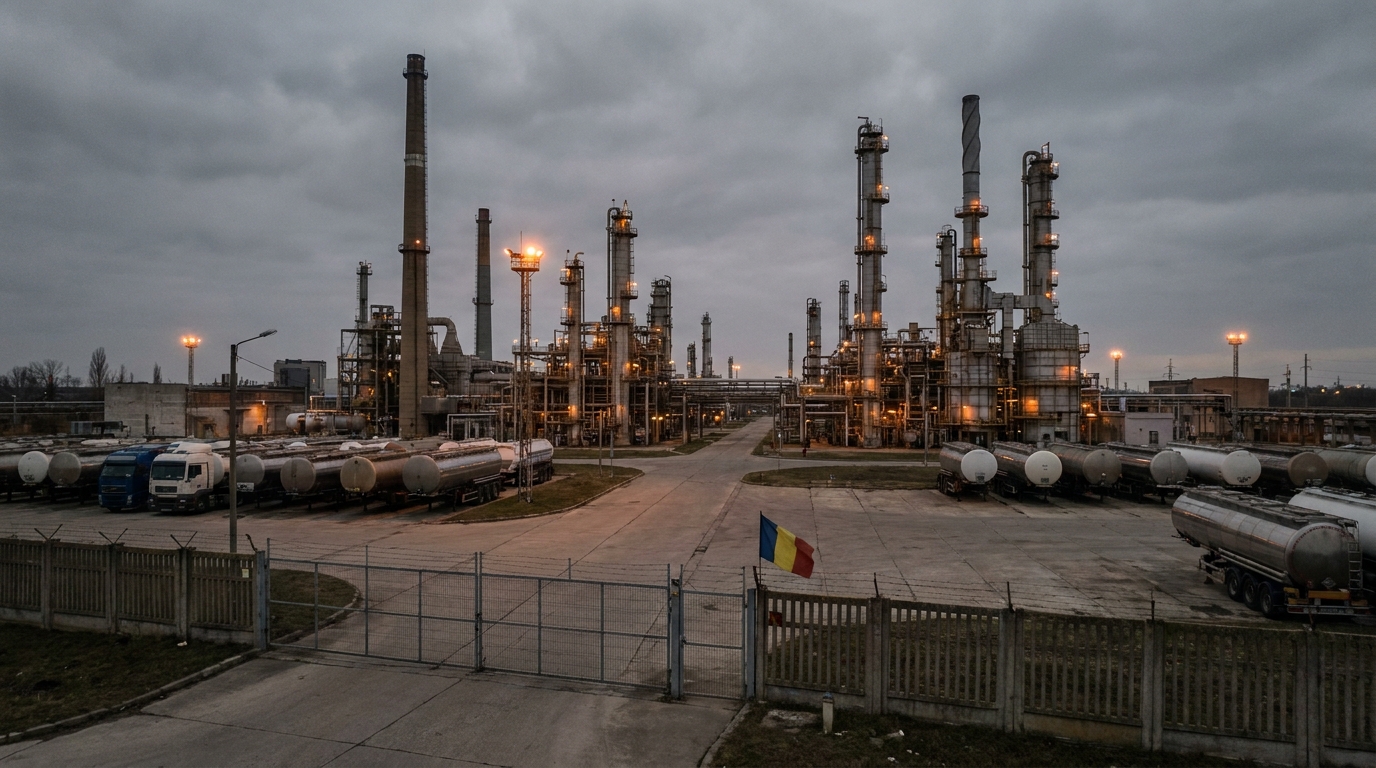
The closure of the Petrotel Lukoil refinery in Ploiești has triggered a wave of financial problems in Romania, potentially affecting nearly five hundred local businesses. Transport and agricultural companies are most at risk, and the impact of the crisis will be felt by trading partners across Central and Eastern Europe—including suppliers operating under the trade credit model. The scale of the threat compels risk managers to immediately audit portfolios of receivables owed to entities in Romania and Moldova.
The refinery that stopped and never returned to operation
Petrotel Lukoil, an oil refining plant located in Ploiești, approximately 55 kilometers north of Bucharest, officially entered insolvency after a Romanian court approved the initiation of the procedure. The refinery previously produced between 2,4 and 2,5 million tons of petroleum products annually, equivalent to about one-fifth of Romania's total oil refining capacity. Its share of the domestic fuel market was therefore not just significant but systemic.
Formally, the plant ceased operations in the fall of 2024 under the pretext of scheduled maintenance. However, what was supposed to be a short technical downtime quickly turned into structural paralysis. The immediate cause of the failure to resume production was the US sanctions imposed on Russian assets, which prevented the normal operation of the plant, which is almost entirely controlled by the Swiss company Litasco SA—part of the internationalrodothe Lukoil Group. Although the Romanian side requested and reportedly obtained appropriate exemptions from sanctions from Washington, the refinery has remained idle for over a year.
460 companies in the danger zone - the TSL sector is on the front line of fire
Bogdan Hossu, chairman of the national trade union confederation Cartel Alfa, publicly assessed that the prolonged shutdown of Petrotel Lukoil directly threatens the existence of approximately 460 Romanian enterprisesEstimates also indicate the risk of losing up to 8 jobs in related supply chains – both in refinery subcontractors and in companies dependent on its production.
Two sectors are bearing the brunt of the crisis:
- Road transport: Carriers relying on local diesel fuel supplies are now forced to turn to more expensive imported alternatives. With margins already squeezed by the Europe-wide slowdown in demand for transport services, the sudden surge in operating costs is rapidly destroying the liquidity of smaller companies.
- Agriculture and food processing: The field season and the transportation of agricultural produce require a stable, predictable supply of diesel fuel. Rising fuel prices and supply difficulties translate directly into higher costs for agricultural production and refrigerated logistics.
From a counterparty risk analysis perspective, the cascading mechanism of this crisis is crucial. Carriers' financial problems immediately spill over to the next links in the chain: subcontractors, vehicle repair shops, spare parts suppliers, leasing companies, and banks. Each bankruptcy in this structure generates new claims and further liquidity shortages for trading partners—often operating in other EU countries, often unaware of the level of exposure of their Romanian counterparties to this particular crisis.
Court proceedings and a mountain of debts to creditors
A Romanian court has approved the launch of formal insolvency proceedings for Petrotel Lukoil. The timetable for the proceedings included preparing a preliminary list of claims by the end of September, adopting a final list of creditors in October, and convening the first creditors' meeting at the beginning of the same month. This is standard procedure under Romanian restructuring law, but in this case, its effectiveness is severely limited by an external factor—international sanctions.rodowe.
It is estimated that about 40 companies directly related to the refinery, waiting for the repayment of arrears amounting to a total of 30 million eurosThis is a huge sum, but even more worrying is that the prospects for its recovery within a reasonable timeframe are assessed as negligible. The complexities of global sanctions regimes, disputes over asset ownership, and the lack of a clear path to resuming production make Petrotel Lukoil an exceptionally difficult case for any administrator or receiver.
Significantly, the company's management emphasizes that the purpose of the proceedings is not to liquidate the plant, but rather to legally protect it, secure its assets, and maintain conditions for a potential restart of production. Possible scenarios include the lifting or modification of sanctions, or a change in the ownership structure. In January, reports emerged of a preliminary agreement with the American private equity fund Carlyle Group regarding the acquisition of the assets—however, as of the time of publication, no transaction had materialized.
Geopolitics vs. Economy: Bucharest's Delays Cost Months
Particularly telling is the comparison of the responses of various European governments to a similar challenge involving Lukoil's assets after the introduction of sanctions. Germany appointed a special administrator over the Russian company's assets there within a week of the crisis escalating. Bulgaria made a similar decision within a month. Meanwhile, Romania fourteen months did not appoint any administrator for Petrotel Lukoil.
Trade unions explicitly point out that Bucharest's administrative inertia directly contributed to the deepening of the current socio-economic crisis. The lack of prompt state intervention meant that for over a year, no recovery plan was implemented, no steps were taken to find a new investor, and the interests of creditors and employees were not adequately protected.
Only under the pressure of a real threat of catastrophe in the fuel market did the government in Bucharest accelerate its efforts to conduct a controlled asset sale. The government's stated goal was to protect national energy security—but from the perspective of companies already caught in a spiral of liquidity problems, this move came far too late.
The domino effect reaches Moldova
The crisis surrounding Petrotel Lukoil hasn't been confined to Romania. Neighboring Moldova has been a significant recipient of petroleum products from Ploiești for years, with Romanian diesel constituting a significant portion of the local fuel market. The refinery's production halt therefore directly impacts a country already grappling with serious macroeconomic and energy instability.
Fuel shortages in Moldova may cause a number of negative consequences:
- Disruptions in supply chains for essential goods, including food and medicines;
- A sharp increase in internal transport costs, which will hit the profitability of local companies;
- Limiting the export of agricultural products – a key source of foreign exchange for the Moldovan economy;
- Deepening energy dependence on other, potentially less stable or more expensive sources of supply.
For European creditors and suppliers, this means one thing: Moldovan companies in the transport and agri-food sectors should be subject to increased vigilance, just like Romanian entities dependent on the infrastructure in Ploiești.
How to assess counterparty risk in current conditions?
The situation around Petrotel Lukoil is a textbook case in which the geopolitical factor — in this case the international sanctions regimerodosive — is causing far-reaching, difficult-to-predict effects in the micro-sphere of hundreds of local businesses. Companies that presented healthy financial indicators just a few months ago may quickly lose liquidity solely due to rising fuel prices or the bankruptcy of a key customer.
From the point of view of contractor verification and credit risk management in relations with companies from Romania and Moldova, it is necessary to take into account several key mechanisms:
- Indirect exposure to the fuel crisis: Even a company that isn't a direct client of Petrotel Lukoil can be heavily dependent on diesel prices. In the transportation sector, fuel costs typically account for 25–35% of total operating costs—an increase of just a dozen or so percent can transform a profitable company into one requiring immediate funding overnight.
- Risk of recipient concentration: If a Romanian carrier mainly served agricultural or agro-food companies from the Ploiești region, its order book may shrink rapidly as local customers face problems.
- Payment delays as an early signal: Companies experiencing problems typically extend payment terms to foreign suppliers first, treating them as the least urgent creditors. An increase in Days Sales Outstanding (DSO) for Romanian contractors should be considered a wake-up call requiring immediate action.
- Information gap: The Romanian market is characterized by relatively low financial transparency among small and medium-sized enterprises. Data from trade registers is often delayed by many months. This means that traditional scoring tools may not reflect the current condition of companies affected by the fuel crisis.
Business Risk Perspective: What Should EU Partners Do?
European companies collaborating with Romanian and Moldovan entities in the transport, logistics, agriculture, and related sectors now face a specific challenge: updating the risk assessment of their receivables portfolios. Below is a summary of actions worth taking without delay.
Receivables portfolio review and segmentation
The first step is to identify contractors from Romania and Moldova operating in sectors directly or indirectly dependent on fuel supplies from Ploiești. Transport, freight forwarding, agriculture, food processing, and distribution companies are industries that require immediate review of credit limits. It's worth checking whether the contractor has any liabilities to Petrotel Lukoil or its direct subcontractors.
Tightening of trading conditions
For entities belonging to the higher-risk group, it is reasonable to consider switching to shorter payment terms, introducing advance payments, or making further cooperation contingent on the provision of additional security—such as bank guarantees, receivables insurance, or documentary letters of credit. For new contractors from these regions, it is recommended to use advance payments until the market situation stabilizes.
Active monitoring of warning signals
Regularly monitoring payment delays, debtor registrations, restructuring proceedings, and management changes for Romanian and Moldovan counterparties should become a standard element of risk management processes. Business verification platforms such as EURODEBT.eu enable automation of this process and provide real-time alerts on changes in entity status.
Verification of claims in the bankruptcy proceedings of Petrotel Lukoil
Entities that are direct creditors of the refinery—e.g., companies that provided services, fuel, parts, or completed transportation orders—should verify as soon as possible whether their claims have been properly filed in ongoing legal proceedings. However, given the scale of the debt, the complexities of sanctions, and the lack of a clear plan for resuming production, the chances of a quick recovery should be assessed realistically—as very low in the short term.
Summary: Geopolitics as a New Operational Risk in TSL
The Petrotel Lukoil crisis is a stark reminder that counterparty risk in the transportation and logistics industry is increasingly shaped by external factors that are completely beyond the control of companies themselves.rodogovernments' administrative delays and changes in global ownership structures can transform a stable regional market into a zone of increased insolvency risk within a few months.
The potential bankruptcy of nearly five hundred Romanian companies, the loss of thousands of jobs, and the destabilization of Moldova's fuel supply are already a foregone conclusion—unless there is swift and effective regulatory or investment intervention. The absence of such intervention in the coming months would mean a profound restructuring of the Romanian transport sector: the elimination of the weakest entities and painful losses for their trading partners, insurance institutions, and financing institutions across Europe.
Companies operating a trade credit model with partners from Romania and Moldova should treat updating their risk assessment not as an option, but as an urgent management obligation. It's time to act proactively—before a cascade of problems hits their own balance sheets.




