

DB Cargo will not reach profitability in 2026 – what does this mean for European logistics?
DB Cargo, the Deutsche Bahn subsidiary responsible for rail freight transport, has officially acknowledged that it will not break even in 2026 — a key condition of the EU restructuring plan. The reason is a one-off impairment charge of approximately 260 million euros on the value of its British subsidiary. The situation necessitates a return to negotiations with the European Commission and is a serious warning sign of operational risk for the entire European logistics market.
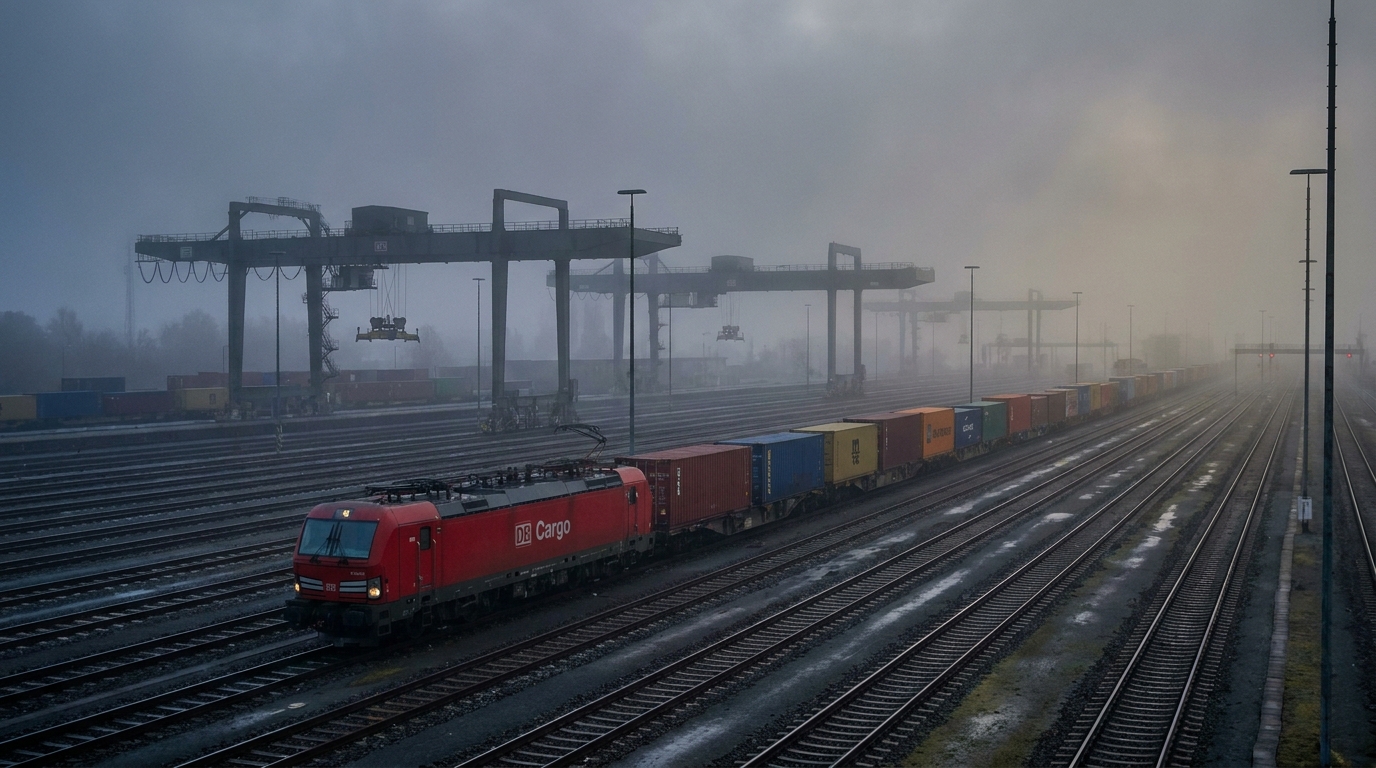
Europe's largest rail freight operator has officially admitted that it will not meet a key condition imposed by the European Commission. DB Cargo—Deutsche Bahn's freight transport subsidiary—will not break even in 2026, even though that was required by the EU recovery plan approved by Brussels. The immediate cause is a one-time write-down of approximately €260 million related to the valuation of its British subsidiary, which is up for sale. This news has shaken the European transport and logistics industry and opens a new, difficult chapter in the relationship between Deutsche Bahn and EU regulators.
The origins of the problem – years of losses and the EU ultimatum
To understand the gravity of the current situation, we need to go back a few years. DB Cargo had been generating operating losses for a long time, which were systematically covered by its parent company, Deutsche Bahn, through internal profit transfer mechanisms. This arrangement, while convenient from a management perspective, had long raised serious concerns from the European Commission.
From the perspective of EU competition law, a situation in which a state railway company—a company with dominant state ownership—permanently subsidizes a loss-making subsidiary may constitute unlawful state aid. Such support distorts the level playing field and favors the entity protected by its state owner over private competitors operating on European rail freight corridors.
In response to these allegations, Deutsche Bahn and DB Cargo presented a comprehensive recovery plan to the European Commission. Its key elements included a reduction in headcount of over 6000, a network restructuring by reducing unprofitable domestic routes in Germany, and a strategic shift towards integrated, trans-European transport services. A fundamental technical requirement, the fulfillment of which was to prove the effectiveness of the entire plan, was to reach the financial break-even point by the end of 2026.
€260 million write-off – a one-off or a symptom of deeper problems?
Bernhard Osburg, CEO of DB Cargo, publicly confirmed that the 2026 break-even target will not be achieved. He cited the need to write down the value of DB Cargo UK, a British subsidiary whose sale is part of a broader divestment strategy, as the main reason. The write-down amounts to approximately 260 million euros, which in itself constitutes a huge burden on the consolidated financial result of the group in the current financial year.
Management is attempting to present this write-down as a one-off and extraordinary event—the result of specific circumstances related to asset valuations in the UK market, rather than a structural issue with the business model. Indeed, Brexit and the resulting changes in cross-border operating conditions have negatively impacted the attractiveness and value of many logistics assets operating between the UK and continental Europe. In this sense, DB Cargo UK is one of many companies that has been hit hard by the political upheaval of 2016.
However, EU regulators are entitled to a broader perspective. For European Commission officials, the fact that the divestment process—which was supposed to be part of the company's financial recovery—is generating massive losses in itself is a wake-up call. This indicates that DB Cargo's historical expansion into foreign markets was undertaken without sufficient financial discipline, and the acquired assets were overly optimistically valued. If the sale of a single foreign subsidiary costs a €260 million write-down, how much might other potential divestments cost?
Return to Brussels - negotiations resume
Failure to meet a key condition of the recovery plan automatically triggers a procedure requiring Deutsche Bahn to return to negotiations with the European Commission. This is a highly unfavorable scenario for several reasons.
First, negotiations with Brussels are time-consuming and unpredictable. Months of talks mean strategic paralysis—the company cannot make long-term investment or contract decisions while waiting for new arrangements with the regulator. Customers and business partners are sensing this uncertainty and are starting to look for alternative service providers.
Secondly, the European Commission may this time present even tougher terms for the new agreement. Brussels has a wide range of instruments at its disposal in cases involving unlawful state aid: from an order to repay illegal aid, to the forced sale of additional business units, to a ban on using financing from the parent company. Any of these solutions would dramatically hinder DB Cargo's continued operation on its current scale.
Third, the very fact of returning to the negotiating table undermines Deutsche Bahn's image as a reliable partner capable of fulfilling its commitments. This has a direct impact on financing costs on capital markets—investors and rating agencies will have to reassess the risks associated with debt securities issued by the DB Group.
6000 jobs at risk - social and operational risks
One of the most sensitive elements of the recovery plan is job cuts. More than 6000 employees are expected to lose their jobs as part of the restructuring—a staggering number, considering that rail transport is traditionally a heavily unionized sector, and rail workers enjoy strong legal protection, particularly in Germany.
Trade unions are already expressing strong opposition to the planned layoffs and vowing to fight for every job. Given the news that the recovery plan has not been implemented and that negotiations with the EU are now underway, social tensions will only increase. There is a real risk of strikes and industrial action, which could paralyze DB Cargo's operations at critical moments—for example, during the peak shipping season before the holidays or during periods of increased industrial activity.
For companies using DB Cargo's services—both directly as a carrier and indirectly as part of a broader logistics chain—the risk of supply disruptions is a factor that must be considered in business continuity planning. It's worth asking now: do our rail-based deliveries have defined alternative distribution channels in the event of a major operational disruption at the dominant player?
Impact on the European rail freight market
DB Cargo is no ordinary company—it's a pillar of European rail logistics. The company operates an extensive network of connections in Central and Western Europe, serving clients in the automotive, chemical, steel, machinery, and—increasingly—arms industries. Its systemic role means that long-term financial and operational problems have far-reaching consequences for the entire TSL industry.
In a negative scenario, assuming the EU forces asset sales or limits on operations on certain corridors, a supply gap will emerge in the market, which private rail operators—such as Captrain, Rail Cargo Group, and PKP Cargo—will attempt to fill. However, this process is time-consuming: converting locomotives, obtaining certificates, hiring drivers, and signing long-term contracts with infrastructure managers all require months, sometimes years, of preparation.
Meanwhile, freight that isn't going to rail will return to the roads. This, in turn, directly conflicts with the European Union's climate goals. The EU's sustainable mobility strategy assumes that by 2030, a significant portion of goods currently transported by truck over distances exceeding 300 km will be transferred to rail. The deepening problems of Europe's largest rail freight operator are working in precisely the opposite direction.
Risk assessment for managers and owners of TSL companies
From a business risk management perspective, the situation at DB Cargo should prompt companies using rail freight services to take several specific preventive measures:
- Contract exposure audit: It's worth analyzing how much of a company's freight volume relies on DB Cargo or its network. High concentration in a single supplier is always a risk factor, and the current financial and regulatory situation of this operator only underscores this fact.
- Supplier diversification: Maintaining parallel relationships with alternative rail operators or freight forwarders offering combined transport allows for a quick switchover in the event of problems with the dominant supplier.
- Contract clauses: New and renewed contracts with rail operators should contain precise provisions regarding liability for delays or cancellations of services due to reasons attributable to the carrier, including strikes or restructuring.
- Monitoring the regulatory situation: The European Commission's decisions regarding the new recovery plan for DB Cargo will have a direct impact on the availability and costs of rail services. Monitoring these developments will allow for proactive adaptation of logistics strategies.
- Supplier Assessment in the Supply Chain: If your trading partners rely on DB Cargo as their primary means of transporting raw materials or components, their problems could become yours. It's worth conducting a thorough review of the operational resilience of your key suppliers.
Prospects – will DB Cargo survive in its current form?
The question of DB Cargo's future is one of the key questions facing the European rail market today. The optimistic scenario assumes that the European Commission demonstrates pragmatism and flexibility, approving a new timeline for achieving profitability—perhaps with a break-even target pushed back to 2027 or 2028. In such a case, the company would have time to complete its restructuring without dramatic cuts and while maintaining operational continuity.
A more pessimistic scenario assumes that Brussels decides to strictly enforce the terms of the original agreement. In such a situation, Deutsche Bahn could face a choice: either implement a forced and costly divestment of further DB Cargo assets, or allow selected business segments to undergo an orderly bankruptcy. Both options would permanently reduce DB Cargo's role in the European freight market.
In the middle of these scenarios lies what currently seems most likely: long, exhausting negotiations that will result in a new recovery plan with stricter conditions and more stringent monitoring. DB Cargo will maintain its operations but will be forced to make deeper and faster cuts than initially planned.
The role of Polish players in the railway market
In this context, it's worth noting the situation of Polish entities operating in the rail freight market. PKP Cargo, although itself struggling with serious financial and structural difficulties, is one of the operators that could theoretically benefit from DB Cargo's partial withdrawal from certain transport corridors. Similarly, Polish freight forwarding companies serving Germany and further west must closely monitor developments, as changes in DB Cargo's service offerings will directly impact the availability and pricing of rail routes through Germany.
For risk managers at Polish logistics companies, the wake-up call should be not only the situation at DB Cargo itself, but more broadly, the growing regulatory tensions surrounding subsidization of state-owned rail freight operators. This precedent could pave the way for deeper EU oversight of other operators in similar situations.
Summary - Risk Landscape in the European Logistics Market
DB Cargo's failure to comply with the terms of the recovery plan approved by the European Commission is not just a problem for one company. It is a systemic event that could reshuffle the cards in the European rail freight market, impact the achievement of EU climate goals, and significantly change the competitive landscape across the entire TSL sector.
The one-off €260 million write-down related to the UK subsidiary is a catalytic event that has exposed a deeper problem: DB Cargo’s historical expansion decisions were made without sufficient financial rigour, and now the bill for those decisions must be paid – at the worst possible moment, just before a key regulatory deadline.
For transport, freight forwarding, and manufacturing companies using European rail infrastructure, the coming months will require particular vigilance. The European Commission's decisions, the results of negotiations with Deutsche Bahn management, and the unions' response to layoff plans—these are the three key variables that will determine the condition of the rail freight market in the near future. The EURODEBT.eu platform will continuously monitor developments and provide information on all significant changes that may impact operational and credit risk in the sector.




