

The US is considering a diesel export ban. Europe could be left without fuel—what does this mean for the transportation industry?
The Trump administration is considering a 90-day ban on diesel exports from the United States — a move that could cut off nearly half of Europe's diesel supplies shipped across the Atlantic. Following the closure of several dozen refineries and the loss of Russian and Middle Eastern supplies, the Old Continent is now structurally dependent on American fuel. For European transport companies, this means the risk of a sharp rise in prices, physical shortages at filling stations and a loss of financial liquidity for carriers. Risk managers should act now.
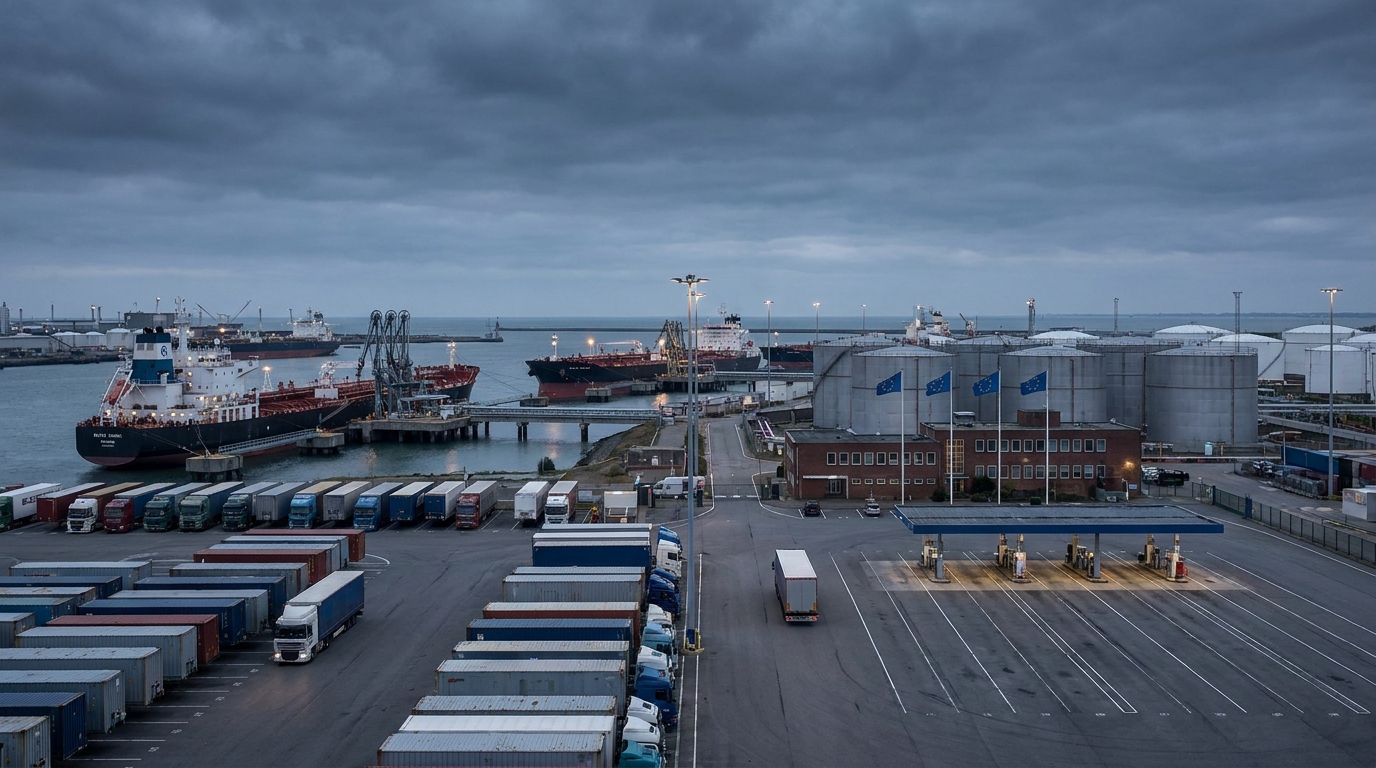
In the third quarter of 2026, the world of transportation and logistics is riveted on a single decision whose consequences—if implemented—could upend the European freight market in a way not seen since the energy crisis triggered by the war in Ukraine. President Donald Trump's administration is conducting advanced studies on the possibility of imposing a 90-day ban on diesel fuel exports from the United States. Treasury Secretary Scott Bessent has publicly confirmed that work is underway, and a decision could come at any time. For European shipping companies, logistics operators, and risk managers, this means one thing: they must prepare for a scenario in which nearly half of maritime diesel shipments to Europe from outside the region simply stop flowing.
How did Europe fall into the trap of dependence on US diesel?
To fully understand the gravity of the situation, one must go back a dozen or so years and trace how the Old Continent gradually shed its own capacity to process crude oil. Over the past decade and a half, under the influence of rigorously tightening emission standards and pressure fromrodoDue to pressure and rising operating costs, approximately 30 refineries in the European Union have been closed or permanently decommissioned. Data from Concawe, the European refining industry's umbrella organization, indicates that these closures resulted in a loss of processing capacity of 250–300 barrels per day.
The mere closure of outdated or unprofitable plants wouldn't be a disaster—provided Europe retained alternative supply channels for the finished fuel. Meanwhile, the Old Continent lost them one by one. For years, Russia was the main supplier of diesel fuel—cheap, close, and in huge volumes. The outbreak of a full-scale invasion of Ukraine in 2022 and the subsequent embargo on Russian petroleum products cut off this flow. Tensions in the Middle East dealt a further blow. As recently as 2025, supplies from the Persian Gulf region covered approximately 41% of all EU diesel imports. The escalating conflict between the US and Iran and disruptions to key maritime corridors caused exports from this region to shrink to a fraction of their previous volumes.
In this geopolitical vacuum, the United States has become something of a ventilator for Europe. As of August 2026, the US accounted for roughly half of all European maritime diesel imports from outside the region—nearly 520 barrels per day crossing the Atlantic. This figure speaks for itself: removing one supplier from the equation creates a gap that cannot be quickly or easily bridged.
Why is Washington considering an embargo—and what is driving it?
It's crucial to understand that the potential export ban is neither a political gesture toward Europe nor part of a broader diplomatic strategy. It has very specific, down-to-earth, and pressing domestic reasons on the American side.
The U.S. Energy Information Administration (EIA) is sounding the alarm: distillate inventories on the US East Coast have fallen to their lowest level since 1990. Meanwhile, domestic refineries are operating at near capacity—at 98% utilization. There's no buffer, no reserve capacity to be tapped into in the event of a sudden surge in demand. And such a surge is not only likely—it's certain. Fall and winter mean increased demand for heating oil and fuel for the agricultural sector, which is now entering another harvest and post-harvest cycle.
At the price level, the situation for US consumers is dire. The average price of a gallon (3,79 liters) of gasoline has risen 91 cents in a single month, surpassing $6,52—over $2,80 higher than a year earlier. These are figures unseen in decades, creating mounting political pressure on the administration to act decisively. The export embargo, in this context, is a response to the domestic call for "cheap diesel for America"—not targeted at any specific trading partner.
How would an export ban hit European diesel prices?
European fuel markets are already operating under extreme conditions. The average price of diesel fuel in the European Union reached around €2,26 per liter in September 2026—a record high that no amount of anti-inflation shields could address, as most member states had already abandoned them, lacking the budgetary space to maintain them.
Fuel market analysts agree: a sudden cutoff in US supply would push European diesel prices up another 30% in a relatively short time. The supply effect would be immediate—the market would begin to discount a shortfall of 520 barrels per day, even before actual physical shortages at the pumps occurred. Futures prices would skyrocket, driving down wholesale and then retail prices.
It's worth emphasizing that alternative supply sources aren't ready to take over. India—currently the second-largest eastern supplier of diesel to Europe—accounts for only about 60% of imports from this source, which alone amounts to a mere 200 barrels per day. The math is merciless: even if India were to immediately double its shipments to Europe—a logistical and physical impossibility in such a short time—the gap left by the US would not be filled.
The Transportation Industry: Existential Risk, Not Operational
For risk managers in transport and logistics companies, this scenario should be treated not as an operational threat, but as an existential threat to a portion of the market. Fuel is the foundation of every carrier's cost calculation—depending on the segment, fleet structure, and route mix, it accounts for 25% to as much as 40% of total operating costs. A sharp 30% price increase automatically deepens pressure on margins, which are already structurally low in road transport.
The fuel crisis scenario raises several overlapping risks that need to be analyzed together:
- Risk of physical fuel shortage: With a drastic shortage of supply and panic buying of stocks by large entities, smaller transport companies may face real difficulties in refueling their trucks – especially in regions with poorer connections to large fuel hubs.
- Price and contract risk: Companies that have signed long-term contracts for transport services without fuel clauses or with clauses that are inadequate to the scale of potential growth will find themselves in a dramatic situation – providing services below cost.
- Financial liquidity risk: A sharp increase in fuel costs will hit cash flow, especially if it coincides with payment delays from clients – which is not an abstract scenario in the current market conditions.
- Cascading risks in supply chains: Rising transport costs translate into more expensive deliveries of goods, which in turn slows down demand, ultimately impacting transport volumes – creating a vicious circle.
- Contractor solvency risk: Companies we currently consider financially stable could find themselves on the verge of losing liquidity within weeks amid the fuel crisis. Credit risk assessments in the TSL industry urgently need to be updated.
The European Union's response – options and their limitations
European Commission and InternationalrodoThe International Energy Agency (IEA) is aware of the gravity of the situation. The IEA has officially warned that the diesel market will remain structurally underfunded on the supply side in the near future. In practice, the EU has several response paths available—none of them simple or quick.
Diversification of supply sources
Theoretically, Europe could accelerate cooperation with alternative suppliers—primarily India and selected North African countries. In practice, this requires renegotiating contracts, adapting port and terminal infrastructure, and, above all, time. With a 90-day embargo window, this time becomes a luxury we don't have.
Release of strategic reserves
Member states and the IEA may decide to release strategic reserves, which would partially cushion the supply shock. However, this is a temporary measure—the reserves are finite, and rebuilding them under current market conditions would be extremely expensive.
Administrative consumption limits
The most drastic and simultaneously most destructive option for the transport industry is to impose administrative limits on diesel consumption. Similar solutions were considered during the gas crisis in 2022. In the case of diesel fuel, this would be a direct blow to the entire logistics chain—from agriculture and construction, through retail distribution, to international transport.rodoYou.
Acceleration of refinery investments
Discussions about reactivating or expanding European refining capacity resurface in Brussels every time there's an energy crisis. However, launching a new refinery or significantly expanding an existing one is an investment measured in billions of euros and years—not weeks or months.
Business Risk Perspective: What to Do Today?
Regardless of whether the Trump administration ultimately decides to implement an export ban, the risk analysis for TSL industry players is clear: Europe's structural dependence on external diesel supplies will not disappear with the eventual lifting of the embargo. We will remain in a zone of heightened fuel risk for at least the next few years.
Transport and logistics companies should take concrete actions now:
- Audit of fuel contracts and clauses: Review all active contracts for indexation and fuel clauses – check whether they actually protect against the scale of increases we are experiencing.
- Evaluation of suppliers and contractors: Review the financial condition of key business partners. The fuel crisis can quickly expose hidden liquidity problems among subcontractors and clients.
- Securing fuel supplies: Where possible, consider building your own fuel buffers – purchasing and storing diesel at current prices could prove beneficial in the coming price increases.
- Futures contracts and hedging instruments: Large companies should consider hedging fuel prices through futures markets or purchasing options – these are tools available but still rarely used in the TSL industry in Poland and the CEE region.
- Emergency scenario in fleet management: Develop a fuel consumption reduction plan – optimizing routes, reducing idling, and taking the least efficient vehicles out of service first.
Summary: Time for risk management, not waiting
A potential 90-day ban on US diesel exports would test the European shipping industry's resilience on a scale not seen in years. Europe has fallen into a structural trap—it has closed its own refineries, lost Russian supplies, and lost secure access to Middle Eastern markets. As a result, nearly half of Atlantic diesel supplies now come from a single source: the United States. This concentration of risk should have raised alarm bells much earlier.
For risk managers, the message is clear: we can't manage risk we don't measure. It's time to update counterparty risk assessment models in the TSL industry, revise budget assumptions, and contract hedging solutions. Markets don't wait for political decisions—they react before an embargo is announced.
The EURODEBT.eu platform will continuously monitor the situation and report on any significant developments, including possible decisions from Washington, the European Commission's reaction and changes in the solvency risk assessment of entities in the road transport sector in Europe.




